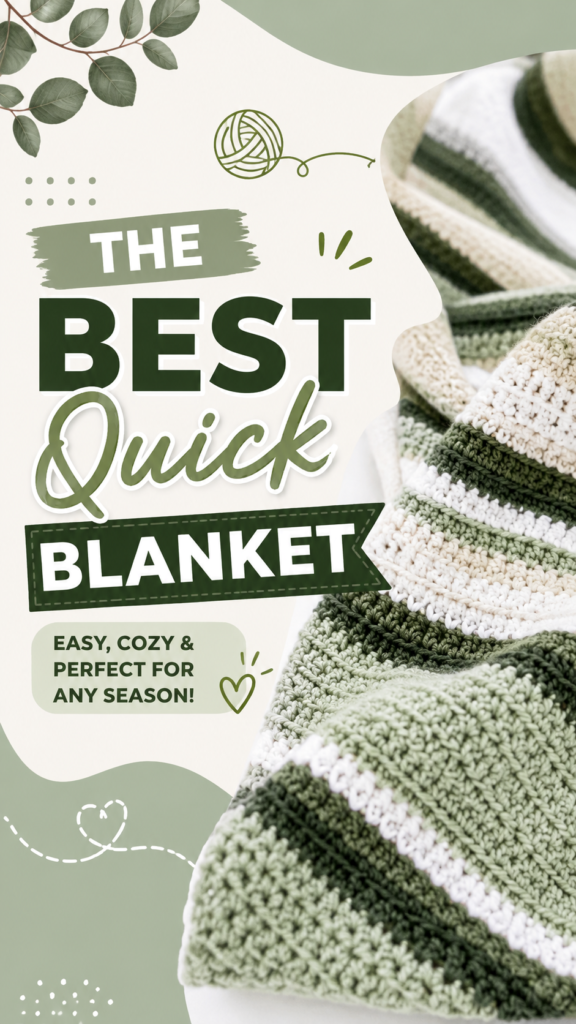
There is something wonderfully satisfying about a crochet blanket that looks beautiful without requiring an overly complicated design. The cozy green and cream striped blanket featured here is a perfect example of how simple color changes, an inviting texture, and a practical size can come together to create a project that feels both useful and relaxing. If you are searching for easy crochet blanket patterns, a quick crochet blanket, or a smaller project that can be finished without committing to a huge bed-sized afghan, this style is an excellent place to start.
The combination of soft sage green, deeper green, and creamy neutral tones gives this blanket a calm, natural appearance. Its textured rows add visual interest while keeping the overall design clean. Whether you want a cozy lap blanket for reading, a handmade gift, or a comfortable crochet throw for your favorite chair, this look offers plenty of inspiration.
Key Takeaways
- Simple crochet stitches can create a beautifully textured blanket.
- Green, cream, and neutral yarns create a soft, timeless color palette.
- A smaller blanket can be quicker and more manageable than a full-size afghan.
- Repeating rows make this style suitable for relaxed crochet sessions.
- Striped color changes add personality without requiring a complicated pattern.
Why a Quick Crochet Blanket Is Such a Great Project
Large crochet blankets can be rewarding, but they can also take a considerable amount of time and yarn. A quick crochet blanket offers a satisfying alternative. You still get the pleasure of creating something warm and handmade, but the project can feel much easier to manage.
A smaller blanket is also versatile. It can rest across your lap while you work at a desk, keep your legs warm during an evening on the sofa, or add an inviting handmade touch to a reading nook. Because it does not need to cover an entire bed, you have more freedom to experiment with colors, textures, and stitch patterns.
One of the biggest advantages of a quick blanket is that progress is easy to see. Each completed row adds noticeable length, which can make the project feel motivating from beginning to end. For crocheters who enjoy seeing a project develop quickly, this type of blanket can be especially satisfying.
The Beauty of Green and Cream Crochet Blanket Colors
The color palette shown in this blanket is one of its strongest features. Sage green, darker green, and creamy white work together naturally, creating a look that feels cozy without being overly bright. Green shades are particularly useful for crochet home decor because they can complement both modern and traditional interiors.
A lighter sage shade gives the blanket a soft foundation, while darker green stripes provide contrast. Cream breaks up the stronger colors and helps the design feel balanced. This approach is easy to adapt if you prefer different shades.
Try a Calm Neutral Palette
If you love the appearance of the featured blanket, consider working with several shades from the same color family. You might combine pale sage, medium green, forest green, and ivory. Keeping the colors relatively muted creates a relaxed aesthetic that works beautifully for blankets intended for living rooms or bedrooms.
Experiment With Seasonal Colors
The same basic striped concept can easily be transformed with a different palette. Soft beige, dusty blue, and cream can create a cool coastal feel. Rust, mustard, and oatmeal can make the blanket feel warm and autumnal. Pink, cream, and muted green can create a softer cottage-inspired combination.
When choosing yarn colors, it can help to select one main shade, one contrasting shade, and one neutral. This gives the blanket a clear visual structure without making the color combination feel chaotic.
Choosing the Right Crochet Stitch
The blanket in the image has a visibly textured surface, showing how a relatively straightforward repeating stitch can create a rich finished fabric. Texture is especially appealing for blankets because it gives the piece a handmade appearance while also making each row more interesting to work.
For a quick crochet blanket, look for a stitch that has a simple repeat and does not require constant pattern changes. Repetitive stitches are easier to memorize, allowing you to spend less time checking instructions and more time crocheting.
Beginner-Friendly Stitch Options
If you are new to crochet blankets, basic stitches are a practical starting point. Single crochet can produce a dense fabric with plenty of structure, while half double crochet provides a nice balance between texture and speed. Double crochet works up more quickly and creates a softer, more open fabric.
Textured stitches can also be used when you want more dimension. The key is to choose a stitch that you enjoy repeating. A stitch that feels comfortable in your hands can make a significant difference during a longer crochet project.
Expert Insight
For a quick blanket, simplicity is often more valuable than complexity. A repeating stitch with planned color changes can look polished and intentional while remaining relaxing enough for everyday crocheting.
How to Plan Your Crochet Blanket
Before starting, decide what you want the finished blanket to do. A lap blanket, baby-sized blanket, sofa throw, and bed blanket all require different dimensions. Starting with the intended purpose makes it easier to determine how wide and long your project should be.
- Choose the finished size. Decide whether the blanket will be used as a lap blanket, throw, or larger afghan.
- Select your yarn. Pick a comfortable yarn with a weight that works well with your chosen stitch.
- Plan the colors. Decide how many shades you want and how often the stripes will change.
- Make a small swatch. Check how the stitch and yarn behave together before committing to the entire blanket.
- Start with a manageable rhythm. Establish a repeat that is easy to recognize as you crochet.
Planning does not need to be complicated. Even a simple sketch showing the approximate order of your stripes can help you maintain a consistent design.
Creating Stripes That Look Intentional
Striped crochet blankets are wonderfully flexible because the stripes can be narrow, wide, evenly spaced, or completely varied. The green and cream design shown here demonstrates how alternating color bands can give a simple blanket a strong visual identity.
If you want a classic appearance, repeat the same stripe sequence throughout the blanket. For example, you could use several rows of sage, followed by a smaller cream section and then a darker green section. Repeating the sequence keeps the design cohesive.
For a more relaxed appearance, vary the stripe widths. Larger sections of your main color can be interrupted by occasional narrow contrast stripes. This approach is particularly useful when you have several coordinating yarn colors available.
Keep Your Color Changes Neat
When switching colors, try to maintain consistent tension. A noticeable change in tension can make one section appear wider or narrower than another. Keeping the yarn relaxed in your hands can help produce more even rows.
It is also worth deciding in advance whether you want to carry yarn along the edge or fasten off between color sections. The best method depends on the stitch, yarn, and look you want to achieve.
Yarn Tips for a Cozy Crochet Blanket
Yarn choice has a major effect on the finished blanket. Since blankets are often used directly against the skin, softness is important. A yarn that feels comfortable in your hands is likely to make the finished piece more enjoyable to use.
Washability is another practical consideration, particularly if the blanket will be used frequently. Before purchasing a large amount of yarn, check the care information and consider how the finished blanket will be maintained.
Think About Texture and Drape
Different yarn fibers and weights can produce very different results with the same stitch. A thicker yarn can help a blanket grow more quickly, while a lighter yarn may create a more delicate fabric. Your stitch choice also affects how firm, flexible, or textured the finished piece feels.
If you want the cozy visual effect shown in the image, consider combining a soft yarn with a stitch that creates visible texture. The result can feel substantial and inviting without relying on an elaborate pattern.
Why Smaller Crochet Blankets Make Great Gifts
A handmade lap blanket is a thoughtful gift because it is both decorative and useful. Unlike an item that is displayed only occasionally, a cozy blanket can become part of someone’s everyday routine.
A smaller blanket can also be easier to personalize. You can select colors based on the recipient’s home, favorite shades, or the season. A neutral palette such as sage and cream has a timeless quality, making it suitable for many different decorating styles.
If you are making a handmade gift, focus on comfort and usability as much as appearance. A beautifully textured blanket in soft, practical colors can become something the recipient reaches for repeatedly.
Simple Ways to Customize the Design
One of the best things about crochet blanket patterns is that you can often adapt the basic concept to match your preferences. The featured striped design provides an excellent starting point, but there is plenty of room for creativity.
- Change the colors: Use your favorite combination while keeping the same stripe structure.
- Adjust the size: Add or remove rows to create a more compact or larger blanket.
- Modify the stripe widths: Alternate between narrow and wide color bands.
- Add a border: Finish the edges with a simple contrasting or coordinating border.
- Mix subtle shades: Combine several tones from the same color family for a soft gradient effect.
These small changes can make a familiar crochet blanket concept feel completely personal. You do not need an elaborate stitch pattern to create something distinctive.
Keeping Your Crochet Project Enjoyable
A quick blanket should feel like an enjoyable project rather than a race to the finish. Set aside manageable periods of time for crocheting, especially if you are working on a repetitive design. A few rows during a quiet evening can gradually turn into a finished blanket.
Keep your yarn organized as you work through the color changes. If you are using multiple skeins, placing each color where it is easy to reach can prevent unnecessary tangling. It can also help to keep a simple written note of your stripe sequence.
Take occasional breaks and check your work. Counting rows every so often can help you notice mistakes before they become difficult to correct.
Why This Matters
A blanket does not need complicated construction to look impressive. Consistent tension, thoughtfully chosen colors, and a clean repeating stitch can create the polished handmade look that makes a simple crochet project stand out.
Finishing Your Crochet Blanket
Once the main body reaches your desired length, give the blanket a careful inspection. Look for loose ends, uneven edges, or areas that may need attention before finishing.
Weaving in yarn ends securely is especially important on a blanket that will be used often. Take your time with this stage because a neat finish can make the entire project look more polished.
Consider a Simple Border
A border can frame the stripes and give the edges a more finished appearance. It does not have to be elaborate. One or two simple rounds in a coordinating color may be enough to define the shape and create a clean edge.
For a subtle finish, use the same neutral shade that appears in the body of the blanket. If you prefer stronger contrast, a darker green border can visually anchor the lighter sage and cream sections.
At a Glance
- Best for: cozy lap blankets, throws, and relaxing crochet projects
- Style: simple, textured, striped, and modern
- Palette inspiration: sage green, deep green, cream, and neutral tones
- Project approach: repeating stitches with planned color changes
- Customization: size, stripe width, yarn colors, and border
Conclusion
A quick crochet blanket can be one of the most rewarding projects to keep in your crochet collection. The striped green and cream design shown here proves that a blanket does not need an elaborate pattern to feel stylish, cozy, and handmade. A straightforward stitch, a thoughtful color palette, and consistent rows can create a beautiful result that works perfectly for everyday comfort.
Whether you are an experienced crocheter looking for a relaxing project or a beginner searching for an approachable blanket idea, this style offers plenty of possibilities. Experiment with your favorite colors, adjust the size to suit your needs, and choose a stitch that feels comfortable to repeat.
The best crochet blanket is one you will actually enjoy making and using. Keep the design simple, make the colors your own, and let each row bring you closer to a cozy finished piece that can be enjoyed for seasons to come.