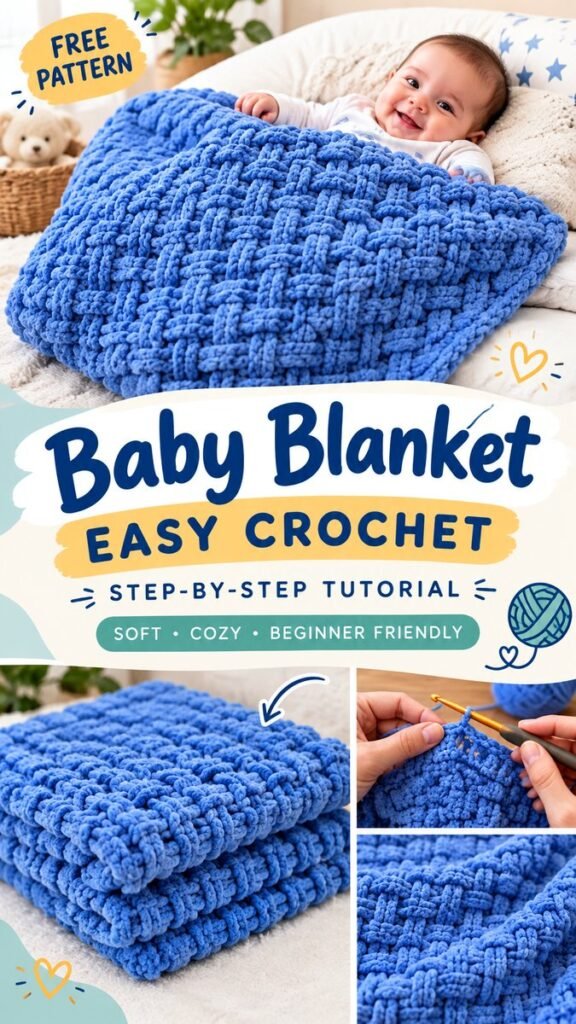
A hand crochet baby blanket is one of those handmade projects that combines practicality, creativity, and sentimental value in a single piece. The chunky blue blanket shown here has a rich, textured appearance that immediately makes it feel soft, warm, and inviting. Its generous texture also gives the finished blanket a beautiful handmade character, making it suitable for a baby shower gift, nursery accent, cozy photo prop, or treasured keepsake.
The appeal of a hand crochet baby blanket goes beyond its appearance. A simple crochet design can become a meaningful handmade gift when you choose a comfortable yarn, a pleasant color, and a stitch pattern that creates an interesting texture. Whether you are an experienced crocheter or learning your first larger project, this style offers plenty of inspiration for creating something personal and useful.
Key Takeaways
- A chunky hand crochet baby blanket creates a soft, cozy handmade look.
- Simple textured stitches can make a blanket visually interesting without complicated shaping.
- Soft, baby-friendly yarn is an important consideration when choosing materials.
- Blue is only one option, and the same design concept works beautifully in many colors.
- A handmade baby blanket can be adapted for gifts, nursery decor, or everyday use.
- Careful finishing and neat edges can make a simple crochet project look polished.
Why Make a Hand Crochet Baby Blanket?
Hand crochet baby blankets remain popular because they offer something that many ready-made blankets cannot: a personal handmade touch. Every row reflects the time and care invested in the project. Even when using a straightforward pattern, the finished piece feels special because it was created intentionally for a little one.
The blanket in this design has a particularly cozy appearance because of its thick yarn and pronounced texture. The raised stitches create depth across the surface, while the blue shade gives the finished piece a cheerful yet calming look. This makes the basic concept easy to adapt to different nursery themes and personal preferences.
A crochet blanket can also be a rewarding project because the progress is easy to see. As each row grows, the texture begins to form a recognizable pattern. For beginners, that visible progress can make a larger project feel much more motivating.
Important: When making a blanket for a baby, prioritize soft materials, secure finishing, and a practical construction. Avoid loose embellishments or decorative elements that could detach, and use the blanket appropriately for the baby’s age and sleeping environment.
Choosing Yarn for a Crochet Baby Blanket
Yarn selection has a major influence on the final appearance and feel of a hand crochet baby blanket. The reference style uses a thick, plush-looking yarn that creates large, noticeable stitches. This type of yarn can help a project grow quickly while producing a substantial texture.
For a baby-focused project, softness should be one of the first things you consider. Look for yarn described as soft, washable, and suitable for baby projects. A yarn that feels pleasant against the skin is especially useful for a blanket that may be handled frequently.
Care instructions matter too. Baby blankets can require regular cleaning, so a washable yarn can make the finished item much easier to maintain. Always check the yarn label for washing and drying recommendations before beginning the project.
Consider the Yarn Weight
Chunky yarn produces a bold, cozy texture and can give a blanket a substantial appearance. Medium-weight yarn creates a lighter fabric and may provide more flexibility for detailed stitch patterns. Your choice should depend on the finished look you want, the stitch pattern you plan to use, and the level of warmth appropriate for your intended use.
Think About Color
The vibrant blue shown in the design is an excellent example of how one strong color can make a crochet blanket stand out. Blue can work particularly well for a classic nursery palette, but there is no need to limit yourself to traditional baby colors.
Soft cream, sage green, dusty pink, warm beige, lavender, pale yellow, or muted gray can create completely different moods. A neutral blanket can feel timeless, while a brighter shade can make the handmade texture the focal point.
Understanding the Textured Crochet Look
One of the most eye-catching features of this hand crochet baby blanket is its textured surface. Instead of appearing flat, the stitches form raised sections that create a tactile, woven-looking effect. This type of texture can make a relatively simple color feel much more dimensional.
Texture is particularly useful when you want a blanket to look impressive without adding multiple colors. A single shade can showcase the stitch definition clearly, allowing the structure of the crochet work to become the main decorative feature.
When recreating this general style, focus on consistent tension. Even stitches help the blanket maintain a regular appearance from one section to another. If your tension changes significantly during the project, some areas may appear tighter or looser than others.
Expert Insight
A textured blanket does not need complicated colorwork to look special. Consistent stitch tension, a soft yarn, a thoughtfully chosen color, and clean edges can create a polished handmade finish while keeping the project approachable.
How to Plan Your Baby Blanket
Before starting, decide how you want the finished hand crochet baby blanket to function. A smaller blanket may be convenient for supervised use, cuddling, or gifting, while a larger design can become a versatile nursery accessory. The intended purpose can help determine your dimensions, yarn quantity, and stitch choice.
1. Choose Your Finished Size
There is no single universal size for every baby blanket. Consider whether you want a compact receiving-style blanket, a stroller blanket, a lap-sized piece, or a larger nursery blanket. Measure as you work rather than relying only on a target number of stitches, because yarn weight and stitch tension can change the final dimensions.
2. Make a Small Gauge Sample
A small test piece can help you see how the yarn and stitch pattern behave together. It is especially useful when working with thick yarn because even a small difference in tension can noticeably affect the finished size.
Use the sample to evaluate more than measurements. Feel the fabric, examine the texture, and decide whether the blanket has the softness and flexibility you want.
3. Prepare Enough Yarn
Running out of yarn halfway through a blanket can be frustrating, particularly if the exact color becomes difficult to find. Check the yarn requirements for your chosen pattern and consider purchasing enough from the same dye lot when possible.
4. Keep Your Edges Straight
Counting stitches at the end of each row can help prevent accidental increases or decreases. This simple habit is especially valuable for beginners because straight edges make the finished blanket look much more professional.
A Beginner-Friendly Crochet Approach
If you are new to crochet, a baby blanket may look like a large undertaking, but the repetitive nature of a blanket can actually make it a comfortable learning project. Once you understand the basic stitch sequence, repeating the same rows allows you to build confidence while watching the blanket grow.
Start by practicing your chosen stitch on a small sample. Learn how to create the foundation chain, identify the top of each stitch, maintain even tension, and turn your work correctly. These fundamentals will make the full blanket much easier to manage.
When you begin the actual project, work slowly at first. Speed comes naturally after your hands become familiar with the movements. If you notice an uneven section, correcting it early is usually easier than discovering several rows later that the stitch count has changed.
- Keep your yarn tension relaxed and consistent.
- Count stitches regularly, especially at the beginning and end of rows.
- Use stitch markers if they help you identify important points.
- Pause occasionally to check the blanket’s shape.
- Weave in loose ends securely when sections are completed.
Adding a Clean Crochet Border
A border can transform the appearance of a hand crochet baby blanket. Even a simple edging can frame the textured center and give the project a more finished appearance. A border can also help create a visually consistent edge when the main stitch pattern has a naturally uneven texture.
For a modern look, consider a simple single-color border that matches the blanket. If you want more contrast, a complementary shade can create a subtle frame around the main body. The best option depends on whether you want the texture or the edging to attract the most attention.
Keep the Border Proportional
A very wide border can compete with a chunky textured center, while a narrow border may provide just enough definition without distracting from the stitch pattern. Try a small sample before committing to the entire edge.
Why This Style Works for Baby Shower Gifts
A handmade baby blanket is a thoughtful gift because it combines usefulness with the personal effort behind handmade crafting. The recipient can associate the blanket with an important milestone, while the maker has the opportunity to personalize the color, texture, and overall style.
The chunky blue design shown here has a cheerful visual quality that works well as inspiration for a baby shower project. You can recreate the same cozy feeling with a different shade or adapt the stitch texture to suit the recipient’s nursery colors.
For gifting, presentation can be simple. Fold the finished blanket neatly and pair it with a handmade card or a small coordinating crochet item. The blanket itself remains the centerpiece.
Pro Tip: If the blanket is intended as a gift, choose the yarn and color with everyday practicality in mind. A beautiful blanket becomes even more useful when it is comfortable, washable, and easy for the recipient to care for.
Care Tips for a Handmade Baby Blanket
Proper care helps preserve the texture and appearance of crochet for years. Always follow the specific washing instructions supplied with your yarn. Different fibers can respond very differently to washing, heat, agitation, and drying.
When possible, avoid harsh treatment that could stretch or distort textured stitches. If the yarn label recommends gentle washing, follow those instructions carefully. Allow the blanket to dry according to the fiber’s care requirements and avoid unnecessary heat when it is not recommended.
Check the Blanket Regularly
Handmade items should occasionally be checked for loose ends, stretched sections, or damaged stitches. Repairing a small issue early can help prevent it from becoming a larger problem. This is especially useful for blankets that are handled frequently.
Ways to Personalize Your Crochet Baby Blanket
Once you understand the basic construction, there are many ways to make the design your own. Personalization does not require complicated crochet techniques. Small changes can completely alter the final result.
- Color: Choose a soft neutral, pastel, or vibrant shade.
- Texture: Experiment with a different repeating stitch pattern.
- Border: Add a contrasting or coordinating edge.
- Size: Adjust the dimensions to suit the intended use.
- Yarn: Select a different fiber or weight for another fabric feel.
You can also create a coordinated nursery collection by using the same color palette across several handmade projects. A crochet baby blanket can become the starting point for matching baskets, small accessories, cushions, or other decorative pieces.
At a Glance
- Style: Chunky, textured, cozy crochet
- Focus: Handmade baby blanket
- Best for: Gifts, nursery projects, and supervised cozy use
- Beginner tip: Practice the stitch and maintain consistent tension
- Finishing tip: Secure loose ends and consider a simple border
Final Thoughts on Hand Crochet Baby Blankets
A hand crochet baby blanket is a wonderful project for anyone who enjoys creating something useful with their own hands. The textured blue design provides a strong starting point, showing how a single color and a substantial stitch pattern can create a visually striking finished piece.
The most successful blanket does not necessarily require the most complicated pattern. A thoughtful yarn choice, consistent tension, carefully maintained edges, and a clean finish can make a simple design feel polished and special. For beginners, focusing on these fundamentals is often more valuable than trying to master an elaborate stitch immediately.
Whether you are making a baby blanket for a shower gift, preparing a handmade nursery piece, or simply looking for a relaxing crochet project, this style offers plenty of room for creativity. Change the color, adjust the size, experiment with texture, or add a simple border to create a version that feels completely personal.
Most importantly, enjoy the process. Every row adds another small piece of handmade character to the finished blanket, turning soft yarn into something meaningful, practical, and made with care.