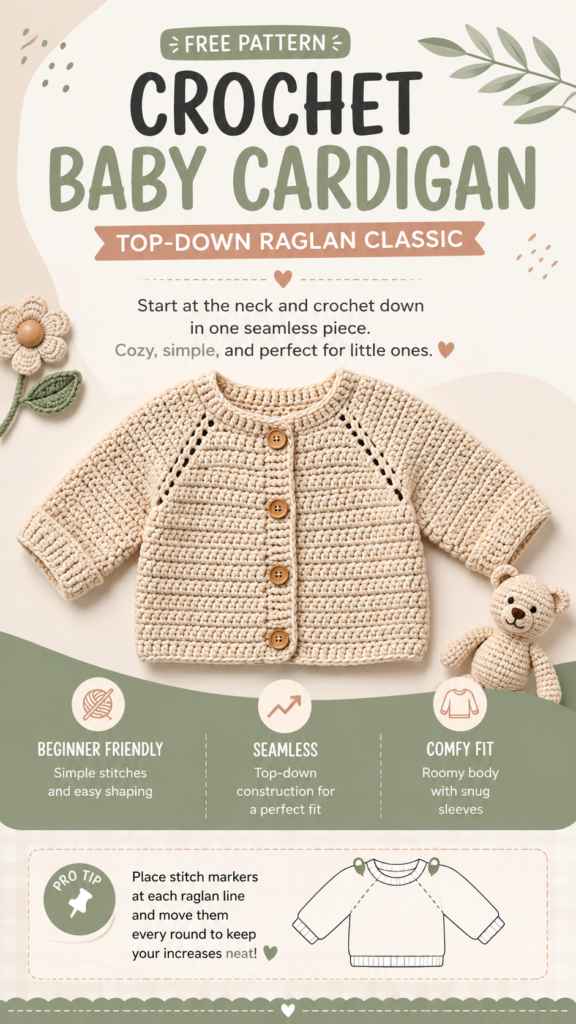
There is something especially charming about a handmade baby cardigan. A small crocheted sweater can turn a simple outfit into something warm, thoughtful, and completely personal. This classic crochet baby cardigan combines a cozy texture with a practical button-front design, making it an inspiring project for crocheters who want to create a useful handmade garment for a little one.
The design shown here uses a top-down raglan construction, allowing the cardigan to be worked in one piece from the neckline downward. That approach can make garment construction feel much more approachable because there are fewer separate pieces to assemble. The result is a clean silhouette with a comfortable body, snug sleeves, and a timeless look that works beautifully for everyday wear or a handmade baby gift.
Key Takeaways
- A top-down raglan cardigan can reduce the need for sewing separate garment pieces together.
- The button-front opening makes layering simple and practical for babies.
- A soft, neutral yarn color creates a timeless handmade wardrobe staple.
- Simple textured stitches can add visual interest without making the design feel complicated.
- Stitch markers are especially useful for keeping raglan increases organized.
- The construction can be adapted for different sizes and yarn choices when the pattern instructions allow.
Why a Crochet Baby Cardigan Makes a Great Handmade Project
Baby clothing is one of the most rewarding categories of crochet because small garments can showcase beautiful techniques without requiring an enormous amount of yarn or time. A cardigan is particularly versatile. Unlike a pullover, it opens completely at the front, which makes it easier to put on over a baby’s existing outfit.
The cardigan in this design has a soft, rounded neckline, long sleeves, a straight button band, and a roomy body. These details create a classic shape that can work across different seasons. Depending on the yarn weight and fiber, a similar design can become a lightweight layering piece or a warmer sweater for cooler days.
Important: When crocheting baby garments, comfort should always come before decoration. Choose soft yarn, avoid scratchy fibers, and make sure buttons and other small embellishments are securely attached and appropriate for the child’s age.
Understanding the Top-Down Raglan Construction
One of the most useful features of this crochet baby cardigan is its top-down raglan structure. Instead of crocheting the front, back, and sleeves as completely separate sections and sewing them together later, the garment begins around the neckline. Increases are then made along the raglan lines to create room for the shoulders, chest, and sleeves.
Think of the raglan lines as four boundaries that divide the upper garment into sections. As the yoke grows, the front and back sections become wider while the sleeve sections gain additional stitches. Once the yoke reaches the desired depth, the sleeve stitches can be separated from the body.
This method has several practical advantages. It can reduce seams, make the garment easier to adjust during construction, and allow the crocheter to see the overall shape developing as the project progresses.
Why Fewer Seams Can Be Helpful
Seaming is not necessarily difficult, but it can be one of the least enjoyable parts of making a garment. A top-down design minimizes the amount of joining required, which can make the finishing stage feel much quicker.
It also gives the cardigan a continuous appearance. Instead of having obvious joins between multiple body panels, the fabric develops naturally from the yoke into the lower body. For beginners, this can be a confidence-building way to explore crochet garments.
The Importance of Raglan Increases
Raglan increases determine how the cardigan grows from the neckline. Keeping track of these increases is important because uneven increases can cause the garment to twist, pull, or develop an unbalanced shape.
Stitch markers are a simple solution. Placing markers at each raglan line creates clear visual reference points. After every round or row, you can quickly check that the increases are happening where they should.
Expert Insight
For a top-down garment, stitch markers are more than convenient accessories. They act as checkpoints that help you maintain symmetry and recognize mistakes early, before several more rounds make them harder to correct.
Choosing Yarn for a Baby Crochet Cardigan
The yarn you choose has a major effect on the finished cardigan. The pictured design uses a light neutral shade that emphasizes the stitch texture and gives the garment a soft, classic appearance. Neutral colors such as cream, oatmeal, beige, soft gray, and muted pastels are especially versatile for baby clothing.
For a baby cardigan, softness and washability are both worth considering. Babies can be messy, so a yarn that tolerates gentle washing can be much more practical than a delicate fiber that requires complicated care.
Before beginning, check the yarn label for recommended washing instructions and consider whether the finished fabric feels comfortable against sensitive skin. It is also helpful to make a gauge swatch if the pattern provides a specific gauge. Even a small difference in tension can change the final size of a garment.
Color Ideas for Handmade Baby Sweaters
A neutral cardigan is timeless, but this design can inspire many different color directions. Soft sage, dusty rose, pale blue, warm caramel, butter yellow, lavender, and muted peach can all create a gentle baby-friendly palette.
If you want something more playful, consider a contrasting button band or a subtle color change between the yoke and body. For a minimalist wardrobe, keeping the cardigan in one color allows the texture and construction to remain the main visual focus.
Simple Details That Make the Cardigan Stand Out
The beauty of this crochet baby cardigan comes from its balance of simplicity and detail. The body features horizontal rows of crochet texture, while the sleeves have a similar structured appearance. The button front adds a traditional cardigan feel without requiring complicated decoration.
Wooden-style buttons complement the warm neutral yarn particularly well. They add a natural handmade character while giving the cardigan a functional closure. When selecting buttons for a baby garment, always consider secure attachment and age-appropriate safety.
Creating a Comfortable Fit
A baby cardigan should allow enough room for movement and layering without becoming excessively loose. The pictured silhouette has a comfortably roomy body paired with sleeves that narrow toward the cuffs. This creates a practical balance between freedom of movement and a neat finished shape.
When working from a crochet pattern, use the recommended finished measurements rather than relying only on a general age label. Babies grow at different rates, and actual measurements provide a more reliable guide.
Pro Tip: If you are between sizes, pay particular attention to chest width, sleeve length, and overall garment length. A cardigan intended for layering often benefits from a little extra ease, but too much can make the sleeves cumbersome.
Helpful Tips for Crocheting the Yoke
The yoke is the foundation of a top-down raglan cardigan, so taking your time during this stage can save frustration later. Count your stitches regularly, especially after increase rounds.
- Place a stitch marker at each raglan point.
- Count the sections between markers after important increase rounds.
- Keep your tension consistent throughout the yoke.
- Lay the garment flat occasionally to check its symmetry.
- Correct mistakes as soon as you notice them instead of hoping they disappear later.
If the yoke begins to look unusually narrow, wide, twisted, or uneven, pause and inspect your stitch counts. Small errors are much easier to fix at this stage than after the sleeves and body are complete.
Finishing the Body and Sleeves
Once the yoke has reached the appropriate depth, the body and sleeves can be developed according to the pattern instructions. This is where the recognizable cardigan shape really begins to appear.
The body shown in the design has a relatively straight silhouette with a clean lower edge. The sleeves are finished with narrower cuffs that give the garment a polished appearance. Ribbed or textured edging can also help prevent the cuffs and hem from looking unfinished.
As you work, periodically check the fabric for consistency. Crochet tension can change when you move from the body to the sleeves, particularly if you are working in the round for the first time.
Finishing the Button Band
The button band is one of the most noticeable finishing details on a baby cardigan. A straight, even band helps the garment look neat and professional. Take care when positioning the buttons and corresponding openings so the front closes without pulling or gaping.
Before sewing the buttons permanently, lay the cardigan flat and check their spacing. This simple step can make a significant difference in the final appearance.
Why Handmade Baby Cardigans Make Meaningful Gifts
A crochet baby cardigan is more than a small piece of clothing. It can become a keepsake connected to a special moment, celebration, or milestone. Handmade gifts have a personal quality that is difficult to reproduce with mass-produced clothing.
This style is particularly gift-friendly because it is practical as well as decorative. Parents can layer it over a onesie, dress, shirt, or other baby outfit. A classic neutral shade also makes it easy to coordinate with different colors and styles.
If you are making a cardigan as a gift, consider adding a small care note explaining how the garment should be washed and dried. This helps the recipient keep the handmade piece looking beautiful for longer.
Ways to Personalize Your Crochet Baby Cardigan
Once you understand the basic construction, there are plenty of ways to make the finished cardigan feel unique. Color is one of the easiest options, but small changes in edging, buttons, or stitch texture can also create a completely different personality.
- Choose a soft pastel for a delicate look.
- Use contrasting buttons for a playful accent.
- Add a simple textured border around the neckline or cuffs.
- Experiment with subtle stripes if the pattern construction allows.
- Select a natural-looking neutral palette for a minimalist wardrobe.
Keep personalization practical for baby clothing. Avoid adding loose decorative pieces that could become detached. The simplest details are often the most beautiful, especially when the crochet texture is already doing most of the visual work.
At a Glance: Crochet Baby Cardigan
Quick Points
- Construction: Top-down raglan style
- Look: Cozy, classic, and minimalist
- Details: Button front, textured body, finished cuffs
- Best for: Baby layering and thoughtful handmade gifts
- Helpful tool: Stitch markers for tracking raglan increases
Final Thoughts on This Cozy Crochet Baby Cardigan
A top-down crochet baby cardigan is a wonderful project for anyone who wants to combine practical garment construction with the warmth of handmade crochet. The raglan approach keeps the design organized, while the simple button-front shape creates a timeless piece that can become a favorite part of a baby’s wardrobe.
The most appealing aspect of this style is its versatility. A neutral color and straightforward silhouette provide a classic foundation, while yarn colors, buttons, borders, and stitch textures offer plenty of room for personalization. Whether you are an experienced crocheter or learning how crochet garments are constructed, this design offers plenty of inspiration for creating something both useful and beautiful.
Most importantly, take your time with gauge, stitch counts, raglan increases, and finishing details. Careful construction at the beginning makes the final cardigan more comfortable, balanced, and polished. Pick a soft yarn, gather your hook and stitch markers, and enjoy watching a simple strand of yarn transform into a cozy handmade layer for a little one.