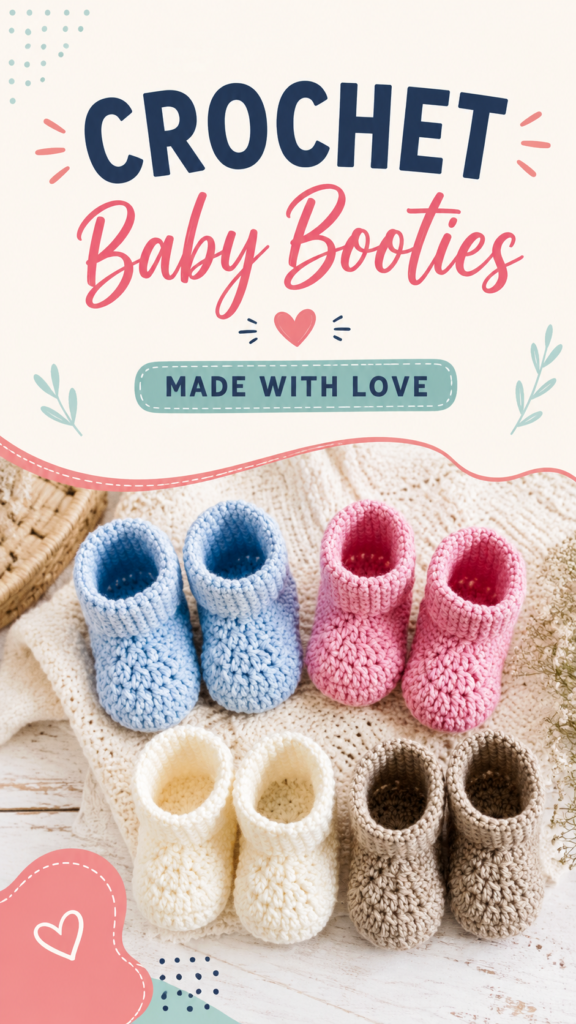
There is something especially charming about a pair of handmade crochet baby booties. Soft yarn, simple stitches, and thoughtful details come together to create tiny shoes that feel both practical and personal. The colorful booties shown here, arranged in gentle shades of blue, pink, cream, and taupe, are a wonderful source of inspiration for anyone who enjoys crochet or wants to make a thoughtful handmade baby gift.
Crochet baby booties are also an approachable project for crafters who want to practice shaping, working in rounds, and creating small wearable pieces. Their compact size means they can often be completed with relatively little yarn, while the variety of colors and stitch patterns gives you plenty of room to develop your own style.
Key Takeaways
- Crochet baby booties make charming handmade gifts for newborns and babies.
- Soft pastel colors create a timeless, gentle look that works beautifully for baby accessories.
- Simple crochet construction makes booties a rewarding project for practicing basic techniques.
- Choosing soft, comfortable yarn is just as important as choosing an attractive color.
- Small changes in edging, cuffs, colors, and stitch texture can create a completely different design.
Why Crochet Baby Booties Are Such a Lovely Handmade Project
Baby booties are one of those crochet projects that combine usefulness with creativity. Unlike a larger blanket or garment, a pair of booties is small enough to feel manageable while still offering plenty of opportunities to experiment with texture and color.
The four pairs pictured in the design demonstrate how much personality can come from color alone. The blue pair has a fresh, classic feel, while the pink pair feels playful and sweet. Cream gives a soft neutral appearance, and the taupe shade creates a more natural, understated option.
One of the biggest advantages of crochet baby booties is their versatility. You can create a coordinated pair for a baby shower gift, match the colors to a nursery palette, or make several pairs in different shades for a handmade baby wardrobe.
They can also become meaningful keepsakes. Handmade items often carry a sense of care that is difficult to reproduce with mass-produced accessories. Even a simple pair of crocheted shoes can become something a family remembers long after the baby has outgrown them.
Choosing the Right Yarn for Baby Booties
Yarn selection deserves attention when making anything intended for a baby. The finished booties should feel soft and comfortable rather than stiff, scratchy, or overly heavy.
Look for yarn that has a pleasant texture and is easy to work with. A smooth yarn can make stitch definition easier to see, which is particularly helpful when following a crochet pattern for the first time.
Color is another important part of the creative process. The image uses a beautiful combination of gentle blue, pink, ivory, and taupe. These shades work particularly well for crochet baby accessories because they create a calm, cozy appearance without overwhelming the small shape of the booties.
- Pastels: Ideal for a delicate, classic baby aesthetic.
- Neutrals: Great for a versatile pair that complements many outfits.
- Soft contrasting colors: Useful for creating playful cuffs, soles, or decorative details.
- Variegated yarn: Can add visual interest without requiring multiple yarn changes.
If you are making booties as a gift, neutral shades can be a practical choice when you do not know the recipient’s preferred colors. If you are creating them for a specific nursery theme, selecting one or two colors from the existing palette can make the finished project feel especially coordinated.
Understanding the Basic Shape of Crochet Baby Booties
Although crochet booties can look intricate, their basic structure is surprisingly approachable. Most designs are built by creating a sole, shaping the upper portion, and then adding the cuff or ankle section.
Start With the Sole
The sole establishes the overall footprint of the bootie. Crochet stitches are typically worked around a starting chain or another foundation structure, with increases used to create the rounded ends.
Keeping your stitches even at this stage is helpful because the sole provides the foundation for everything that follows. Count your stitches carefully, especially when working from a written pattern, because a small difference early in the project can affect the finished shape.
Build the Upper
Once the sole is established, the crochet work begins to rise around the sides. This is where the bootie starts to develop its recognizable shoe-like shape.
Depending on the pattern, shaping may involve changing stitch placement, reducing stitches, or working specific sections to create room around the toe. Texture can also be introduced here to make the booties visually more interesting.
Finish With a Comfortable Cuff
The taller cuffs visible in the pictured booties give them a cozy, sock-like appearance. A cuff can also help the bootie stay comfortably around the baby’s ankle when the design is worn.
Ribbed-looking stitches, simple rounds, or a folded edge can all produce different effects. Even a basic cuff can become a defining feature when you choose a contrasting yarn color.
Expert Insight
Small projects reward careful tension. If your stitches become noticeably tighter or looser from one section to another, the shape of a tiny bootie can change quickly. Take a moment to check your tension as you work instead of waiting until the final round.
Crochet Techniques That Make Booties Easier
Crochet baby booties are a useful way to build confidence with several foundational techniques. If you are relatively new to crochet, choose a pattern that explains its abbreviations and construction clearly.
- Creating a foundation chain
- Working single crochet and other basic stitches
- Increasing to shape rounded sections
- Decreasing to form the upper portion
- Joining rounds neatly
- Weaving in yarn ends securely
- Maintaining consistent stitch tension
Experienced crocheters can use baby booties as a quick way to explore more decorative stitches. A textured stitch can transform a simple design, while a contrasting cuff can make the booties look completely different without changing the basic construction.
For beginners, resist the temptation to make the design complicated too quickly. A clean silhouette with consistent stitches can look just as beautiful as a heavily decorated pattern, especially when paired with a lovely yarn color.
How to Create Your Own Color Combinations
The color arrangement in the image is a great reminder that baby crochet does not have to rely on a single traditional palette. Soft colors can be mixed and matched to create different moods while keeping the overall look gentle.
Soft Blue and White
A pale blue paired with cream or ivory creates a calm, airy combination. This works especially well when you want a timeless design that can coordinate with a wide range of baby clothing.
Blush Pink and Cream
Pink creates a cheerful and playful appearance. Combining it with cream can soften the contrast and keep the finished booties looking elegant rather than overly bright.
Taupe and Natural Neutrals
Taupe, beige, oatmeal, and warm gray are excellent choices for a modern neutral look. These colors can feel especially cozy when paired with textured stitches.
You can also use one main color and reserve a second shade for the cuff or edging. This simple approach creates contrast without making the project difficult.
Tips for Making Crochet Baby Booties Look Polished
Small handmade projects benefit from careful finishing. Because baby booties are compact, uneven edges or loose yarn tails can be more noticeable than they would be in a larger crochet project.
- Keep your tension consistent. Consistent stitches help both booties match in size and shape.
- Count your stitches. A quick stitch count can prevent shaping problems later.
- Compare the two booties. Place them side by side as you work to check that their proportions match.
- Secure your yarn ends. Weave them in carefully so the finished piece looks tidy.
- Pay attention to symmetry. The toe, cuff, and sole should have a balanced appearance.
- Keep embellishments practical. Avoid loose decorative pieces that could become unsafe for a baby.
A polished finish does not require complicated techniques. Neat joins, even edges, consistent sizing, and securely finished ends can make a simple crochet pattern look beautifully professional.
Why This Matters
- Baby booties are small, so stitch consistency has a noticeable effect on the final shape.
- A soft yarn and comfortable construction can make the finished accessory much more pleasant to use.
- Simple design choices often create a more timeless result than excessive decoration.
Crochet Baby Booties Make Thoughtful Handmade Gifts
A handmade pair of baby booties can be a wonderful addition to a baby shower gift basket or a small collection of newborn essentials. Because the project uses relatively little material compared with larger crochet makes, it is also an appealing choice when you want to create something personal without committing to a lengthy project.
Consider pairing the booties with another handmade item, such as a simple blanket, hat, or soft accessory. Keeping the colors coordinated can turn several small projects into a cohesive gift set.
You can also make several pairs in different shades. The four-color arrangement shown here demonstrates how attractive a simple design can become when presented in a small collection.
A particularly thoughtful approach is to personalize the color palette rather than adding lots of decoration. A favorite soft pink, muted blue, warm cream, or neutral taupe can make a simple pair feel intentionally chosen for the recipient.
Ideas for Personalizing Your Crochet Baby Booties
Once you are comfortable with the basic construction, there are plenty of ways to make the design your own while keeping its simple charm.
- Use a contrasting color for the cuff.
- Try a different neutral for the sole.
- Experiment with subtle stitch textures.
- Create matching pairs in several pastel colors.
- Adjust the cuff height for a different silhouette.
- Add a simple decorative crochet edge when appropriate.
The key is to make one change at a time. If you change the stitch pattern, yarn weight, size, and construction simultaneously, it can become difficult to understand why the finished bootie behaves differently from the original pattern.
A Simple Workflow for Your Next Pair
Having a clear workflow can make the project more enjoyable, especially when you are making matching booties. Start by selecting your yarn and reviewing the pattern from beginning to end before picking up your hook.
- Choose a soft yarn and a color palette.
- Check the recommended hook size and pattern instructions.
- Make the first sole while paying close attention to stitch counts.
- Shape the upper according to the pattern.
- Work the cuff and finishing rounds.
- Secure and weave in all loose ends.
- Make the second bootie, comparing it with the first as you go.
- Inspect the completed pair for loose ends, uneven edges, or other finishing issues.
This process keeps the project organized and helps you catch mistakes before they become difficult to correct. It also makes it easier to reproduce the same design in another color later.
How to Get More Inspiration From a Simple Design
The beauty of a classic crochet baby bootie pattern is that it can become a starting point rather than an endpoint. Once you understand the basic shape, you can begin noticing how small changes affect the finished result.
Look closely at the proportions of the sole, the height of the cuff, and the transition between the textured upper and the ankle section. These details can inspire new variations even when you continue using the same basic construction.
Saving several crochet baby bootie ideas together can also help you develop a personal design style. You might notice that you consistently prefer muted neutrals, bright pastels, ribbed cuffs, textured toes, or minimalist finishes.
Over time, those preferences can become the foundation for your own collection of handmade baby accessories.
Quick Points
- Choose soft, comfortable yarn.
- Keep stitch tension even.
- Use pastel or neutral colors for a timeless look.
- Check both booties for matching proportions.
- Finish every yarn end securely and neatly.
Final Thoughts on Crochet Baby Booties
Crochet baby booties are a wonderful example of how a small handmade project can have plenty of creative personality. The soft colors, cozy textures, and simple shoe-like shapes shown here make them especially appealing for crocheters looking for a project that is both useful and beautiful.
Whether you are an experienced crocheter or just beginning to explore handmade baby accessories, a pair of crochet baby booties offers an opportunity to practice essential skills while creating something genuinely special. Start with a straightforward pattern, choose a yarn you enjoy working with, and let the colors provide much of the visual interest.
Most importantly, enjoy the process. Handmade crochet does not need to be complicated to be meaningful. A carefully crafted pair of tiny booties, made with soft yarn and thoughtful color choices, can become a memorable gift and a satisfying project to keep returning to.
If these colorful crochet baby booties have inspired your next project, save the idea, choose your favorite palette, and pick up your hook. Your next adorable handmade pair could be just a few stitches away. 🧶💗