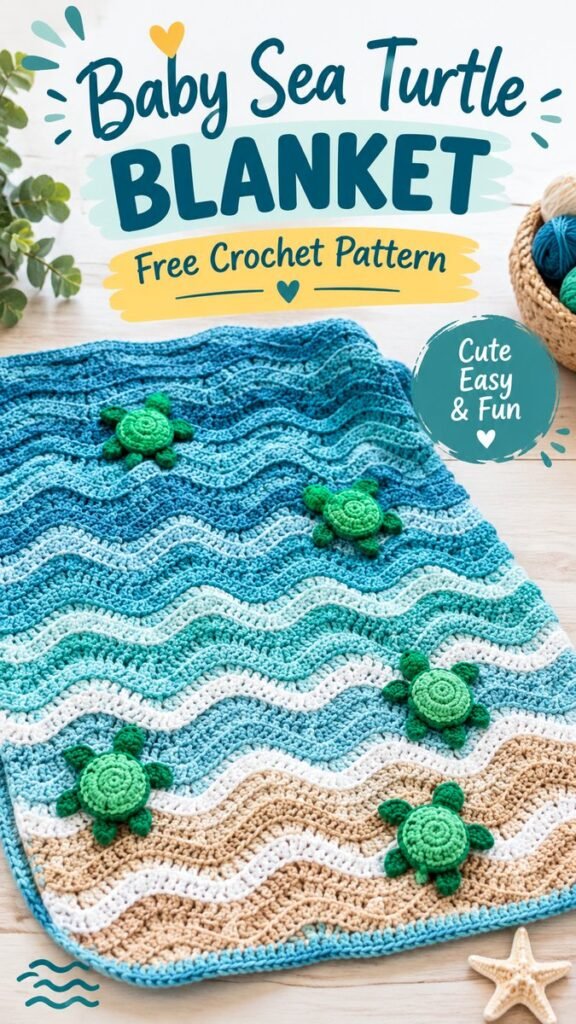
Few handmade projects feel as cozy and meaningful as a crocheted baby blanket. A soft blanket can add warmth to a nursery, create a beautiful layer for a stroller, or become a treasured handmade gift for a new baby. The design shown here combines gentle ocean-inspired colors, flowing wave-like rows, and adorable crocheted sea turtles to create a playful coastal look. If you are searching for free baby blanket patterns crochet enthusiasts can enjoy, this style offers plenty of inspiration for a relaxing and creative project.
The combination of turquoise, aqua, white, and sandy neutral tones gives the blanket a calm seaside character. The repeating waves add texture and movement, while the small turtle motifs create charming focal points across the surface. You can use the same general concept as inspiration while choosing your own yarn colors, stitch textures, blanket size, and decorative details.
Key Takeaways
- Wave-inspired crochet stitches create a beautiful ocean effect.
- Soft aqua, blue, white, and sandy shades work naturally together.
- Crocheted turtle appliques can turn a simple blanket into a playful nursery piece.
- Simple repeating rows make textured blanket designs enjoyable to customize.
- Choosing soft, baby-friendly yarn is an important part of creating a comfortable blanket.
Why Ocean-Inspired Baby Blankets Are So Charming
An ocean theme brings an instantly calming quality to handmade baby projects. Shades of blue naturally suggest water, while lighter stripes can resemble foam, waves, or a sandy shoreline. Adding little sea turtles makes the design feel playful without making it overly complicated.
One of the most appealing details of this style is the contrast between the structured crochet rows and the rounded turtle shapes. The blanket itself has a rhythmic appearance, while the turtles provide small areas of visual interest. This makes the finished piece attractive from a distance and rewarding to explore up close.
Ocean-inspired crochet also gives you plenty of freedom. You do not have to reproduce a particular color sequence or arrangement. Instead, think about the elements that make the theme recognizable: flowing lines, watery colors, sea-life motifs, and a relaxed coastal feeling.
Choosing Colors for a Crochet Baby Blanket
Color selection can completely change the personality of a baby blanket. For an ocean-inspired design, a palette built around blues and aquas is an easy starting point. You can combine several shades to create gentle movement between rows.
A darker teal can add depth, while medium blue provides the main ocean character. Pale aqua creates softness, and white or cream can separate groups of colors. A warm beige or sandy shade introduces contrast and makes the blanket feel more like a miniature beach scene.
When choosing yarn for free baby blanket patterns crochet projects, consider how the colors will look together across many repeating rows. A palette that looks attractive as individual skeins may appear very different once worked into a large blanket.
A Simple Coastal Palette
- Deep teal for visual depth
- Classic ocean blue for the main color family
- Soft aqua for lighter waves
- White or cream for contrast
- Warm beige for a subtle sandy accent
- Green shades for turtle details
Important: When making a blanket for a baby, prioritize soft, comfortable yarn and a fabric that feels pleasant against delicate skin. Washability is also a practical consideration because baby blankets can require frequent cleaning.
Creating the Wave-Like Crochet Texture
The flowing surface is one of the defining features of this blanket style. Rows rise and dip repeatedly, producing a wave effect that resembles the movement of water. This type of texture can make a relatively simple color sequence look much more dynamic.
Wave patterns are often created through carefully arranged increases and decreases. The exact stitch combination can vary from one crochet pattern to another, so it is useful to follow the instructions for your chosen design rather than assuming every ripple pattern is worked the same way.
For beginners, practicing the stitch sequence on a small swatch can make the main project much easier. A sample allows you to check your tension, understand how the peaks and valleys form, and see how your yarn colors interact before committing to a full blanket.
Keep Your Edges Consistent
Ripple blankets can become uneven when the stitch count changes accidentally. Counting stitches at the end of important rows can help maintain the intended shape. Keeping your tension reasonably consistent also helps the waves look balanced throughout the project.
If the blanket begins to narrow or widen unexpectedly, pause before continuing. Check your stitch count and compare the current row with the pattern instructions. Correcting a small mistake early is usually easier than discovering it several rows later.
Expert Insight
The beauty of a wave blanket comes from repetition. Rather than adding too many competing details, let the changing colors and rhythmic texture do most of the visual work. Small sea-life motifs can then stand out naturally against the patterned background.
Adding Crocheted Sea Turtle Motifs
The little turtles give this blanket its strongest decorative personality. Their rounded shells and small flippers contrast beautifully with the horizontal movement of the wave rows. Even a basic blanket can become more distinctive when decorated with a few handmade motifs.
You can approach the turtles as appliques added after the blanket is completed, or incorporate decorative elements according to the construction of the specific pattern you are following. Separate motifs can also make customization easier because you can decide how many turtles you want and where to position them.
Playing With Turtle Colors
Green is a natural choice for a sea turtle theme, but several shades can make the motifs more interesting. A darker green around the edges can create definition, while a lighter green in the center can emphasize the shell.
Keep the motifs visually connected by repeating one or two colors. If the blanket contains several shades of blue, a consistent green family for the turtles helps the decorations feel intentional rather than random.
Small details can make a big difference. A textured shell, contrasting border, or carefully positioned flippers can give each turtle a friendly handmade character. The goal is not necessarily perfect uniformity. Slight variations can make a handmade blanket feel even more personal.
How to Plan Your Baby Blanket Project
Before starting a full blanket, decide what you want the finished piece to accomplish. A small receiving blanket, crib blanket, stroller blanket, and larger nursery throw can all require different dimensions and amounts of yarn.
- Choose the blanket size. Decide whether you want a compact baby blanket or a larger piece for growing use.
- Select your yarn. Look for a soft, washable option appropriate for baby projects.
- Plan the color sequence. Write down the order of your shades before beginning long repeating sections.
- Make a swatch. Use it to check your tension and become familiar with the stitch pattern.
- Work in sections. Repeating rows can be easier to manage when you establish a comfortable rhythm.
- Add decorative motifs. Position turtles or other ocean-inspired details once you know how they complement the finished surface.
Making Free Baby Blanket Patterns Crochet Projects Beginner-Friendly
Not every beautiful crochet blanket requires advanced techniques. Repeating stitch patterns can become much easier once you understand their rhythm. If you are new to crochet, look for a pattern with clear row instructions and a manageable stitch repeat.
It can also help to mark the beginning of rows or use a stitch counter. These simple habits reduce the chance of losing your place, especially when several colors are involved.
Another helpful approach is to separate the learning process from the final project. Practice the main stitch pattern with leftover yarn first. Once the movement of the stitches feels natural, start the actual blanket.
Pro Tip: Keep a small project note beside your yarn with the current row, color, and any pattern changes. This makes it much easier to return to the blanket after a break without having to figure out where you stopped.
Ideas for Personalizing an Ocean Baby Blanket
The sea theme can be adapted in many creative ways. You could make the blanket more colorful with coral-inspired pinks, introduce soft yellow for a sunny beach feel, or use mostly neutral shades for a subtle nursery aesthetic.
Sea turtles are only one possible motif. Depending on the style and skill level of your chosen pattern, you might explore additional coastal-inspired decorations such as simple shells, starfish, waves, fish, or bubbles.
For a personalized baby gift, consider using colors that coordinate with the nursery. Soft blue and cream can create a classic look, while mint, pale aqua, and beige can feel modern and gentle. A limited palette can be just as beautiful as a highly colorful design.
Keep Decorative Details Practical
When creating a baby blanket, decorative additions should be securely attached and thoughtfully placed. Avoid loose embellishments that could detach easily. The finished blanket should remain comfortable, functional, and easy to care for.
Great Occasions for a Handmade Crochet Blanket
A handmade baby blanket can be a thoughtful project for many occasions. The ocean-inspired design works especially well as a baby shower gift because it feels both decorative and practical.
- Baby shower gifts
- New baby presents
- Nursery decoration
- Handmade keepsakes
- Stroller and outing blankets
- Personal crochet projects for expecting families
A handmade item also gives you an opportunity to add personal meaning through color choices and design details. Even when using a free crochet pattern as a starting point, your yarn selection, tension, finishing choices, and decorative arrangement can make the finished blanket uniquely yours.
Finishing Your Crochet Baby Blanket
Once the final row is complete, take time to inspect the blanket carefully. Check the edges, weave in loose yarn ends securely, and make sure any decorative motifs are firmly attached.
Blocking may help certain crochet fabrics settle into a more even shape, depending on the yarn and stitch pattern. Always consider the care instructions for your chosen fiber before washing or blocking.
A gentle final wash can also help prepare a handmade baby blanket for use. Follow the yarn manufacturer’s care recommendations, especially if the blanket is intended for frequent washing.
Quick Points
- Use a soothing coastal color palette.
- Practice ripple stitches before beginning the full blanket.
- Use small turtle motifs for a playful finishing touch.
- Keep yarn and decorative details suitable for baby use.
- Save your favorite free crochet patterns for future handmade gifts.
Final Thoughts on Free Baby Blanket Patterns Crochet
A wave-inspired baby blanket with sea turtle details is a wonderful example of how simple crochet elements can work together to create a memorable handmade design. The flowing rows bring texture and movement, the ocean colors create a peaceful atmosphere, and the little turtles add personality.
If you are exploring free baby blanket patterns crochet projects, use this style as inspiration for your own creative direction. Experiment with ripple textures, combine shades of blue with soft neutrals, and add carefully chosen motifs to make the blanket feel special.
The most rewarding part of making a handmade baby blanket is the opportunity to create something with both beauty and purpose. Whether you are an experienced crocheter or learning one stitch at a time, a thoughtfully planned blanket can become a meaningful gift that brings comfort for years to come. Pick your favorite yarn, choose a calming color palette, and enjoy watching each row transform into a cozy ocean-inspired keepsake.
Tags
Free Baby Blanket Patterns Crochet Baby Blanket Baby Blanket Crochet Free Crochet Patterns Crochet Baby Gifts Sea Turtle Crochet Ripple Crochet Blanket Easy Crochet Blanket