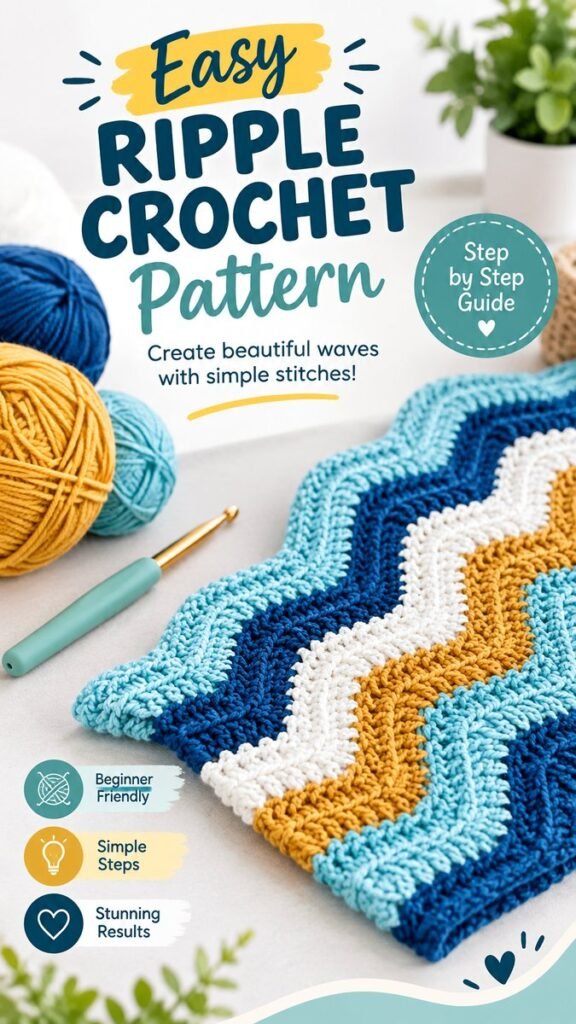
If you love colorful handmade blankets but want a project that feels simple, relaxing, and rewarding, an easy ripple crochet pattern free is a wonderful place to start. Ripple crochet creates beautiful waves across the fabric using repeating stitches, making even a simple color combination look wonderfully textured and eye-catching. The design shown here pairs soft aqua, deep blue, warm mustard, and cream for a fresh modern look that works beautifully for cozy blankets and throws.
Key Takeaways
- Ripple crochet is a great way to create striking wave patterns with repeating stitches.
- A simple color palette can make a handmade crochet blanket look polished and modern.
- Consistent stitch tension helps keep the ripple pattern neat and balanced.
- Color changes can be planned in stripes for a bold or soft visual effect.
- This style works especially well for cozy blankets, throws, baby projects, and handmade gifts.
What Makes an Easy Ripple Crochet Pattern So Appealing?
Ripple crochet is popular because it creates movement without requiring an overly complicated design. Instead of working a completely flat row, increases and decreases are arranged in a repeating rhythm. These changes create peaks and valleys that travel across the project like gentle waves.
The finished effect can look much more intricate than the stitching process actually feels. Once the repeating sequence becomes familiar, the rhythm can be relaxing to work. This makes a free ripple crochet pattern particularly appealing to crocheters who enjoy projects that are easy to pick up and continue over several sessions.
Important: Ripple crochet depends heavily on maintaining the same stitch pattern throughout each row. Counting carefully during the first few rows can save a lot of time later and help keep every wave aligned.
Choosing Colors for a Ripple Crochet Blanket
One of the most enjoyable parts of making a ripple blanket is selecting the color palette. The example features a lively combination of aqua, navy blue, white, and golden mustard. Together, these shades create contrast while still feeling warm and inviting.
You do not need to copy the exact colors to achieve a similar sense of balance. Instead, think about combining one light shade, one darker contrast color, one neutral, and one accent shade. This approach makes it easier to create a coordinated blanket without making the design feel too busy.
Try a Four-Color Palette
- Light shade: Aqua, sky blue, soft pink, or pale green can brighten the design.
- Dark shade: Navy, charcoal, forest green, or burgundy can define the waves.
- Neutral: Cream, ivory, beige, or white can give the eyes a visual break.
- Accent: Mustard, coral, lavender, or another warm shade can add personality.
Alternating these colors in consistent stripe sections can make the ripple pattern especially noticeable. For a softer appearance, use several closely related shades. For a bolder blanket, choose stronger contrasts between neighboring stripes.
Understanding the Ripple Stitch Rhythm
The defining feature of ripple crochet is the repeated sequence of increases and decreases. In simple terms, stitches are added in certain areas to create peaks and reduced in other areas to form valleys. Repeating that structure across the row produces the characteristic wave.
The exact stitch combination can vary depending on the pattern. Some designs use basic stitches, while others introduce variations for a deeper or more decorative texture. The important part is following the chosen stitch sequence consistently rather than improvising once the pattern begins.
Start With a Manageable Size
If you are new to ripple crochet, consider starting with a smaller project. A lap blanket, baby blanket, or decorative throw can give you enough space to practice the wave formation without committing immediately to a very large project.
A smaller project also makes it easier to identify tension issues. If the waves become uneven, you can spot the problem sooner and adjust your technique before continuing for many rows.
Expert Insight
A ripple blanket looks its best when the peaks and valleys remain consistent from one row to the next. If your edges begin to slant unexpectedly, stop and check your stitch count before continuing. Correcting a small mistake early is much easier than repairing several completed rows.
How to Keep Your Ripple Crochet Neat
Even an easy crochet pattern benefits from a little preparation. Before beginning, make sure you understand the basic stitches used in the pattern and know how the increases and decreases are arranged. A small practice swatch can help you become comfortable with the rhythm.
Watch Your Tension
Tension affects the appearance and dimensions of a crochet project. If your stitches become much tighter or looser from row to row, the waves may look uneven. Try to hold the yarn and hook comfortably rather than forcing each stitch into exactly the same physical shape.
Count the Stitches
Counting is especially useful when learning ripple crochet. The repeated pattern may feel predictable, but one missed increase or decrease can shift the shape of the waves. Counting at the end of each row gives you a simple checkpoint before starting the next one.
Keep the Edges in Check
The edges of a ripple blanket can sometimes reveal a tension or counting issue before the center does. If one side starts becoming noticeably wider or narrower, pause and review the previous row. Maintaining the correct stitch count is one of the easiest ways to create a professional-looking finished piece.
Pro Tip: Keep your yarn balls organized when working multiple colors. Separating each shade before you begin makes stripe changes smoother and reduces the chance of accidentally using the wrong color sequence.
Easy Ways to Customize Your Ripple Blanket
A ripple crochet design is easy to personalize. You can change the size, colors, stripe widths, and overall mood while keeping the basic wave concept. This flexibility makes ripple crochet useful for everything from understated home decor to bright handmade gifts.
- Change the width: Adjust the starting size according to whether you want a small throw or a larger blanket.
- Experiment with stripes: Use narrow color changes for a lively effect or wider sections for a calmer look.
- Use a neutral background: Cream or white can make colorful ripple stripes stand out beautifully.
- Try tonal shades: Several shades of one color can create a subtle, sophisticated wave effect.
- Add a simple border: A clean border can frame the finished waves and give the blanket a polished appearance.
Project Ideas for Ripple Crochet
Once you are comfortable with the stitch rhythm, there are plenty of ways to use the technique. A ripple crochet blanket is the obvious choice, but the wave pattern can inspire many other handmade projects.
- Cozy living room throws
- Baby blankets
- Lap blankets for relaxing evenings
- Colorful handmade gifts
- Decorative bedroom blankets
- Seasonal crochet projects using themed colors
The visual texture also makes ripple blankets particularly attractive when photographed. Strong color contrast emphasizes the waves, while softer palettes create a calm and cozy handmade aesthetic.
Making the Process More Enjoyable
Crochet projects become much easier to enjoy when the setup is comfortable. Keep your yarn within easy reach, choose a hook that feels comfortable in your hand, and work in a space with enough light to see your stitches clearly.
It can also help to complete a few rows before deciding whether you love your color combination. Yarn colors can look different once they are worked into stitches, so seeing the ripple effect develop gives you a better sense of the finished appearance.
Most importantly, give yourself permission to work at your own pace. Ripple crochet is particularly satisfying because the repeated rhythm allows you to settle into the project as the waves gradually build across the fabric.
At a Glance
- Choose a simple repeating ripple stitch pattern.
- Plan a balanced palette before starting.
- Check stitch counts regularly.
- Keep your tension comfortable and consistent.
- Customize stripe widths and blanket size to suit your project.
Final Thoughts on Easy Ripple Crochet
An easy ripple crochet pattern free project is a lovely combination of simplicity and visual impact. The repeating waves provide enough structure to make the project engaging, while the color possibilities allow you to create something that feels completely personal.
The colorful ripple blanket style shown here demonstrates how a few carefully chosen shades can transform a straightforward crochet technique into a striking handmade piece. Whether you are learning crochet for the first time or simply looking for a relaxing blanket project, ripple crochet offers plenty of room to experiment.
Start with a manageable size, keep your stitch count consistent, and enjoy watching each new row bring another wave to life. Once you find a color combination you love, this classic technique can become a favorite for blankets, gifts, and cozy home projects.
Tags
Easy Ripple Crochet Ripple Crochet Pattern Free Crochet Pattern Crochet Blanket Crochet for Beginners Colorful Crochet DIY Crochet Ideas