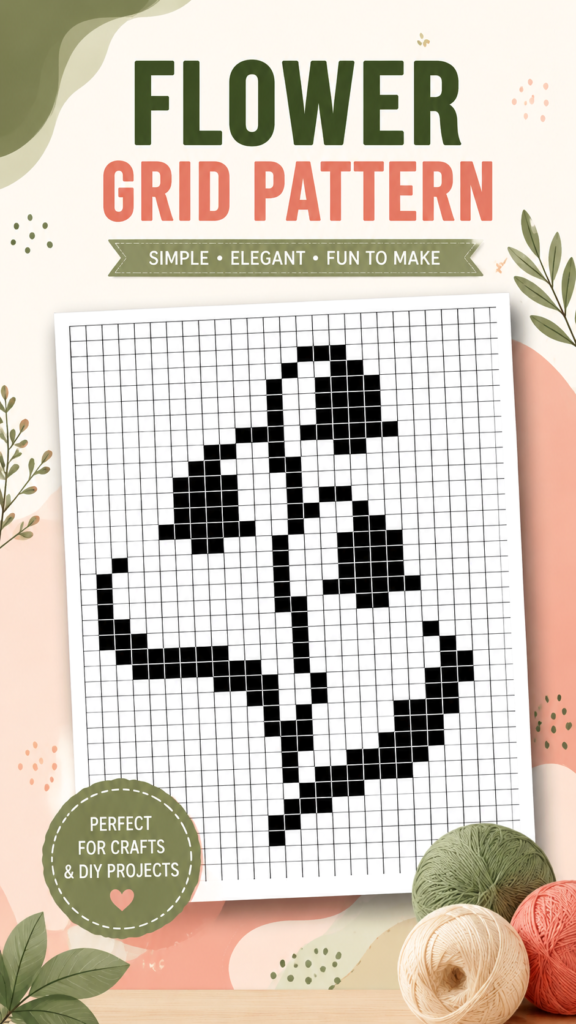
Easy filet crochet is a wonderful way to turn a simple crochet grid into an elegant floral design. By working with filled and open squares, you can create a picture that looks detailed and decorative while relying on a repeating, easy-to-follow structure. The floral motif shown here is a great example of how a crochet chart can guide every stitch without requiring a complicated collection of techniques.
Filet crochet is especially appealing to beginners because the design is built from a visual grid. Instead of memorizing a long sequence of stitches, you can work across the chart and watch the pattern develop row by row. The result can be used for crochet blankets, runners, decorative panels, home accents, and handmade gifts.
Key Takeaways
- Filet crochet uses open and filled spaces to create a recognizable image.
- A crochet grid makes floral motifs easier to follow visually.
- Simple patterns can be adapted for blankets, runners, panels, and decor.
- Consistent tension helps keep the finished grid neat and balanced.
- Light-colored yarn can make the pattern especially delicate and airy.
What Makes Easy Filet Crochet So Appealing?
One of the best things about easy filet crochet is the balance between simplicity and visual impact. The individual stitches may be familiar, but when they are arranged according to a chart, they create a recognizable image. Floral patterns are particularly effective because leaves, petals, stems, and blossoms can all be represented through carefully placed blocks.
The grid shown in this style of pattern acts almost like a map. Each square represents part of the overall design, allowing you to concentrate on a small section rather than trying to understand the entire picture at once. This makes filet crochet an approachable option for crocheters who enjoy chart-based projects.
The clean geometric structure also gives filet crochet a timeless appearance. A floral motif can feel traditional, modern, rustic, or minimalist depending on the yarn color, finished size, and project where it is used.
Understanding the Floral Crochet Grid
A filet crochet chart is generally made from a series of squares arranged in rows and columns. Some squares are left open while others are filled. The combination of these spaces forms the picture.
In a floral design, filled squares can define the outline of petals, leaves, stems, or other botanical details. Open squares create the background and allow the motif to stand out. When you look at the complete chart, the image becomes much easier to recognize than it may seem from any individual row.
The numbered edges of the grid are useful for keeping track of your position. If you lose your place, you can return to the row and column you were working on rather than guessing where the next section belongs.
Important: Treat the chart as your visual roadmap. Before starting a large project, spend a few minutes understanding how the open and filled spaces are arranged. A clear understanding of the grid can prevent repeated mistakes later.
How to Read an Easy Filet Crochet Pattern
Reading a crochet chart can feel intimidating at first, but a grid-based filet design is often easier to understand once you recognize its visual logic. Instead of focusing on the complete flower immediately, break the design into manageable sections.
Start With the Row Direction
Determine where the first row begins and how the rows progress. The numbers around a chart provide useful orientation, especially when the design is symmetrical or when several rows contain similar sections.
Work methodically from one side to the other. Avoid jumping around the chart simply because one section looks easier. Following the row order will make it much easier to maintain the correct shape.
Identify Open and Filled Spaces
The central idea of filet crochet is the contrast between empty and filled sections. Once you understand how the chart represents those two areas, the rest of the design becomes much more approachable.
Look at a few consecutive rows before beginning. Notice where the filled blocks expand, narrow, or shift. These changes are what create the curves and angles of the floral motif.
Check Your Work Frequently
After completing several rows, compare your crochet with the chart. Checking regularly is much easier than discovering a mistake after a large section has been completed.
If something does not look right, pause and compare the completed rows with the corresponding chart rows. Small corrections made early can save considerable time.
Choosing Yarn for Filet Crochet
Yarn choice can dramatically influence the final appearance of a filet crochet design. A smooth yarn with consistent thickness makes the grid easier to see and helps the floral motif maintain its clean shape.
Light or neutral colors are particularly attractive for delicate botanical patterns because they emphasize the open spaces. White, cream, beige, soft green, pale pink, and other gentle shades can create an airy decorative effect.
For a more contemporary look, you can experiment with stronger colors. The same grid-based flower can take on an entirely different personality when worked in a rich green, terracotta, dusty rose, blue, or another favorite shade.
When selecting yarn, consider the final purpose of the project. A decorative wall panel may call for a different yarn choice than a blanket or table runner. Always consider softness, durability, drape, and how clearly the stitch structure will show.
Keeping Your Crochet Grid Neat
Consistent tension is one of the most important details in a successful filet crochet project. Because the design depends on repeated squares, uneven tension can make some sections look wider or narrower than others.
Try to maintain a relaxed and steady grip on your hook. Avoid pulling every stitch extremely tight. A consistent rhythm will generally produce a more uniform fabric and make the chart easier to interpret as you work.
Pro Tip: If your project is growing unevenly, do not automatically assume the chart is the problem. Count your spaces and compare your row width before continuing. Consistent stitch tension and regular counting are two of the easiest ways to keep a filet crochet design on track.
Easy Filet Crochet Project Ideas
A floral grid pattern can be used in far more ways than a single finished square. Once you understand the chart, you can imagine many creative applications for the motif.
Floral Crochet Blankets
Repeated floral motifs can become the foundation for a beautiful blanket. You can work one large design or combine multiple smaller panels. Repetition gives the finished piece a cohesive appearance while allowing you to enjoy the relaxing rhythm of chart-based crochet.
Decorative Table Runners
Filet crochet is naturally suited to decorative textiles. A floral runner can add handmade character to a dining table, console, shelf, or other surface. The open structure also creates a light visual effect rather than making the piece appear overly heavy.
Crochet Wall Decor
A finished floral panel can be displayed as handmade artwork. Stretching the crochet carefully and mounting it within a simple frame can emphasize the geometry of the grid and turn the motif into a decorative statement.
Handmade Gifts
Floral crochet designs also make thoughtful handmade gifts. A small decorative piece can be personalized through yarn color and finished size, making the project suitable for someone who appreciates handmade home accents.
Tips for Beginners Trying Filet Crochet
If you are new to crochet charts, begin slowly. There is no need to rush through a floral pattern simply because the finished image looks complicated. The beauty of filet crochet is that a complex-looking picture can be built from repeated, understandable sections.
- Choose a smooth yarn that makes your stitches easy to see.
- Use a hook size appropriate for your selected yarn.
- Keep the chart nearby while you work.
- Mark your current row if you are likely to lose your place.
- Count regularly rather than waiting until the end of the project.
- Practice on a small swatch before committing to a larger design.
- Keep your tension relaxed and consistent.
Why This Matters
The most valuable skill in filet crochet is not speed. It is learning to translate a visual grid into consistent stitches.
- Work a few rows at a time and check your progress.
- Use counting as a tool rather than relying only on the appearance of the fabric.
- Keep the chart aligned with your current row to reduce confusion.
How to Make the Design Your Own
Once you feel comfortable with the basic grid, there are plenty of ways to personalize a filet crochet flower. Changing the yarn color is the easiest option, but you can also experiment with scale, repetition, and placement.
For example, a single floral motif can become a small decorative panel, while several motifs can be arranged into a larger textile. Alternating floral and geometric sections can also create visual rhythm.
Color provides another opportunity for creativity. A monochromatic design can have a classic and understated appearance, while contrasting colors can make individual filled sections much more noticeable.
If you are designing your own chart, begin with a simple silhouette rather than a highly detailed picture. Grid-based designs work best when the important shapes remain recognizable after being translated into squares.
Common Mistakes to Avoid
Even an easy filet crochet pattern can become frustrating when small errors accumulate. Fortunately, most common problems are easy to prevent with a little organization.
Skipping the Count
It can be tempting to work from memory once a section begins to repeat. However, counting helps maintain the exact structure of the chart, particularly around changes in the floral outline.
Losing Your Row
Because multiple rows can look similar, losing your position is one of the easiest ways to create an accidental change in the motif. Use a simple marker, pencil, or removable note to identify the row you are currently working on.
Ignoring Finished-Row Width
If the edges of your work are gradually becoming uneven, stop and investigate before continuing. Compare the width of your rows and check whether your stitch count has changed.
Making Filet Crochet a Relaxing Craft
One reason crochet chart projects are so enjoyable is their repetitive nature. Once the basic structure becomes familiar, you can settle into a steady rhythm. The grid gives you a clear destination, while each completed row provides a small sense of progress.
For beginners, this can be a satisfying way to build confidence. Instead of tackling a complicated three-dimensional project immediately, you can focus on precision, counting, tension, and chart reading. Those skills can transfer naturally to many other crochet patterns.
There is also something rewarding about watching an image appear gradually. At the beginning, the fabric may look like a collection of simple stitches. As more rows are completed, the floral shape begins to emerge and the purpose of each open and filled section becomes clear.
At a Glance
- Use a grid to follow the floral motif row by row.
- Keep stitch tension consistent for an even design.
- Count spaces frequently to catch mistakes early.
- Experiment with yarn colors and finished project sizes.
- Use the motif for blankets, runners, panels, decor, or gifts.
Conclusion
Easy filet crochet is a beautiful example of how simple crochet structures can create impressive visual designs. A carefully arranged grid transforms open and filled spaces into a recognizable floral motif, giving beginners an approachable way to explore chart-based crochet while still offering plenty of room for creativity.
Whether you are making your first filet crochet project or looking for fresh inspiration for a larger handmade piece, the key is to work patiently and consistently. Read the grid carefully, count your spaces, maintain even tension, and check your progress as you go.
The floral theme shown here is especially versatile, but the same principles can be applied to countless crochet chart designs. Once you become comfortable reading the grid, you can experiment with different motifs, yarn colors, sizes, and project ideas. Keep your favorite patterns close, practice one row at a time, and enjoy watching your design take shape.