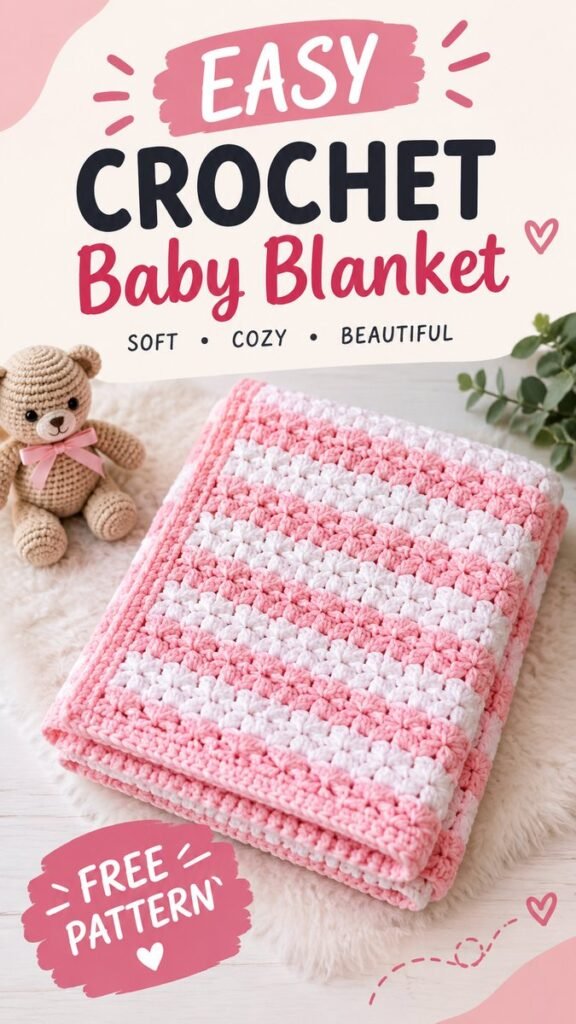
A double crochet baby blanket is one of those timeless crochet projects that feels both simple and special. With an easy stitch pattern, soft yarn, and a gentle color combination, you can create a cozy handmade blanket that is beautiful enough for a nursery and practical enough for everyday use. The classic pink-and-white look shown here gives the blanket a soft, cheerful character, while the straightforward rows make this style especially appealing to beginners.
Key Takeaways
- Double crochet creates a simple, attractive texture that is easy to repeat.
- Soft pink and white yarn create a classic baby-friendly color palette.
- Simple row construction makes this a comfortable project for beginners.
- Color changes can add gentle stripes without making the pattern complicated.
- A neat border can give the finished blanket a polished, gift-ready appearance.
Why a Double Crochet Baby Blanket Is a Great Beginner Project
When learning crochet, it helps to choose a project that teaches an important stitch while keeping the construction manageable. A double crochet baby blanket fits that goal beautifully. The stitch is one of the most commonly used crochet stitches, and repeating it across rows allows you to practice tension, turning chains, counting, and consistent edges.
The finished fabric also grows relatively quickly compared with projects that use very small stitches. That means you can see your progress after only a few rows. For a new crocheter, watching the blanket become wider and longer can be wonderfully motivating.
Another advantage is versatility. The same basic double crochet technique can create a simple solid-color blanket, a striped design, a two-tone pattern, or a more decorative version with a contrasting border. You do not need an elaborate stitch combination to make something attractive.
Important: For a baby blanket, comfort and practicality matter just as much as appearance. Choose a soft, washable yarn and keep decorative additions secure and minimal, especially if the blanket will be used by a young baby.
Choosing Yarn for an Easy Crochet Baby Blanket
Yarn selection can make a major difference in how enjoyable your project is to crochet and how comfortable the finished blanket feels. For a baby blanket, look for yarn described as soft, gentle, and easy to care for. Machine-washable options are particularly convenient because baby blankets can require frequent cleaning.
A light pink and white combination gives this design its soft, traditional appearance, but you can easily adapt the palette to suit a nursery or recipient. Cream, pale blue, sage green, lavender, beige, peach, and soft yellow can all create a similarly gentle effect.
Think About Color Before You Start
If you want a blanket with a look similar in spirit to the pictured design, consider using a main light shade with a second color for occasional horizontal stripes. Keeping the colors within the same soft family helps the blanket feel cohesive.
For a particularly clean appearance, use one color for most rows and introduce the accent color at regular intervals. You can also alternate colors every few rows for a stronger striped effect.
How Much Yarn Should You Buy?
The amount of yarn needed depends on the finished dimensions, yarn weight, crochet hook, stitch tension, and number of colors. Instead of relying on a single universal quantity, check the yarn label and compare its recommended yardage with the size of blanket you want to make.
If you are planning stripes, it is wise to have enough of every color before beginning. Buying an extra skein of the main color can also help prevent an unexpected shortage if your tension changes during the project.
Basic Supplies for a Double Crochet Baby Blanket
You do not need a large collection of tools for this project. A comfortable hook and suitable yarn are the most important supplies.
- Soft baby-friendly yarn: Choose a washable yarn in your preferred colors.
- Crochet hook: Select a hook appropriate for your yarn weight and adjust if needed to achieve comfortable tension.
- Yarn needle: Useful for weaving in yarn ends neatly after color changes.
- Scissors: Keep a sharp pair nearby for clean yarn cuts.
- Stitch markers: Optional, but helpful when checking edges or counting repeated sections.
A measuring tape is also useful. Measuring periodically helps you keep the blanket close to your intended size instead of discovering at the end that the dimensions are significantly different from what you expected.
Understanding the Double Crochet Stitch
The double crochet stitch is a foundational crochet stitch with a taller profile than single crochet. It produces a fabric with visible rows and a pleasant drape, making it a popular choice for blankets, scarves, garments, and home accessories.
To make a standard US double crochet, yarn over, insert the hook into the indicated stitch, yarn over and pull up a loop, then yarn over and pull through two loops twice. Once this motion becomes familiar, you can work across a row with a steady rhythm.
Practice Your Tension First
Before beginning the entire blanket, make a small swatch. This gives you a chance to practice the double crochet stitch and see how your yarn and hook work together.
If your stitches are very tight, the fabric may feel stiff. If they are extremely loose, the blanket may become too open or difficult to keep square. A relaxed, consistent tension generally produces a more even result.
Expert Insight
For a neat blanket, consistency is often more important than speed. Keep your hands relaxed, avoid pulling the working yarn too tightly, and check the width every few rows. Small corrections early are much easier than fixing uneven edges later.
Planning the Size of Your Crochet Baby Blanket
Baby blankets come in many sizes, so there is no single dimension that works for every project. A small receiving-style blanket may be convenient for wrapping, while a larger version can be useful in a crib, stroller, or nursery setting.
Decide what you want the blanket to be used for before you make your starting chain. This makes it easier to choose the appropriate width and length.
- Choose the approximate finished width.
- Make a foundation chain that gives you the desired starting width.
- Work the first double crochet row carefully and count your stitches.
- Repeat the rows until the blanket reaches your preferred length.
- Finish with a tidy border if desired.
Because crochet tension varies from person to person, measuring the actual fabric is more reliable than assuming your blanket will reach a particular size after a certain number of rows.
Creating Soft Stripes With Color Changes
The pink-and-white appearance of this blanket demonstrates how much visual interest can come from simple color changes. You can keep the stitch pattern exactly the same while changing colors at selected points.
For subtle stripes, work several rows in your main color, then add one or two rows in an accent color. Return to the main color and repeat the sequence. This creates a calm horizontal rhythm without requiring complicated stitchwork.
Another option is to make wider blocks of color. This approach uses fewer yarn changes and creates a more modern appearance. You can also place the accent color only around the edges for a minimalist design.
Keeping Stripes Even
Write down your color sequence as you work. Even a simple note such as “main color, main color, accent, main color” can prevent mistakes when you put the project down for a few days.
When changing colors, leave enough yarn to weave in securely later. Neatly finished yarn ends help the blanket maintain its appearance through regular use and washing.
How to Keep Your Blanket Edges Straight
One of the biggest challenges beginners encounter with crochet blankets is uneven edges. This usually happens because stitches are accidentally added or skipped at the beginning or end of rows.
Count your stitches regularly, especially during the first several rows. If every row should contain the same number of double crochets, checking that number can quickly reveal a problem.
Pay close attention to the turning chain. Depending on the pattern instructions, the turning chain may or may not count as a stitch. Follow one consistent method throughout the project rather than changing your approach halfway through.
It can also help to place a stitch marker in the first or last stitch of a row. This is particularly useful when working quickly or when the edges become harder to see as the blanket grows.
Adding a Simple Crochet Border
A border can transform a basic double crochet baby blanket into a more finished-looking piece. It can help frame the stripes, add structure around the edges, and give the project a polished appearance.
For a simple finish, consider working a round of single crochet around the entire blanket. If you prefer a slightly more decorative edge, you can experiment with additional rounds or a simple repeating edging.
Choose a border color that complements the blanket rather than competing with it. White can create a crisp finish around pastel stripes, while the accent color can create a stronger frame.
Pro Tip: Work the first border round slowly and pay attention to the corners. Adding enough stitches around each corner helps the border lie flat instead of pulling or curling.
Simple Ways to Personalize a Baby Blanket
The beauty of a basic double crochet baby blanket is that it gives you a flexible foundation for personalization. You can change the colors, dimensions, border, or finishing details while keeping the central stitch pattern simple.
Try Different Color Palettes
Pastel shades create a soft traditional look, but you are not limited to pink and white. Try cream and sage for a calm natural palette, lavender and white for a gentle contrast, or blue and cream for a classic nursery-inspired combination.
Experiment With Stripe Width
Changing the number of rows in each color can completely alter the character of the blanket. Thin stripes feel delicate and playful, while wider blocks of color can look clean and contemporary.
Keep Embellishments Practical
Small decorative touches can be charming in photographs, but a blanket intended for a baby should prioritize safety and durability. Avoid loose decorations or small pieces that could detach. A beautiful stitch pattern, thoughtful color palette, and neat border are often more than enough.
Finishing Your Handmade Blanket
When you reach the desired length, take a little extra time to finish the project carefully. Fastening off securely is only the first step. The yarn tails should be woven into the fabric with a yarn needle so they remain concealed and secure.
After weaving in the ends, gently inspect the entire blanket. Look for loose stitches, missed color changes, uneven edges, or areas that may need a little adjustment.
If the yarn label provides care instructions, follow them when washing or preparing the blanket. A gentle wash and appropriate drying method can help preserve the softness and shape of the finished crochet piece.
Why Handmade Baby Blankets Make Meaningful Gifts
A handmade crochet baby blanket has a personal quality that makes it especially memorable as a gift. Even a simple pattern represents hours of thoughtful work, from choosing yarn and colors to creating every row by hand.
This type of blanket can be a lovely choice for a baby shower, new arrival, nursery decoration, or keepsake. The straightforward design also makes it easy to coordinate with different nursery styles.
If you are making one as a gift, consider starting early. Crochet projects often take longer than expected when life gets busy. Giving yourself plenty of time allows you to work at a comfortable pace and finish the edges carefully.
At a Glance
Quick Points
- Use a soft, washable yarn for a practical baby blanket.
- Practice double crochet tension with a small swatch first.
- Count stitches regularly to keep the edges straight.
- Use gentle color changes to create simple, attractive stripes.
- Finish with a secure border and carefully woven-in yarn ends.
Conclusion: A Simple Blanket With a Beautiful Finish
A double crochet baby blanket proves that an easy stitch pattern can create something truly special. The combination of repeated double crochet rows, soft yarn, gentle colors, and a neat finish creates a timeless handmade piece without requiring an advanced crochet skill set.
Whether you follow a simple two-color stripe plan or personalize the design with your own palette and border, the basic approach remains approachable and rewarding. Take your time with tension, count your stitches, and check the shape as you go. Those small habits can make a noticeable difference in the finished blanket.
Most importantly, enjoy the process. Crochet is as much about the experience of making as it is about the final result. A soft handmade baby blanket can become a thoughtful gift, a cozy nursery accent, and a lasting reminder of the care that went into every row.
Ready to crochet? Gather your soft yarn, choose a calming color combination, and start with a simple double crochet swatch. Once your rhythm feels comfortable, your baby blanket can grow row by row into a cozy handmade favorite.