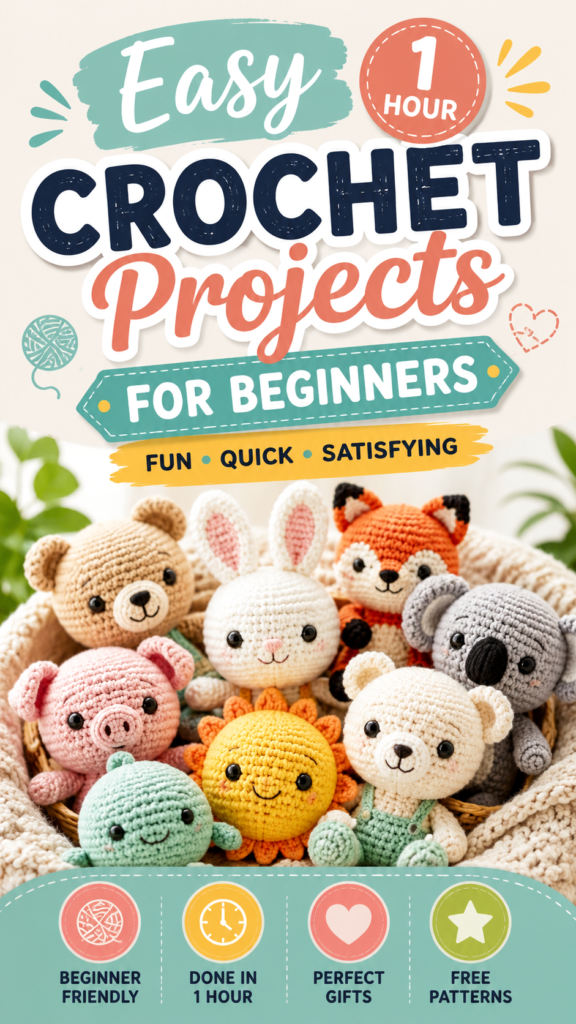
Crocheting cute animals is one of the most enjoyable ways to build confidence with yarn and a hook. From round bunnies and teddy bears to cheerful foxes, pigs, koalas, and other tiny characters, beginner crochet animals combine simple shapes with plenty of personality. These projects are especially appealing because every finished piece feels like a small accomplishment, whether it becomes a handmade gift, nursery decoration, desk companion, or part of a growing amigurumi collection.
The best part is that beginner-friendly crochet animals do not need to be complicated. Many designs are built around a handful of basic stitches, easy increases and decreases, and small individual pieces that are assembled at the end. Once you understand the structure, you can begin experimenting with colors, facial details, accessories, and different animal shapes.
Key Takeaways
- Beginner crochet animals are often made from simple shapes and repeatable stitch patterns.
- Small amigurumi projects are excellent for practicing increases, decreases, counting, and working in rounds.
- Choosing smooth yarn and clear colors can make it easier to see each stitch.
- Simple faces and minimal details often create the cutest finished characters.
- Starting with one easy project can help you build skills for larger and more detailed crochet animals.
Why Beginner Crochet Animals Are So Popular
Crochet animals have a special charm because they turn ordinary yarn into something expressive and playful. A few carefully placed stitches can become ears, paws, a snout, or a little tail. The finished result feels personal in a way that many other handmade projects do not.
For beginners, these projects also provide a useful balance between learning and creativity. You can practice the same foundational techniques repeatedly while still making something that looks completely different from a basic practice swatch. A small round head may teach you how to increase evenly. A body can help you understand how to maintain stitch counts. Tiny ears or limbs can introduce shaping without making the project overwhelming.
Important tip: When choosing your first crochet animal, look for a design with simple rounded sections and limited color changes. A project that is easy to understand is more valuable than one that looks impressive but leaves you frustrated halfway through.
What Makes an Amigurumi Project Beginner-Friendly?
Amigurumi is the popular crochet style used to create stuffed characters and small three-dimensional figures. Although some advanced designs include detailed shaping and complex construction, many beginner crochet animals rely on a very approachable formula.
Simple Repeating Stitches
Most easy crochet animals use a small collection of stitches repeated throughout the project. Depending on the pattern, you may work primarily with single crochet stitches, along with increases and decreases to change the shape.
Repeating familiar movements helps beginners develop rhythm. Instead of constantly learning a new stitch, you can focus on reading the pattern, counting accurately, and maintaining even tension.
Easy Rounded Shapes
Many adorable animals begin with a sphere or oval. This is one reason plush bunnies, bears, pigs, and similar characters are so popular for beginners. Rounded shapes can be created gradually by increasing stitches to widen the piece and decreasing stitches to close it.
Once you understand this basic approach, you can reuse the same skill across many projects. The shape may change, but the core technique remains familiar.
Minimal Assembly
Some crochet patterns require many small parts that must be sewn together. For a first project, fewer pieces can make the experience easier. A simple animal with a head, body, two ears, and two small limbs is usually less intimidating than a highly detailed character with many accessories.
Cute Crochet Animals to Try First
If you are looking for inspiration, certain animal styles are especially well suited to beginners. Their recognizable features can be created with basic shapes, allowing you to concentrate on technique while still making something irresistibly cute.
Crochet Bears
A crochet bear is a classic first amigurumi project. The rounded ears, short snout, and compact body can be kept wonderfully simple. You can create a traditional teddy bear look with neutral yarn or use bright colors for a playful modern version.
Crochet Bunnies
Bunnies are instantly recognizable thanks to their long ears. Even a simple round body and head can become a charming rabbit with two ears, tiny eyes, and a small embroidered nose. They are also easy to personalize with pastel colors or a small scarf.
Crochet Pigs
Pigs are another beginner favorite because their design can be built from rounded sections. Small ears, a snout, and a curly or simple tail add personality without requiring complicated shaping.
Crochet Foxes and Woodland Animals
Foxes offer a fun next step when you are ready to experiment with color contrast. A lighter muzzle, pointed ears, and a fluffy-looking tail can give the character more definition while still using beginner-friendly construction.
Crochet Koalas and Other Round Characters
Animals with large round ears and simple facial features are ideal for creating a soft, cuddly style. A koala-inspired design, for example, can focus on a round head, prominent ears, and a contrasting nose.
Expert Insight
The easiest way to make a crochet animal look polished is not necessarily to add more details. Consistent tension, careful stuffing, symmetrical placement of features, and neat assembly usually make a bigger visual difference than complicated decorations.
Essential Supplies for Beginner Crochet Animals
You do not need a large collection of tools to get started. A small set of reliable supplies can take you through many beginner amigurumi projects.
- Crochet hook: Choose the size recommended for your yarn or pattern.
- Yarn: Smooth, easy-to-see yarn is often helpful when learning.
- Stitch markers: These are useful for tracking the beginning of rounds.
- Yarn needle: Essential for sewing pieces together and weaving in ends.
- Stuffing: Use suitable soft filling for plush crochet projects.
- Scissors: A small, sharp pair makes finishing easier.
For your first project, consider choosing a lighter or medium color rather than very dark yarn. Dark stitches can be harder to see, especially when you are learning where to insert the hook. Yarn texture also matters. Highly fuzzy or textured yarn may look beautiful, but smooth yarn usually makes stitch counting and pattern reading much easier.
How to Start Your First Crochet Animal
Starting an amigurumi project can feel unfamiliar if you have only made flat crochet pieces. The process becomes much easier when you approach it one step at a time.
1. Read the Entire Pattern First
Before picking up your hook, look through the pattern from beginning to end. Identify the abbreviations, note how many pieces you need to make, and check when stuffing or assembly happens.
This quick review helps prevent surprises later. You do not need to memorize every instruction. You simply want a clear picture of the overall project.
2. Practice Working in Rounds
Many crochet animals are made in continuous rounds or joined rounds. A stitch marker is especially useful because it helps you identify where one round ends and the next begins.
Count regularly. Losing track of even one stitch can change the shape of a small amigurumi piece.
3. Learn Increases and Decreases
These two techniques control the shape of most beginner crochet animals. Increasing adds stitches and makes the piece wider. Decreasing removes stitches and gradually narrows the piece.
Take your time with decreases, especially at first. Neat decreases can help create a smooth finished surface.
4. Stuff Gradually
Do not wait until the final moment to add all the stuffing if the opening is becoming small. Add a little at a time and shape the piece gently as you work.
A well-stuffed crochet animal should look full and rounded without being stretched so tightly that gaps appear between stitches.
Pro Tip: Use smaller amounts of stuffing than you think you need, then add more gradually. This gives you better control over the shape and helps prevent lumps inside the finished animal.
Tips for Making Crochet Animals Look Extra Cute
The charm of amigurumi often comes from tiny finishing decisions. You do not need complicated techniques to create an expressive character.
Choose a Cohesive Color Palette
Soft neutrals, gentle pastels, bright cheerful shades, or coordinated seasonal colors can all work beautifully. Try selecting two or three colors that complement each other rather than introducing too many unrelated tones.
Keep Facial Features Balanced
Place eyes and facial details carefully. On small crochet animals, moving an eye or nose by only a few stitches can noticeably change the expression. Before permanently attaching details, pause and check the overall balance from the front.
Add Small Accessories
A tiny scarf, bow, collar, flower, or simple pair of overalls can transform a basic animal into a unique character. Accessories are also a great way to customize several animals made from the same base pattern.
Common Beginner Mistakes and How to Avoid Them
Mistakes are a normal part of learning crochet. The goal is not to avoid every error but to recognize common issues early enough to correct them.
- Losing count: Use a stitch marker and count at the end of each round.
- Uneven tension: Practice slowly and avoid pulling the yarn too tightly.
- Overstuffing: Add filling gradually so the stitches do not stretch open.
- Rushing assembly: Pin or position pieces before sewing when possible.
- Choosing a project that is too advanced: Start simple and build complexity with each new animal.
One of the most useful habits you can develop is giving yourself permission to undo a few stitches. If something looks noticeably uneven, fixing it early is usually easier than trying to hide the problem later.
Why Small Crochet Projects Build Big Skills
A tiny crochet animal may seem like a simple craft project, but it can teach skills that carry into many other types of crochet. You practice counting, shaping, reading abbreviations, managing tension, sewing pieces together, and making design decisions.
Small projects also provide faster motivation. Completing a large blanket or garment can take a long time, while a compact crochet animal may give you the satisfaction of finishing a recognizable project much sooner.
Why this matters: Finishing beginner-friendly projects builds momentum. Each completed bunny, bear, pig, or other small amigurumi character becomes practical evidence that your skills are improving.
How to Turn One Simple Pattern Into a Whole Animal Collection
Once you are comfortable with a basic body shape, you can create variety by changing only a few elements. This is one of the most exciting parts of making crochet animals.
A round head with short ears may become a bear. Longer ears can turn the same concept into a bunny. Pointed ears and a contrasting muzzle can create a fox-like character. Changing the snout, colors, or accessories can give every project its own identity.
Try experimenting with:
- Different yarn colors and color combinations
- Larger or smaller ears
- Alternative facial expressions
- Scarves, bows, hats, or tiny clothing
- Different body proportions
This approach helps you move from simply following instructions toward understanding how crochet construction works. Over time, you may begin modifying beginner patterns with confidence.
Making Beginner Crochet Animals as Gifts and Decorations
Handmade crochet animals are naturally suited to gifting. Their small size makes them easy to display, and their handmade appearance gives each one a personal touch. A tiny collection can brighten a shelf, add character to a craft space, or become a thoughtful addition to a gift.
They can also be fun seasonal projects. By changing colors and accessories, you can create collections that suit spring, autumn, birthdays, baby showers, or everyday decor without changing the basic crochet techniques you already know.
Quick Points
- Start with a simple animal made from rounded shapes.
- Use smooth yarn and keep a stitch marker nearby.
- Practice increases and decreases until the shaping feels natural.
- Focus on neat stuffing and balanced facial placement.
- Customize colors and accessories as your confidence grows.
Start Your Beginner Crochet Animal Journey
Beginner crochet animals are a wonderful combination of creativity, skill building, and pure fun. You do not need to master every crochet technique before making your first cute character. Start with a simple design, learn the basic rhythm of working in rounds, and allow each project to teach you something new.
Whether you choose a soft bunny, a cheerful bear, a playful pig, a colorful fox, or another adorable creature, the key is to enjoy the process. Small imperfections are part of handmade work, and every finished project gives you more experience for the next one.
With a hook, a few colors of yarn, and a beginner-friendly pattern, you can gradually build an entire collection of charming amigurumi animals. Start simple, stay curious, and remember that the most rewarding part of crochet is watching a few stitches slowly become something you can hold in your hands.
Conclusion
Easy crochet animals are an ideal starting point for anyone who wants to explore amigurumi without feeling overwhelmed. Simple shapes, repeatable stitches, and endless opportunities for personalization make these projects both approachable and exciting. As your confidence grows, you can experiment with new animals, colors, accessories, and construction techniques.
Begin with one small project and focus on enjoying each stage. Practice your stitches, count carefully, stuff gradually, and take your time with the finishing details. Before long, that first beginner crochet animal can become the start of a colorful handmade collection filled with unique characters and new skills.