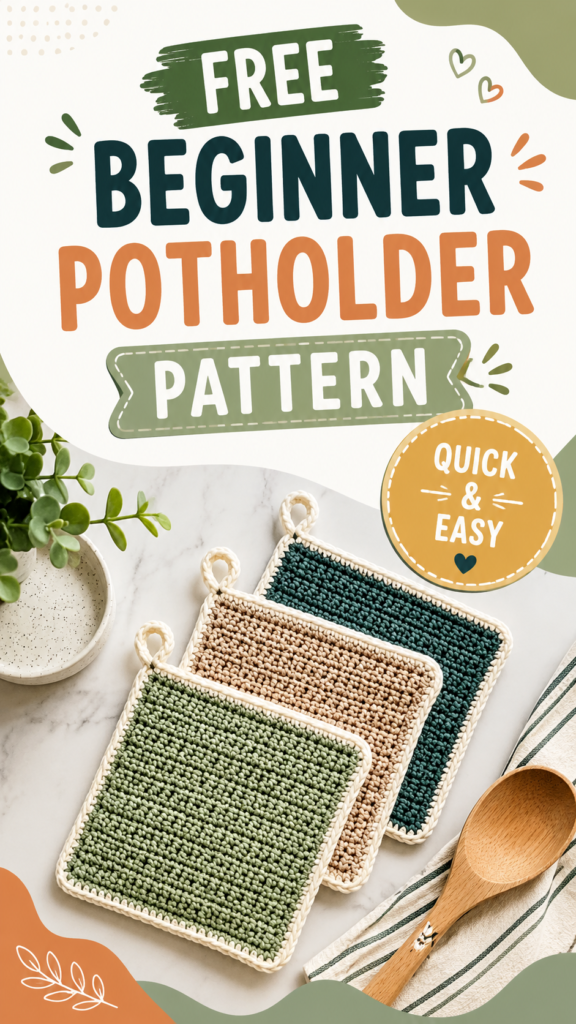
There is something wonderfully satisfying about making a useful kitchen item with your own hands. These easy crochet pot holders are a great example of how a simple crochet project can become both practical and decorative. With a straightforward rectangular shape, neat edging, and a convenient hanging loop, this style of potholder is approachable for beginners while still giving experienced crocheters plenty of room to experiment with color and texture.
Key Takeaways
- A simple rectangular potholder is an excellent beginner crochet project.
- Basic stitches can create a practical and attractive kitchen accessory.
- Cotton yarn is a popular choice for crochet kitchen projects.
- A contrasting border can give handmade potholders a polished finish.
- Different colors make it easy to create coordinated kitchen sets or handmade gifts.
Why Easy Crochet Pot Holders Make Great Beginner Projects
When learning to crochet, it is tempting to start with an elaborate pattern that promises an impressive finished result. However, simple projects are often the best way to build confidence. An easy crochet pot holder lets you practice consistent tension, turning rows, working an edging, and creating clean corners without requiring complicated shaping.
The rectangular design shown here keeps the construction uncomplicated. Instead of focusing on intricate motifs, the beauty comes from the texture of the stitches, the carefully finished border, and the combination of soft neutral colors. That makes this type of project especially appealing if you are searching for an easy crochet potholder pattern for beginners.
Another advantage is that a potholder is relatively small. You can make progress quickly, which makes it easier to notice how your tension changes from one row to another. It is also an excellent project for using leftover yarn in coordinating colors.
Important: For a kitchen potholder intended for handling hot cookware, choose materials and construction appropriate for heat protection. A decorative crochet piece should not automatically be assumed to provide sufficient protection from high temperatures.
Choosing Yarn for a Crochet Potholder
Yarn choice has a major effect on the finished project. For many crochet kitchen accessories, cotton is a practical option because it has a firm feel, handles frequent use well, and gives stitches a defined appearance. It also works beautifully with the simple textured construction seen in these potholders.
Natural, muted colors such as sage green, cream, beige, and warm earthy tones create a relaxed handmade look. They are particularly attractive in kitchens with neutral, rustic, farmhouse, Scandinavian, or modern decor.
You do not have to copy a particular color combination. One of the easiest ways to personalize a free crochet pot holder pattern is to choose colors that already appear elsewhere in your kitchen.
- Try soft greens for a calm, natural look.
- Use cream or beige for a timeless neutral palette.
- Add terracotta or warm brown for an earthy accent.
- Choose brighter shades if you want your potholders to become colorful kitchen decor.
Why Texture Matters
The dense appearance of the stitches gives the potholders a substantial handmade character. Even when the stitch pattern itself is simple, consistent rows create a satisfying texture that makes the finished piece look carefully crafted.
For beginners, this is useful because you can concentrate on stitch consistency rather than complicated stitch combinations. Once you become comfortable with the basic motion, maintaining an even tension becomes much easier.
A Simple Construction for Beginners
The design can be understood as a few straightforward components: a rectangular crocheted body, a contrasting or complementary border, and a small hanging loop. This uncomplicated construction is one reason an easy crochet potholder pattern is such a useful practice project.
Start by creating a foundation chain that corresponds to the desired width of the potholder. Work rows across the chain using the stitch specified by your chosen pattern. Continue until the piece reaches a pleasing height and resembles a compact rectangle.
Beginners should pay particular attention to the first and last stitch of every row. Missing an edge stitch can gradually make the project narrower, while accidentally adding stitches can make it wider. Counting stitches occasionally is a simple way to keep the shape consistent.
Keeping Your Edges Straight
Neat edges make a significant difference in the final appearance. If your rectangle starts looking slightly slanted, check your stitch count before continuing. It is much easier to correct a small mistake early than to discover it after several more rows.
Try to maintain the same yarn tension throughout the project. Avoid pulling each stitch extremely tightly. A relaxed, consistent motion generally makes the fabric easier to work with and helps produce a more uniform surface.
Finishing the Edges With a Crochet Border
One of the most attractive details in this style of potholder is the contrasting cream-colored edging. A border can make a simple crochet project look much more finished and intentional.
Once the main rectangle is complete, work around its outer edge according to your chosen pattern. Take extra care at the corners so they remain defined rather than bunching together. A clean border can also help visually frame the central stitch pattern.
If you want a subtle effect, choose a border that is only slightly different from the main color. For a stronger design statement, select a contrasting shade. Cream against sage green, for example, creates a soft and classic combination.
Expert Insight
A border is more than decoration. It can visually define the shape of a handmade potholder and give the project a cleaner, more finished appearance. For beginners, practicing a simple border is also a useful way to improve control around corners and edges.
Adding the Hanging Loop
The small loop at the top of each potholder is a practical detail that also contributes to the design. It allows the finished piece to hang from a kitchen hook or other suitable storage point when it is not being used.
A hanging loop can be created as part of the finishing process. Keep it securely attached to the edge and make sure the stitches are firm. The loop does not need to be large. A compact loop is often enough for convenient storage.
This tiny feature also gives the potholder a recognizable handmade look. When several potholders are displayed together, matching loops and borders help create a cohesive set.
How to Make Your Crochet Pot Holders Look More Professional
Even a beginner-friendly crochet pattern can produce a polished result when you focus on a few finishing details. The goal is not perfection. It is consistency.
1. Keep Your Stitch Tension Consistent
Uneven tension can make some rows look tighter or looser than others. Try to hold the yarn and hook comfortably rather than gripping them too firmly. After a few practice rows, your hands will naturally settle into a rhythm.
2. Count Your Stitches
Counting does not have to happen after every row forever. During the early stages of a project, however, regular counting can prevent accidental increases or decreases. Once you become familiar with the pattern, you will be able to recognize whether the shape looks correct.
3. Weave in Ends Carefully
Loose yarn tails can distract from an otherwise beautiful project. Take time to secure and weave in your ends neatly. This small finishing step makes a noticeable difference when the potholder is viewed from different angles.
4. Pay Attention to Corners
Whether you are crocheting the main body or adding the border, corners deserve extra attention. Even spacing helps the rectangle maintain its shape and prevents the edging from looking crowded or wavy.
Color Ideas for Handmade Crochet Kitchen Accessories
The muted palette of sage, cream, beige, and deep green is particularly versatile, but there are countless ways to adapt the look. A coordinated group of potholders can make a kitchen feel more personal without overwhelming the existing decor.
For a minimalist style, combine two neutrals. For a botanical-inspired palette, pair sage with cream and a deeper green. If you prefer a warm autumn look, experiment with beige, rust, caramel, and muted orange.
You can also make every potholder slightly different. Use one dominant color for the center, then rotate the border colors between pieces. The result can feel coordinated while still giving every handmade item its own character.
Turning One Pattern Into a Handmade Set
Once you have completed one easy crochet pot holder, making a small collection becomes much simpler. The same basic pattern can be repeated in different colors to create a matching set.
A set of two or three potholders can be useful around the kitchen and makes a thoughtful handmade present for someone who appreciates practical crafts. You can also pair potholders with other simple crochet kitchen accessories for a coordinated handmade collection.
Repeating the same pattern is also excellent crochet practice. Your first potholder may take the most concentration, but subsequent versions often feel faster because you already understand the construction and finishing process.
Creative Ways to Personalize Easy Crochet Potholders
A free crochet potholder pattern does not have to result in identical projects. Small adjustments can give the finished pieces a completely different personality.
- Change the colors: Build a palette around your kitchen, favorite season, or recipient.
- Experiment with borders: Try a contrasting shade or a simple decorative edging.
- Make coordinated pairs: Reverse the main and border colors on the second potholder.
- Use leftover yarn: Combine small quantities of compatible colors for a cheerful handmade effect.
- Add storage loops: Keep the loop simple and secure for convenient hanging.
Common Beginner Mistakes to Avoid
Simple projects are not completely mistake-proof, and that is part of the learning process. One common issue is losing track of the first or last stitch in a row. This can gradually change the shape of the potholder.
Another mistake is choosing a yarn that does not suit the intended purpose. Before using a handmade crochet item around heat, consider the fiber, fabric construction, thickness, and intended use carefully.
It is also easy to rush the finishing stage. Do not underestimate the difference that neat borders and securely woven ends can make. A few extra minutes of finishing can turn a basic beginner project into something that looks much more refined.
Pro Tip: If your first potholder is not perfectly square, do not consider it a failure. Use it as a practice piece, identify where the stitch count or tension changed, and apply what you learned to the next one. Crochet skills improve quickly through repetition.
Why This Project Is Worth Saving
An easy crochet pot holder pattern combines several qualities that make a craft project especially appealing. It is approachable, useful, customizable, and small enough to finish without committing to a large time-consuming project.
The simple construction also makes it suitable for crochet beginners who want to move beyond practice swatches. Instead of making rows that have no purpose after you finish learning a stitch, you can turn those skills into a functional item for the home.
The finished potholders shown in soft green and neutral shades demonstrate how much visual impact can come from simple shapes and thoughtful color choices. A basic rectangle can become a stylish kitchen accessory when the texture, border, and palette work together.
Quick Points
- Choose a practical yarn suitable for the intended use.
- Keep your stitch count consistent for straight edges.
- Use a simple border to create a polished finish.
- Personalize the project with coordinated colors.
- Practice the pattern more than once to build confidence and consistency.
Final Thoughts on Easy Crochet Pot Holders
Easy crochet pot holders are a wonderful starting point for anyone who wants to create useful handmade items while developing fundamental crochet skills. Their straightforward rectangular construction provides plenty of practice with rows, tension, edges, borders, and finishing without making the project feel overwhelming.
The real charm comes from how easily the basic idea can be adapted. Soft sage, cream, beige, and green create a calm modern look, while brighter colors can make the same design playful and cheerful. Add a neat border and a secure hanging loop, and a simple crochet project becomes a practical piece of handmade kitchen decor.
Whether you are making your first potholder or adding another useful project to your crochet collection, this beginner-friendly idea is worth keeping on hand. Gather your favorite yarn, pick a simple stitch pattern, and enjoy the process of turning a few basic crochet techniques into something you can actually use.