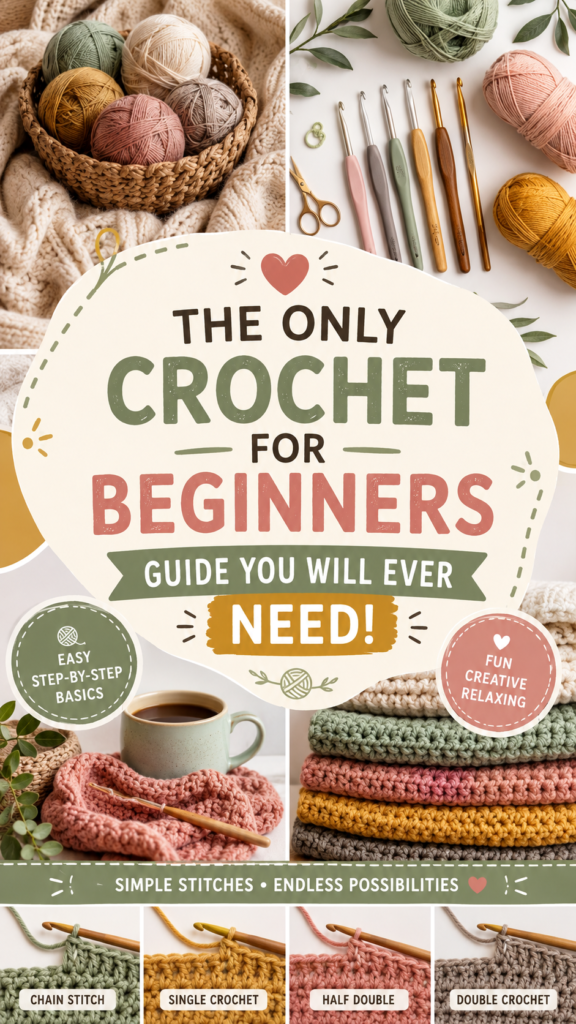
Crochet is one of those creative hobbies that looks impressive long before it feels complicated. With a hook, a few basic stitches, and some soft yarn, beginners can start making useful, cozy, and colorful projects without needing an overwhelming collection of tools. From simple chains and single crochet rows to textured swatches and beginner-friendly handmade pieces, the first steps are all about learning how the yarn and hook work together.
Whether you want to make small practice pieces, cozy accessories, simple home decor, or eventually larger projects, starting with the basics can make the learning process much more enjoyable. This beginner crochet guide explores the essential stitches, tools, habits, and project ideas that can help you build confidence one loop at a time.
Key Takeaways
- Start with a comfortable hook and smooth yarn to make stitches easier to see.
- Learn the chain stitch first, then move on to single crochet and other basic stitches.
- Practice small swatches before committing to a large project.
- Focus on even tension instead of trying to crochet quickly.
- Choose simple beginner crochet projects that let you repeat the same stitches.
Why Crochet Is a Great Hobby for Beginners
One of the best things about crochet is that you can begin with very little. A crochet hook, yarn, scissors, and a willingness to practice are enough to get started. Unlike hobbies that require large workspaces or expensive equipment, crochet can fit easily into a quiet corner at home or a small project bag.
It is also a flexible skill. You can practice for ten minutes, put your work aside, and return to it later. This makes crochet especially appealing for people who enjoy relaxing, hands-on activities but do not always have long blocks of free time.
Another benefit is the sense of progress. A beginner might start by learning how to make a slip knot and chain, then gradually discover how those simple loops become textured rows, fabric, and finished projects. Each new stitch creates another opportunity to build confidence.
Important: You do not need to master every crochet stitch before making something useful. Many beginner projects rely on only one or two basic stitches, which makes repetition part of the learning process.
Essential Crochet Supplies to Start With
Keeping your first crochet setup simple can make learning less stressful. There is no need to buy every hook size or every type of yarn before you understand what you enjoy using.
A Comfortable Crochet Hook
Crochet hooks come in different materials, shapes, and sizes. For beginners, the most important factor is comfort. A hook that feels smooth and easy to hold can make repeated practice more enjoyable.
Medium-sized hooks are often easier for beginners because the stitches are large enough to see clearly without becoming difficult to manage. The best hook size will depend on the yarn and project, so checking the yarn label is a helpful starting point.
Smooth, Easy-to-See Yarn
When learning crochet, smooth yarn is generally easier to work with than highly textured or fuzzy varieties. Simple yarn makes it easier to identify individual loops and understand where the hook should go.
A medium-weight yarn in a light or medium color can also be useful for practice. Very dark yarn may make stitches harder to see, while extremely fine yarn can make the work feel more delicate than necessary for a first project.
A Few Helpful Extras
- Sharp scissors for cutting yarn
- A yarn needle for weaving in loose ends
- Stitch markers for keeping track of important points
- A small measuring tool for checking project size
- A project bag or basket for keeping supplies organized
The Basic Crochet Stitches Every Beginner Should Learn
You do not need a huge library of stitches to begin creating. A few foundational techniques can take you surprisingly far. Learning them slowly and practicing each one before moving on can make the process much easier.
1. The Slip Knot
The slip knot is usually the starting point for getting yarn onto the crochet hook. It creates an adjustable loop and introduces the basic hand movements you will use throughout the project.
2. The Chain Stitch
The chain stitch is one of the first techniques every beginner encounters. It creates a series of connected loops that often form the foundation for the first row of a crochet project.
Practice making chains with a consistent size. At first, some loops may be tight while others are loose. That is completely normal. Repetition helps your hands become familiar with the movement and gradually improves consistency.
3. Single Crochet
Single crochet creates a compact, textured fabric and is a favorite stitch for beginner crochet projects. Once you understand where to insert the hook and how to pull the yarn through the loops, you can use this stitch to create swatches, washcloths, scarves, small accessories, and many other simple designs.
4. Half Double Crochet
Half double crochet adds a little more height than single crochet while still producing a dense and attractive texture. It is a useful next step when you want to explore how changing the stitch affects the look and feel of the fabric.
5. Double Crochet
Double crochet is taller and creates fabric more quickly because each stitch has greater height. It can feel slightly more involved at first, but the movement becomes easier once you are comfortable with yarn overs and pulling through loops.
Expert Insight
The fastest way to become more comfortable with crochet is not to chase complicated patterns. Repeating a few basic stitches helps you improve tension, recognize stitch structure, and develop the muscle memory that makes future projects easier.
How to Improve Your Crochet Tension
One of the biggest challenges for beginners is maintaining consistent tension. Tension describes how tightly or loosely the yarn is held while crocheting. If the stitches are too tight, it can be difficult to insert the hook. If they are too loose, the project may look uneven.
There is no need to force your hands into an uncomfortable position. Experiment with how the yarn moves through your fingers until you find a method that feels natural. The goal is controlled, repeatable movement rather than gripping the yarn as tightly as possible.
Pro Tip: If your first few rows look uneven, keep going. Many beginners find that their tension naturally improves after several rows because the repeated motion becomes more familiar.
Easy Crochet Ideas for Beginners
Choosing the right first project can make a major difference. A beginner-friendly project should give you enough repetition to practice without requiring complicated shaping or frequent stitch changes.
Simple Crochet Swatches
Small swatches are one of the easiest ways to practice. Choose a stitch, crochet a small rectangle, and focus on keeping the edges and tension consistent. You can compare your first rows with your later rows to see how quickly your technique improves.
Cozy Crochet Squares
Squares are simple, flexible, and useful for learning. They can remain individual practice pieces or eventually become part of a larger handmade project. Repeating the same stitch across a square gives beginners plenty of time to become comfortable with the basic motion.
Beginner Scarves
A scarf can be an excellent project when you want something simple and repetitive. Choose one stitch and work in rows. The longer format provides plenty of practice while gradually creating a useful finished item.
Textured Practice Pieces
Once you know a few stitches, try alternating them to see how each one changes the texture. This is a fun way to explore crochet without immediately following a complex pattern.
A Simple Way to Learn Crochet Step by Step
Learning crochet becomes much more manageable when you break the process into small goals. Instead of trying to understand an entire project at once, focus on one technique at a time.
- Learn how to hold the hook and yarn. Find a comfortable position that allows your hands to move freely.
- Practice the slip knot. Repeat it until creating the adjustable loop feels simple.
- Make several chain stitches. Focus on keeping the loops similar in size.
- Learn single crochet. Practice working into a row and turning your work.
- Experiment with half double and double crochet. Notice how the stitch height changes the fabric.
- Complete a small project. Finishing something simple can provide motivation for the next challenge.
Common Beginner Crochet Mistakes and How to Fix Them
Mistakes are part of learning any new craft. The good news is that many common crochet problems are easy to understand once you know what to look for.
Accidentally Adding or Losing Stitches
If your rows gradually become wider or narrower, count your stitches regularly. Beginners often miss the first or last stitch in a row, especially when learning where the turning chain fits into the work.
Crocheting Too Tightly
Tight stitches can make the hook difficult to insert. Try relaxing your grip and allowing the yarn to move more smoothly. If necessary, practice with a slightly larger hook while you develop a more comfortable rhythm.
Trying to Crochet Too Fast
Speed is not the goal when you are learning. Slow, deliberate movements make it easier to understand the structure of each stitch. Accuracy and consistency will naturally lead to greater speed over time.
How to Stay Motivated as a New Crocheter
It is easy to compare your first projects with polished handmade pieces created by experienced crocheters. Instead, compare your current work with your own earlier practice. Small improvements in tension, stitch recognition, and consistency are real progress.
Keeping your projects simple can also help. A manageable project gives you a better chance of reaching the finish line, and finishing something by hand can be incredibly satisfying.
Consider keeping a small collection of yarn colors that inspire you. Soft neutrals can create a calm, cozy look, while brighter shades can make practice feel playful and creative. The best choice is the one that makes you want to pick up your hook again.
At a Glance
- Start with smooth yarn and a comfortable hook.
- Master the chain stitch before building more advanced skills.
- Practice single crochet, half double crochet, and double crochet.
- Choose small, repetitive projects to build confidence.
- Focus on progress and consistency rather than perfection.
Conclusion: Start Simple and Enjoy the Process
Learning crochet does not require perfection, advanced patterns, or a huge collection of supplies. The strongest foundation often begins with the simplest techniques: making a chain, learning how to form a stitch, practicing rows, and gradually becoming more comfortable with the hook and yarn.
Simple crochet ideas for beginners offer the perfect opportunity to explore creativity while developing practical skills. Every swatch, square, and small project teaches you something new about tension, stitch structure, and rhythm.
The most important takeaway is simple: begin with the basics, allow yourself to make mistakes, and keep practicing. A few easy stitches can open the door to an endless range of creative crochet projects.
Pick up your hook, choose a yarn color you love, and start with one simple stitch. Before long, those individual loops can become something cozy, useful, and completely handmade by you.
Tags
Crochet for Beginners Easy Crochet Ideas Basic Crochet Stitches Beginner Crochet Projects Learn to Crochet Crochet Stitches DIY Yarn Projects