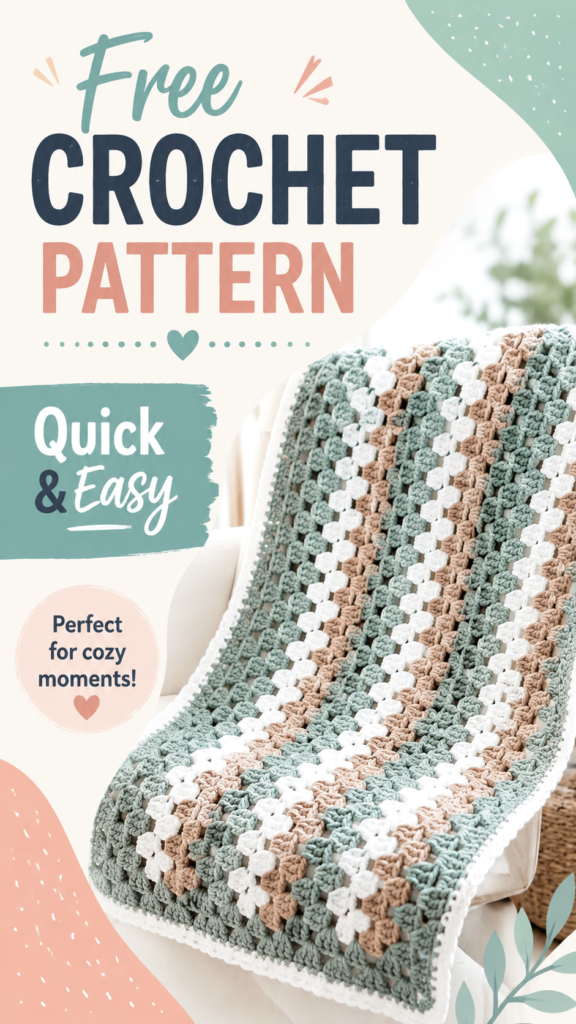
There is something timeless about a handmade baby blanket. Soft yarn, simple stitches, and a thoughtful color palette can turn a basic crochet project into a treasured nursery piece. This easy baby blanket crochet design combines the classic charm of granny square-inspired stitching with gentle shades of sage green, warm beige, and white. The result is a cozy, versatile blanket that looks beautiful folded over a chair, draped across a crib, or wrapped around a little one.
If you are searching for a beginner-friendly crochet project that feels rewarding without requiring an overly complicated pattern, this style is a wonderful place to start. The repeating stitch structure creates an attractive texture while allowing the colors to become part of the design. It is also easy to personalize, so you can make your blanket smaller, larger, brighter, or more neutral depending on your preference.
Key Takeaways
- This crochet baby blanket has a cozy granny square-inspired appearance.
- Soft sage, beige, and white create a calm and versatile color combination.
- The repeating construction makes this style approachable for beginners.
- Changing yarn colors can give the same basic design a completely different personality.
- A simple border can provide a polished finish and help define the blanket.
- The finished project makes a thoughtful handmade baby gift or nursery accent.
Why an Easy Baby Blanket Crochet Project Is So Appealing
Baby blankets are among the most satisfying crochet projects because they combine practicality with creativity. Unlike a small decorative item, a blanket gives you plenty of room to experiment with color, texture, and edging while still following a straightforward construction.
An easy baby blanket crochet pattern is especially useful when you want a relaxing project rather than something that requires constant counting or complicated shaping. Repeating rows or granny square-style sections create a rhythm that becomes easier to follow as you work.
One of the biggest advantages of a simple crochet blanket is flexibility. You can keep the design exactly as it is, adjust the dimensions, or use the same stitch concept with completely different colors. The basic idea remains approachable while the finished blanket can feel uniquely yours.
The blanket pictured in this style demonstrates how effective a restrained palette can be. Sage green adds a soft natural feeling, beige introduces warmth, and white creates contrast between the sections. Together, these shades give the blanket a calm appearance without making it feel plain.
Choosing Yarn for a Crochet Baby Blanket
Yarn choice has a major effect on the finished blanket. For a baby-focused project, softness and comfort are important considerations. You want a yarn that feels pleasant against delicate skin and is practical enough for regular care.
A soft washable yarn is often a convenient choice for blankets because baby items may need frequent cleaning. Always check the care instructions on the yarn label before beginning your project, particularly if the blanket is intended as a gift.
Consider the Yarn Weight
A medium-weight yarn can be a practical option for a blanket with visible stitch definition and a comfortable amount of warmth. Lighter yarn can create a more delicate fabric, while thicker yarn generally produces a heavier and faster-growing blanket.
The most important thing is consistency. If you change yarn brands or weights during the project, the texture and finished size can vary. When combining several colors, using yarns with similar weights and fiber characteristics will help the blanket look more cohesive.
Pick a Calm, Coordinated Color Palette
The muted sage, beige, and white combination shown here is an excellent example of a soft nursery palette. It works particularly well when you want something gender-neutral and understated.
You could recreate a similar mood with several variations:
- Sage green, ivory, and natural beige for an earthy look.
- Dusty blue, cream, and taupe for a cool neutral palette.
- Blush, oatmeal, and white for a warm and delicate finish.
- Mustard, cream, and soft gray for a cheerful modern blanket.
- Several shades of one color for a subtle monochromatic effect.
Before committing to the entire blanket, place small amounts of your chosen yarn colors beside one another. This simple step can help you see whether the shades have enough contrast to make the stitch pattern stand out.
Understanding the Granny Square-Inspired Look
The visual character of this blanket comes from the familiar rhythm of granny-style crochet. Clustered stitches create small openings throughout the fabric, giving the blanket texture without making the design overly complicated.
Traditional granny squares are usually worked outward from a center, while other granny-inspired blanket designs may use rows or joined sections to create a similar appearance. The image has the cozy, repeating character associated with granny crochet, making it easy to imagine adapting the idea to a variety of blanket constructions.
This style is popular because it creates visual interest through repetition. You do not need an elaborate motif in every section. Instead, the combination of stitch texture and color changes does much of the decorative work.
Expert Insight
Color placement can completely change the appearance of a simple crochet stitch. Repeating a light shade between darker colors creates clear visual separation, while keeping neighboring shades close together produces a softer, blended effect.
How to Plan Your Easy Baby Blanket Crochet Project
Before picking up your hook, take a few minutes to decide what you want the finished blanket to look like. Planning does not need to be complicated, but it can prevent unnecessary unraveling later.
- Choose your yarn weight and fiber.
- Select two to four coordinating colors.
- Decide whether you want stripes, squares, or repeating color sections.
- Make a small crochet swatch to become familiar with the stitch.
- Measure the swatch if you need a specific finished size.
- Plan your border before you begin the final section.
A swatch is particularly helpful for beginners. It gives you an opportunity to practice tension and understand how the yarn behaves before committing to a full blanket.
Pro Tip: Do not worry if your first few stitches are not perfectly uniform. Crochet tension often becomes more consistent once your hands settle into the rhythm of the stitch. Focus on keeping your tension comfortable rather than pulling every stitch extremely tight.
Simple Techniques That Make the Blanket Look Polished
A beginner-friendly project does not have to look basic. A few small techniques can make a significant difference in the finished result.
Keep Your Tension Consistent
Try to maintain a similar amount of pressure throughout your project. Uneven tension can make some sections wider or tighter than others. If your hands become tired, take a short break rather than forcing yourself to continue.
Pay Attention to Color Changes
When working with multiple colors, clean transitions help the blanket look intentional. Secure yarn ends neatly and weave them in carefully. If you are using a repeating color sequence, keep the order written down so you can easily return to it after a break.
Use the Border as a Finishing Detail
The white edging visible around the blanket provides a crisp frame that helps the interior colors stand out. A simple border can also give the edges a more finished appearance.
You can choose a single-color border for a clean look or repeat one of the main blanket colors for stronger coordination. Even a few rounds of straightforward crochet can make the entire project feel more complete.
Making the Blanket Your Own
One of the best things about an easy baby blanket crochet design is how easily it can be personalized. You do not have to reproduce the exact color arrangement to capture the same cozy feeling.
For a modern nursery, try neutral shades such as cream, sand, warm gray, and muted green. For a brighter look, introduce cheerful colors in alternating sections. If you prefer a timeless style, two colors plus white can create plenty of contrast without becoming busy.
You can also change the size. A small blanket can work as a lightweight stroller or cuddle blanket, while a larger version can become a generous nursery throw. Keep in mind that changing the dimensions may affect the amount of yarn required, so it is helpful to estimate your materials before beginning.
Try a Different Color Rhythm
Instead of repeating the same colors in every row or section, consider creating wider bands of your favorite shade. You could make sage the dominant color and use beige and white as accents, or reverse the balance for a lighter-looking blanket.
Experiment With the Edge
The border does not have to be complicated. A neat single-color edge keeps attention on the main pattern, while a textured or scalloped finish can add a decorative touch. Choose an edging that complements the stitch pattern rather than competing with it.
Why Handmade Baby Blankets Make Meaningful Gifts
A handmade baby blanket has a personal quality that is difficult to recreate with mass-produced items. The time spent selecting yarn, working each section, and finishing the edges becomes part of the gift.
This type of crochet project can be especially appealing for baby showers, new-baby celebrations, or simply as a thoughtful handmade surprise. Neutral colors such as sage, cream, beige, and white are versatile enough to complement many nursery styles.
Even if you are making the blanket for yourself, the finished piece can become a useful part of everyday life. It can add texture to a nursery chair, provide an extra layer during quiet moments, or become a keepsake associated with a special stage of childhood.
Care Tips for Your Crochet Baby Blanket
Once the blanket is finished, proper care can help preserve its softness and appearance. Always follow the specific washing and drying instructions provided for your yarn.
- Check the yarn label before washing.
- Use a gentle washing method when recommended.
- Avoid excessive heat if the yarn care instructions advise against it.
- Reshape the blanket gently while it dries if necessary.
- Store it clean and completely dry.
Because crochet fabric can stretch when wet, avoid pulling or wringing the blanket. Gentle handling is especially useful when working with a larger piece that becomes heavier after washing.
Quick Points: Easy Baby Blanket Crochet at a Glance
- Style: Cozy granny-inspired crochet texture
- Palette: Soft sage, beige, and white
- Skill level: Well suited to simple, repeating crochet techniques
- Best for: Baby blankets, nursery decor, handmade gifts, and relaxing crochet sessions
- Personalization: Change colors, dimensions, stitch rhythm, or edging
Final Thoughts on This Easy Baby Blanket Crochet Style
An easy baby blanket crochet project can be simple without sacrificing beauty. The combination of repeating stitches, soft colors, and a clean border creates a warm handmade look that feels both classic and current.
The sage green, beige, and white palette shown here is particularly versatile, but the real appeal is the freedom behind the design. Once you understand the basic rhythm, you can adapt the colors and dimensions to match your own style. That makes this kind of blanket a useful project for beginners and experienced crocheters alike.
Take your time choosing the yarn, practice your stitch with a small swatch, and let the color changes become part of the creative process. Whether you are crocheting a baby shower gift, preparing something special for a nursery, or simply looking for a relaxing weekend project, this cozy crochet blanket style is an inviting place to begin.
Most importantly, enjoy the process. Handmade blankets are built one stitch at a time, and those small moments of creativity are what make the finished piece feel truly special. Save this easy baby blanket crochet idea for your next project and let it inspire your own color combination and cozy handmade design.