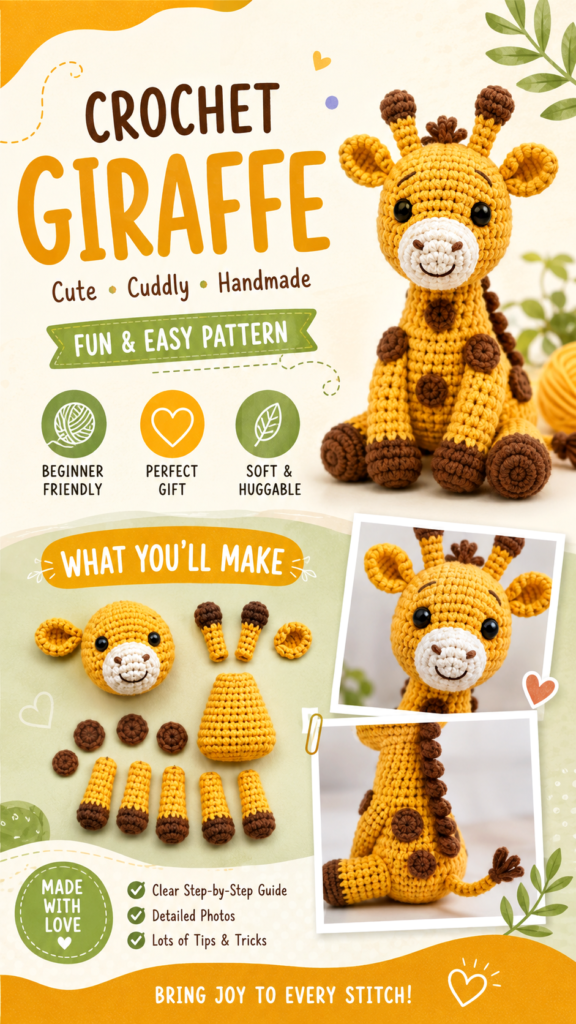
Few handmade projects are as charming as a crochet giraffe. With its long neck, little horns, soft ears, spotted body, and friendly expression, this adorable amigurumi design captures everything people love about crocheted jungle animals. It is a fun project for makers who enjoy creating cute stuffed toys, thoughtful handmade gifts, and playful nursery decor.
A crochet giraffe pattern can also be a rewarding way to practice important amigurumi skills. From shaping the head and body to attaching small details and adding decorative spots, the project offers a creative mix of simple techniques and satisfying assembly. Whether you are a beginner exploring amigurumi or an experienced crocheter looking for a sweet new make, a cuddly giraffe is a wonderful addition to any crochet animal collection.
Key Takeaways
- A crochet giraffe is a fun and recognizable amigurumi project with plenty of personality.
- Simple shapes can be combined to create the head, ears, horns, body, legs, tail, and spots.
- Warm yellow yarn paired with brown details gives the giraffe its classic jungle-inspired look.
- Careful stuffing and secure assembly help create a sturdy, cuddly finished toy.
- The same basic techniques can be adapted for other crochet jungle animals.
Why Crochet Jungle Animals Are So Popular
Crochet jungle animals have become a favorite theme for makers because they are playful, colorful, and easy to personalize. A single pattern can inspire an entire handmade collection featuring giraffes, lions, elephants, zebras, monkeys, and other animal friends. These projects work beautifully as toys, decorative pieces, baby shower gifts, and nursery accessories.
What makes the giraffe especially appealing is its instantly recognizable shape. The long neck creates a distinctive silhouette, while the ears, small horns, and round spots give the design plenty of visual character. Even a simple crochet giraffe can look expressive when the facial features and proportions are carefully balanced.
Important: One of the biggest strengths of amigurumi is that small design changes can create a completely different personality. Adjusting the eye placement, ear angle, neck length, or spot arrangement can make every handmade giraffe feel unique.
The Classic Parts of a Crochet Giraffe
A crochet giraffe may look detailed, but the finished toy is usually built from a series of manageable pieces. Breaking the project into individual sections makes the process easier to understand and helps you focus on one area at a time.
The Head and Snout
The head is often the main focal point of an amigurumi giraffe. A rounded yellow head can be paired with a lighter snout to create contrast and define the face. This two-color combination gives the toy a soft, friendly appearance and makes the facial details easier to see.
Eyes are commonly positioned with enough spacing to create a sweet expression. A small stitched nose and curved mouth can add even more personality. The goal is not perfect realism. The charm comes from turning a familiar animal into a cute, simplified crochet character.
The Ears and Horns
Giraffes have distinctive ears and horn-like ossicones, which are important details in a crochet version. Small rounded ears in the main body color can be attached near the top of the head, while the horns often feature darker tips for contrast.
These details may be small, but their placement matters. Positioning them evenly helps the face look balanced. Pinning the pieces temporarily before sewing can make it easier to check the overall appearance.
The Long Neck and Body
The giraffe’s neck is the feature that immediately separates it from many other crochet animals. It can be crocheted as a long tube and connected securely to the body and head. A well-stuffed neck helps the finished toy sit upright and keeps the shape neat.
The body is usually larger and more rounded, creating a sturdy base for the neck and legs. When the proportions work together, the giraffe has a soft toy-like appearance while still keeping its recognizable animal shape.
Legs, Hooves, and Tail
Four small legs give the giraffe a seated or standing look depending on the pattern. Brown hooves provide a natural contrast against the yellow yarn. A narrow tail finished with a darker fringe adds one final touch of character.
These pieces are also great for practicing consistency. Keeping the legs similar in size and shape helps the finished animal look polished, especially when all four are visible.
Choosing the Best Colors for a Crochet Giraffe
Color plays a major role in making a crochet giraffe instantly recognizable. A warm golden yellow is a classic choice for the main body, while brown works beautifully for the spots, mane, hooves, horn tips, and tail detail. A cream or soft white snout can brighten the face and add extra contrast.
You do not have to follow realistic colors exactly. One of the most enjoyable parts of crochet is experimenting with your own palette. Soft pastels can create a nursery-style giraffe, while bright colors can make the project more playful. Earthy tones may give the design a cozy handmade look.
A simple color balance
- Main color: Yellow, golden mustard, or another cheerful shade.
- Accent color: Brown for spots and darker details.
- Face contrast: Cream, white, or beige for the snout.
- Optional accent: A soft green or neutral background for photos and display.
Why This Matters
A limited color palette can make an amigurumi project look more cohesive. Repeating the same brown yarn in the spots, mane, hooves, and horn tips creates a polished design while keeping the project visually simple.
Essential Crochet Techniques for Amigurumi Animals
A cute crochet giraffe is usually created with common amigurumi techniques rather than complicated stitch combinations. This makes it an approachable project for crocheters who already know the basics or want a motivating way to improve.
Working in Continuous Rounds
Most rounded amigurumi pieces are worked in spirals or continuous rounds. A stitch marker is especially helpful because it allows you to track the beginning of each round and count your increases or decreases accurately.
Increasing and Decreasing
Increases make the crochet fabric expand, while decreases help shape it into a narrower form. These two techniques are responsible for much of the sculpted appearance of amigurumi. A head may widen through increases, remain straight for several rounds, and then narrow again as the piece is closed.
Joining Separate Pieces
Assembly is one of the most important stages of a crochet animal project. The head, ears, horns, legs, tail, mane, and spots all need to be attached securely. Taking time with this step can make a noticeable difference in the final result.
Pro Tip: Before sewing any major piece permanently, use pins or removable markers to test the placement. Look at the giraffe from the front and side, then adjust before attaching. A few minutes of planning can save a lot of reworking.
How to Create an Even, Cuddly Amigurumi Finish
The neat appearance of a crochet giraffe comes from more than the pattern itself. Yarn tension, stuffing, and assembly all influence the final shape. Aim for firm, even stitches so the stuffing does not show through large gaps.
Stuff the head and body gradually rather than waiting until the end. Adding small amounts as the opening becomes narrower makes it easier to distribute the filling evenly. Avoid large lumps, especially around the face, neck, and legs.
It is also important not to overstuff. Too much filling can stretch the stitches and distort the shape. Too little may cause the animal to look floppy. The best balance is firm enough to hold the intended form while still feeling soft and squeezable.
Adding Giraffe Spots and a Textured Mane
The spots are one of the most recognizable features of a giraffe. In crochet, they can be made as small separate circles and sewn onto the body, or incorporated into the design with color changes depending on the project style.
Separate spots are especially useful for creative customization. You can vary the size and placement while still keeping a consistent color. A mix of small and medium spots often creates a lively handmade appearance.
A textured brown mane can run along the back of the neck. This detail does not need to be complicated. Small strands, loops, or textured stitches can create the impression of a mane while adding extra dimension to the finished toy.
Make each giraffe unique
- Change the spot arrangement.
- Use different shades for the mane and hooves.
- Adjust the facial expression with stitched details.
- Create a taller or shorter neck depending on the desired style.
- Add a small accessory if it fits your overall design theme.
Crochet Giraffes as Handmade Gifts and Nursery Decor
A handmade crochet giraffe can be much more than a fun project. Its cheerful look makes it a thoughtful gift for animal lovers, new parents, children, and anyone who appreciates handmade decor. A finished giraffe can also become part of a larger crochet jungle animal collection.
For nursery decor, softer colors can create a calm and coordinated style. A giraffe displayed alongside other crocheted animals can become a playful centerpiece on a shelf or in a themed room. Smaller versions can also work as decorative accessories or gift embellishments.
When making toys for young children, pay close attention to construction and safety. Ensure all pieces are firmly attached and choose finishing methods appropriate for the intended recipient.
Building a Complete Crochet Jungle Animal Collection
Once you have completed one giraffe, it is easy to see how the same amigurumi approach can lead to an entire jungle collection. Many animals share similar construction methods, including rounded heads, cylindrical limbs, separate ears, embroidered details, and color accents.
Consider pairing a giraffe with other familiar jungle animals. A lion can use a similar rounded head with a textured mane. An elephant can be created with large ears and a curved trunk. A zebra can use contrasting stripes, while a monkey can be customized with long arms and a curled tail.
This makes crochet jungle animals an excellent theme for makers who enjoy connected projects. Each animal can stand on its own, but together they create a coordinated collection full of color and personality.
Ideas for expanding the theme
- Create a matching set of jungle animal toys.
- Use the same yarn palette across every project for a cohesive look.
- Make smaller versions for a cute shelf display.
- Choose soft colors for a nursery-inspired collection.
- Use the animals as decorative handmade gifts for special occasions.
Common Mistakes to Avoid When Making Crochet Animals
Even simple amigurumi projects can have small challenges. Fortunately, most are easy to prevent with a little patience and planning.
Uneven tension
Inconsistent tension can make some pieces larger or looser than others. Try to keep your stitches firm and even throughout the project.
Incorrect piece placement
Eyes, ears, horns, and legs can dramatically change the final expression and proportions. Always check placement before making permanent attachments.
Rushing the finishing stage
Weaving in ends, sewing pieces neatly, and checking the overall shape may take time, but these finishing details help transform separate crochet pieces into a polished handmade animal.
Quick Note
- Count your stitches carefully.
- Stuff gradually for a smooth shape.
- Test placement before sewing.
- Use color details to emphasize the giraffe’s character.
At a Glance: Crochet Giraffe Project Tips
- Best feature to highlight: The long neck and distinctive spots.
- Great color combination: Warm yellow, brown, and cream.
- Most useful tool: A stitch marker for keeping track of rounds.
- Key finishing step: Pin pieces before permanent assembly.
- Creative next step: Build a matching crochet jungle animal collection.
Final Thoughts on Making a Cute Crochet Giraffe
A crochet giraffe combines the fun of amigurumi with the timeless appeal of handmade animals. Its cheerful colors, recognizable shape, and playful details make it a project that feels rewarding from the first stitches to the final assembly.
Whether you are making one cuddly giraffe or planning an entire crochet jungle, the key is to enjoy the creative process. Take your time with the shaping, experiment with colors, and let the small details bring your handmade animal to life. With a little patience and imagination, a few simple crochet pieces can become a sweet giraffe full of personality.
The best part of a handmade crochet animal is its individuality. Every stitch, spot, and tiny facial detail adds character, making each finished giraffe a one-of-a-kind creation worth displaying, gifting, and enjoying.
Tags
Crochet Jungle Animals Crochet Giraffe Amigurumi Pattern Crochet Animals Amigurumi Toys Cute Crochet Ideas Crochet Gifts Jungle Amigurumi