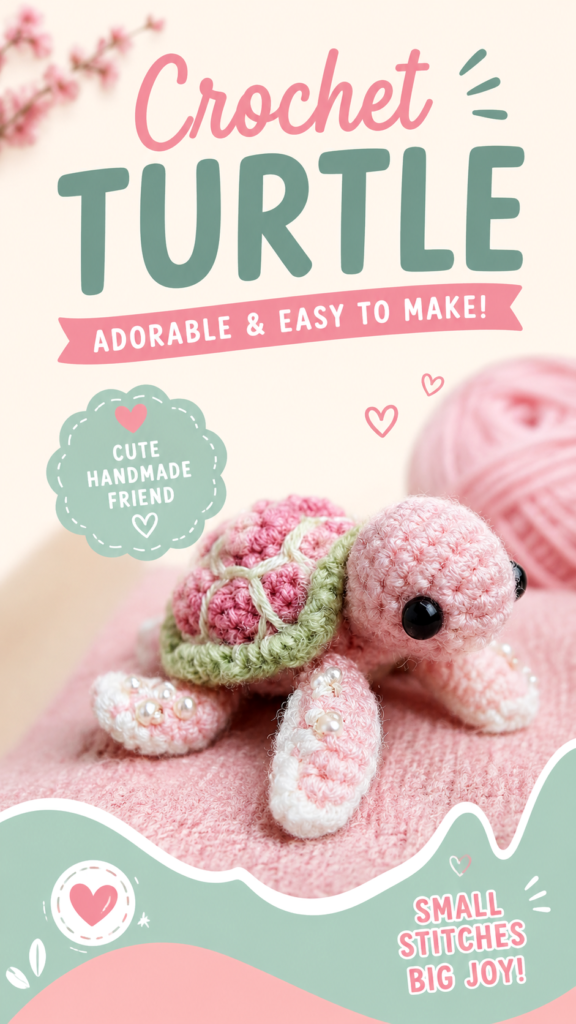
Small, charming, and full of handmade personality, crochet animal projects are a wonderful way to turn a few strands of yarn into something truly special. A tiny crochet turtle like this one shows just how much character can be created with simple shapes, soft colors, textured stitches, and carefully chosen details. The combination of a rounded pink body, a patterned shell, gentle green accents, and tiny decorative touches makes this kind of amigurumi especially appealing for crafters who love cute handmade creations.
Whether you are looking for a relaxing weekend project, inspiration for your next amigurumi, or ideas for handmade gifts, crochet animals offer endless possibilities. Turtles are particularly fun because their recognizable shell, flippers, and rounded head create a design that is both playful and approachable. You can keep the colors soft and delicate, experiment with brighter shades, or personalize the finished piece with your own favorite yarn combinations.
Key Takeaways
- Crochet animal projects are ideal for practicing small, manageable amigurumi shapes.
- A turtle design combines simple rounded pieces with a distinctive decorative shell.
- Pastel pink, soft green, and cream create a gentle handmade aesthetic.
- Small details can transform a basic crochet animal into a memorable keepsake.
- Different yarn colors and embellishments make it easy to create a personalized version.
Why Crochet Animal Projects Are So Appealing
Crochet animals have a special charm because they combine the creativity of fiber art with the recognizable shapes of familiar creatures. Unlike larger crochet projects that can take weeks to complete, small amigurumi animals often feel achievable one section at a time. A head, body, shell, ear, wing, tail, or pair of feet can be treated as its own little project before everything comes together.
That makes crochet animal projects excellent for crafters who enjoy seeing quick progress. They can also be a useful way to practice techniques such as working in the round, increasing, decreasing, shaping, stuffing, and joining pieces neatly.
The most memorable amigurumi designs are often not the most complicated ones. They are the designs where color, shape, texture, and tiny finishing details work together to create a clear personality.
The Charm of a Crochet Turtle
A crochet turtle is a particularly lovable animal project because its basic silhouette is easy to recognize. The rounded head, four flippers, compact body, and large shell provide several opportunities for creative interpretation without requiring an overly complicated overall structure.
The shell is often the visual centerpiece. In a pastel design, contrasting shades can be used to separate the shell from the body while decorative lines or raised stitches add dimension. A green border around a pink shell, for example, creates a soft contrast that immediately draws attention to the turtle’s back.
The legs and flippers can remain simple and rounded. Their compact shape helps preserve the cute proportions associated with amigurumi. Adding subtle decorative details can make them look more polished without overwhelming the design.
Choosing Colors for Cute Crochet Animals
Color is one of the easiest ways to change the personality of a crochet animal. Soft pastel combinations create a delicate, playful appearance, while deeper greens, blues, oranges, or browns can make the same animal feel more natural or adventurous.
The turtle shown here demonstrates how effective a gentle palette can be. Soft pink gives the body a sweet appearance, while muted green adds contrast around the shell. Cream and white details introduce brightness and help individual elements stand out.
Simple Color Combinations to Try
- Pink, mint, and cream: Perfect for a soft, whimsical turtle.
- Sage green, beige, and brown: A more natural woodland-inspired palette.
- Blue, aqua, and white: Fresh colors for an ocean-inspired animal.
- Lavender, pale yellow, and cream: A cheerful pastel combination.
- Coral, peach, and soft green: Warm and playful without looking too bright.
When choosing yarn colors, consider contrast as well as harmony. If every shade has a similar value, the different parts of the animal may visually blend together. Using one slightly stronger accent color can help define the shell, eyes, feet, or decorative edging.
Building the Main Shapes of an Amigurumi Turtle
One of the most useful aspects of crochet animal projects is that many designs are constructed from basic three-dimensional forms. Understanding those forms makes it easier to adapt patterns and create your own variations later.
The Head
The head is usually a rounded or slightly oval shape. It needs enough structure to hold its form while remaining soft and cuddly. The size of the head has a major effect on the overall personality of the turtle. A proportionally larger head generally gives the animal a more youthful and cartoon-like appearance.
When shaping a crochet head, consistent tension is especially helpful. Uneven stitches can make a small rounded piece look irregular, while consistent tension creates a smoother finish.
The Shell
The shell is where a turtle project can become especially creative. A simple rounded shell works beautifully, but decorative surface details can take the design to another level. Color changes, raised lines, contrasting borders, and textured crochet stitches can all be used to create a shell pattern.
The example has a visually prominent pink shell surrounded by green crochet work. Pale strands create additional patterning across the surface, giving the shell a dimensional handmade appearance.
Pro Tip: Treat the shell as the focal point of the design. If the shell has a detailed pattern, keep the rest of the turtle relatively simple so the decorative work remains easy to appreciate.
The Flippers
Four small flippers give the turtle its unmistakable character. They can be made as simple flattened shapes with gentle curves. Keeping their proportions consistent helps the finished animal look balanced.
For a decorative version, small accents can be incorporated into the flippers. The pictured design uses tiny pearl-like embellishments that add a delicate decorative effect. If you are making a toy intended for young children, however, avoid loose small embellishments and choose securely stitched or embroidered details instead.
Adding Personality With Small Details
Details are what turn a collection of crocheted shapes into a character. The glossy black eyes immediately give the turtle an expressive appearance. Even a simple pair of eyes can make an amigurumi project feel lively.
Other details can be added depending on your skill level and intended use. An embroidered smile, tiny nostrils, subtle shell accents, or contrasting edging can all change the look of the finished piece.
- Use embroidered features for a soft and secure finish.
- Experiment with eye sizes to change the expression.
- Add contrasting yarn around the shell for definition.
- Try textured stitches when you want the shell to stand out.
- Keep decorative additions proportional to the animal’s size.
Expert Insight
Small amigurumi designs reward careful finishing more than excessive complexity. Clean joins, even stuffing, consistent tension, and well-positioned facial features can make a simple crochet animal look remarkably polished.
Yarn and Materials for Crochet Animal Projects
Small crochet animals do not require a huge collection of supplies. A few basic materials can be enough to begin experimenting with amigurumi.
Basic Supplies
- Soft crochet yarn in your chosen body, shell, and accent colors.
- A crochet hook appropriate for the yarn.
- Fiberfill or another suitable stuffing material.
- A yarn needle for joining pieces and weaving in ends.
- Scissors for trimming yarn.
- Safety eyes or embroidery materials, depending on the project.
For amigurumi, many crafters prefer a yarn that produces firm, clearly defined stitches. The exact fiber and hook combination can vary depending on the desired texture. A slightly tighter fabric is often useful when making stuffed crochet figures because it helps prevent the stuffing from showing through the stitches.
How to Make Your Crochet Turtle Look More Polished
Even when using a simple crochet animal pattern, finishing techniques make a significant difference. Before assembling the pieces, inspect each section for loose ends, uneven shaping, or areas that need additional stuffing.
- Check the proportions. Place the head, shell, and flippers together before permanently joining them.
- Stuff gradually. Add small amounts of stuffing rather than filling the piece all at once.
- Shape carefully. Use your fingers to distribute stuffing evenly and smooth rounded sections.
- Position facial details thoughtfully. Even a tiny adjustment to eye placement can change the expression.
- Secure the joins. Take time to attach each piece firmly and neatly.
- Inspect the finished animal. Trim loose ends and gently adjust the shape before displaying it.
Taking a few extra minutes during assembly can make the finished turtle look much more professional. This is especially important for small projects because every detail is easy to see.
Creative Ways to Personalize Crochet Animals
One of the best reasons to explore crochet animal projects is the freedom to personalize them. Once you understand the basic structure, you can create variations that feel completely different from one another.
Experiment With Shell Patterns
For a turtle, the shell provides an excellent canvas for creativity. Try alternating colors, adding geometric motifs, changing the edging color, or experimenting with raised crochet textures. Even a small modification can give the animal a new personality.
Change the Mood With Color
A pastel turtle can feel delicate and sweet, while saturated colors can make it playful and energetic. Earthy shades can create a natural aesthetic, and ocean-inspired blues and greens can reinforce the turtle’s connection to aquatic environments.
Create a Collection
Once you have made one crochet animal, it is tempting to make another. A collection of small amigurumi creatures can be built around a theme such as woodland animals, ocean animals, farm animals, jungle creatures, or colorful fantasy-inspired characters.
Keeping the basic proportions similar can make a collection feel cohesive. Changing colors, ears, tails, shells, wings, or facial expressions gives each creature its own identity.
Crochet Animals as Handmade Gifts
Small crochet animals can make thoughtful handmade gifts because they are personal without requiring a large project. A tiny turtle can work as a cheerful decorative piece, a craft-room companion, or part of a larger handmade gift arrangement.
The color palette can also be customized for the recipient. Soft pinks and creams may suit a delicate aesthetic, while brighter colors can make the project feel more playful. If the animal is intended for a child, prioritize securely attached or embroidered details and select materials appropriate for the intended age.
Handmade gifts also have the advantage of being easy to personalize. A favorite color combination, special theme, or coordinated set can turn a simple crochet pattern into something that feels intentionally chosen.
Beginner-Friendly Tips for Amigurumi
If you are new to crochet animals, start with a project that uses basic shapes and a limited number of color changes. A small turtle can be a useful learning project because the main forms are compact and the overall design is easy to understand.
- Practice consistent tension before starting the final piece.
- Count stitches carefully when working in the round.
- Use stitch markers when helpful.
- Stuff gradually to maintain an even shape.
- Take photos during assembly to compare proportions.
- Do not worry if your first animal is not perfect. Each project builds useful skills.
Important: When working on tiny crochet animals, consistency matters more than speed. Taking your time with stitch counts, shaping, stuffing, and assembly can make a noticeable difference in the final result.
Turning Inspiration Into Your Next Crochet Project
A charming crochet turtle can be the starting point for a much larger collection of animal-inspired crafts. Look closely at the shapes that make the design recognizable, then consider how those same principles could be adapted to another creature.
For example, a rounded head can become the foundation for many different amigurumi animals. Simple flattened shapes can become ears, wings, fins, or paws. A textured oval can become a shell, wing, leaf, or decorative body section. Thinking in basic shapes makes crochet design feel much more approachable.
You can also use the same color philosophy across different projects. Choose three or four coordinating shades, assign one as the main body color, one as the accent, and another as a highlight. This creates a consistent handmade style without making every project identical.
Why This Matters
- Simple shapes make it easier to understand how amigurumi figures are constructed.
- Color choices can completely change the personality of the same animal design.
- Small finishing details often create the biggest visual impact.
A Fun Project for Creative Crochet Time
There is something especially satisfying about finishing a small crochet animal. Because the project is compact, you can watch its personality appear piece by piece. The head gives it expression, the shell establishes its identity, and the little flippers bring the whole design together.
A pastel crochet turtle is also a great reminder that handmade crafts do not need to be complicated to be beautiful. A carefully selected palette, thoughtful texture, and neat construction can create a result that feels polished and full of character.
If you enjoy amigurumi, keep a small notebook or digital collection of color combinations, animal ideas, and details you would like to try. A single project can inspire several future creations, especially when you start changing proportions, colors, and decorative elements.
At a Glance
- Choose soft, coordinating yarn colors.
- Build the turtle from simple rounded crochet shapes.
- Make the shell the main decorative focal point.
- Use secure, carefully placed facial details.
- Personalize colors, textures, and proportions to make the project your own.
Conclusion: Make Your Own Adorable Crochet Animal
Crochet animal projects are a wonderful blend of creativity, patience, and personality. A tiny turtle demonstrates how simple crochet techniques can become something genuinely charming when they are combined with thoughtful colors, distinctive textures, and carefully finished details.
Whether you are an experienced amigurumi maker or just beginning to explore small crochet projects, there is plenty of room to experiment. Start with basic shapes, choose a color palette you love, and let the shell or another signature feature become the focal point. From there, small adjustments can transform a familiar animal into a design that feels uniquely yours.
Most importantly, enjoy the process. Handmade animals do not need to be perfectly identical to a pattern to be successful. The little differences created by your tension, color choices, shaping, and finishing are part of what makes handmade crochet so special. Pick up your yarn, choose your favorite colors, and start creating your next adorable crochet companion.