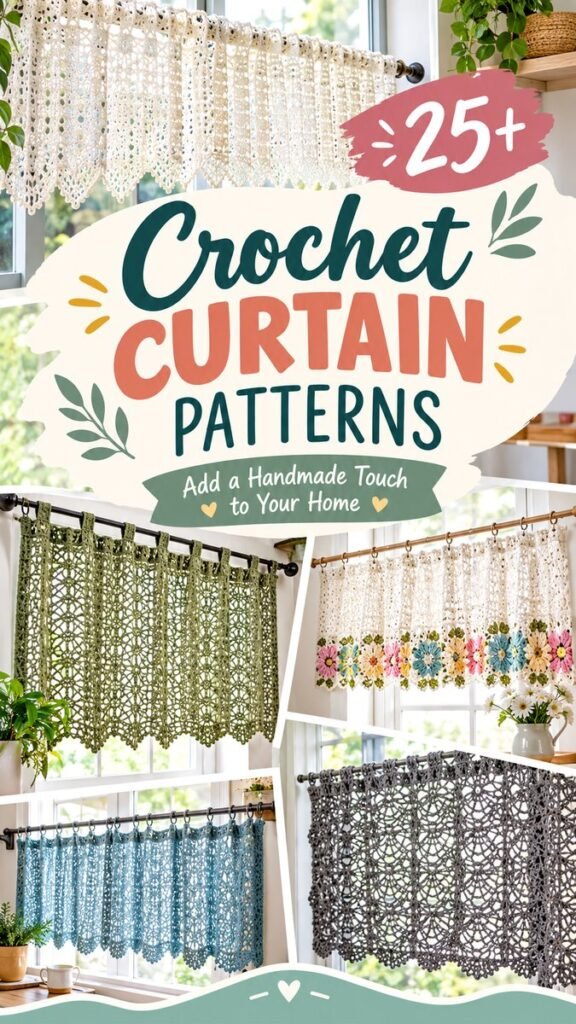
A crochet door curtain can instantly make an ordinary doorway feel warmer, softer, and more personal. Openwork stitches allow light and air to move through while adding beautiful handmade texture, making these curtains especially appealing for kitchens, bedrooms, entryways, and relaxed living spaces. From delicate lace patterns to bold geometric motifs and colorful floral borders, there are countless ways to turn simple crochet work into practical home decor.
The designs featured here show how much personality a crochet door curtain can bring to a room. Some styles use a single neutral shade for an airy look, while others combine contrasting colors or decorative edging for extra character. Whether you love vintage-inspired crochet, modern minimalist patterns, or cheerful handmade accents, a door curtain is a rewarding project that can be adapted to your space.
Key Takeaways
- Choose an open crochet stitch when you want an airy, lightweight curtain.
- Measure the doorway before selecting the pattern and yarn quantity.
- Neutral shades create a calm look, while contrasting colors add personality.
- Decorative borders can give a simple curtain a finished appearance.
- Repeatable stitch patterns make it easier to customize the curtain size.
- Small crochet door curtains can be approachable projects for confident beginners.
Why Crochet Door Curtains Are Worth Making
A crochet door curtain combines decoration and function in a way that few handmade projects do. Instead of leaving a doorway completely plain, you can introduce pattern, texture, and color without making the room feel crowded. The open structure of many crochet stitches also keeps the finished piece visually light.
Another advantage is flexibility. A crochet curtain does not have to cover an entire door from top to bottom. A shorter cafe-style panel can decorate the upper portion of an opening, while a longer panel can create a softer visual separation between two areas. You can also make a pair of narrow panels instead of one wide piece.
Important: The most successful crochet door curtains are designed around the doorway rather than the other way around. Measure the available width and height first, then choose a stitch pattern that can be repeated comfortably within those dimensions.
Crochet Door Curtain Ideas to Try
The visual inspiration includes several distinct approaches, making it easy to imagine a handmade curtain in different decorating styles. You can keep the basic concept simple or use the pattern as a starting point for a more elaborate design.
Delicate Lace Crochet Curtains
Lace-inspired crochet is ideal when you want a light and elegant effect. Open stitches create decorative spaces throughout the fabric, allowing the doorway to remain visually open. Cream, ivory, beige, and other soft neutrals can complement traditional or contemporary interiors.
A lace crochet door curtain can feature repeated motifs such as small diamonds, fans, shells, flowers, or other geometric openings. Repetition is especially useful because it creates a consistent rhythm across a larger panel while making the pattern easier to follow.
Floral Border Door Curtains
For a more decorative result, consider adding flowers along the bottom edge or across selected sections of the curtain. Colorful crochet flowers can turn a plain openwork panel into a cheerful accent that works beautifully in kitchens, craft rooms, bedrooms, or garden-inspired spaces.
You do not need to cover the entire curtain with flowers. A simple row along the hem can provide enough visual interest without overwhelming the main stitch pattern. Choose two or three coordinating shades for a balanced handmade look.
Colorful Striped Crochet Panels
Changing colors is another easy way to personalize a crochet door curtain. Horizontal stripes can create a playful appearance, while carefully selected shades can help connect the curtain with existing furniture, rugs, cushions, or kitchen accessories.
Soft pastel combinations can create a gentle atmosphere, while deeper shades offer more contrast. If you want the crochet pattern itself to remain the main focus, keep the palette limited and repeat the same colors throughout the design.
Geometric Openwork Curtains
Geometric crochet patterns are a great choice for a more structured look. Diamonds, grids, repeating arches, and symmetrical motifs can give a handmade curtain a modern character. A dark gray, charcoal, olive, or muted blue yarn can make the stitch definition particularly noticeable.
Geometric designs are also useful when you want a curtain that feels decorative without relying on flowers or other ornate details. The repeated shapes provide enough texture to stand out on their own.
Choosing the Right Crochet Pattern
Before beginning, think about how much coverage you want and how the curtain will be used. A doorway that needs to remain visually open may benefit from a very lacy pattern. If you want more visual separation, choose a denser stitch design with smaller openings.
Consider the Level of Detail
Highly decorative patterns can be beautiful, but they may require more concentration and more time to complete. Repeating shell, mesh, or simple geometric stitches can be easier to manage, particularly when making a wide curtain.
Think About the Curtain Shape
A rectangular panel is the simplest option, but you can experiment with scalloped hems, pointed edges, decorative corners, or multiple sections. The bottom edge is a particularly effective place to introduce a distinctive crochet motif.
Match the Pattern to the Room
A delicate white or cream curtain can suit a bright, simple room, while colorful crochet works well when you want the doorway to become an accent. For a natural decorating scheme, earthy greens, warm neutrals, and muted tones can blend beautifully with wooden furniture and plants.
How to Plan a Crochet Door Curtain
Good planning makes a noticeable difference when working on a larger crochet home decor project. Start by measuring the doorway or curtain rod where the finished piece will hang.
- Measure the desired finished width.
- Measure the height from the hanging point to the preferred bottom edge.
- Decide whether you want one panel or two separate panels.
- Choose a yarn weight and crochet hook that suit the stitch pattern.
- Make a small gauge or pattern sample before committing to the full curtain.
- Adjust the starting chain or motif count according to the pattern repeat.
The sample is particularly important because crochet tension can vary from one maker to another. Even if you follow the same pattern, your finished fabric may be wider, narrower, looser, or denser than expected. A small test section helps you make adjustments before investing time in the full project.
Expert Insight
For a curtain, drape matters just as much as stitch beauty. A pattern that looks attractive in a small sample may behave differently when expanded into a full panel. Test how the fabric hangs before deciding on the final size.
Yarn Choices for Crochet Door Curtains
The yarn you choose affects the weight, texture, drape, and overall appearance of the finished curtain. Lightweight yarns are often a natural choice for openwork designs because they can create a delicate fabric that does not look overly heavy around a doorway.
Cotton is popular for crochet home decor because it offers clear stitch definition and comes in a wide range of colors. Depending on the pattern, a smooth yarn can make lace motifs easy to see and can give geometric designs a crisp appearance.
When choosing yarn, also consider maintenance. A door curtain may collect dust over time, especially if it hangs near a frequently used entrance. A yarn that can be cleaned according to its care instructions will make the finished project easier to maintain.
Simple Ways to Customize Your Curtain
One of the best things about crochet is how easily a basic pattern can become your own. You can change the colors, border, dimensions, or stitch combinations while keeping the main structure recognizable.
- Add a scalloped crochet border for a softer finish.
- Use contrasting yarn for the bottom edge.
- Combine two complementary colors in alternating rows.
- Replace a plain hem with floral or geometric motifs.
- Make two narrow panels for a traditional split-curtain effect.
- Adjust the length to create a short cafe-style doorway curtain.
Pro Tip: If you love the look of a detailed crochet pattern but want a faster project, use the decorative stitch only along the bottom section and keep the upper portion simple. This creates a focal point while reducing the amount of intricate work.
Styling a Crochet Door Curtain at Home
A handmade curtain can work in many areas beyond a traditional doorway. Try a short panel in a kitchen opening, use a decorative piece to soften a transition between rooms, or create a cozy accent for a small nook.
For a calm and timeless arrangement, pair a neutral crochet curtain with natural textures such as wood, woven baskets, simple ceramics, or greenery. The open crochet pattern adds interest without competing with the surrounding decor.
If your room already contains strong colors, pick one shade from the existing palette and use it for the curtain. This creates a coordinated appearance while still allowing the crochet texture to stand out.
Create a Cozy Kitchen Accent
Kitchen doorways are particularly suited to crochet curtains because shorter panels can add personality without making the area feel enclosed. A lace pattern in a light neutral shade can complement bright windows and open shelving, while a striped or floral design can introduce a cheerful handmade detail.
Add Texture to a Bedroom
In a bedroom, a soft crochet curtain can contribute to a relaxed atmosphere. Choose a subtle pattern and colors that work with bedding or other textiles. A long openwork panel can create a decorative transition while maintaining a light visual effect.
Use Crochet in Small Spaces
You do not need a large doorway to enjoy this project. Smaller openings can be dressed with compact panels, making crochet curtains a practical option for spaces where full-size fabric curtains would feel too bulky.
Finishing Details That Make a Difference
Once the main crochet panel is complete, take time to inspect the edges. Uneven sides can affect how the curtain hangs, especially when the design contains openwork. A simple border can help create a more finished appearance and give the edges additional structure.
Blocking can also be useful for suitable crochet fabrics. It can help open up lace motifs and encourage the finished piece to settle into a more defined shape. Always follow the care recommendations appropriate for the yarn you selected.
Finally, consider the hanging method. A curtain can be attached to a rod using loops, rings, ties, or another method compatible with the design. Keep the attachment points evenly spaced so the top edge hangs neatly.
Making Your Crochet Curtain Project More Enjoyable
Larger crochet projects become much easier to manage when you break them into smaller milestones. Instead of focusing on the entire finished curtain, work through the project one repeat, section, or row at a time.
Keep your measurements nearby and check the width periodically. Crochet fabric can change shape as more rows are added, and catching an issue early is much easier than discovering it after the curtain is finished.
It can also be helpful to photograph your progress. A quick picture from time to time lets you see how the pattern is developing and can make it easier to spot changes in tension or color placement.
At a Glance
- Measure before you crochet.
- Choose lightweight yarn for airy designs.
- Use lace stitches for an open, delicate effect.
- Add borders or color changes for personalization.
- Test the drape before finishing the full curtain.
Conclusion: Create a Handmade Doorway You Love
A crochet door curtain is more than a decorative textile. It is an opportunity to bring handmade character, texture, and color into an everyday part of your home. The inspiration from lace panels, floral borders, colorful stripes, and geometric openwork shows how many directions this simple project can take.
Start with the style that best matches your space, then make it personal through yarn color, curtain length, stitch choice, and finishing details. Whether you prefer an airy neutral panel or a cheerful design filled with color, the finished piece can become a small but memorable feature of the room.
With careful measuring, a suitable stitch pattern, and a little patience, you can create a crochet door curtain that feels intentional and beautifully handmade. Save your favorite ideas, choose a pattern that inspires you, and let your next crochet project transform an ordinary doorway into a cozy decorative detail.