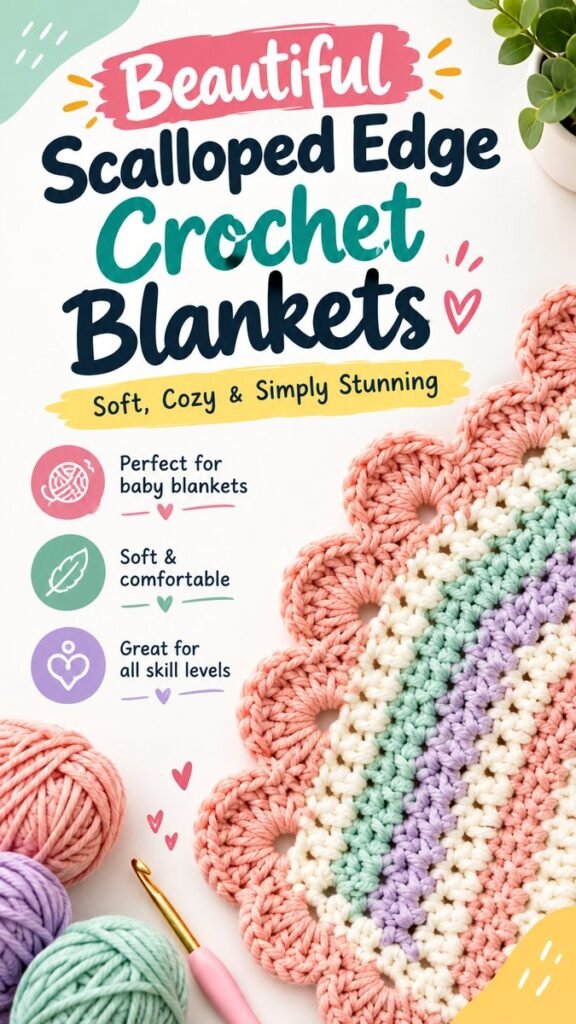
There is something wonderfully satisfying about adding the final border to a handmade baby blanket. A well-chosen crochet border can transform a simple blanket into a polished, gift-worthy piece while adding softness, texture, and personality. Scalloped edging is especially charming because its rounded shapes create a gentle decorative finish that works beautifully with cozy pastel blankets.
Whether you are finishing a colorful striped blanket, refreshing an older crochet project, or looking for an easy way to make a baby gift feel more special, crochet borders for baby blankets offer plenty of creative possibilities. From delicate shell-inspired edges to simple rounded scallops, the right border can frame your stitches without overwhelming the main design.
Key Takeaways
- A scalloped crochet border gives baby blankets a soft, rounded decorative finish.
- Pastel shades pair naturally with playful baby blanket designs.
- A simple border can make uneven edges look more finished and intentional.
- Matching or contrasting yarn can create very different visual effects.
- Simple edging patterns are approachable for crocheters of different skill levels.
Why Crochet Borders Make Baby Blankets Special
The border is more than an extra row around a blanket. It creates a visual frame that helps define the shape of the finished project. When the blanket features several colors or repeating stripes, a border can also bring those colors together and give the entire piece a cohesive appearance.
For baby blankets, rounded edging is particularly appealing. Soft curves tend to complement the cozy nature of crocheted fabric, creating a finish that feels playful without becoming overly complicated. A scalloped edge can look delicate on a small blanket while still providing enough texture to make the outside stand out.
Important: The best baby blanket border does not need to be elaborate. A consistent, evenly worked edge with a pleasing yarn color can make a bigger visual impact than a highly complicated pattern.
Scalloped Edge Crochet Ideas for Baby Blankets
A scalloped border is one of those crochet techniques that can be adapted to many blanket styles. The basic idea is to create repeated rounded sections along the outer edge, producing a series of gentle curves. Depending on the stitches and spacing used, the scallops can be small and subtle or larger and more decorative.
For a blanket with pastel stripes, a soft pink, cream, mint, lavender, or another coordinating shade can emphasize the cheerful character of the design. A contrasting border can make the outer edge immediately noticeable, while a coordinating shade creates a quieter and more seamless finish.
Soft and Rounded Shell-Style Edging
Shell-inspired borders are a natural choice when you want rounded shapes around the blanket. They create a repeating fan or scallop effect that looks especially attractive on baby blankets. The curved sections can echo the softness of the crocheted fabric and give the project a classic handmade appearance.
This type of edging works well when the blanket itself has relatively simple stitches because the border becomes a decorative focal point. If the blanket already contains a lot of texture, keeping the scallops modest can prevent the finished piece from looking too busy.
Simple Scalloped Crochet Border
If you prefer an uncomplicated finish, a basic scalloped crochet edging can be a practical option. Repeated rounded sections add visual interest without requiring a highly intricate border design. This makes the style useful for crocheters who want an attractive finish while keeping the project approachable.
Simple edging can also be easier to coordinate with different blanket patterns. Whether the blanket has stripes, solid sections, granny-style motifs, or another repeating design, a clean scalloped edge can provide a consistent outline.
Colorful Borders for Pastel Blankets
Color is one of the easiest ways to personalize crochet borders for baby blankets. The blanket shown with soft pink, ivory, mint, and lavender tones demonstrates how a gentle palette can create a cheerful yet soothing appearance.
You can choose one of three general approaches when selecting a border color:
- Match the main color: Use a shade that already appears in the blanket for a coordinated finish.
- Choose a neutral: Cream, ivory, or another understated shade can frame colorful stitches without competing with them.
- Use a contrast: A stronger accent color makes the border more noticeable and gives the blanket a playful outline.
How to Choose the Right Crochet Border
The best border depends on the blanket’s colors, stitch texture, size, and overall style. Before beginning, look at the blanket as a whole rather than choosing an edging pattern in isolation. A border should complement the existing design and help the finished piece feel balanced.
Consider the Blanket’s Existing Texture
A heavily textured blanket may look best with a relatively simple border. A plain or gently textured blanket, on the other hand, can support a more decorative scalloped edge. Thinking about contrast in texture helps the border stand out without taking attention away from the center.
Think About Proportion
Border size matters. A narrow blanket usually benefits from a proportionally modest edging, while a larger blanket may accommodate wider scallops or multiple finishing rounds. The goal is to make the border look like a natural extension of the blanket rather than an oversized addition.
Match the Mood of the Project
For baby blankets, gentle colors and rounded motifs naturally create a warm, cozy mood. Pastel pink, mint, lavender, cream, and similar shades can give the finished blanket a soft appearance. If the blanket is intended as a gift, choosing a border that reflects the colors already present can make the project feel thoughtfully coordinated.
Expert Insight
A border can visually unify several colors. When a blanket contains multiple pastel shades, repeating one of those colors around the outside often creates a more intentional and finished look.
Tips for Creating a Neat Baby Blanket Border
Even a simple crochet edging looks much more polished when the foundation round is neat and consistent. Take a little time to inspect the blanket edge before starting. Look for areas where stitches may be crowded, stretched, or uneven, and decide how you want to establish the border.
Work Around the Corners Carefully
Corners deserve special attention because the direction of the border changes there. If the corner is too tight, the blanket may curl. If there are too many stitches, the corner can become wavy. A balanced corner helps the blanket lie flat and allows the scalloped edge to continue smoothly around the entire piece.
Keep Your Tension Consistent
Consistent tension helps the scallops maintain a similar size throughout the border. If some sections are noticeably tighter or looser than others, the curves may look uneven. Relaxed, steady stitching can make a substantial difference in the final appearance.
Check the Edge as You Go
Do not wait until the final stitch to inspect your work. Every few inches, lay the blanket flat and check how the edging is forming. This makes it easier to notice tension changes, skipped spaces, or areas where the border is beginning to pull or ripple.
Pro Tip: If you are unsure how a particular scalloped border will look, crochet a small sample first. Testing the stitch combination and color can save time and helps you decide whether the scale of the scallops suits your blanket.
Best Color Combinations for Crochet Baby Blanket Edging
Color selection can completely change the personality of a crochet blanket. A soft pink scalloped border gives a delicate and playful finish, while ivory creates a more understated appearance. Mint and lavender can add a fresh pastel touch, especially when they already appear in the blanket’s central design.
For a harmonious palette, choose a border color that appears somewhere inside the blanket. This creates repetition and naturally connects the center with the outer edge. For a bolder result, select an accent shade that contrasts with the main colors while still fitting the overall palette.
When combining several pastel colors, remember that the border does not have to include every color used in the blanket. Sometimes one carefully selected shade is enough to tie the entire design together.
Making Crochet Borders Work for Baby Gifts
A handmade baby blanket is already meaningful, and a thoughtful border can give it an especially finished appearance. The rounded scallops in a soft pastel shade create a friendly, cozy look that works well for nursery-inspired projects and handmade gifts.
If you are preparing a blanket as a gift, consider keeping the border comfortable and practical rather than excessively raised or complicated. A smooth, secure finish allows the blanket to remain soft and useful while still providing the decorative detail that makes handmade crochet so appealing.
Simple Details Can Have a Big Visual Impact
One of the most useful things about crochet edging is how much it can change the overall appearance of a project. A blanket may look nearly complete before the border is added, yet the finished edging can make the colors appear more intentional and the shape more defined.
That is why scalloped borders remain such a popular idea for baby blankets. They offer decorative texture without requiring the entire project to be redesigned. If you already have a blanket waiting for its finishing touch, experimenting with a rounded edge can be an easy way to give it a fresh look.
At a Glance
- Choose rounded scallops for a soft, playful finish.
- Coordinate the border with one or more blanket colors.
- Keep stitch tension steady for evenly sized curves.
- Pay extra attention to corners so the blanket stays flat.
- Test a small sample before committing to the final edging.
Conclusion
Beautiful crochet borders for baby blankets do not have to be complicated. A carefully chosen scalloped edge can add softness, texture, and a polished finishing touch while allowing the colors and stitches of the blanket to remain the star of the project.
Whether you prefer delicate pastel edging, a coordinating neutral, or a cheerful contrasting color, focus on proportion, consistency, and balance. Take your time around the corners, maintain even tension, and test your border idea when you are uncertain. These small steps can turn a simple crochet blanket into a beautifully finished handmade piece.
Save your favorite scalloped crochet edging ideas and return to them whenever you have a baby blanket ready for its final touch. With the right border, even a simple crochet design can feel extra special, cozy, and thoughtfully handmade.
Tags
Crochet Borders Baby Blanket Crochet Crochet Edging Scalloped Crochet Crochet Blanket Ideas Baby Blanket Ideas Crochet Patterns Handmade Baby Gifts