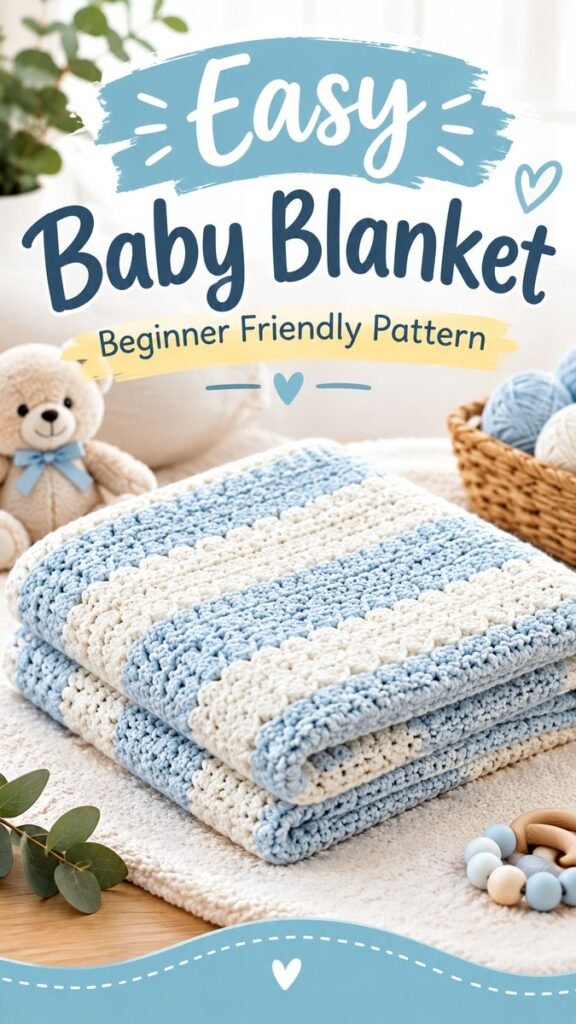
This easy crochet baby blanket for boys is a cozy, timeless project for anyone who loves handmade nursery pieces. With its soft blue and ivory color palette, simple striped appearance, and beginner-friendly feel, this blanket is a lovely choice for a baby shower gift, nursery accent, or thoughtful handmade keepsake. The classic colors make it especially easy to coordinate with a variety of baby room styles, while the straightforward design keeps the focus on comfort and simplicity.
Key Takeaways
- A soft blue and ivory palette creates a classic look for a boy’s nursery.
- Simple crochet construction makes this style approachable for beginners.
- Striped color changes add visual interest without requiring a complicated design.
- A handmade baby blanket can become a practical gift and meaningful keepsake.
- Choosing soft, baby-friendly yarn helps create a comfortable finished blanket.
Why a Simple Crochet Baby Blanket Is a Great Project
A crochet baby blanket does not need an elaborate stitch pattern to look beautiful. In fact, uncomplicated designs often have a timeless quality that works especially well for baby items. The blanket shown here combines gentle colors with a neat, textured appearance, creating a piece that feels both handmade and polished.
For a beginner crocheter, a simple baby blanket can also be an excellent way to build confidence. The repeated nature of many basic blanket patterns allows you to become comfortable with your hook, yarn tension, stitch rhythm, and row counting. Once those skills become familiar, larger crochet projects feel much less intimidating.
The blue and ivory combination is particularly versatile. Soft blue brings a calm, traditional nursery feel, while ivory adds warmth and keeps the overall design light. Together, the colors create a neutral enough palette to work with many different nursery themes without making the blanket feel overly decorative.
Important: When making a baby blanket, prioritize softness, comfortable construction, and practical care over complicated decorative details. A simple blanket that feels pleasant and is easy to maintain can become an everyday favorite.
Choosing Colors for a Crochet Baby Blanket for Boys
Color is one of the easiest ways to personalize a crochet baby blanket. The reference design uses a combination of pale blue and creamy ivory, a pairing that feels gentle and classic. You can recreate that visual mood with similar shades or adjust the palette to suit your own preferences.
Soft blue is a natural choice for a boy’s crochet blanket, but there is no need to limit yourself to one specific shade. Powder blue, sky blue, muted denim, dusty blue, or a slightly gray-blue yarn can each create a different effect. Pairing any of these with ivory, cream, white, or beige can soften the finished design.
If you want a more modern look, consider using two or three coordinating shades rather than several contrasting colors. Keeping the palette restrained helps the texture of the crochet work remain visible and gives the blanket a clean appearance.
Simple Color Combinations to Try
- Powder blue and ivory: Soft, traditional, and gentle.
- Sky blue and cream: Bright without feeling harsh.
- Dusty blue and beige: A warm, modern nursery combination.
- Blue, white, and ivory: A fresh striped appearance with subtle contrast.
Selecting Yarn for a Baby Blanket
Yarn selection plays a major role in how a crochet baby blanket feels and performs. For a project intended for a baby, look for yarn that feels soft against the skin and is practical enough for regular washing. A blanket that is beautiful but difficult to care for may spend more time stored away than being used.
Soft acrylic yarn is a common option for blankets because it can be lightweight, easy to work with, and relatively simple to care for. Other yarn fibers may also be suitable depending on the intended use and the manufacturer’s care recommendations. Always check the yarn label before beginning the project, particularly when washing instructions matter.
Another useful consideration is yarn texture. Very fuzzy or heavily textured yarn can make stitches harder to see, which may be frustrating for someone learning to crochet. A smooth yarn with clear stitch definition is often easier to handle when practicing a beginner-friendly blanket pattern.
Choose a yarn weight that matches the pattern instructions rather than selecting yarn based only on color. Changing the yarn weight can affect the blanket’s dimensions, drape, texture, and amount of yarn required.
How Much Yarn Do You Need?
The exact amount of yarn depends on the finished blanket size, stitch pattern, yarn weight, hook size, and your personal tension. A small baby blanket generally requires less yarn than a larger crib or toddler blanket. If you are following a specific free pattern, use its recommended yarn quantity as your starting point.
It is also helpful to purchase enough yarn from the same color lot when possible. Dye lots can vary slightly, and having extra yarn available is useful if you need to make adjustments or finish the border.
Understanding the Beginner-Friendly Design
The visual appeal of this crochet baby blanket comes from repetition, texture, and color rather than an overly complicated motif. That makes this type of project especially appealing to crocheters who are still developing their skills.
A repetitive pattern can help establish a comfortable rhythm. Instead of constantly learning a new stitch sequence, you can focus on maintaining consistent tension and keeping your edges neat. This is valuable practice for anyone who hopes to move on to larger blankets, scarves, baby clothing, or home decor projects.
The striped appearance also gives you an easy way to personalize the blanket. You can keep the stripes wide and simple, alternate colors evenly, or create your own sequence. Even a basic stitch pattern can look completely different when you change the arrangement of colors.
Why This Matters
- Consistent tension helps create a more even fabric and cleaner edges.
- Simple repeating stitches make it easier to notice mistakes early.
- Limited color palettes create a polished look without complicated pattern changes.
Basic Supplies for the Project
A beginner-friendly crochet baby blanket does not require a large collection of supplies. Keeping your materials simple can make the project more approachable and enjoyable.
- Soft baby-friendly yarn: Select the weight and fiber recommended by your chosen pattern.
- Crochet hook: Use the hook size suggested for your yarn and pattern.
- Yarn needle: Useful for weaving in loose ends after color changes.
- Scissors: Keep a small sharp pair nearby for trimming yarn.
- Stitch markers: Helpful for keeping track of rows or important sections.
Tips for Crocheting a Neat Baby Blanket
One of the biggest challenges for beginners is keeping the blanket edges straight. It is easy to accidentally add or skip a stitch at the beginning or end of a row, especially when working quickly. Counting your stitches regularly can help prevent the blanket from gradually becoming wider or narrower.
Pay attention to your tension as well. If your stitches become tighter or looser as you crochet, the fabric may change in appearance. Try to hold the yarn comfortably rather than gripping it too firmly. A relaxed grip can make long crochet sessions much more pleasant.
When changing colors, keep your transitions tidy. Weaving in ends carefully can make the back of the blanket look cleaner and help prevent loose strands from becoming troublesome later.
Pro Tip: Before committing to the entire blanket, crochet a small swatch. This gives you a chance to check the fabric’s texture, stitch tension, color combination, and overall appearance before investing time in the full project.
Keep Your Edges Consistent
If your pattern includes turning chains, pay attention to how they are counted. Different crochet patterns handle turning chains differently, so following the instructions consistently is more important than trying to apply a general rule to every project.
Using a stitch marker at the first or last stitch can also make row counting easier. This is especially helpful when the stitch pattern looks similar from one row to the next.
How to Personalize a Crochet Baby Blanket
One of the best things about making a handmade baby blanket is the opportunity to customize it. You can use the same basic construction while changing the colors, dimensions, border, or finishing details.
For a classic boy’s nursery blanket, soft blue and ivory create the gentle look shown here. For a more neutral design, substitute cream, oatmeal, sage, gray, or warm beige. If you are making the blanket as a gift, consider choosing colors that coordinate with the baby’s nursery or the family’s preferred style.
You can also personalize the size. A smaller blanket may work well as a stroller or cuddle blanket, while a larger version can provide more coverage. Before changing dimensions, consider how the alteration will affect the stitch repeat and yarn requirements.
Consider Adding a Simple Border
A clean border can frame the blanket and give the finished piece a more polished appearance. A simple single-crochet or similarly straightforward edging can complement a textured blanket without competing with the main pattern.
If the blanket already has strong stripes, a contrasting border can create definition. Alternatively, matching the border to one of the main colors can produce a softer, more cohesive finish.
Making This Blanket as a Baby Shower Gift
A handmade crochet baby blanket can be a thoughtful baby shower gift because it combines usefulness with the personal touch of something made by hand. The soft blue and ivory palette shown here is especially suited to a traditional boy’s nursery, while the simple design makes it easy to adapt for different preferences.
If you are gifting the blanket, take time to finish the loose ends securely and inspect the entire piece before wrapping it. Check that there are no loose strands or unfinished sections. Following the yarn manufacturer’s care instructions can also help the recipient understand how to maintain the blanket.
A handmade blanket can be paired with another simple nursery gift, but it can also stand on its own. Fold it neatly and use simple wrapping to let the crochet texture become part of the presentation.
Care Tips for a Crochet Baby Blanket
Proper care helps preserve the softness and appearance of handmade crochet. Always follow the washing and drying instructions provided for the specific yarn used in your project. Different fibers can respond very differently to heat, agitation, and moisture.
- Check the yarn label before washing.
- Use the recommended water temperature and washing method.
- Avoid harsh treatment that could stretch or distort the stitches.
- Dry the blanket according to the yarn manufacturer’s instructions.
- Store the blanket clean and completely dry when it is not being used.
Because baby blankets may be washed frequently, choosing a practical yarn and finishing the blanket securely are important considerations from the beginning of the project.
Easy Crochet Baby Blanket Ideas to Explore
Once you are comfortable with a simple blanket, there are many ways to build on the same idea. Try alternating narrow and wide stripes, experimenting with a two-tone checker effect, or keeping the entire blanket in one calming color. You can also explore different beginner-friendly stitches to create subtle changes in texture.
For a boy’s crochet blanket, traditional blue shades are only one option. Soft green, warm gray, cream, muted tan, and dusty neutrals can all create beautiful nursery-friendly combinations. The most important consideration is choosing colors that you enjoy and that work well together.
If you are still learning, resist the temptation to make the first project overly complicated. A straightforward blanket gives you valuable practice while still producing something useful. Once you have completed one project, you can gradually experiment with more detailed stitch patterns, decorative borders, and colorwork.
At a Glance
- Style: Soft, classic, striped crochet baby blanket.
- Palette: Light blue and ivory for a gentle nursery look.
- Skill level: Beginner-friendly when paired with a simple repeating pattern.
- Best use: Nursery blanket, baby shower gift, or handmade keepsake.
- Personalization: Adjust colors, size, stripe arrangement, and border details.
Conclusion: A Cozy Handmade Crochet Baby Blanket
A crochet baby blanket free pattern for boys can be a wonderfully rewarding project, especially when the design keeps the colors soft and the construction approachable. The blue and ivory blanket style featured here demonstrates how simple crochet techniques can create a polished, cozy result without relying on complicated decoration.
Whether you are making your first baby blanket or adding another handmade piece to your collection, focus on comfortable yarn, consistent tension, neat edges, and a color palette you love. Small details such as careful color changes and a clean border can make a simple project feel especially finished.
Most importantly, enjoy the process. Handmade crochet pieces carry a warmth that goes beyond their practical purpose. A carefully made baby blanket can become part of quiet nursery moments, stroller walks, cuddles, and family memories for years to come. With a beginner-friendly approach and a timeless blue-and-ivory palette, this style is an easy project to save and revisit whenever you are ready to pick up your hook.
Tags
Crochet Baby Blanket Free Crochet Pattern Baby Boy Blanket Beginner Crochet Crochet Baby Gift Boy Nursery Ideas Easy Crochet Projects span style=”display:inline-block;background:#e8f4f8;color:#315c70;border-radius:20px;padding:7px 13px;margin:4px;font-size:14px;”>Handmade Baby Blanket