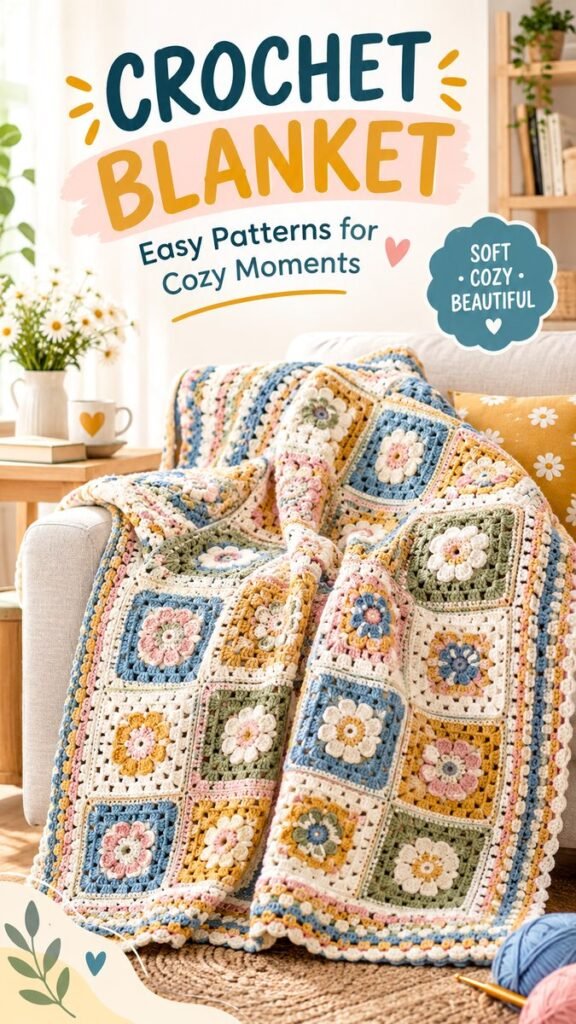
A neutral crochet baby blanket can bring warmth, texture, and a beautifully handmade touch to a nursery without overwhelming the space. Soft cream, beige, oatmeal, taupe, and muted blue tones create a calm foundation, while carefully placed crochet details add personality and charm. The blanket shown here combines cozy square motifs, textured stitches, delicate edging, and sweet bear-inspired details for a look that feels both playful and timeless.
Whether you are making a baby blanket as a thoughtful handmade gift or creating something special for a nursery, this style offers plenty of inspiration. The combination of neutral colors and decorative crochet motifs makes it easy to create a blanket that feels personal while still working beautifully with a variety of nursery themes.
Key Takeaways
- Neutral crochet colors create a soft, versatile baby blanket.
- Granny square construction makes it easy to combine different textures and motifs.
- Small decorative details can give a simple blanket a distinctive handmade character.
- A scalloped or textured border can provide a polished finished edge.
- Cream, beige, soft blue, and muted pastel shades work especially well together.
Why Choose a Neutral Crochet Baby Blanket?
Neutral baby blankets are popular because they are wonderfully adaptable. Instead of relying on bold colors, a neutral palette creates a gentle appearance that can complement many nursery styles. A cream or beige base can feel warm and traditional, while small accents of dusty blue, soft pink, sage, or warm brown can introduce just enough contrast.
A handmade crochet blanket also has a visual quality that mass-produced blankets often cannot replicate. The stitches create raised textures, subtle shadows, and patterns that invite you to look closer. When different squares are combined, the result can feel artistic while still being practical and cozy.
Important: A neutral palette does not have to mean a completely plain blanket. The most appealing designs often use neutral shades as the foundation and add small amounts of muted color through borders, motifs, flowers, stripes, or decorative squares. This keeps the overall look calm while giving the blanket plenty of character.
A Soft Foundation for Nursery Decor
A neutral crochet baby blanket can easily become part of the nursery decor. Fold it over a crib rail when appropriate for decorative purposes, place it across a nursery chair, or keep it neatly folded in a basket. Its texture can add warmth to a room filled with smooth wood, painted furniture, woven baskets, and soft fabrics.
Because neutral colors are easy to coordinate, the blanket does not need to dictate the rest of the room. Instead, it can quietly connect different elements together. Cream can echo the walls, beige can complement natural wood, and muted blue or green accents can tie into cushions, artwork, or small decorative pieces.
Understanding the Crochet Blanket Design
The visual appeal of this type of crochet baby blanket comes from combining multiple square motifs rather than relying on one repeating stitch throughout. Each section can have its own texture, color arrangement, or decorative detail while still following the same general shape.
Square-based blankets are particularly attractive for handmade projects because they offer a flexible way to experiment. You can make individual squares separately, arrange them in different combinations, and then join them into a larger blanket. This allows the design to evolve as you work.
Mixing Textured and Decorative Squares
One of the strongest design ideas is to alternate simple textured squares with more decorative motifs. A plain ribbed or patterned square gives the eye a place to rest, while a floral or character-inspired square becomes a focal point.
For a neutral crochet baby blanket, consider building a collection that includes:
- Simple solid-color squares
- Textured stitch squares
- Small floral motifs
- Animal-inspired motifs
- Striped or color-blocked squares
- Openwork squares used sparingly for visual contrast
The goal is not to make every square complicated. A thoughtful combination of simple and detailed sections can create a much more balanced finished blanket.
Adding Sweet Baby-Friendly Motifs
Small motifs can turn an ordinary crochet blanket into something memorable. Bear faces, flowers, hearts, stars, clouds, or other simple shapes can work beautifully with a neutral color scheme. The important part is keeping the motif colors coordinated so the blanket retains its soft overall appearance.
For a subtle design, use the same motif repeatedly in different neutral shades. Another option is to reserve decorative motifs for a few feature squares and keep the remaining sections relatively simple.
Expert Insight
When a crochet blanket contains many different motifs, repeating one or two colors throughout the design helps everything feel connected. A consistent neutral base can make even playful decorative squares look cohesive rather than busy.
Choosing the Best Neutral Crochet Colors
Color selection has a major effect on the finished appearance of a crochet baby blanket. Neutral does not have to mean using only one shade. In fact, layering several closely related tones can create beautiful depth.
Cream and Oatmeal
Cream and oatmeal are excellent foundation colors for a soft nursery blanket. They create a warm appearance and pair easily with both cool and warm accent shades. These colors are especially useful when you want the blanket to feel timeless and understated.
Beige and Warm Brown
Beige and light brown can give a crochet baby blanket a cozy, natural appearance. These shades work particularly well with wooden nursery furniture and woven accessories. A warm brown can also be used in small amounts to define patterns or decorative motifs.
Muted Blue and Soft Pastels
A little color can make a neutral blanket feel more playful without losing its calm quality. Muted blue is especially effective when paired with cream and beige. Soft sage, dusty pink, pale yellow, or gentle lavender can also be introduced as small accent colors.
Pro Tip: Choose one dominant neutral, one secondary neutral, and one or two accent colors before you begin. This simple approach makes it easier to create coordinated squares and prevents the finished blanket from becoming visually crowded.
Planning Your Crochet Baby Blanket
Before crocheting dozens of squares, spend a little time planning the overall arrangement. This is particularly helpful when the design includes several motifs or multiple colors.
- Choose your color palette. Decide on the main neutral shades and a small number of accent colors.
- Select your square designs. Mix simple textured squares with a few decorative motifs.
- Make sample squares. This gives you an opportunity to check how the colors and textures look together.
- Plan the arrangement. Lay completed squares out before joining them so you can move colors and motifs around.
- Choose the border. A simple border can unify a detailed design and create a finished appearance.
Think About the Final Layout
Square blankets become especially interesting when similar motifs are not placed in an overly predictable arrangement. Try spreading feature squares throughout the blanket rather than placing them all together. You can also alternate light and slightly darker squares to create a gentle rhythm.
If you prefer a more minimalist result, use mostly cream and beige squares with only a few decorative accents. For a playful nursery style, increase the number of soft blue, pastel, or motif-covered squares while keeping the overall palette muted.
Creating a Beautiful Crochet Border
The border is more than a finishing detail. It can visually frame the entire blanket and make the individual squares feel like one cohesive design. A simple border is often the best choice when the center contains many patterns.
For a soft neutral crochet baby blanket, consider a border in cream, oatmeal, or another shade that appears throughout the main design. A scalloped edge can add a gentle decorative touch, while several narrow rounds can create a layered effect.
You can also use a subtle contrasting color around the outside to make the blanket stand out. If the interior contains several pastel accents, repeating one of those colors in the border can help connect the design from the center to the edges.
Tips for Making a Handmade Baby Blanket
A baby blanket is a project where comfort and practicality matter just as much as appearance. Soft yarn, comfortable stitching, and a manageable design can make the finished piece more enjoyable to use and care for.
- Keep the texture comfortable. Avoid making the entire blanket excessively raised or bulky.
- Check your yarn care instructions. A baby blanket may need frequent washing, so easy-care materials can be convenient.
- Secure finishing details carefully. Pay close attention to ends, joins, and decorative elements.
- Keep the design balanced. Too many different motifs can compete for attention.
- Make a gauge sample when appropriate. Consistent tension can help your squares remain similar in size.
When adding decorative elements, think about how they will hold up with regular use. Flat motifs and securely worked details can provide visual interest while maintaining a practical feel. Always follow appropriate baby-safety guidance when making or using handmade items for infants.
Why Granny Square Blankets Make Great Handmade Gifts
There is something especially meaningful about giving a handmade crochet baby blanket. The time spent selecting colors, working stitches, arranging motifs, and finishing the border turns a simple textile into a personal keepsake.
Granny square designs are also appealing because they can be customized. You can change the color combinations, replace decorative motifs, simplify the arrangement, or make the blanket larger or smaller according to your project needs.
A neutral design is particularly versatile as a gift because it can suit many different tastes. Instead of matching one specific nursery theme, cream, beige, oatmeal, and muted accent shades provide a flexible foundation that can grow with the room.
Why This Matters
- A limited color palette makes mixed crochet motifs look more coordinated.
- Simple squares can balance more detailed decorative sections.
- Repeating a border color throughout the blanket creates a polished finished look.
Easy Ways to Personalize a Neutral Crochet Blanket
The beauty of a handmade blanket is that personalization can happen at almost every stage. Even a classic neutral design can be adjusted to reflect a particular nursery or gifting occasion.
Adjust the Accent Colors
Start with the same cream or beige foundation and change the accent colors. Soft sage creates a natural look, dusty blue gives the blanket a cool and peaceful feeling, while muted pink can add a gentle romantic touch. Warm mustard or terracotta can create a more contemporary appearance when used sparingly.
Change the Motif Mix
If you love animal-inspired details, use a few character squares as focal points. If you prefer a more traditional style, replace them with flowers, geometric patterns, or textured squares. Keeping the same overall color palette will maintain visual consistency.
Experiment With the Border
A narrow neutral border creates a minimalist finish, while a wider decorative border makes the blanket feel more elaborate. You can repeat colors from the center or choose one shade to frame the entire design.
Styling a Neutral Crochet Baby Blanket
Once finished, a crochet baby blanket can become a charming part of a cozy nursery setting. Fold it neatly over a comfortable chair, place it in a woven storage basket, or display it at the foot of a nursery seating area. The handmade texture can instantly make a space feel warmer and more inviting.
Pair the blanket with other understated textures such as linen, cotton, wood, woven baskets, and soft cushions. Keeping surrounding decor relatively simple allows the crochet stitches and motifs to become the main visual feature.
For photography or Pinterest inspiration, natural light can emphasize the texture of crochet beautifully. A neutral background, a few soft nursery accessories, and a carefully folded or casually draped blanket can create an inviting presentation without making the scene feel overly staged.
Quick Points
- Use cream and beige as the foundation.
- Add muted colors for gentle visual interest.
- Mix simple squares with a few decorative motifs.
- Finish with a coordinated crochet border.
- Prioritize comfortable, practical construction for everyday use.
Conclusion
A neutral crochet baby blanket is a wonderful way to combine timeless color, cozy texture, and handmade personality. The soft palette creates a calm foundation, while granny squares, decorative motifs, textured stitches, and a carefully chosen border can transform the blanket into something truly special.
You do not need an overly complicated pattern to create an impressive result. A thoughtful combination of neutral shades, simple stitch patterns, and a few charming feature squares can produce a blanket that feels polished, warm, and personal. Whether you are making one for a nursery, preparing a handmade baby gift, or simply looking for your next crochet project, this style offers plenty of room for creativity.
Start with a small color palette, experiment with a few square designs, and let the texture of the crochet do the talking. With a little planning, you can create a neutral crochet baby blanket that feels cozy today and remains a beautiful handmade keepsake for years to come.