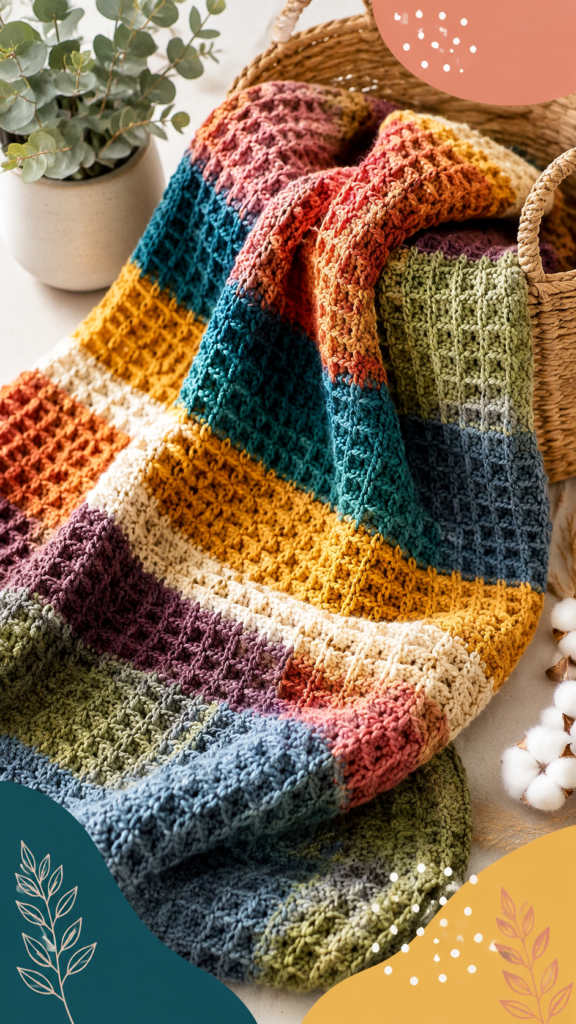
Colorful crochet blankets have a special way of making a room feel warmer, softer, and more personal. The rich combination of mustard yellow, coral, dusty pink, plum, sage green, blue, and neutral shades creates a cozy handmade look while the raised stitch texture gives each section plenty of visual interest. This style of crochet is perfect for anyone who loves practical projects that also add personality to a home.
A beautifully textured crochet blanket does not need complicated decoration to make an impression. Strong color choices, repeating stitch patterns, and thoughtful combinations can turn simple yarn into something that feels artistic and inviting. Whether you are an experienced crocheter searching for your next project or a beginner looking for colorful crochet inspiration, this approach offers plenty of ideas to explore.
Key Takeaways
- Use multiple colors to create a cheerful, handmade crochet blanket.
- Textured stitches add depth and make simple designs look more detailed.
- Warm and muted shades can be combined for a balanced cozy palette.
- Striped sections are an approachable way to experiment with color.
- Crochet blankets can work beautifully as throws, gifts, or decorative accents.
- Consistent tension and careful color changes help create a polished finished project.
Why Colorful Crochet Blankets Feel So Cozy
Color is one of the first things that catches the eye in a handmade blanket. Instead of relying on a single shade, a multicolor crochet design can create layers of personality through carefully selected yarn. The combination of earthy green, golden yellow, coral, berry tones, blue, and soft neutrals creates a relaxed palette that feels both playful and sophisticated.
Colorful crochet blankets are especially useful when you want a handmade piece to become part of the room rather than simply blend into the background. A few strong shades can complement neutral furniture, while softer combinations can create a calm and restful atmosphere.
Important: A successful multicolor blanket does not require every shade to match perfectly. Repeating a few related colors throughout the design can create harmony while still keeping the finished piece interesting.
Choosing a Balanced Yarn Palette
When planning a colorful crochet blanket, start by deciding on the overall mood. Warm colors such as mustard, rust, coral, and dusty pink create an energetic autumn-inspired feeling. Sage, olive, blue, and gray can bring in a more natural and grounded quality.
You can also use a neutral shade to give the brighter colors breathing room. Cream, oatmeal, beige, or soft gray can help prevent a large collection of colors from becoming visually overwhelming.
- Choose two or three main colors that you love.
- Add one or two supporting shades for variety.
- Include a neutral if you want more visual balance.
- Repeat colors rather than using every shade only once.
The Beauty of Textured Crochet Stitches
Color is only part of what makes a crochet blanket visually appealing. Texture can completely change the character of a project. Raised stitches create shadows and highlights that become especially noticeable when light moves across the surface.
The blanket style shown here has a distinctly tactile appearance, with repeated stitch structures creating a substantial, cozy surface. This type of texture makes a simple striped design feel more sophisticated without requiring complicated motifs or decorative appliqués.
Why Texture Makes a Difference
Textured crochet stitches can make a blanket feel more substantial and visually dimensional. They also give the eye something to follow across each section, which is useful when working with multiple colors.
For crocheters who enjoy repetitive projects, textured rows can provide a satisfying rhythm. Once the stitch pattern becomes familiar, the process can become relaxing and enjoyable while still producing a striking result.
Simple Texture Can Have a Big Impact
You do not always need elaborate crochet motifs to create an impressive blanket. A repeating textured stitch paired with thoughtful color changes can be enough. This is one reason textured crochet blankets are so appealing for home projects. The finished result looks detailed while maintaining a clean overall structure.
Expert Insight
When working with several colors, let the stitch texture remain consistent while the palette provides the variation. Keeping one element predictable makes the overall design easier to manage and gives the colors room to stand out.
How to Plan a Multicolor Crochet Blanket
Planning your color arrangement before starting can save time and make the finished blanket feel more intentional. You do not need a complicated chart. A simple list of colors and the order in which they will appear can be enough.
Start With a Small Color Test
Before committing to a large project, crochet a few sample rows using your chosen colors. Place the samples next to each other in natural light. This makes it easier to see whether the shades complement one another.
Yarn can look very different depending on lighting, surrounding colors, and texture. A small swatch gives you an opportunity to adjust the palette before investing hours into the full blanket.
Create a Simple Stripe Sequence
Striped crochet is one of the easiest ways to create a colorful blanket. You can make each stripe the same width for a neat, orderly appearance or vary the widths for a more relaxed handmade style.
- Choose your core palette.
- Decide whether stripes will be even or varied.
- Write down the color sequence before beginning.
- Repeat key colors throughout the blanket for cohesion.
- Review the overall arrangement regularly as the blanket grows.
Pro Tip: Photographing your color samples can help you judge the palette from a different perspective. Sometimes a combination that looks excellent in person becomes even clearer when viewed as a photograph.
Crochet Blanket Ideas for Different Home Styles
A colorful crochet throw can fit into many different decorating styles. The secret is choosing shades and textures that complement the existing room.
Boho-Inspired Spaces
For a relaxed bohemian look, combine earthy greens, mustard, rust, plum, dusty pink, and natural neutrals. Handmade texture works especially well with woven baskets, natural fibers, wood accents, and plants.
Modern Neutral Rooms
A bright crochet blanket can become a focal point in a neutral room. If your furniture and walls are mostly cream, white, gray, or beige, a multicolor throw can introduce warmth without requiring a complete decorating change.
Cozy Cottage Decor
Soft pinks, warm yellows, muted greens, berry tones, and natural neutrals can create a welcoming cottage-inspired atmosphere. Textured crochet adds the handmade character that makes this decorating style feel comfortable rather than overly polished.
Making a Crochet Blanket Look Polished
Handmade does not have to mean unfinished or inconsistent. A few simple habits can make a major difference in the final appearance of your crochet blanket.
Keep Your Tension Consistent
Consistent tension helps maintain a uniform stitch structure. If your tension changes significantly from one section to another, some rows may become tighter or looser than others. Taking occasional breaks can help prevent hand fatigue from affecting your stitching rhythm.
Handle Color Changes Carefully
Color changes are an important part of a striped crochet blanket. Secure transitions neatly and avoid leaving unnecessarily long loose ends. A clean change helps the stripes appear intentional and keeps the back of the blanket more manageable.
Give the Finished Blanket a Clean Finish
Once the crochet work is complete, take time to weave in loose ends securely. Depending on the yarn and stitch pattern, gentle blocking may also help the blanket settle into a more even shape.
Important: The finishing stage is worth the extra attention. Neatly secured ends, even edges, and a consistent shape can make a handmade crochet blanket look significantly more refined.
Choosing the Right Crochet Project for Your Skill Level
A textured striped blanket can be adapted to different levels of crochet experience. Beginners may prefer a repeating stitch pattern with straightforward color changes, while more experienced crocheters can experiment with more elaborate textures or irregular stripe sequences.
For Beginners
Start with a manageable blanket size and a stitch pattern that you can repeat confidently. A simple rectangular design allows you to focus on maintaining consistent tension and learning how color changes affect the overall appearance.
For Experienced Crocheters
If you already feel comfortable with basic stitches, consider experimenting with several textures, alternating stripe widths, or a more complex color arrangement. You can also use leftover yarn to create a deliberately varied palette.
Creative Ways to Use a Crochet Blanket
A handmade crochet blanket can be much more than a practical layer of warmth. Its colors and texture can become part of your home styling.
- Fold it over the arm of a sofa for an easy decorative accent.
- Drape it across the end of a bed for added color and texture.
- Place it inside a woven basket for a cozy, layered display.
- Use it as a thoughtful handmade gift for a friend or family member.
- Keep a smaller version nearby as a comfortable reading or relaxing throw.
Because crochet blankets are made by hand, they can also carry a sense of personality that mass-produced textiles often lack. Choosing the colors yourself allows the finished piece to reflect your own taste and creativity.
Finding Inspiration for Your Next Crochet Blanket
When searching for crochet inspiration, look beyond finished blanket patterns. Pay attention to color combinations, stitch textures, stripe proportions, yarn weights, and the way finished pieces are styled.
Save combinations that catch your attention and compare them later. You may notice that you consistently prefer certain palettes, such as warm autumn colors, muted botanical shades, jewel tones, or soft pastels.
Creating a personal collection of crochet ideas can make planning future projects easier. Instead of beginning with a blank page, you can use saved inspiration as a starting point and then adapt it into something distinctly your own.
Why Handmade Crochet Remains So Appealing
There is something deeply satisfying about turning a strand of yarn into a useful textile through a series of simple stitches. Crochet combines creativity with repetition, allowing the maker to enjoy both the process and the finished result.
Colorful crochet blankets are particularly appealing because there are almost endless possibilities. The same basic stitch can look completely different when worked in another yarn color or arranged into a new stripe sequence.
The finished blanket becomes more than a collection of stitches. It can represent time spent creating, experimenting, and choosing details with care. That handmade quality is what gives crochet its enduring charm.
At a Glance
- Think texture first, then build a complementary color palette.
- Repeat important colors to keep multicolor designs cohesive.
- Use simple stripe patterns for an approachable handmade project.
- Keep tension and color transitions consistent for a polished finish.
- Style the finished blanket as both a practical textile and a decorative accent.
Conclusion: Create a Crochet Blanket Full of Personality
A colorful textured crochet blanket is a wonderful example of how simple materials can become something warm, useful, and visually memorable. Rich yarn colors create movement, while raised stitches add depth and tactile appeal. Together, these details produce a handmade piece that can brighten a room and make a space feel more welcoming.
The most important part of designing your own crochet blanket is finding a combination of colors and textures that you genuinely enjoy. You can keep the stitch pattern simple and let the palette do the work, or explore more elaborate textures as your confidence grows.
Whether you are planning your first striped crochet blanket or looking for inspiration for another handmade project, this style offers plenty of room for creativity. Choose colors that make you happy, experiment with texture, and give yourself permission to make the design your own. The result can become a cozy everyday favorite that adds handmade character wherever it is displayed.