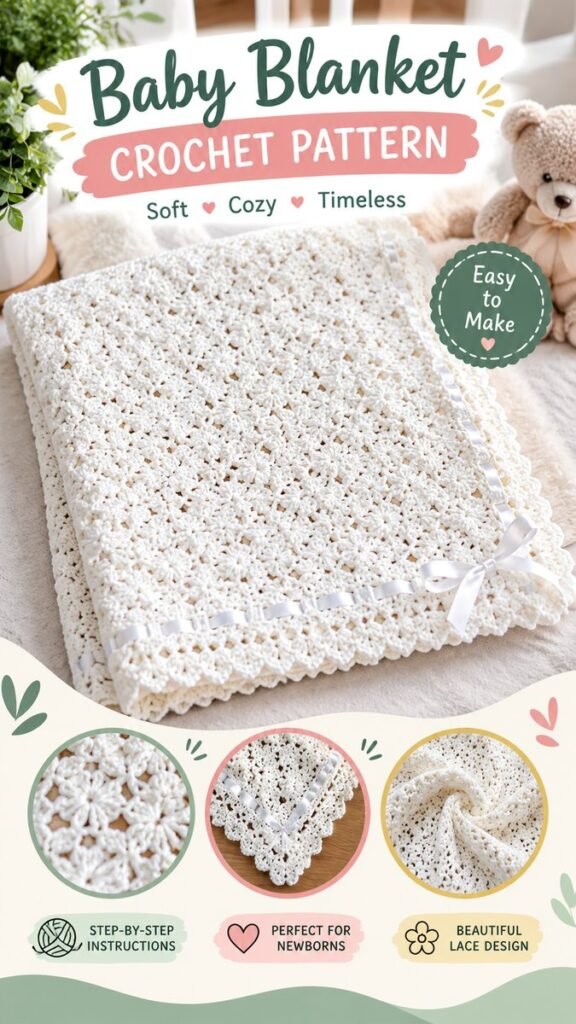
There is something timeless about a delicate handmade baby wrap, and a soft lace crochet design like this makes a beautiful starting point for a baby shawl crochet pattern free project. The featured design has an airy openwork texture, a soft ivory appearance, a decorative scalloped edge, and a simple ribbon detail that gives the finished piece a classic nursery feel. Its gentle texture makes it especially appealing for crocheters who enjoy creating thoughtful handmade gifts.
A baby shawl can be approached in several ways. It may be worked as a rectangular wrap, a traditional triangular shawl, or a blanket-style piece with a graceful drape. The design shown here has the visual qualities of a delicate baby blanket while also offering inspiration for a smaller shawl or receiving wrap. The key is to preserve the lightweight lace effect, soft edging, and comfortable drape that make the project look special without making it unnecessarily complicated.
Key Takeaways
- A delicate lace stitch can create an elegant baby shawl with plenty of visual texture.
- Soft, baby-friendly yarn helps create a comfortable finished wrap.
- A simple scalloped border adds definition without overwhelming the main stitch pattern.
- Neutral colors such as ivory, cream, white, or pale pastels create a timeless nursery look.
- The design can be adapted into a rectangular wrap, receiving shawl, or smaller baby blanket.
- Careful blocking can help open the lace pattern and improve the finished shape.
What Makes This Baby Shawl Design Special?
The appeal of this style comes from the balance between texture and openness. Instead of relying on complicated color changes, the design uses a single light shade to let the crochet stitches become the main decorative feature. Repeating lace motifs create small openings across the fabric, giving the piece a light and delicate appearance.
The ivory color shown in the design is particularly versatile. It works beautifully for a newborn gift, baby shower present, christening-style keepsake, nursery accessory, or handmade heirloom. If ivory is not your preferred color, the same concept can be interpreted in soft blush, dusty blue, pale sage, warm beige, lavender, or another gentle shade.
The border is another important visual feature. A softly scalloped or picot-inspired edge frames the openwork center and gives the project a finished appearance. For a shawl, the border can be kept narrow so that the main lace fabric remains the focus.
Choosing Yarn for a Baby Shawl Crochet Pattern
Yarn choice can change the entire character of a crochet baby shawl. For a project intended to have a delicate drape, lightweight yarn is generally more suitable than a very bulky fiber. A soft DK or light worsted yarn can work for a warmer wrap, while a lighter yarn can emphasize the open lace effect.
Look for yarn that feels pleasant against sensitive skin. Smooth fibers are often easier to work with when creating repeated lace stitches because the individual loops remain visible. Machine-washable options can also be practical for baby projects, since handmade baby items may need frequent cleaning.
Suggested Yarn Qualities
- Soft and comfortable against the skin.
- Light enough to create a flexible drape.
- Easy to wash and care for.
- Suitable for the crochet hook size you plan to use.
- Available in a color that complements the delicate lace texture.
Important: For a baby-focused project, always check the yarn manufacturer’s care instructions and choose materials appropriate for the intended use. A beautiful shawl is even more practical when it can be cared for easily.
Hook Size and Gauge
There is no single hook size that must be used for this style because yarn weight, fiber, individual tension, and the desired drape all affect the result. A slightly larger hook than normally used for a particular yarn can sometimes help create a softer, more open fabric, but the best choice should be determined with a small swatch.
Make a sample using the lace stitch you intend to repeat. Look at both the appearance and flexibility of the fabric. If the stitches feel stiff or the fabric does not drape comfortably, consider trying a larger hook. If the fabric looks excessively loose and loses its structure, a smaller hook may be more suitable.
For a baby shawl, exact gauge is less important when creating a flexible wrap than it would be for a fitted garment. However, keeping your tension consistent throughout the project will help the edges remain even and make blocking easier.
A Simple Lace Stitch Concept
The texture in the pictured design suggests a repeating openwork motif made from combinations of basic crochet stitches, chains, and strategically placed increases or decreases. You can recreate the overall character without needing to duplicate an unknown original pattern.
A practical approach is to build a repeating motif around groups of taller stitches separated by chain spaces. These open sections create the airy appearance associated with lace crochet. Shorter stitches can then be used between motifs to provide structure.
Basic Stitch Vocabulary
- Ch: chain
- Sl st: slip stitch
- Sc: single crochet
- Hdc: half double crochet
- Dc: double crochet
- Sk: skip
These stitches are enough to create many elegant lace effects. A repeating shell, fan, V-stitch, or floral-inspired cluster can all produce a similar light texture while allowing you to develop your own original version.
How to Plan Your Baby Shawl
Before starting, decide what form you want the finished piece to take. The reference design is rectangular, which makes it particularly easy to adapt into a baby wrap. A rectangular shawl can be crocheted from one short edge to the other, while a triangular shawl can be increased gradually from the center or one corner.
For a rectangular design, begin with a foundation chain that represents the desired width. Work the lace pattern in repeating rows until the piece reaches the preferred length. This construction is straightforward and makes it easy to stop at a size that suits your project.
If you prefer a triangular baby shawl, begin with a small central section and increase at regular intervals. The lace motif can then spread outward as the shawl grows. This shape creates a classic drape and can be especially attractive when finished with a decorative border.
Expert Insight
The most important design feature is not the exact number of stitches, but the relationship between the lace motif, fabric drape, and border. Make a small swatch first, then adjust the repeat so the pattern sits naturally and the edges remain balanced.
Original Baby Shawl Crochet Pattern Framework
The following framework is an adaptable starting point inspired by the visual qualities of the design. It is intentionally written as a flexible pattern concept rather than claiming to reproduce an exact source pattern.
Materials
- Soft baby-friendly yarn in approximately DK or another lightweight yarn weight.
- A crochet hook appropriate for the chosen yarn, adjusted after making a swatch.
- Yarn needle for weaving in ends.
- Scissors.
- Optional satin ribbon for a decorative finish.
Foundation
- Make a foundation chain in a multiple that fits your chosen lace repeat, plus any turning chains required by the stitch pattern.
- Work a setup row using evenly spaced stitches and chain spaces.
- Begin the lace repeat, keeping the motif centered and checking the edges after every few rows.
Lace Repeat
For a simple original lace effect, consider working a repeated sequence such as a small group of double crochet stitches, a chain space, skipped stitches, and another stitch group. On the following row, work the stitch groups into the chain spaces from the previous row. This creates an open, repeating texture.
Continue repeating the established motif. Keep your chain spaces consistent because variations in chain tension can make the lace look uneven. If the design begins to pull inward or flare unexpectedly, stop and check your stitch count before continuing.
Border
Once the main fabric reaches your desired length, add a simple finishing round or row. A row of single crochet can stabilize the edge, followed by a scalloped border made with combinations of single crochet, skipped stitches, and several double crochet stitches worked into the same space.
For a softer finish, a small picot detail can be added around the outer edge. Keep the border proportional to the shawl. A narrow lace border can complement an intricate center without competing with it.
How to Get a Beautiful Lace Finish
Lace crochet often looks much better after blocking. Before blocking, the fabric may appear slightly compressed, uneven, or less open than expected. Gentle blocking can help separate the motifs and reveal the intended pattern.
For a baby shawl, handle the finished fabric carefully. Follow the yarn manufacturer’s washing and blocking recommendations rather than applying excessive heat or moisture. Shape the piece gradually and allow it to dry completely before removing the pins or supports.
Pro Tip: Photograph or inspect your lace swatch before beginning the full shawl. If the stitch pattern looks attractive in a small sample but becomes too dense when repeated, slightly changing the hook size or spacing can create a much more graceful fabric.
Adding a Ribbon Detail
The ribbon detail visible along the lower edge of the featured design adds a charming decorative touch. A ribbon can be threaded through evenly spaced openings near the border, creating a soft accent without changing the main crochet pattern.
If you choose to add ribbon, keep the embellishment secure and consider the intended use of the finished item. Decorative elements on baby items should always be handled thoughtfully. For everyday use, a crochet-only border may be the simplest option.
Color Ideas for a Handmade Baby Shawl
The neutral ivory shown here gives the project an heirloom-inspired appearance, but there are many ways to personalize the color palette. A soft cream creates warmth while maintaining the classic look. Pale pink or blue can introduce a traditional baby color, while sage green, muted lavender, oatmeal, or dusty rose can give the finished shawl a more contemporary feel.
For a more modern design, consider using one solid color and letting the stitch texture provide all the visual interest. This is especially effective with intricate lace because color changes can sometimes distract from the repeating motifs.
Tips for Crocheters Making Their First Lace Shawl
- Start with a small swatch before committing to the full project.
- Use stitch markers to identify the beginning or ending of important repeats.
- Count the stitches periodically rather than waiting until the end of several rows.
- Keep chain tension relaxed and consistent.
- Use good lighting when working with pale yarn.
- Block the finished piece gently to open the lace pattern.
- Write down any modifications so you can reproduce the same dimensions later.
A lace project becomes much easier when you focus on the repeat instead of trying to memorize every stitch individually. Once the rhythm of the motif becomes familiar, the rows can progress quickly and naturally.
Ways to Customize the Pattern
One of the biggest advantages of making a handmade baby shawl is the ability to adapt it. You can make the project wider or narrower by changing the number of pattern repeats in the foundation chain. Length can be adjusted by adding or removing repeat rows.
You can also create a different personality by changing the border. A simple single-crochet edge gives a clean modern finish, while scallops, shells, picots, or small floral motifs create a more decorative appearance.
For a more open shawl, use a slightly larger hook and a suitable lighter yarn. For a warmer wrap, choose a denser stitch arrangement or a slightly heavier yarn. Always make a swatch first because the same stitch can look dramatically different depending on fiber, tension, and hook size.
Why Handmade Baby Shawls Make Meaningful Gifts
A crochet baby shawl combines usefulness with the personal quality of handmade work. A thoughtfully chosen yarn color, carefully repeated stitch pattern, and neat border can turn a simple project into something that feels especially personal.
The neutral lace style shown in the design is particularly flexible. It can be prepared as a baby shower gift, newborn photography accessory, nursery keepsake, or lightweight wrap. Because the pattern concept can be adjusted in size and color, it also works well for crocheters who want to create something unique for a particular family.
Handmade projects also provide room for small personal details. A contrasting border, delicate edging, personalized color choice, or subtle texture can make the finished piece feel distinctly your own.
At a Glance
- Style: Delicate lace baby shawl or wrap.
- Look: Soft, airy, elegant, and timeless.
- Best colors: Ivory, cream, white, blush, sage, or other soft shades.
- Key detail: Repeating lace texture with a decorative border.
- Customization: Adjust width, length, yarn, hook size, and edging.
Caring for Your Crochet Baby Shawl
Care should always be based on the yarn label. Different fibers respond differently to washing, drying, and blocking, so avoid assuming that every crochet shawl can be treated the same way.
When washing is appropriate, handle the lace fabric gently and avoid unnecessary stretching. Support the full piece when it is wet so that the openwork does not become distorted. After washing, reshape it carefully and allow it to dry according to the yarn manufacturer’s instructions.
Proper care helps preserve the delicate texture and keeps the handmade shawl looking beautiful for longer. A little attention to storage and washing can also help maintain the shape of the decorative border.
Final Thoughts on This Baby Shawl Crochet Pattern
A baby shawl crochet pattern free project does not need complicated construction to create an impressive result. The beauty of this style comes from simple elements working together: soft yarn, repeating lace motifs, an open fabric structure, and a carefully finished border.
The pictured design offers wonderful inspiration for anyone who enjoys delicate baby crochet. Its ivory palette and floral-looking lace texture create a gentle, classic appearance, while the scalloped edge gives the project a polished finish. Whether you make a rectangular baby wrap or adapt the concept into a triangular shawl, the same design principles can help you create a piece that feels light, comfortable, and handmade with care.
The best place to begin is with a small swatch. Experiment with the yarn, hook, lace repeat, and border until the fabric has the softness and drape you want. From there, the project can grow row by row into a beautiful handmade keepsake.