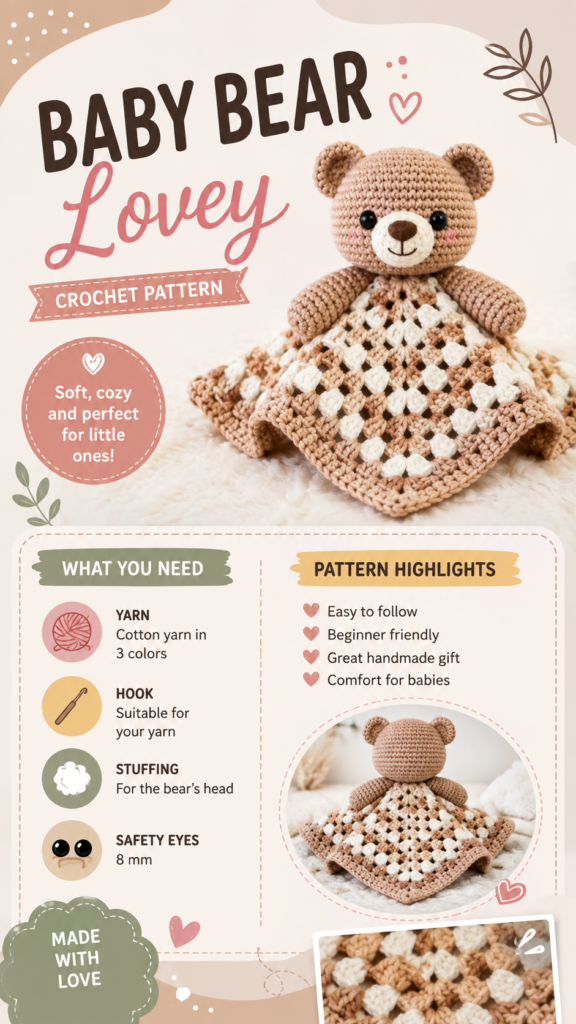
Few crochet projects are as charming and comforting as a handmade baby lovey. This adorable baby bear lovey combines a soft crocheted teddy bear with a textured blanket, creating a sweet keepsake that feels both playful and cozy. The warm neutral palette of beige, cream, and soft brown gives the design a timeless nursery feel, while the heart-like motifs across the blanket add a gentle decorative touch.
For crocheters who enjoy making thoughtful handmade gifts, a baby bear lovey is a wonderful project to keep in your pattern inspiration collection. It brings together amigurumi-style crochet techniques, simple blanket construction, color changes, and decorative stitch patterns in one memorable piece.
Key Takeaways
- This baby bear lovey combines a crocheted teddy bear with a square blanket.
- Neutral yarn shades create a soft, classic look that works beautifully in a nursery.
- The blanket features repeating textured motifs that give the finished piece visual interest.
- The bear’s head, ears, and arms can be approached as separate crochet components.
- The design makes an appealing handmade baby gift or cozy nursery keepsake.
- The pictured pattern includes both written instructions and a visual stitch guide.
What Is a Baby Bear Lovey?
A baby lovey is a small comfort blanket that incorporates a soft character, animal, or decorative centerpiece. Instead of being a traditional flat blanket, a lovey gives a baby a cozy fabric section to hold along with a friendly three-dimensional companion.
The design shown here centers on a crocheted teddy bear. Its rounded head, small ears, embroidered-looking muzzle, safety-style eyes, and attached arms sit above a square crocheted blanket. The result is more than a blanket. It is a cuddly character and a handmade comfort item in one.
What makes this style especially appealing is its balanced scale. The bear provides the personality, while the blanket provides texture and something soft to hold. The square shape also gives the project a distinctive silhouette that looks lovely folded over a crib chair, nursery basket, or gift box.
Important: When making crochet items intended for babies, prioritize secure construction and age-appropriate materials. Small detachable components can present a hazard, so finished items should always be checked carefully and used with appropriate adult supervision.
A Closer Look at the Crochet Bear
The teddy bear is the focal point of this baby crochet pattern. Its design uses a warm brown yarn for the head, ears, and arms, with a lighter muzzle that creates a classic teddy bear appearance. Dark eyes and a small stitched nose and mouth complete the friendly expression.
The rounded head has a compact amigurumi-inspired construction. The visible instructions begin with a magic ring and single crochet stitches, followed by increases that expand the shape. Later rounds maintain the circumference before decreases gradually bring the piece toward its finished form.
This construction is common in crocheted animal projects because it allows the crocheter to create a smooth three-dimensional shape without complicated shaping techniques. The result is a rounded bear head that sits naturally at the top of the lovey.
The Bear’s Face
The face is intentionally simple. A cream-colored oval muzzle contrasts with the brown head, making the facial features easy to see. The small dark nose and curved mouth give the bear a gentle expression rather than an overly elaborate appearance.
This simplicity is part of the design’s appeal. A baby crochet project does not need dozens of decorative details to feel special. A few carefully placed features can create a recognizable character while allowing the blanket’s stitch pattern to remain the visual focus.
The Ears and Arms
The pictured pattern separates the ears from the main head and includes instructions for shaping them with a magic ring and crochet stitches. The arms are longer rounded pieces positioned on either side of the bear, giving the character the appearance of gently hugging the blanket.
When assembling a project like this, neat finishing matters. Consistent tension, carefully woven yarn ends, and secure joins can make a noticeable difference in the final appearance.
The Crochet Blanket Design
The blanket is what gives this baby bear lovey its distinctive personality. Instead of a plain solid fabric, the square features repeating clusters in brown, cream, and lighter neutral shades. The motifs form a decorative pattern across the blanket while the outer border gives the piece a clean finished edge.
The visual guide included in the design uses familiar crochet symbols. The legend identifies symbols for single crochet, increases, decreases, chains, and double crochet. A chart like this can be especially useful when working through repeating sections because the crocheter can see how individual stitches relate to the overall motif.
The blanket begins from a central point and expands outward, creating a symmetrical square. This construction makes the changing color pattern particularly noticeable because the motifs radiate through the fabric as the blanket grows.
Why the Neutral Color Palette Works
The combination of warm brown, cream, and soft beige creates a calm and cozy appearance. These shades are easy to coordinate with many nursery styles and have a handmade, natural quality that suits crochet particularly well.
A neutral palette is also practical for crocheters who want a versatile baby gift. You can keep the colors close to the pictured combination for a classic teddy bear look, or adapt the concept with other gentle shades while maintaining the same contrast between the bear and blanket.
Soft sage, dusty pink, muted blue, oatmeal, ivory, or warm gray could all create different moods. The key is to preserve enough contrast between adjacent colors so the repeating blanket motifs remain visible.
Expert Insight
For a patterned lovey, color contrast can matter just as much as stitch choice. Before crocheting the full blanket, place your chosen yarns side by side in natural light. If two shades blend together too closely, the decorative motifs may become difficult to distinguish.
Understanding the Pattern Structure
The visible pattern is divided into several logical components, beginning with the bear’s head and ears before moving into the blanket. This type of organization makes a multi-part crochet project easier to approach because each component can be completed separately before final assembly.
Head Instructions
The head section shown in the pattern uses a magic ring followed by rounds of single crochet and increases. The middle rounds maintain the shape, while later rounds introduce decreases. The final instruction calls for closing and stuffing the piece.
For crocheters new to amigurumi-style construction, maintaining even tension is helpful. If stitches become too loose, stuffing may show through the fabric. If they are extremely tight, working increases and decreases can become more difficult.
Reading the Crochet Chart
The chart provides another way to understand the blanket construction. Its symbol key shows how individual stitch symbols correspond to written abbreviations. Once you understand the legend, the visual layout can make repeating sections easier to follow.
When working from a chart, identify the starting point first. Then follow the direction of the round or row carefully. For symmetrical designs, it can help to pause after each completed section and compare your work with the visual shape shown in the guide.
A Simple Way to Stay Organized
Keep track of completed rounds as you work. A row counter, pencil marks on a printed pattern, or a small checklist can prevent confusion when the design contains repeated increases, decreases, and color changes.
Materials for a Baby Crochet Lovey
The pictured project suggests a relatively straightforward collection of crochet supplies. The most important choices are yarn, an appropriate crochet hook, stuffing for the bear’s head, and the materials needed for the facial features.
- Yarn: Soft cotton yarn in coordinating neutral shades is suitable for recreating the visual style.
- Crochet hook: Choose a hook that works well with the yarn weight and gives you the desired fabric density.
- Stuffing: Use suitable fiber filling for the three-dimensional bear components.
- Eyes and facial details: The pictured design uses dark eye details and a contrasting muzzle.
- Yarn needle: Useful for weaving in ends and joining components.
- Scissors: Essential for clean finishing and trimming yarn tails.
Because the final project is intended for a baby-oriented setting, selecting soft, washable yarn can make the finished lovey easier to care for. Always follow the manufacturer’s care recommendations for your chosen materials.
Tips for Making Your Crochet Lovey
Working on a baby bear lovey can be relaxing, but the project has several small details worth planning before you begin. A little preparation can make the process smoother and help the finished piece look polished.
- Check your tension. Crochet a small sample if you are unsure how your yarn and hook combination behave together.
- Plan your color changes. Arrange the yarn shades before starting so the blanket pattern remains consistent.
- Count stitches regularly. Repeating increases and decreases are easier to correct early than several rounds later.
- Finish ends securely. Take time to weave yarn tails neatly into the fabric.
- Assemble carefully. Position the bear centrally and check both sides before permanently attaching components.
- Inspect the finished item. Look for loose parts, unsecured ends, or openings that need additional finishing.
Pro Tip: Photograph your work after completing each major section. Besides helping you remember how the pieces fit together, these quick reference photos can make assembly much easier if you take a break between crochet sessions.
A Lovely Handmade Baby Gift
One of the biggest attractions of a crochet baby lovey is its gift potential. Handmade baby items carry a personal quality that is difficult to reproduce with mass-produced blankets. The teddy bear centerpiece gives the gift an immediately recognizable character, while the crocheted blanket adds texture and warmth.
This kind of project can be suitable for baby showers, new-baby gifts, nursery collections, or simply a thoughtful handmade surprise. It can also become a meaningful keepsake that parents associate with the early months of a child’s life.
If you are preparing the lovey as a gift, consider presentation as part of the experience. Fold the blanket neatly, keep the bear facing upward, and use simple neutral wrapping that complements the handmade aesthetic.
Ways to Personalize the Design
The beauty of crochet is how easily a basic concept can become your own. The bear’s colors can be changed, the blanket palette can be adjusted, and small decorative choices can create a completely different personality.
- Use cream and sage for a soft woodland-inspired nursery look.
- Try dusty pink and oatmeal for a warm, gentle palette.
- Combine muted blue with ivory for a classic neutral alternative.
- Use several coordinated shades for a more playful blanket.
- Add a simple personalized detail if your chosen pattern and construction safely allow it.
Keeping the blanket relatively simple while allowing the bear to remain the focal point is an effective design strategy. The original visual balance works because neither component overwhelms the other.
Why Crochet Baby Loveys Remain So Popular
Crochet loveys combine several qualities that make handmade projects especially satisfying. They are practical, decorative, customizable, and small enough to feel approachable compared with a full-size blanket.
For beginners, a lovey can also provide an opportunity to learn multiple crochet skills within one project. You can practice working in the round with the bear, learn shaping through increases and decreases, explore color changes in the blanket, and improve finishing techniques during assembly.
Experienced crocheters may enjoy the project because the basic concept leaves plenty of room for creativity. Once the construction is understood, experimenting with yarn colors, stitch motifs, borders, and character designs can produce many unique variations.
At a Glance
- Project type: Baby crochet lovey
- Main character: Teddy bear
- Blanket shape: Square
- Style: Cozy, neutral, handmade, nursery-friendly
- Techniques: Single crochet, increases, decreases, chains, double crochet, shaping, and assembly
Final Thoughts
This baby bear lovey is a beautiful example of how a relatively compact crochet project can combine character, texture, and practical comfort. The rounded teddy bear creates an instantly lovable centerpiece, while the patterned blanket adds visual depth through repeating stitches and warm neutral colors.
Whether you are looking for baby crochet patterns, a beginner-friendly handmade gift idea, a cozy nursery project, or inspiration for your next crochet creation, this style of lovey is worth adding to your project list. Take your time with stitch counts, keep your tension consistent, and enjoy the process of watching the individual pieces become one finished design.
Most importantly, let the pattern inspire rather than limit your creativity. Experiment with gentle color combinations, make thoughtful finishing choices, and create a version that feels uniquely yours. A handmade crochet lovey is not simply a collection of stitches. It is a small, cozy creation made with time, patience, and care.