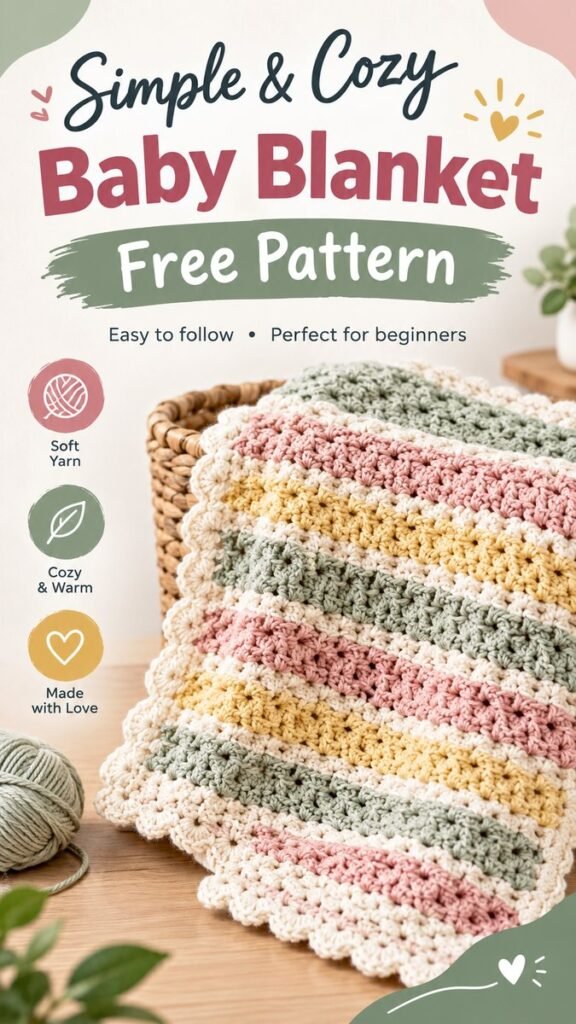
A handmade baby blanket has a special way of making a nursery feel warmer, softer, and more personal. The design shown here brings together gentle pastel shades, cozy crochet texture, and a relaxed striped layout that feels both timeless and modern. If you are looking for a crochet pattern baby blanket that feels approachable while still looking beautiful, this style offers plenty of inspiration for your next project.
The combination of soft cream, dusty pink, muted green, and warm yellow creates a calming palette without making the blanket feel plain. Layered stripes add visual interest, while the textured stitches and decorative edging give the finished piece a handcrafted character. Whether you are making a baby blanket for your own nursery, preparing a handmade baby shower gift, or simply looking for a relaxing crochet project, this style is easy to adapt to your preferred colors and skill level.
Key Takeaways
- A striped baby blanket is an easy way to create a polished handmade look.
- Soft neutral and pastel shades work beautifully together for a calming nursery aesthetic.
- Simple crochet stitches can be combined with textured rows for extra dimension.
- A decorative border can make an otherwise simple blanket feel finished and special.
- Choose soft, washable yarn that is practical for everyday baby use.
Why This Crochet Pattern Baby Blanket Style Works
The appeal of this crochet baby blanket style comes from its balance. The blanket is visually interesting without relying on complicated decoration. Broad horizontal color sections create an organized rhythm, while textured crochet stitches prevent the surface from looking flat.
The pastel palette also gives the design a gentle character. Cream provides a soft foundation, while muted pink, sage green, and warm yellow introduce color in a restrained way. This makes the overall look suitable for many nursery styles, from classic and cozy to contemporary and minimalist.
Another useful feature of this approach is flexibility. You do not need to reproduce the exact color arrangement shown in the inspiration. The same idea can be recreated with blues and creams, lavender and sage, peach and ivory, or a completely neutral palette.
Important: The beauty of a handmade baby blanket is its adaptability. Use the visual rhythm of stripes and texture as inspiration, then adjust the colors, dimensions, stitch combinations, and border to suit your own project.
Choosing Yarn for a Crochet Baby Blanket
Yarn choice can dramatically affect how a finished crochet baby blanket looks and feels. For a project intended for a baby, softness and practicality are especially useful considerations. A yarn should feel comfortable against delicate skin and be easy to care for once the blanket is finished.
Look for yarn described as soft, washable, and suitable for baby or nursery projects. Acrylic blends are often convenient because they can be practical for frequent washing, while cotton and cotton blends can provide a different texture and drape. The best option depends on the finished feel you want and the care instructions provided by the yarn manufacturer.
Think About Texture as Well as Color
Texture is one of the strongest visual features of this blanket style. The raised and patterned rows create small shadows and highlights across the surface, helping each stripe stand out. When choosing yarn, consider how clearly the stitch definition will show.
A very fuzzy yarn can soften the appearance of intricate stitches, while a smoother yarn can make textured patterns more visible. If your goal is a blanket with clearly defined crochet rows, a smooth yarn can be particularly useful for showing off stitch details.
Building a Beautiful Stripe Palette
Color planning is one of the easiest ways to personalize a crochet pattern baby blanket. The inspiration uses a restrained palette rather than bright, high-contrast colors. This creates a soft appearance that works especially well with nursery decor.
Start with one main neutral such as cream, ivory, oatmeal, or light beige. Then add two or three complementary colors. Sage green, dusty rose, muted mustard, soft blue, and pale peach are all possibilities for a gentle handmade aesthetic.
- Base color: Use a neutral shade to connect the other colors.
- Accent color: Add a muted pastel for warmth and personality.
- Secondary accent: Introduce another soft shade to keep the stripes interesting.
- Contrast: Use slightly lighter or darker tones to separate neighboring rows.
It can help to place your yarn colors next to one another before beginning. This simple step lets you see whether the shades blend naturally or create more contrast than you intended.
Simple Crochet Stitch Ideas for Baby Blankets
You can recreate the overall character of this style with a variety of crochet stitches. The important idea is to create a combination of comfortable texture and a visually consistent surface.
Classic Rows
Simple rows are a reliable choice for beginners. They create clean horizontal lines and allow the colors to become the main decorative feature. Alternating colors every few rows can produce a look similar to the inspiration while keeping the construction straightforward.
Textured Rows
Adding occasional textured sections can break up simple stripes. Raised stitches, clusters, shells, bobbles, or other decorative techniques can create areas that catch the light differently from smoother rows.
If you are newer to crochet, there is no need to make every row complicated. One textured section between several simpler sections can create plenty of visual interest without making the entire project difficult to manage.
Decorative Edging
The border is an important part of the finished appearance. A simple scalloped, shell, picot, or gently textured edge can give a baby blanket a polished look. Choosing the same neutral color for the border can also help unify a multicolored stripe design.
Expert Insight
When combining several colors and stitch textures, consistency matters more than complexity. A simple stitch repeated evenly across carefully chosen colors can look more refined than a blanket overloaded with different techniques.
Planning the Size of Your Baby Blanket
Baby blankets can be made in many dimensions, so consider how the blanket will be used before beginning. A smaller blanket can be convenient for cuddling or use in a stroller, while a larger design can grow with the child and work well as a nursery throw.
The image inspiration emphasizes a cozy, generously sized handmade blanket with enough surface area for the stripes and border to make an impact. Your own dimensions can be adjusted according to the yarn weight, crochet hook, stitch pattern, and intended use.
Rather than choosing a size solely from appearance, make a small crochet swatch first. A swatch helps you understand how your yarn and hook work together and gives you an opportunity to see whether the fabric feels soft, flexible, and comfortable.
How to Plan Your Crochet Pattern
A little preparation can make the actual crocheting much more enjoyable. Before starting the full blanket, decide on the approximate width, stripe sequence, stitch changes, and border style.
- Choose your yarn and a coordinated color palette.
- Make a small gauge or texture swatch.
- Decide how wide and long you want the blanket to be.
- Plan the order of your colors before crocheting.
- Choose where textured rows will appear.
- Keep notes about your row count and color changes.
- Finish with a border that complements the main design.
Keeping a simple record of your rows is particularly useful when working with stripes. Even if you are creating the blanket freely rather than following a formal pattern, notes can help you maintain symmetry and make corrections easier.
Creating a Beginner-Friendly Crochet Project
A crochet pattern baby blanket does not have to be technically difficult to look impressive. Beginners can achieve a beautiful result by combining basic stitches with thoughtful color placement and a neat border.
One practical approach is to choose a primary stitch for most of the blanket and introduce only a few decorative rows. This keeps the repetitive sections relaxing while giving the finished piece enough personality to feel special.
It is also worth remembering that handmade work does not need to look perfectly machine-made. Small variations are part of the charm of crochet. Concentrate on maintaining a reasonably consistent tension and enjoying the process rather than worrying about every tiny difference between rows.
Keep Your Tension Consistent
Consistent tension helps your blanket maintain an even shape. If your stitches gradually become tighter or looser, the width can change as you work. Checking your project regularly can help you notice these changes early.
If the fabric feels stiff, your tension may be too tight for the yarn and stitch pattern. If it feels unusually loose or lacks structure, you may want to adjust your hook size or tension. A small swatch is an easy way to experiment before committing to the full blanket.
Making the Blanket Feel Extra Special
The finishing details can transform a simple crochet project into something memorable. A carefully chosen border, balanced color sequence, and tidy finishing work can make the blanket feel intentional from edge to edge.
You can also personalize the project by changing the stripe width. Narrow stripes create a busier appearance, while wider bands of color produce a calmer, more modern look. Alternating these approaches can create a subtle rhythm across the blanket.
For a handmade gift, the color palette can be chosen to complement the nursery or simply reflect the recipient’s style. Soft neutrals are versatile, while muted pastels provide a little more personality without becoming overwhelming.
Pro Tip: Photograph or lay out your planned yarn colors in stripe order before starting. Seeing the full sequence at a glance makes it much easier to spot combinations that look too similar and adjust the palette before you crochet dozens of rows.
Care and Finishing Considerations
Once your crochet baby blanket is complete, finishing deserves just as much attention as the crocheting itself. Secure your yarn ends carefully and inspect the border for loose sections or uneven areas.
Always follow the care instructions associated with the yarn you selected. Washing requirements can vary considerably between fiber types and blends. If the blanket is intended for frequent everyday use, choosing an easy-care yarn from the beginning can make maintenance simpler.
Before gifting a handmade blanket, give it a final inspection. Check the edges, ends, joins, and decorative details so that everything is secure and tidy.
Ideas for Personalizing Your Baby Blanket
Once you have the basic structure in mind, there are many ways to make the design your own. You can keep the soft pastel character of the inspiration or take the concept in an entirely different direction.
- Replace pastel pink with soft lavender for a cooler palette.
- Use shades of cream, beige, and oatmeal for a neutral nursery look.
- Add soft blue or dusty teal for a fresh color combination.
- Make the border wider for a more defined finished edge.
- Alternate smooth and textured sections for extra dimension.
- Use wider color bands for a simple contemporary appearance.
The key is to maintain a sense of balance. If you choose several strong colors, a neutral shade can help separate them. If your colors are already very subtle, textured stitches or a decorative border can keep the blanket from looking too plain.
At a Glance
- Soft pastel stripes create a calm, cozy appearance.
- Simple stitches make the design approachable for newer crocheters.
- Textured rows add dimension without requiring decoration everywhere.
- A thoughtful border gives the blanket a polished finish.
- Color placement is an easy way to create a completely personal design.
Conclusion
A crochet pattern baby blanket is more than a practical handmade project. It is an opportunity to combine color, texture, and creativity into something that can become part of a family’s everyday moments. The soft stripes, gentle palette, and cozy crochet texture shown in this style offer a beautiful starting point for crocheters of many experience levels.
Whether you follow a structured pattern or use the design as inspiration for your own creation, focus on choosing comfortable yarn, coordinating colors, maintaining consistent tension, and giving the finished piece a neat border. Small design decisions can make a simple blanket feel thoughtfully crafted.
Most importantly, choose a process you will enjoy. Crochet is wonderfully flexible, and a baby blanket gives you plenty of room to experiment with colors, stitches, stripes, and finishing details. Pick your favorite yarn, create a soothing palette, and start building a cozy handmade piece one row at a time.
Tags
Crochet Pattern Baby Blanket Crochet Baby Blanket Baby Blanket Crochet Easy Crochet Pattern Beginner Crochet Crochet Blanket Pastel Crochet Handmade Baby Gift