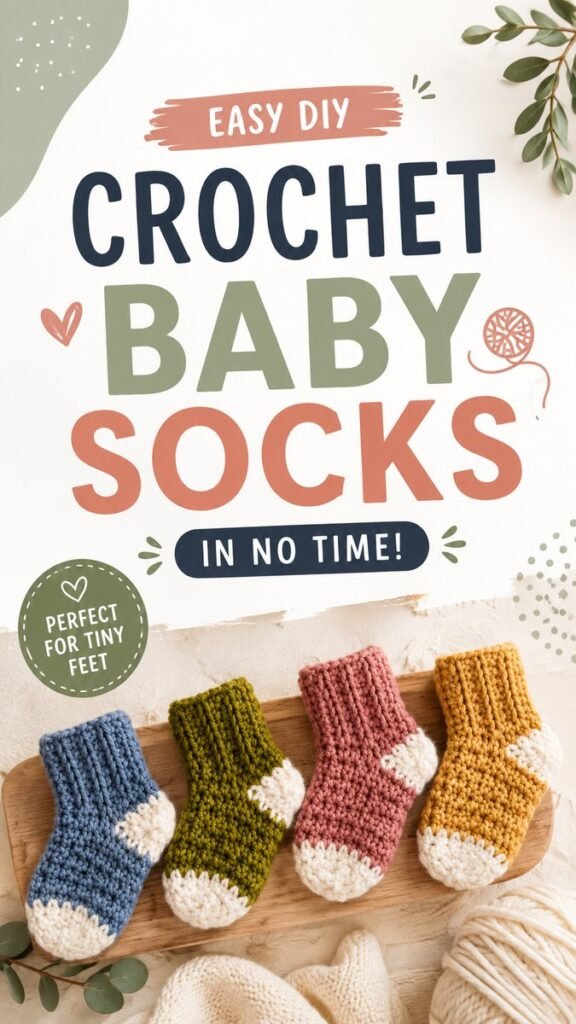
There is something wonderfully satisfying about making tiny handmade pieces for little ones, and crochet socks for baby are a perfect example. They are small enough to feel like a quick project, yet they offer plenty of room for color, texture, and creative details. The image highlights a charming collection of crocheted baby socks in soft, earthy shades, finished with contrasting white toes, cuffs, and playful accents. The result is cozy, practical, and irresistibly cute.
Whether you are looking for a simple crochet project, a thoughtful handmade baby gift, or inspiration for using up small amounts of yarn, baby socks are worth adding to your project list. With the right yarn, a comfortable fit, and a straightforward construction, you can create little socks that look special without requiring an overly complicated design.
Key Takeaways
- Choose soft, comfortable yarn suitable for baby garments.
- Keep the sock construction simple when making a quick beginner project.
- Use contrasting colors to make small crochet details stand out.
- Check the fit carefully because babies grow quickly.
- Save your favorite crochet baby sock ideas for future gifts.
Why Crochet Socks for Baby Make a Lovely Handmade Project
Baby socks are an especially appealing crochet project because they combine usefulness with creativity. Unlike larger garments, a small pair can often be completed without committing to a huge amount of yarn or a lengthy pattern. That makes them approachable for beginners while still giving experienced crocheters plenty of opportunities to experiment.
The socks shown in the image have a cozy handmade appearance, with textured stitches and distinct sections of color. Blue, olive green, dusty rose, and warm mustard create a cheerful palette while the creamy white details add contrast. This type of color combination is easy to adapt to different nurseries, outfits, seasons, or personal preferences.
Another benefit is that crochet baby socks can be personalized. A simple design can become more distinctive by changing the cuff color, adding a small decorative motif, or choosing a different stitch texture. You do not need an elaborate pattern to make something that feels thoughtful and handmade.
Important: Comfort should always come before decoration when crocheting anything intended for a baby. Choose soft materials, avoid bulky embellishments, and make sure there are no loose pieces that could become detached.
Choosing Yarn for Crochet Baby Socks
The yarn you choose has a major effect on how the finished socks feel. For baby projects, softness and comfort are especially important. A yarn can look beautiful in a photograph but still feel unsuitable if it is scratchy, overly stiff, or uncomfortable against delicate skin.
Look for yarn that is soft, smooth, and easy to wash. Baby-friendly yarn options are particularly useful because handmade socks can require frequent cleaning. A yarn with good stitch definition can also help textured crochet patterns look neat and polished.
Color is another fun part of the process. The reference design uses muted, nature-inspired colors rather than extremely bright shades. You could recreate the same cozy feeling with combinations such as sage and cream, dusty blue and ivory, soft pink and oatmeal, or mustard and natural beige.
Think About Texture
Texture is one of the most attractive features of handmade crochet socks. Ribbed sections can create a stretchy-looking cuff, while simple textured stitches can give the body of the sock a handcrafted appearance. The key is to keep the fabric comfortable and flexible rather than making it excessively dense.
For a beginner-friendly design, consider using a relatively simple stitch throughout the main section and introducing a different stitch or color at the cuff and toe. This creates visual interest without making the entire project complicated.
How to Plan a Simple Crochet Baby Sock Design
Before picking up your hook, it helps to think about the basic structure of the sock. A simple baby sock can be approached as several small sections: the cuff, the leg, the heel area, the foot, and the toe. Depending on the pattern, these sections may be worked in different ways.
- Start with the cuff: A flexible cuff helps the sock stay comfortably in place.
- Build the leg: Work enough rounds to create the desired height.
- Shape the heel: Follow the pattern carefully so the sock sits naturally on the foot.
- Continue across the foot: Maintain an even stitch pattern for a smooth finish.
- Finish the toe: Gradually shape the front and secure the yarn neatly.
The exact stitch count and sizing should come from the specific pattern you are following. Baby feet change size quickly, so measurements are more useful than relying only on age labels. A handmade item should have enough room to be comfortable without being excessively loose.
Keep the First Pair Simple
If this is your first attempt at crochet socks for baby, simplicity can make the experience much more enjoyable. A basic silhouette with two or three coordinating colors can look just as charming as an intricate pattern. The socks pictured demonstrate how much visual appeal can come from color blocking and texture alone.
Once you become comfortable with the construction, you can experiment with stripes, textured cuffs, decorative edging, or other small design changes. Making one uncomplicated pair first also gives you a chance to understand how the yarn behaves before trying more detailed techniques.
Expert Insight
Small baby projects are excellent for practicing tension. Because the finished item is compact, uneven stitches can become noticeable quickly. Try to keep your tension consistent from round to round, especially when switching between colors or stitch patterns.
- Make a small test section if your tension is uncertain.
- Keep color changes neat on the inside of the work.
- Compare both socks as you work so they remain similar in size.
Cute Color Ideas for Handmade Baby Socks
One of the easiest ways to personalize crochet baby socks is through color. The image offers several combinations that feel cozy and timeless. Instead of relying on one color, contrasting toes, cuffs, and small decorative sections make each pair more visually interesting.
Soft and Neutral
Try cream, oatmeal, beige, taupe, or warm gray for a classic handmade look. Neutral socks can work beautifully with many baby outfits and make a lovely choice when you want something understated.
Earthy and Natural
Sage green, olive, muted brown, dusty blue, and warm mustard can create the same relaxed craft-inspired mood seen in the image. These shades work especially well when paired with an off-white accent.
Soft Pastels
For a lighter, sweeter look, consider blush pink, pale blue, lavender, soft yellow, or mint. Pastels can be combined with cream rather than stark white for a softer overall appearance.
Details That Make Crochet Baby Socks Stand Out
You do not need complicated decorations to make a pair memorable. In fact, simple design choices often create the strongest visual effect. A contrasting toe is one easy option. A different cuff color can create a clean border, while a small patch of textured crochet can add dimension.
The socks in the image use white accents against darker colors, creating an instantly recognizable toe and heel effect. You can use the same general design principle with your own palette while changing the proportions, stitch pattern, and placement of details to create a completely different pair.
Another idea is to coordinate the socks with a handmade blanket, cardigan, hat, or baby booties. Matching colors across several small accessories can create a cohesive gift set without requiring every item to use the exact same pattern.
Tips for a Comfortable Baby-Friendly Finish
Comfort matters just as much as appearance. A beautiful pair of crochet socks should feel soft and flexible rather than stiff or restrictive. Pay particular attention to the cuff, because a cuff that is too tight can be uncomfortable, while one that is too loose may not stay in place.
- Use soft yarn with a comfortable texture.
- Avoid rough fibers or bulky construction.
- Keep seams and joins as smooth as practical.
- Check that decorative elements are securely attached.
- Wash and care for the finished item according to the yarn manufacturer’s instructions.
- Make sure the finished socks are an appropriate size before use.
Pro Tip: When making a pair, finish the first sock and use it as your size reference for the second. Matching the second sock to the completed one can be easier than trying to remember stitch counts and tension from memory.
Crochet Baby Socks as Handmade Gifts
A handmade pair of baby socks can be a charming addition to a baby shower gift, newborn basket, or first wardrobe collection. Because the project is relatively small, it is also practical for crocheters who want to make several gifts throughout the year.
Presentation can make a simple project feel extra special. Fold the finished socks together, coordinate them with a small handmade accessory, or choose a color palette that reflects the recipient’s style. Even a basic pair can feel personal when the colors and finishing touches have been thoughtfully selected.
Handmade gifts also provide an opportunity to use leftover yarn. If you have several small quantities in complementary shades, baby socks can be an excellent way to turn those leftovers into something useful. Just make sure each yarn used is appropriate for the intended project and comfortable for baby wear.
Making Your Crochet Project More Enjoyable
Part of the appeal of crochet is the ability to slow down and enjoy the process. A small project such as baby socks can be completed in manageable stages, making it easy to work on while relaxing at home. Choose a pattern that matches your current skill level, gather your materials, and focus on consistent stitches rather than rushing to the finish.
If your first pair is not perfectly identical, do not be discouraged. Handmade projects naturally contain small variations. With practice, your tension will become more consistent and your finishing techniques will improve. The goal is to create something comfortable, useful, and made with care.
At a Glance
- Soft yarn is the foundation of comfortable baby socks.
- Simple color changes can create a polished handmade look.
- Consistent tension helps both socks match more closely.
- Always consider comfort, fit, and secure finishing details.
- Save inspiring crochet baby sock ideas for future projects and gifts.
Conclusion
Crochet socks for baby are a wonderful combination of creativity, practicality, and handmade charm. The cozy socks featured in this design show how much personality can come from simple shapes, textured stitches, and thoughtfully chosen colors. You can keep your own version minimal and neutral, experiment with cheerful color combinations, or create a coordinated set of tiny accessories.
Whether you are a beginner looking for a manageable crochet project or an experienced maker searching for a sweet handmade gift, baby socks offer plenty of possibilities. Start with soft yarn, focus on a comfortable fit, and let the colors and textures do the decorating. Most importantly, enjoy the process of making something small and useful with your own hands.
Save your favorite crochet baby sock ideas now so you can return to them when your next tiny handmade project calls for a little extra inspiration.