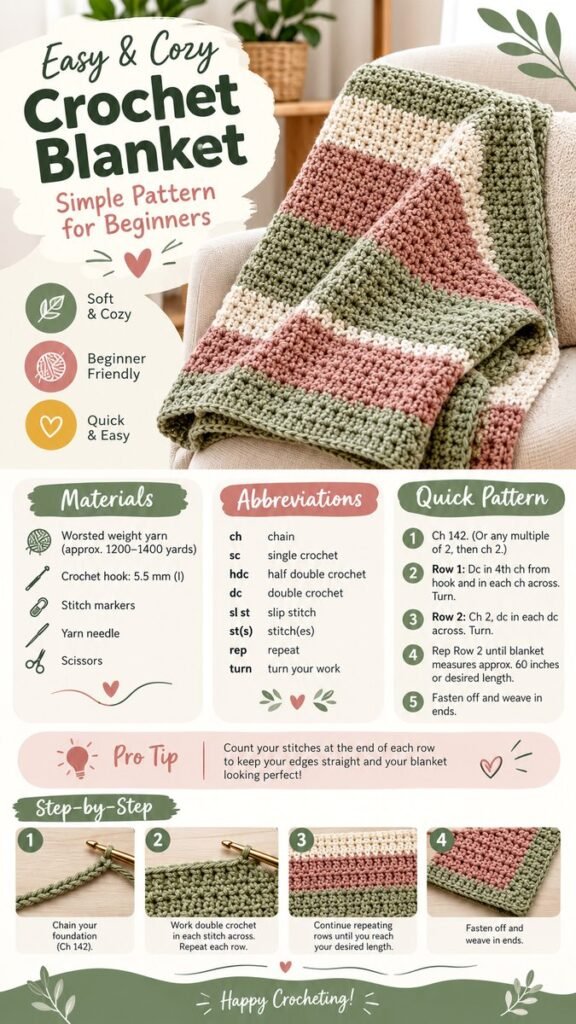
A cozy handmade blanket can transform a simple nursery corner into something warm, personal, and inviting. This double crochet baby blanket combines an easy repeating stitch with soft-looking sage green, blush pink, and creamy ivory sections for a calm, timeless finish. The straightforward construction makes it especially appealing if you want a relaxing crochet project that does not require complicated stitch combinations.
The design shown here is built around rows of double crochet, creating a textured fabric with a comfortable handmade character. With a few basic supplies, careful stitch counting, and a simple color plan, you can create a blanket that works beautifully as a baby gift, nursery accessory, or cozy handmade keepsake.
Key Takeaways
- A simple double crochet repeat makes this blanket approachable for beginners.
- Sage, blush, and ivory create a soft, modern color combination.
- A 5.5 mm crochet hook and worsted weight yarn are shown in the project guide.
- Counting stitches at the end of every row helps maintain straight edges.
- The basic pattern can be adjusted for a different finished length.
- Weaving in the ends neatly gives the finished blanket a polished appearance.
Why a Double Crochet Baby Blanket Is a Great Beginner Project
Double crochet is one of the classic crochet stitches, and it is useful for projects where you want rows to build relatively quickly. Once the foundation chain is complete, the main body of this blanket follows a repeated rhythm. That makes it easier to settle into the project without constantly checking a complicated stitch chart.
For a beginner, repetition is a major advantage. You can concentrate on keeping your tension consistent, recognizing the structure of each stitch, and checking the edges as the blanket grows. The result is a practical way to improve your crochet skills while making something useful.
Important: Stitch counting is one of the easiest ways to prevent a blanket from gradually becoming wider or narrower. Count your stitches at the end of each row, especially during the first several rows when you are establishing your technique.
Materials for the Crochet Baby Blanket
The visual guide uses a small collection of familiar crochet supplies. Keeping your materials organized before starting can make a repetitive project much more enjoyable.
- Worsted weight yarn: The guide suggests approximately 1,200 to 1,400 yards total.
- Crochet hook: A 5.5 mm hook is shown.
- Stitch markers: Useful for keeping track of important points while working.
- Yarn needle: Needed for weaving in loose ends.
- Scissors: Keep a sharp pair nearby for finishing and trimming yarn.
The blanket pictured uses a muted palette of sage green, warm ivory, and dusty blush. These colors give the project a gentle nursery-inspired appearance without making the design overly complicated. You can follow a similar palette or choose colors that coordinate with the baby’s room, nursery decor, or recipient’s preferences.
Choosing Yarn for a Baby Blanket
When making a blanket for a baby, softness and practicality are important considerations. Look for yarn that feels comfortable against the skin and follow the manufacturer’s care instructions. A washable yarn can also be convenient for a blanket that may need regular cleaning.
Before committing to the full blanket, consider making a small swatch. A swatch gives you an opportunity to see how the yarn behaves with your chosen hook and whether the fabric feels too loose, too firm, or comfortable for your intended use.
Understanding the Crochet Abbreviations
The pattern guide uses several standard crochet abbreviations. Learning these terms makes it easier to read the instructions and follow similar patterns in the future.
- ch: chain
- sc: single crochet
- hdc: half double crochet
- dc: double crochet
- sl st: slip stitch
- st(s): stitch or stitches
- rep: repeat
- turn: turn your work
The primary stitch used for the blanket is the double crochet. Even though the abbreviation list includes several common crochet terms, the main construction remains simple, which is part of what makes this design approachable.
How to Start the Double Crochet Baby Blanket
The illustrated guide begins with a foundation chain of 142 chains, with the note that the starting chain can be adjusted using a multiple of two plus two. This gives you flexibility if you want to create a blanket with a different width.
- Make the foundation chain. Chain 142, or choose another suitable starting number based on the desired width.
- Begin the first row. Work a double crochet into the fourth chain from the hook, then continue with a double crochet in each chain across.
- Turn your work. At the end of the row, turn the blanket so you can begin the next row.
- Start the next row. Chain 2, then work a double crochet in each double crochet across.
- Repeat the second row. Continue the same basic sequence until the blanket reaches your preferred length.
- Finish. Fasten off and weave the remaining yarn ends securely into the fabric.
The beauty of this construction is its simplicity. Once you understand the first few rows, the rest becomes a steady rhythm of chaining, double crocheting, turning, and repeating.
Row 1: Establishing the Foundation
After making the foundation chain, insert your hook into the fourth chain from the hook and work a double crochet. Continue across the foundation chain, placing one double crochet in each chain as instructed. Take your time here because the foundation row determines the structure of the entire blanket.
If your foundation chain feels unusually tight, your first row may be difficult to work into. Keeping your chain stitches relaxed can make the beginning much easier. A consistent foundation also helps create a cleaner bottom edge.
Row 2: Creating the Repeating Texture
For the second row, chain two and work a double crochet in each double crochet across. At the end of the row, turn your work and repeat the same sequence. As you continue, the fabric develops the familiar rows of textured double crochet visible in the finished blanket.
The key is consistency. Try to maintain similar tension throughout each row and avoid accidentally skipping or adding stitches. If the edge begins to look uneven, pause and count your stitches before continuing.
Expert Insight
A simple stitch pattern puts more attention on your tension and edges. If your rows are not staying straight, do not immediately change the hook size. First check whether you are consistently working the final stitch of every row and maintaining the same tension.
Creating the Sage, Blush, and Ivory Color Scheme
One of the most appealing features of the pictured blanket is its restrained color palette. Sage green provides a natural base, ivory adds brightness, and dusty blush introduces a gentle accent. Together, the colors create a soft look that suits a variety of nursery styles.
Color changes can be used to divide the blanket into broad sections rather than creating a complicated multicolor pattern. This approach keeps the stitching simple while allowing the finished piece to have plenty of visual interest.
Simple Ways to Customize the Colors
You can keep the same basic design while changing the palette completely. Soft blue, cream, and gray can create a cool neutral appearance. Terracotta, oatmeal, and olive can produce a warmer earthy feel. For a more traditional nursery look, try two neutral shades with one gentle accent color.
- Use three colors for broad horizontal stripes.
- Alternate two shades for a simpler design.
- Choose one main color and use a contrasting border.
- Use leftover yarn carefully if you want a playful patchwork-inspired palette.
Pro Tip: Lay your yarn balls next to one another before starting. Seeing the shades together can help you decide which color should dominate and which colors work best as accents.
Keeping Your Blanket Edges Straight
Straight edges are often one of the biggest challenges when learning crochet. A blanket can slowly become wider or narrower if a stitch is accidentally added or missed at the beginning or end of a row.
The visual guide specifically recommends counting your stitches at the end of each row. This small habit can save significant time later because it lets you correct an error while it is still close to where it happened.
- Count your stitches before beginning the next row.
- Pay special attention to the first and final stitches.
- Keep your turning chain consistent.
- Place a stitch marker at useful reference points if it helps you stay organized.
- Do not pull your stitches excessively tight.
Making the Blanket Longer or Shorter
The guide suggests repeating Row 2 until the blanket measures approximately 60 inches or reaches the desired length. This makes the design adaptable. You do not have to stop at one exact measurement if your project has a different purpose.
For a baby blanket, consider the intended use before deciding on dimensions. A smaller blanket may be convenient for supervised cozy time, while a larger one can become a longer-lasting nursery or family blanket. Always consider practical use and safe baby sleep guidance when deciding how and where a blanket will be used.
Finishing Your Handmade Baby Blanket
Once you reach the desired length, fasten off your yarn and use a yarn needle to weave in the loose ends. Take a little extra time with this step because neat finishing can make a simple blanket look considerably more polished.
Weave each end back and forth through several stitches on the wrong side of the fabric, following safe and appropriate finishing practices for the yarn you are using. Trim excess yarn only after the end is secure.
A Simple Finishing Checklist
- Check the final dimensions.
- Inspect the edges for missed or loose stitches.
- Fasten off securely.
- Weave in all loose ends.
- Follow the yarn label’s washing and drying instructions.
- Lay the finished blanket flat to inspect its overall shape.
Care Tips for a Crochet Baby Blanket
A handmade baby blanket deserves gentle care. Always check the yarn label before washing because different fibers can respond differently to heat, agitation, and drying methods.
If the yarn allows machine washing, use the recommended cycle and temperature. If hand washing is required, handle the blanket gently and avoid aggressive twisting. Proper care helps preserve the stitch definition, colors, and overall shape.
Why This Simple Pattern Makes a Thoughtful Handmade Gift
A handmade blanket has a personal quality that makes it memorable. The repeating double crochet design is simple enough to work into a relaxing routine, while the color changes give the finished piece a distinctive appearance.
It can also be a satisfying project for crocheters who want something useful without spending hours learning complex motifs. The combination of familiar stitches and customizable colors means you can make the design feel personal without changing its basic construction.
At a Glance
- Project: Double crochet baby blanket
- Main stitch: Double crochet
- Suggested hook: 5.5 mm
- Suggested yarn: Worsted weight
- Design style: Soft striped color blocking
Final Thoughts on the Double Crochet Baby Blanket
This double crochet baby blanket shows how a straightforward stitch can become a beautiful handmade project with the right colors and careful finishing. The repeating rows make the pattern accessible, while the sage, ivory, and blush palette gives it a soft and contemporary character.
If you are new to crochet, focus on consistent tension and stitch counting rather than trying to work quickly. If you are an experienced crocheter, use the basic structure as a flexible starting point for experimenting with yarn colors, stripe widths, and finished dimensions.
Most importantly, enjoy the process. A simple double crochet pattern gives you plenty of room to practice, personalize, and create something with a genuinely handmade feel. Keep your edges even, count your stitches, choose colors you love, and let the rows build into a cozy finished blanket.