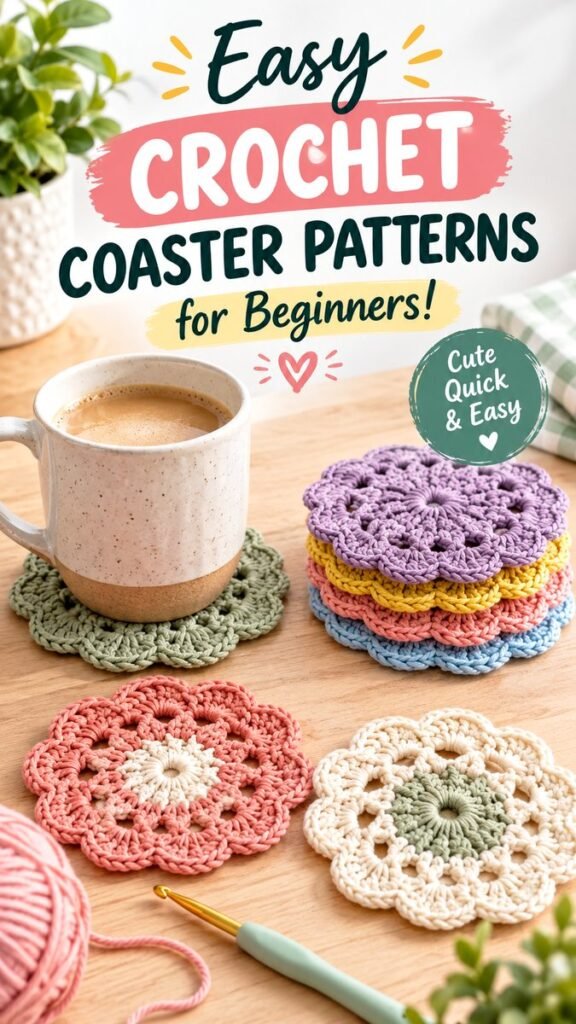
Easy crochet coasters are a wonderful way to turn a few strands of yarn into something practical, pretty, and completely handmade. The colorful flower-inspired coasters shown here combine simple crochet texture with cheerful colors, making them a lovely addition to a coffee table, kitchen counter, desk, or reading nook. With their rounded edges, openwork details, and layered floral appearance, these coasters also offer plenty of inspiration for customizing your own set.
Key Takeaways
- Easy crochet coasters make a useful beginner-friendly project.
- Flower-inspired shapes create a soft, decorative finish.
- Cotton yarn is a practical choice for everyday coaster projects.
- Pastel and earthy colors can be mixed to create coordinated sets.
- Different border details can completely change the finished look.
- Handmade coasters are simple gifts for coffee and tea lovers.
Why Easy Crochet Coasters Are a Great Beginner Project
If you are learning crochet, small projects can be especially satisfying. A coaster is compact enough to finish without committing to a large blanket or complicated accessory. It also gives you an opportunity to practice basic stitches, maintain even tension, work in rounds, and recognize how a pattern develops as each round is completed.
The floral designs shown in this collection have a decorative center surrounded by open spaces and scalloped edges. That combination creates visual interest without requiring the finished piece to be large. Once you become comfortable with the basic construction, you can experiment with different yarn colors and stitch combinations to create your own variations.
Important: For a coaster that will be used regularly, focus on firm, even stitches and a yarn that can handle occasional washing. A well-structured coaster should lie flat and provide a stable surface for a mug or glass.
Choosing Yarn for Crochet Coasters
Yarn choice can make a noticeable difference in both the appearance and usefulness of easy crochet coasters. The reference style uses soft, cheerful shades that emphasize the floral shape, but there is no need to follow one particular color scheme. Neutral cream, muted green, dusty pink, mustard, terracotta, blue, and other gentle shades can work beautifully together.
Cotton yarn is often a convenient option for crochet coasters because it has a defined stitch appearance and is suitable for practical household projects. It also gives crochet motifs a structured look, which is helpful when you want the petals and openwork sections to remain visible.
- For a classic look: Try cream, beige, soft brown, or natural tones.
- For a cheerful set: Combine pink, yellow, blue, and green.
- For a modern palette: Use sage, ivory, terracotta, and muted mustard.
- For a coordinated collection: Keep the same pattern while changing the color of each coaster.
How Much Yarn Do You Need?
Coasters are excellent stash-friendly crochet projects because they use relatively small amounts of yarn compared with larger home decor pieces. The exact amount depends on the size of the coaster, yarn weight, hook size, stitch pattern, and number of rounds.
If you have leftover yarn from previous crochet projects, this is a perfect opportunity to put those partial skeins to work. Mixing several shades can produce a colorful stack of coasters that feels intentionally handmade rather than perfectly matched.
Essential Crochet Supplies
You do not need a large collection of tools to make easy crochet coasters. A simple setup is enough to get started.
- Yarn suitable for crochet home projects
- A crochet hook that works comfortably with your chosen yarn
- Scissors for trimming the finished yarn
- A yarn needle for weaving in loose ends
- A measuring tape if you want to keep every coaster a similar size
The image also highlights a crochet hook beside the finished pieces, reinforcing how accessible this type of project can be. Keeping your supplies together in a small project bag makes it easy to pick up a coaster whenever you have a few spare minutes.
Understanding the Floral Coaster Design
One of the most appealing features of these crochet coasters is their flower-like construction. The center creates a visual focal point, while the surrounding rounds expand outward into an open, lacy motif. The final edge gives the coaster a softly scalloped silhouette.
This style is particularly attractive because it works as both a functional household item and a small decorative accent. Instead of hiding the coaster underneath a mug, the detailed crochet pattern becomes part of the table setting.
Start With the Center
Many round crochet motifs begin with a small center that gradually grows outward. The center can be compact and textured, creating contrast with the openwork sections that follow. When working in rounds, pay attention to the shape after each section so the motif continues to spread evenly.
Build the Openwork
Open spaces give floral crochet designs their light and airy appearance. Depending on the pattern, these spaces may be created with chains, skipped stitches, or combinations of basic stitches. They can also make the project look more intricate than it actually is.
Finish With a Decorative Edge
The outer edge is an important part of the finished look. Scallops, small loops, clusters, or rounded motifs can create the flower-petal effect visible in this style. Take your time during the final round because small differences in stitch tension can affect whether the border sits flat.
Expert Insight
A coaster does not need complicated stitches to look impressive. Strong color choices, consistent tension, and an attractive border can make a simple round motif feel polished and thoughtfully designed.
- Keep your tension consistent around each round.
- Lay the coaster flat occasionally to check its shape.
- Adjust your hook size if the fabric feels unusually stiff or loose.
How to Keep Crochet Coasters Flat
One of the most common frustrations when crocheting round motifs is ending up with a coaster that curls, waves, or refuses to lie flat. This can happen when the tension changes or when a round contains too many or too few increases for the stitch structure.
Work slowly and check the shape as you progress. If the piece begins to cup upward, it may need additional increases depending on the pattern. If the edge becomes noticeably wavy, the round may have more fullness than necessary. Following the stitch counts in a tested pattern is the safest way to maintain the intended shape.
Blocking can also help improve the final appearance of some crochet motifs. Gently shaping the finished piece and allowing it to dry can help define the edges and openwork. Always consider the fiber and care instructions of your yarn before using heat or moisture.
Pro Tip: Do not wait until the final stitch to check your coaster’s shape. Placing the work flat after several rounds makes it easier to spot tension or shaping issues while they are still easy to correct.
Color Ideas for a Handmade Coaster Set
The stack of colorful coasters provides plenty of inspiration for building a coordinated collection. Rather than making every coaster identical, consider using one consistent motif and changing the color combination for each piece.
- Sage and cream: A calm combination for minimalist spaces.
- Terracotta and blush: Warm shades that suit cozy interiors.
- Mustard and cream: A cheerful pairing with vintage-inspired character.
- Dusty blue and coral: A playful combination with plenty of contrast.
- Mixed pastels: Ideal for a bright and friendly table arrangement.
You can also create a two-color design by using one shade for the center and another for the outer rounds. This approach helps emphasize the structure of the crochet motif while keeping the overall design cohesive.
Ways to Use Easy Crochet Coasters Around the Home
Although their main purpose is to protect a surface from everyday drinkware, crochet coasters can be used in several decorative ways. Place them beneath coffee mugs during a quiet morning, arrange them on a dining table for guests, or keep a small stack beside a tea station.
Their handmade texture also works well with other cozy decor. Pair colorful crochet coasters with wooden trays, ceramic mugs, woven baskets, plants, or neutral linens. The contrast between soft yarn and natural materials creates a relaxed tabletop arrangement.
Make a Matching Mug and Coaster Corner
A simple ceramic mug placed on a handmade crochet coaster can instantly create a cozy coffee corner. Choose coaster colors that complement your favorite cups rather than trying to match everything exactly. A few coordinated shades often look more natural and interesting.
Create a Handmade Gift Set
A small stack of crochet coasters can also make a thoughtful handmade gift. Choose several colors that work well together, finish the yarn ends neatly, and arrange the pieces as a coordinated set. This idea is especially useful when you want to make something personal without taking on a long or complicated project.
Simple Tips for Better Crochet Results
Even an easy crochet project becomes more enjoyable when you establish a few good habits. Before beginning, read through the pattern so you understand the construction and have all the required materials nearby.
- Choose yarn that clearly shows your stitches.
- Make a relaxed starting loop rather than pulling it excessively tight.
- Count stitches when the pattern requires it.
- Check your work after each round.
- Keep your tension as consistent as possible.
- Weave in loose ends securely when finished.
- Shape the coaster flat before putting it into regular use.
If you are completely new to crochet, do not worry about making every coaster perfect on the first attempt. Small variations are part of the charm of handmade work. With practice, your stitches will become more consistent and your finished motifs will begin to look increasingly polished.
Making Your Crochet Coasters More Personal
Once you understand the basic construction, there are many ways to personalize a coaster pattern. Experiment with the number of colors, border styles, center motifs, and overall size. You can create a collection that fits your own home rather than simply reproducing one color combination.
For a subtle appearance, use different shades from the same color family. For something more playful, combine contrasting colors across the center, middle rounds, and outer edge. You can even make seasonal palettes using warm autumn shades, fresh spring pastels, or cool winter neutrals.
Texture is another way to make the project distinctive. A dense center paired with an open border can create an appealing contrast, while a more compact stitch pattern can produce a sturdier everyday coaster.
At a Glance
- Small project with a practical everyday purpose.
- Flower-inspired shapes add decorative personality.
- Color changes make each coaster unique.
- Simple construction is suitable for crochet practice.
- Great for home decor, handmade gifts, and yarn stash projects.
Conclusion
Easy crochet coasters are proof that a small handmade project can make a noticeable difference. With a simple round foundation, attractive openwork, and a decorative scalloped finish, these flower-inspired designs bring texture and color to an everyday tabletop.
Whether you are practicing crochet for the first time or looking for a quick project between larger creations, coasters are an enjoyable choice. Try a calm sage and cream combination, build a colorful pastel stack, or use leftover yarn to create a collection filled with personality.
The best part is that there is plenty of room to make the design your own. Adjust the colors, experiment with borders, and develop a style that feels right for your home. Once you have made one, you may find yourself reaching for another shade of yarn and starting the next coaster before you know it.
Tags
Easy Crochet Coasters Crochet Coasters Crochet for Beginners Easy Crochet Patterns Flower Crochet Crochet Home Decor DIY Crochet Projects Handmade Coasters