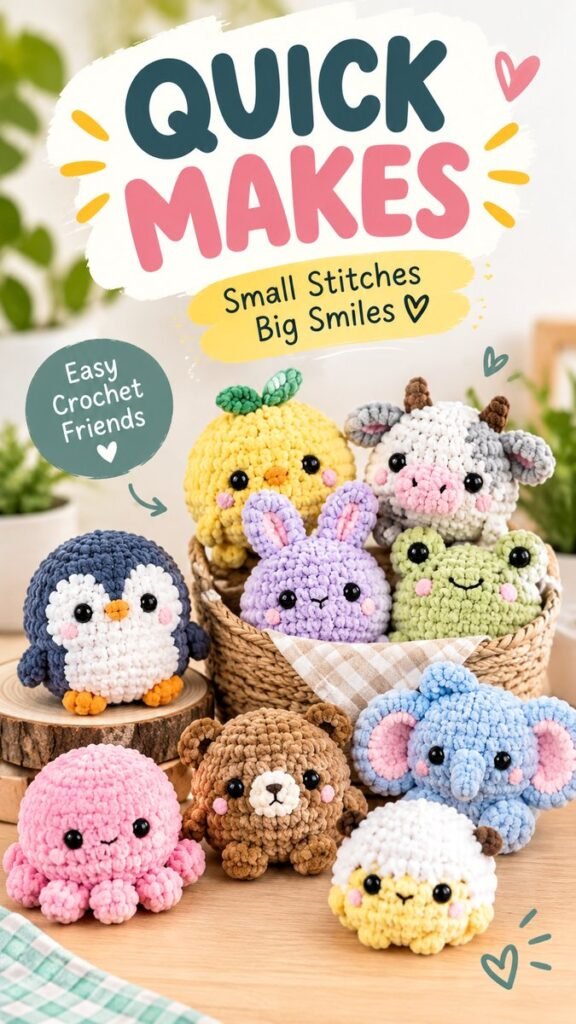
Learning to crochet can feel intimidating at first, especially when you see detailed projects with complicated shapes and tiny stitches. The good news is that some of the most charming crochet projects are also wonderfully approachable for beginners. Simple amigurumi animals, colorful crochet friends, and small handmade figures are excellent ways to practice basic techniques while creating something cute and useful.
If you are searching for easy crochet patterns for beginners, small projects are a great place to start. They require less yarn, can often be completed relatively quickly, and give you plenty of opportunities to practice tension, stitch placement, shaping, joining, and finishing. With a few basic supplies and some patience, you can turn soft yarn into adorable handmade creations.
Key Takeaways
- Start with small crochet projects that use simple shapes and stitches.
- Chunky yarn can make stitches easier to see and projects faster to complete.
- Basic amigurumi is a fun way to practice working in rounds.
- Simple color changes can make beginner projects look more detailed.
- Neat finishing and consistent tension can dramatically improve the final result.
Why Easy Crochet Patterns Are Perfect for Beginners
When you are learning a new craft, completing a project from beginning to end can be incredibly motivating. Large blankets, fitted garments, and intricate accessories may require many hours of practice. Smaller crochet projects provide a more manageable alternative.
Beginner-friendly crochet patterns usually focus on fundamental skills rather than complicated techniques. You may work with basic single crochet stitches, simple increases and decreases, and straightforward shapes. Once those skills become familiar, you can gradually experiment with more advanced patterns.
Small amigurumi-style projects are particularly useful because many of them are built from rounded or oval shapes. A beginner can repeat the same fundamental movements several times and quickly become more comfortable holding the hook, controlling yarn tension, and counting stitches.
Important: Your first project does not need to be perfect. Consistent practice is more valuable than achieving flawless stitches immediately. Every completed project helps you understand your hook, yarn, tension, and stitch placement a little better.
Cute Crochet Projects to Try First
The most appealing beginner projects often have a playful character and a simple construction. Think tiny animals, soft fruits, little creatures, flowers, clouds, or rounded decorative pieces. These projects can be made with a small amount of yarn and are easy to personalize.
Simple Amigurumi Animals
Amigurumi refers to small crocheted or knitted stuffed figures, and it is a wonderful category for new crocheters. Many beginner amigurumi designs are based on basic geometric forms. A round body can become a bear, chick, penguin, frog, sheep, or another cheerful character simply by changing the colors and adding small details.
Look for patterns that use primarily single crochet and simple increases or decreases. Avoid starting with designs that contain many separate pieces, complicated embroidery, or highly detailed shaping. A pattern with a simple body and a few easy decorative elements can give you a much smoother introduction.
Mini Crochet Creatures
Tiny creatures are another excellent option when you want a quick crochet project. Small frogs, bears, rabbits, elephants, birds, and other friendly characters can be made in playful colors. Their compact size also makes them easy to display on shelves, desks, craft spaces, or gift tables.
These projects are useful for practicing repetition. Once you understand how the body is constructed, you can create several variations without completely learning a new technique every time.
Simple Crochet Food
Crochet food is a fun way to explore beginner-friendly shapes. Fruits, cupcakes, candies, vegetables, and other miniature foods can often be reduced to circles, ovals, tubes, or small stuffed forms. These shapes are less intimidating than elaborate wearable projects.
Bright yarn colors also make simple stitches visually exciting. A basic crochet form can look completely different when worked in yellow, pink, green, purple, blue, or soft pastel shades.
Choosing Yarn for Easy Crochet Patterns
Yarn choice can make a major difference when you are learning. Beginners often benefit from yarn that allows the stitches to remain visible and easy to identify. Extremely fuzzy or heavily textured yarn can hide stitch definition, making it harder to count and correct mistakes.
Chunky yarn is especially appealing for quick crochet projects because it creates larger stitches. You can see your progress more clearly, and a small project can develop quickly. Soft, smooth yarn is also a practical choice because the hook can move through the stitches without as much resistance.
For colorful beginner projects, keep a small selection of shades available. You do not need a huge yarn collection. A few coordinating colors can be enough to create eyes, ears, cheeks, bodies, accessories, and decorative details.
Beginner Yarn Checklist
- Choose yarn with clear stitch definition.
- Use a comfortable weight that matches the pattern recommendation.
- Keep contrasting colors available for small details.
- Avoid very slippery or difficult-to-control yarn while learning.
- Check the yarn label for the recommended hook range.
Essential Crochet Skills to Practice
You do not need to master every crochet technique before starting a beginner pattern. Concentrate on a few foundational skills and build from there.
Making a Slip Knot and Chain
The slip knot and chain are among the first techniques most crocheters learn. Chains form the foundation of many flat projects, while a slip knot provides the starting point for getting yarn onto the hook.
Practice making several chains while keeping your tension as even as possible. If your chain becomes extremely tight in some areas and loose in others, your later stitches may become difficult to work into.
Working Single Crochet
Single crochet is one of the most useful stitches for beginner amigurumi. It produces a compact fabric that works well for small stuffed shapes. Once you become comfortable with it, you can begin experimenting with increases and decreases to create rounded forms.
Increasing and Decreasing
Increasing adds stitches to a round or row, while decreasing reduces them. These two techniques allow a simple crochet tube or circle to become a shaped object. They are especially important for amigurumi because they help create heads, bodies, ears, feet, and other forms.
Pro Tip: Count your stitches regularly instead of waiting until the end of a round. A quick stitch count can catch a missed increase or accidental extra stitch before it changes the shape of your entire project.
How to Make Beginner Crochet Projects Look Polished
Simple patterns can look remarkably professional when you pay attention to a few finishing details. Consistent tension is one of the biggest factors. Try to keep the yarn moving smoothly through your fingers rather than pulling each stitch as tightly as possible.
Stitch markers can also be extremely helpful when working in continuous rounds. They make it easier to identify the beginning of a round and reduce the chance of losing your place.
When stuffing a crochet figure, add small amounts gradually. Overstuffing can stretch the stitches and change the appearance of the fabric. Understuffing may leave the finished figure looking uneven. Gentle, even filling usually produces a smoother shape.
Adding Personality With Small Details
One of the most enjoyable parts of beginner crochet is personalization. A basic rounded body can become an entirely different character with a few simple additions.
- Add embroidered cheeks for a sweet expression.
- Use contrasting yarn for ears, feet, wings, or tails.
- Experiment with pastel shades for a soft handmade look.
- Try different facial expressions to create unique personalities.
- Combine two or three colors to make simple patterns more eye-catching.
You can also change the size of a project by experimenting with yarn weight and hook size, although it is important to understand that changing materials can affect the final dimensions and stitch tension.
Why This Matters
A beginner pattern does not have to look basic. Thoughtful color combinations, neat stitching, balanced stuffing, and carefully placed details can turn a simple shape into an adorable finished piece.
A Simple Beginner Crochet Routine
If you are completely new to crochet, creating a small practice routine can make learning feel much easier. Instead of trying to complete a complicated project immediately, divide your practice into manageable steps.
- Practice holding the hook. Find a grip that feels relaxed and comfortable.
- Work several chains. Focus on maintaining even tension.
- Practice single crochet. Make a small swatch and count your stitches.
- Try a simple circle. Practice increasing evenly around the shape.
- Make a small project. Choose a beginner-friendly amigurumi or decorative design.
- Finish carefully. Weave in loose ends and check the shape before calling it complete.
This approach gives you a chance to learn from small mistakes. If your first project is slightly uneven, that is completely normal. The next one will usually feel more familiar because your hands have already learned some of the basic movements.
Easy Crochet Patterns for Beginners as Handmade Gifts
Small crochet creations also make thoughtful handmade gifts. Their compact size makes them practical for gifting, and their playful appearance can suit a wide range of ages and interests.
A tiny crocheted animal can become a cheerful desk companion, shelf decoration, bag accessory, or handmade keepsake. You can choose colors based on the recipient’s favorite shades or create a small collection of different characters.
Handmade gifts do not need to be elaborate to feel special. The time and attention involved in creating something by hand are part of what makes crochet meaningful.
Common Beginner Mistakes to Avoid
Everyone makes mistakes while learning crochet. The goal is not to avoid every error, but to recognize common problems and understand how to correct them.
Losing Track of Stitch Counts
Adding or skipping one stitch can gradually change the shape of a project. Use a stitch marker and count your stitches whenever the pattern calls for it.
Crocheting Too Tightly
Beginners sometimes pull the yarn too firmly because they want neat stitches. Excessive tension can make it difficult to insert the hook and may create stiff fabric. Try relaxing your hands and allowing the hook to move naturally.
Choosing an Overly Complicated Pattern
A beautiful advanced pattern can be inspiring, but it may become frustrating if you are still learning basic stitches. Start with a project that matches your current skills, then increase the difficulty as your confidence grows.
How to Keep Your Crochet Projects Fun
Crochet is a creative hobby, so there is plenty of room to experiment. Once you understand the basic construction of a beginner pattern, try changing the colors, adding small accessories, or combining elements from different simple projects.
Keep a small notebook or digital collection of patterns you want to try. Saving ideas can help you build a personal project list and make it easier to choose your next creation when you have a free afternoon.
It is also helpful to photograph your finished projects. Seeing your progress over time can be surprisingly motivating. A first slightly uneven piece can become a useful reminder of how much your technique has improved.
At a Glance
- Start small and practice one skill at a time.
- Choose smooth, easy-to-see yarn.
- Use stitch markers when working in rounds.
- Experiment with cheerful colors and simple details.
- Focus on progress rather than perfection.
Conclusion: Start With One Simple Crochet Project
Easy crochet patterns for beginners can open the door to a relaxing and highly creative hobby. Small amigurumi animals, colorful crochet characters, miniature food, and simple decorative pieces provide an approachable way to learn essential techniques without feeling overwhelmed.
Start with a pattern that uses familiar stitches and a manageable number of pieces. Choose yarn that is comfortable to handle, keep your stitch count under control, and give yourself permission to make mistakes. Every round is another opportunity to improve your tension and confidence.
The most important thing is to enjoy the process. A simple ball of yarn can become a cheerful handmade friend with just a hook, a little patience, and some creativity. Save your favorite beginner crochet ideas, choose one project that excites you, and make your first stitch today.
Tags
Easy Crochet Patterns Crochet for Beginners Beginner Crochet Easy Crochet Projects Amigurumi Cute Crochet DIY Crochet Crochet Ideas