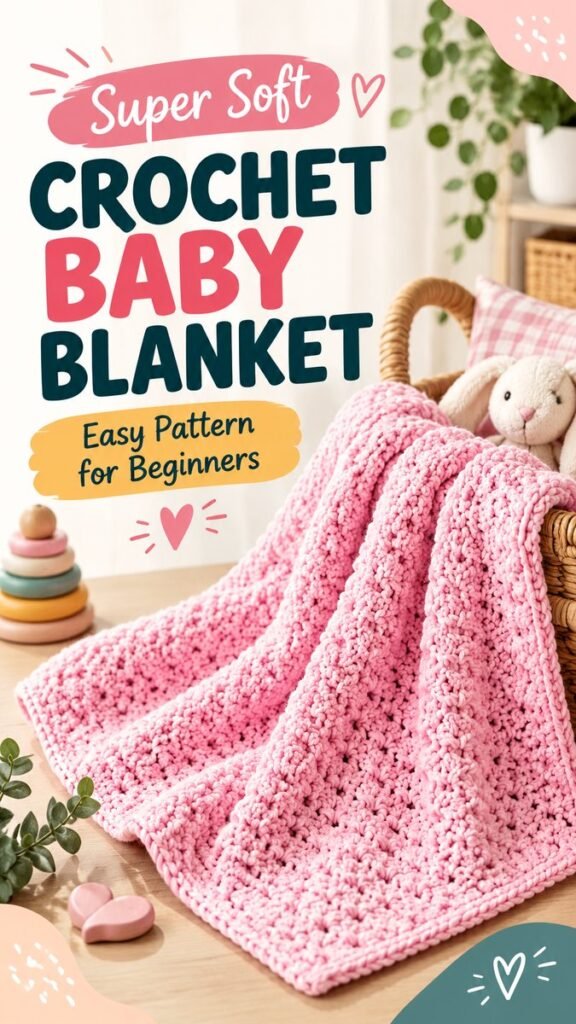
Soft, cozy, and wonderfully approachable, an easy crochet baby blanket is one of those handmade projects that feels rewarding from the very first row. The pink blanket shown here has a plush texture, a simple rectangular shape, and a gentle color palette that makes it especially appealing for a nursery, baby shower gift, or everyday cuddle blanket. If you are searching for free baby blanket crochet patterns easy enough for beginners, this style is a great place to start.
Key Takeaways
- Choose a soft, washable yarn that feels comfortable against delicate skin.
- Simple crochet stitches can create a beautiful textured baby blanket.
- A rectangular design makes sizing and finishing straightforward for beginners.
- Soft pink is lovely, but the same pattern concept works in many colors.
- Consistent tension helps create an even, polished finished blanket.
Why Easy Crochet Baby Blankets Are So Popular
Baby blankets are among the most satisfying crochet projects because they combine practical use with handmade charm. Unlike complicated garments that require careful shaping, a simple blanket can often be worked row by row while you relax, watch a favorite show, or listen to a podcast.
The blanket in this design has a particularly cozy appearance. Its chunky-looking texture gives the surface visual depth without relying on complicated decorative details. The soft pink shade also creates a warm, cheerful look that fits beautifully into a nursery or baby’s room.
The secret to a beginner-friendly crochet blanket is not complicated stitching. It is choosing a manageable construction, comfortable yarn, and a repeatable stitch pattern that lets you build confidence as you go.
Choosing Yarn for a Soft Baby Blanket
Yarn selection can make a major difference in both the appearance and feel of a crochet baby blanket. Since a baby blanket is designed to be touched frequently, softness should be one of your first considerations.
Look for yarn that feels smooth and pleasant in your hands. Machine-washable options can also make everyday care much easier. Babies and young children can be wonderfully messy, so a blanket that can be cleaned without complicated maintenance is especially practical.
For the soft, plush appearance shown in this style, a thicker yarn can create prominent stitches and a cozy surface. If you prefer a lighter blanket, choose a thinner yarn and adjust your hook size accordingly.
What to Consider Before Buying Yarn
- Softness: Feel the yarn before committing to a large project whenever possible.
- Washability: Easy-care yarn is useful for a frequently used baby blanket.
- Weight: Thicker yarn generally creates a heavier, warmer blanket.
- Color: Pastel shades create a gentle nursery look, while brighter colors add playful energy.
- Texture: A smooth or subtly textured yarn makes stitch definition easier to see.
Picking an Easy Crochet Stitch Pattern
When looking through free baby blanket crochet patterns easy enough for beginners, focus on patterns with a consistent repeat. A stitch pattern that uses the same basic sequence across each row is much easier to memorize than a design requiring constant changes.
Simple stitches can still produce impressive results. Single crochet, half double crochet, double crochet, moss stitch, and other beginner-friendly combinations can create attractive fabrics without complicated shaping.
The textured appearance of the inspiration style works particularly well with stitches that create a raised or closely woven surface. Texture gives a simple blanket personality while keeping the overall construction uncomplicated.
Why Texture Works So Well
Texture adds visual interest without requiring elaborate color changes or motifs. This makes it ideal when you want a blanket that looks special but remains relaxing to crochet.
A textured stitch can also make a single-color blanket feel much more detailed. Soft pink yarn, for example, becomes visually richer when the stitches create rows of subtle shadows and highlights across the surface.
Expert Insight
For a first baby blanket, prioritize a stitch pattern that you genuinely enjoy repeating. A simple pattern with consistent tension will usually produce a more polished result than an advanced pattern that feels frustrating.
How to Approach an Easy Baby Blanket Project
One of the best things about a basic crochet blanket is that you can break the project into small, manageable stages. You do not need to think about the entire blanket every time you pick up your hook.
- Choose your yarn and a suitable crochet hook.
- Decide approximately how large you want the blanket to be.
- Create a foundation chain based on the desired width and stitch repeat.
- Work the first rows slowly while you become comfortable with the pattern.
- Continue repeating the stitch sequence until the blanket reaches the desired length.
- Finish the final row, secure the yarn, and weave in loose ends neatly.
- Add a simple border if you want a more finished appearance.
Working this way keeps the process approachable. Instead of worrying about completing hundreds of rows, concentrate on making the current section neat and consistent.
Getting the Right Blanket Size
There is no single size that every baby blanket must follow. The ideal dimensions depend on how you intend to use it. A smaller blanket can be convenient for cuddling or placing over a stroller, while a larger design may work well for a crib or nursery setting.
If you are following a specific crochet pattern, use its recommended measurements as your starting point. If you are creating your own version, make a small swatch first. This allows you to see how your yarn, hook, stitch, and tension work together before committing to the full blanket.
Remember that crochet tension varies from person to person. Two crocheters can use the same yarn and hook yet produce slightly different measurements. Checking your gauge can therefore save time and help you achieve the proportions you want.
A Simple Way to Adjust the Size
To make a blanket wider, increase the number of foundation stitches while keeping the stitch repeat in mind. To make it longer, continue working additional rows. This flexibility is one reason basic rectangular crochet blankets are such useful beginner projects.
Keeping Your Crochet Edges Neat
One challenge beginners often notice is uneven edges. The blanket may look slightly wider or narrower from one section to another, especially when learning to identify the first and last stitch of each row.
Counting stitches regularly can help. You do not necessarily need to count every stitch forever, but checking your stitch total at the end of several rows can catch mistakes before they become noticeable.
Pay particular attention to the turning chain and the first stitch. Different crochet patterns treat turning chains differently, so always follow the specific instructions of the pattern you are using.
Pro Tip: If your edges are becoming uneven, slow down at the beginning and end of every row. A few extra seconds spent locating the correct stitches can prevent an entire section from needing to be unraveled.
Adding a Simple Border
A border is optional, but it can give a handmade baby blanket a beautifully finished appearance. A basic single crochet border is an approachable choice for beginners and can help define the edges of a textured blanket.
You can keep the border in the same color for a clean monochromatic look, as shown by the soft pink aesthetic, or introduce a contrasting shade for a more playful finish.
When working around the corners, take care to keep the border flat. Too few stitches can pull the corner inward, while too many can cause the edge to ripple. Working slowly around the first corner will help you understand how your chosen stitch behaves.
Easy Color Ideas for Baby Blankets
Although the soft pink palette is charming, beginner crochet blankets do not need to be pink. A simple stitch pattern gives you plenty of freedom to experiment with color.
- Soft cream for a timeless neutral look.
- Light sage for a calm, natural nursery palette.
- Dusty blue for a cool and peaceful finish.
- Warm beige for a modern minimalist blanket.
- Lavender for a gentle pastel accent.
- Two complementary colors for simple striped rows.
If you are making a gift, consider colors that coordinate with the nursery or the recipient’s existing style. A thoughtfully chosen color can make an uncomplicated blanket feel especially personal.
Why This Project Makes a Lovely Handmade Gift
A crochet baby blanket has a special handmade quality that makes it suitable for baby showers, new arrivals, birthdays, or simply welcoming a little one into the family. The rectangular construction also makes it possible to customize the size and color without redesigning the entire project.
For a gift, presentation can be simple. Fold the finished blanket neatly and pair it with a handmade card or a coordinating nursery accessory. The soft texture and thoughtful craftsmanship will be the main attraction.
Before gifting any handmade item intended for a baby, make sure loose ends are securely woven in and that the finished piece is clean and suitable for its intended use. Always follow the care instructions for the yarn you selected.
Beginner Tips for a Smoother Crochet Experience
Starting a blanket can feel intimidating because the project is much larger than a small coaster or scarf. The easiest way to stay motivated is to focus on progress rather than speed.
- Keep your tension relaxed instead of pulling each stitch tightly.
- Use stitch markers when you have trouble finding row edges.
- Count your stitches periodically to catch mistakes early.
- Take breaks if your hands become tired.
- Keep your yarn organized so it feeds smoothly while you crochet.
- Save your pattern instructions somewhere easy to reference.
It is completely normal for the first few rows to look less polished than later rows. As your hands become familiar with the stitch sequence, your rhythm and tension will usually become more consistent.
Making Your Free Baby Blanket Crochet Pattern Your Own
One of the joys of working from an easy crochet pattern is the ability to personalize it. You can keep the basic construction while changing the yarn color, blanket dimensions, border, or stitch texture.
Try creating a smaller version for a stroller, a larger version for cozy nursery use, or a simple striped variation using two soft colors. You can also experiment with a subtle border to frame the textured center.
The goal does not have to be perfection. A handmade blanket is valuable because it reflects the time and care invested in creating it. Small variations in tension can even become part of its handmade character.
Quick Points
- Start with soft, practical yarn.
- Choose a repeatable beginner stitch.
- Check your tension as you work.
- Customize the color and size to suit your needs.
- Finish with a neat border for an extra polished touch.
Conclusion: Start Your Cozy Crochet Baby Blanket
Free baby blanket crochet patterns easy enough for beginners can be a wonderful way to build crochet skills while creating something useful and beautiful. The soft pink blanket style featured here shows how much visual impact can come from simple construction, cozy texture, and a thoughtful color choice.
Whether you are making your first baby blanket or adding another handmade project to your collection, keep the process simple. Choose comfortable yarn, work with a stitch pattern you enjoy, maintain consistent tension, and give yourself plenty of time to enjoy each row.
A cozy crochet baby blanket does not need complicated details to make an impression. With a beginner-friendly approach and a little patience, you can create a soft handmade piece that feels warm, thoughtful, and uniquely yours. Grab your favorite yarn and crochet hook, choose your colors, and start creating a blanket you will be proud to finish.