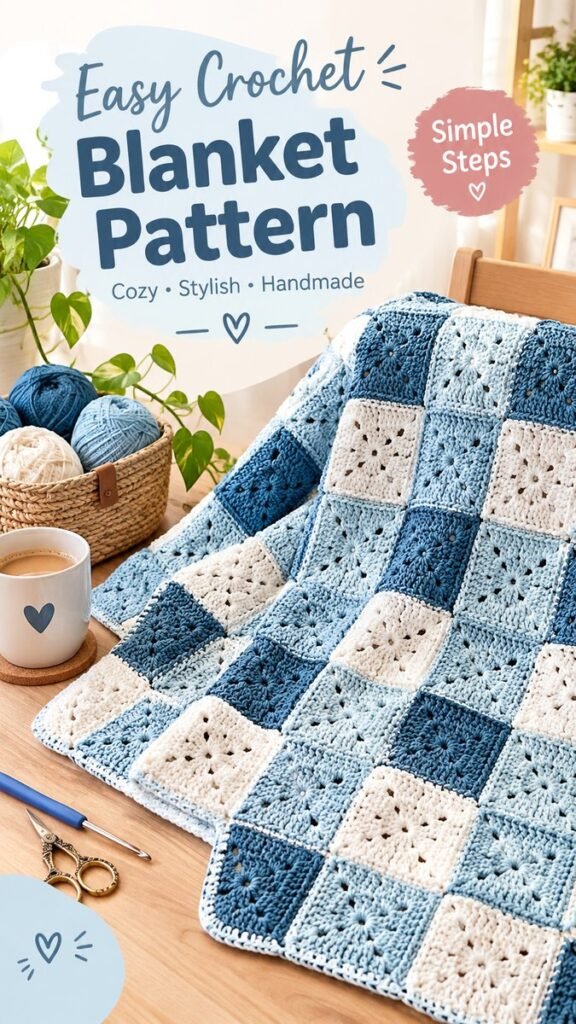
There is something wonderfully timeless about a crochet baby blanket made from granny squares. Soft shades of blue, cream, and pale gray create a peaceful, classic look, while the repeating squares add texture, personality, and a handmade touch. This style of crochet baby blanket is a lovely choice for a nursery, a baby shower gift, or a cozy keepsake that can be treasured for years.
A granny square blanket also offers plenty of creative freedom. You can repeat a simple color arrangement, experiment with different shades, or make every square slightly different. Whether you are an experienced crocheter or learning how to join your first squares, this project is a beautiful way to create something useful, personal, and full of charm.
Key Takeaways
- A granny square baby blanket is a flexible project for beginners and experienced crocheters.
- Blue, cream, and soft neutral shades create a calm, timeless nursery aesthetic.
- Consistent square sizes make joining easier and help the finished blanket lie flat.
- Soft, washable yarn is a practical choice for a baby-friendly handmade blanket.
- Simple borders can give the blanket a polished finish without overwhelming the design.
Why Granny Squares Make a Beautiful Baby Blanket
Granny squares are one of the most recognizable crochet motifs, and their appeal comes from both their simplicity and versatility. Each square is worked individually, then joined with other squares to create a larger design. This makes a granny square baby blanket easier to manage than a project that requires working across the entire width from the beginning.
The square format also makes it simple to plan colors. A blanket can feature a repeating checkerboard arrangement, alternating light and dark squares, or a more relaxed patchwork effect. The blue and cream combination shown here feels especially soothing, with enough contrast to make each square visible while keeping the overall design soft and coordinated.
Another advantage is portability. You can crochet a few squares while relaxing at home, traveling, or enjoying a quiet afternoon. Over time, those small pieces become a meaningful handmade blanket.
A Classic Look with Modern Appeal
Traditional granny square blankets often have a colorful, nostalgic appearance, but a carefully selected palette can give the same technique a modern feel. Soft blue, dusty blue, ivory, and pale gray work beautifully together because they create contrast without looking too busy.
This kind of color scheme suits many nursery styles, including minimalist, coastal, Scandinavian-inspired, and classic cottage decor. It also makes the blanket versatile enough to use as a stroller cover, a nursery accent, or a cozy layer during quiet family moments.
Choosing Colors for a Crochet Baby Blanket Granny Square Design
Color planning is one of the most enjoyable parts of making a granny square baby blanket. Before crocheting a large number of squares, choose a small palette and decide how often each shade will appear. This helps the finished blanket look intentional rather than random.
A soft blue and cream palette is a reliable starting point. You might use a pale blue as the main background, a deeper blue for contrast, and cream or ivory to brighten the arrangement. A small amount of gray can help connect the colors and add a gentle neutral balance.
Simple Color Combinations to Try
- Soft blue, ivory, and pale gray: A calm combination with a clean, airy appearance.
- Dusty blue, cream, and navy: A slightly stronger palette with classic contrast.
- Sky blue, white, and beige: A light and natural option for a neutral nursery.
- Three shades of blue with one cream accent: A coordinated look that still feels interesting.
Try placing yarn balls or small color samples next to one another before committing to the full project. Colors can look different depending on the lighting and surrounding shades, so this simple step can help you create a more balanced result.
Important: The most successful granny square color layouts usually include a clear balance between light and dark shades. If every square is equally bright, the pattern may feel scattered. Repeating a few colors throughout the blanket creates rhythm and makes the finished design feel cohesive.
Selecting the Right Yarn for a Baby Blanket
For a crochet baby blanket, yarn choice matters just as much as color. The finished blanket should feel soft, comfortable, and practical for everyday use. Look for yarn that is gentle against delicate skin and easy to care for, especially if the blanket will be used regularly.
Machine-washable acrylic yarn is a popular option because it is generally affordable, durable, and available in a wide range of colors. Cotton blends can also be appealing when you want a breathable fabric with a slightly different texture. Some crocheters prefer soft acrylic or cotton-acrylic blends for their balance of comfort and easy maintenance.
Always check the yarn label for washing instructions, recommended hook size, and fiber information. If the blanket is intended as a gift, choosing a yarn that can be washed easily is often a thoughtful practical detail.
Helpful Yarn Tips
- Choose a smooth yarn so the granny square stitches remain easy to see.
- Avoid overly fuzzy yarn if you want crisp square definition.
- Use the same yarn weight throughout the blanket for consistent square sizes.
- Buy enough yarn from the same dye lot when possible for a more uniform color.
- Make a small test square before purchasing all the materials.
Planning the Size and Layout
One of the best features of a granny square baby blanket is how easily the size can be customized. Instead of committing to a fixed width and length immediately, you can decide how many squares you want across and how many rows you want down.
For a small baby blanket, a compact arrangement of squares may be enough for cuddling or placing over a stroller. A larger arrangement can work well as a crib blanket or a versatile nursery throw. The exact finished size will depend on the dimensions of each square, your yarn weight, and your crochet tension.
Before joining, lay all the completed squares on a flat surface. This lets you experiment with the color order and identify any sections that feel too dark, too light, or too repetitive. Taking a quick photo of the arrangement can also help you remember the layout while joining.
Keep the Pattern Balanced
A checkerboard arrangement is an easy way to create visual structure. Place darker blue squares between pale blue and cream squares so the colors are distributed evenly. If you prefer a more relaxed look, group a few similar shades together and scatter the cream squares throughout the design.
There is no single correct layout. The goal is to create a blanket that feels balanced and pleasing to you. Even a simple arrangement can look special when the colors are chosen thoughtfully.
Expert Insight
Make a few extra granny squares before beginning the final layout. Spare squares are useful if one becomes damaged, if you decide to enlarge the blanket later, or if you want to test different joining and border techniques without disturbing the main design.
How to Build a Granny Square Baby Blanket
Although granny squares can vary in stitch pattern, the basic process is straightforward. You crochet individual squares, weave in the loose ends, arrange the pieces, join them, and finish the blanket with a border. The most important part is maintaining consistent tension so the squares are similar in size.
1. Choose a Granny Square Pattern
Start with a granny square pattern that matches your skill level and the look you want. A classic square with clusters of stitches creates a familiar open texture, while a more detailed square may include floral centers, textured rounds, or decorative stitch changes.
For a baby blanket, consider a pattern that is comfortable, flexible, and not overly dense. A slightly open stitch design can create a lightweight fabric, while a tighter pattern may provide more warmth. Always consider how the yarn and stitch combination feel together before making a large number of squares.
2. Make a Consistent Set of Squares
Once you have chosen your pattern, crochet enough squares to create your planned layout. Try to keep your tension steady from one square to the next. If some squares are noticeably larger or smaller, the joining process may become uneven.
Blocking can help square up crochet motifs and improve their shape. Depending on the yarn, gentle blocking may make the pieces easier to align. Always use a method suitable for the fiber you have selected.
3. Weave in the Ends
Weaving in ends as you go can make the finishing stage much less overwhelming. Use a yarn needle to secure each loose tail neatly on the wrong side of the square. This also makes it easier to arrange and join the pieces without a collection of loose strands getting in the way.
4. Join the Squares
There are several ways to join granny squares, and each method creates a slightly different appearance. A traditional sewn join can produce a neat, flexible seam. A slip-stitch join may create a more defined ridge, while a single crochet join can add texture and a subtle raised line between squares.
Choose a joining method that complements your design. For a soft, classic baby blanket, a neat join in a coordinating color can help the squares look connected without distracting from their individual patterns.
5. Add a Simple Border
A border gives the blanket a finished appearance and can help frame the granny square pattern. A few rounds of single crochet create a clean edge, while a shell, scallop, or picot border adds a more decorative touch.
For a blue and cream blanket, a cream border can create a soft frame, while a pale blue border can emphasize the cool color palette. If the squares already contain plenty of detail, a simple border is often the best choice.
Tips for Neat Crochet Granny Squares
Even simple crochet projects benefit from a few careful habits. Granny squares can look uneven when tension changes, corners become too tight, or the joining method pulls the fabric out of shape. A little attention during the early stages can make the finished blanket much more polished.
- Count your rounds: Make sure every square has the same number of rounds unless the pattern intentionally varies.
- Check the corners: Keep corner spaces consistent so the squares retain their shape.
- Measure regularly: Compare squares as you work rather than waiting until the end.
- Use a comfortable hook: The correct hook size can help maintain even tension.
- Join carefully: Avoid pulling the seams too tightly, which can cause puckering.
Pro Tip: If your granny squares are slightly different sizes, do not immediately unravel them. First, check whether gentle blocking can improve the shape. For future squares, adjust your tension or hook size so the pieces become more consistent.
Making the Blanket Special as a Handmade Gift
A crochet baby blanket is more than a practical item. It is a thoughtful handmade gift that reflects time, care, and creativity. A granny square design is especially meaningful because every square represents a small part of the overall project.
For a baby shower, consider choosing colors that coordinate with the nursery while keeping the design timeless. Blue and cream are classic, but the same layout can be adapted with sage green, warm beige, soft pink, lavender, or muted yellow. The most important consideration is selecting shades that work well together and suit the recipient’s style.
You can also make the blanket more personal by adding a simple handmade label, choosing a special border, or creating a matching small accessory. Keep embellishments secure and avoid loose decorative pieces that may not be suitable for babies.
Care and Finishing Considerations
Before gifting or using the blanket, follow the yarn manufacturer’s care instructions. Washing and drying the blanket correctly can help preserve its shape, softness, and color. If the yarn recommends gentle washing, avoid harsh cycles or high heat that could affect the finished fabric.
It is also a good idea to inspect the seams and border carefully. Secure any remaining ends, check that the joining stitches are firm, and make sure the blanket lies comfortably without excessive curling or puckering.
Ways to Customize Your Granny Square Baby Blanket
Once you understand the basic construction, there are many ways to make the design your own. You can change the size of the squares, alternate different motifs, or create a border that introduces a new color. Small changes can give the blanket a completely different personality.
- Use a single color for the final round of every square to create a unified look.
- Alternate two granny square patterns for subtle texture variation.
- Create a central color arrangement and repeat it around the edges.
- Add a wide border in a neutral shade for a clean, modern finish.
- Make the blanket smaller for a stroller or larger for a nursery throw.
Do not feel pressured to make every square identical if you prefer a handmade patchwork effect. The beauty of crochet is that small variations can add character. As long as the squares are compatible in size and the color palette is balanced, the result can feel charming and intentional.
At a Glance
- Choose a soft, coordinated yarn palette.
- Keep every granny square consistent in size.
- Arrange the squares before joining them.
- Use a simple border to frame the finished blanket.
- Follow the yarn care instructions for long-lasting softness.
Conclusion: Create a Cozy Handmade Keepsake
A crochet baby blanket granny square project is a wonderful way to combine classic crochet techniques with modern color styling. The repeating squares make the blanket approachable, while the choice of yarn, layout, joining method, and border allows you to create something completely personal.
Whether you choose soft blue and cream shades like the inspiration here or develop your own favorite palette, the finished blanket can bring warmth and handmade charm to a nursery or baby gift collection. Take your time with the squares, enjoy the process, and let the colors guide your creativity. A few simple motifs can become a beautiful keepsake that feels thoughtful, practical, and truly one of a kind.