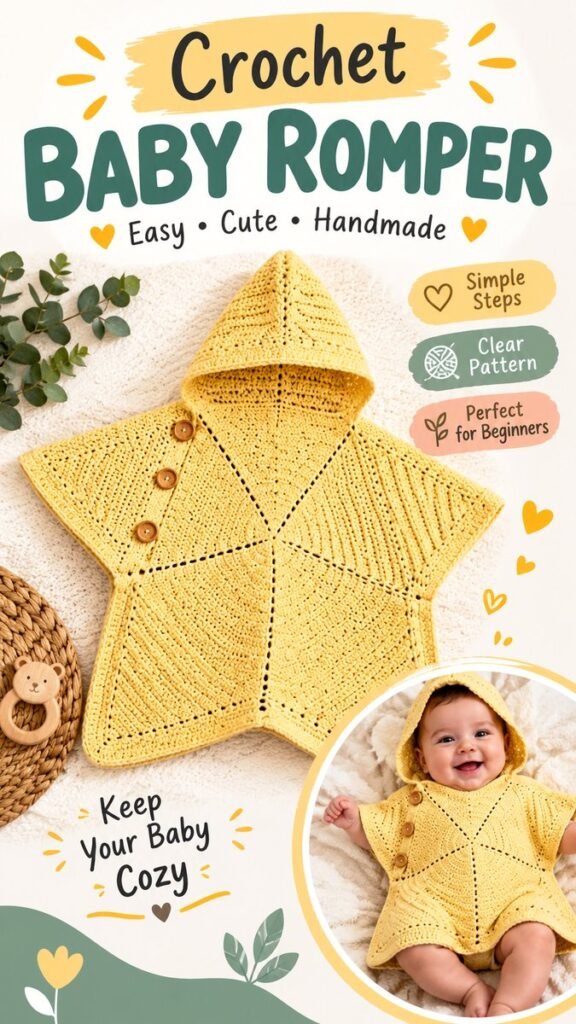
Crocheting baby clothes is a wonderful way to create something cozy, practical, and full of handmade charm. A cute crochet baby romper can be especially rewarding because it combines a comfortable shape with beautiful stitch details and a sweet hooded design. Whether you are an experienced crocheter or searching for beginner-friendly inspiration, free baby clothes crochet patterns can help turn a simple skein of yarn into a memorable little outfit.
Key Takeaways
- A hooded crochet baby romper makes a cozy handmade project for little ones.
- Soft, lightweight yarn is a practical choice for comfortable baby garments.
- Simple geometric panels and button details can make a basic design look special.
- Accurate measurements are essential when creating crochet baby clothing.
- Free crochet patterns are useful for learning construction, shaping, and finishing techniques.
Why Crochet Baby Clothes Make Wonderful Handmade Projects
Baby garments are among the most charming crochet projects to make. They are small enough to feel manageable while still giving you plenty of opportunities to practice stitches, shaping, joining, and finishing. A crochet baby romper can also be customized with different yarn colors, buttons, stitch textures, and decorative borders.
The featured style combines a warm golden-yellow shade with an oversized hood, wide sleeves, button closures, and geometric crochet sections. The result is a playful garment that looks both comfortable and distinctive. The triangular and diagonal stitch details give the fabric visual movement without requiring a complicated collection of decorative accessories.
For anyone collecting baby clothes crochet patterns free online, designs like this are particularly useful sources of inspiration. Even when you follow a pattern exactly, understanding the basic construction helps you make adjustments for size, yarn weight, and personal style.
Choosing Yarn for a Crochet Baby Romper
Yarn selection can make a major difference in how a finished baby garment feels. For clothing that sits directly against delicate skin, prioritize yarn that feels soft and comfortable rather than choosing a fiber simply because it looks attractive in the skein.
A lightweight or medium-light yarn can work well for a garment inspired by this style. The fabric should have enough structure to hold its shape while remaining flexible enough for comfortable movement. Always check the yarn label for care instructions, particularly when making something intended for frequent washing.
Color is another easy way to personalize a crochet baby clothes pattern. Soft cream, butter yellow, sage green, dusty pink, light blue, and warm beige can all create a gentle nursery-inspired appearance. A neutral base can also be paired with contrasting buttons or edging for a more modern finish.
Important: For baby garments, comfort and practicality should come before decoration. Choose soft materials, avoid loose embellishments that could become detached, and make sure buttons and other attachments are securely fastened.
Understanding the Construction of the Design
One of the most interesting features of this crochet baby romper style is its panel-based appearance. The fabric is arranged around central and diagonal sections, creating a geometric effect across the front and lower body. This approach adds character while allowing the crocheter to work with recognizable shapes rather than relying entirely on complicated surface decoration.
The hood is another defining feature. A hood can make a baby garment look extra cozy and gives the finished project a distinctive silhouette. Depending on the pattern construction, the hood may be crocheted separately and joined to the main body or shaped directly from the neckline.
The wide sleeve sections create a relaxed appearance and can make dressing easier. The button detail on the front adds both visual interest and practical functionality. When working from a free crochet pattern, pay close attention to where increases, decreases, seams, and button placements occur because small changes can affect the overall proportions.
The Hood
A well-shaped hood should sit comfortably around the head without being excessively tight. If the pattern includes shaping instructions, keep your stitch counts consistent. A simple stitch marker can help you identify important corners or increase points, especially when the design contains symmetrical sections.
The Main Body
The main body is where the geometric stitch pattern becomes most noticeable. Consistent tension is particularly important here because uneven tension can cause panels to look distorted. Count your stitches regularly and compare both sides of the garment as you work.
Buttons and Closures
Wooden buttons give the pictured style a natural handmade feel, but the same design can be updated with smooth neutral buttons, colorful alternatives, or simple crochet closures. Whatever you choose, attach every button firmly and inspect it regularly.
Expert Insight
- Check your gauge before beginning the full garment.
- Measure the intended wearer rather than relying only on age labels.
- Keep notes about stitch counts so adjustments are easier to repeat.
How to Get Better Results From Free Crochet Patterns
Free patterns are excellent resources, but reading the instructions carefully can save considerable time. Before picking up your hook, look through the entire pattern and identify the materials, abbreviations, gauge information, construction method, and finishing instructions.
- Read the complete pattern first. Understanding the sequence makes each stage easier to follow.
- Make a gauge swatch. Your tension may differ from the designer’s, even when you use the same yarn size.
- Measure as you go. Compare the garment with the desired measurements instead of waiting until the end.
- Use stitch markers. Mark corners, increases, decreases, or repeated sections to keep geometric designs balanced.
- Weave in ends carefully. A neat finish helps the garment look polished and withstand normal handling.
Do not be afraid to pause when an instruction seems unclear. Count the stitches in the previous row, identify the section you are working on, and compare the result with the pattern’s expected shape. Correcting a small mistake early is usually much easier than unraveling a large section later.
Pro Tip: Take a quick photo of your work after completing each major section. This creates a visual record that can help you spot uneven shaping and makes it easier to remember where you stopped during your next crochet session.
Making the Pattern More Beginner-Friendly
A crochet baby romper may look intimidating when you first see the finished garment, but breaking it into smaller tasks can make the project much more approachable. Instead of thinking about the complete outfit, focus on one component at a time.
- Start by practicing the primary stitch on a small swatch.
- Learn how increases and decreases change the shape of your fabric.
- Work slowly around corners and shaping points.
- Use removable stitch markers to identify repeating sections.
- Finish and inspect each piece before moving to the next stage.
If you are completely new to crochet, practicing a small geometric sample first can be especially helpful. The pictured design relies heavily on structured lines and panels, so consistent tension is more important than working quickly.
Sizing Tips for Handmade Baby Clothes
Sizing is one of the biggest challenges when making baby clothing. Babies grow quickly, and age-based sizing can vary between patterns. Whenever possible, use actual measurements as your guide.
Useful measurements can include the baby’s approximate chest or body circumference, garment length, sleeve opening, neckline, and hood dimensions. Compare those measurements with the finished dimensions supplied by the pattern before choosing your size.
Remember that crochet fabric can behave differently depending on the stitch pattern and yarn. A fabric with open stitches may stretch more than a dense fabric. The goal is a garment that provides comfortable movement without being excessively loose.
Allowing for Growth
If you are making a gift and cannot measure the baby directly, consider choosing a slightly larger size rather than trying to guess an exact fit. A wearable handmade item can be especially useful when it remains comfortable for more than a very short period.
Creative Ways to Personalize a Crochet Baby Outfit
Once you understand the basic construction, there are many ways to give a crochet baby romper your own personality. Changing the yarn color is the simplest option, but small design decisions can make the finished piece feel completely different.
- Try a soft neutral shade for a minimalist look.
- Use two coordinating colors to emphasize geometric sections.
- Choose natural-looking buttons for a rustic handmade style.
- Add a simple contrasting border around the hood or sleeves.
- Experiment with subtle stitch textures while keeping the garment comfortable.
For a modern nursery aesthetic, muted earthy shades work beautifully. For something brighter and more playful, cheerful yellow, coral, mint, lavender, or sky blue can transform the same basic concept.
Care and Finishing Tips for Crochet Baby Clothes
A handmade baby garment deserves careful finishing. Before the first wear, inspect all seams, button attachments, edges, and woven-in yarn ends. The garment should feel comfortable from every angle, with no rough ends or loose decorative pieces.
Follow the washing and drying instructions for the specific yarn you choose. When in doubt, gentle handling is generally preferable to aggressive washing. Avoid high heat unless the yarn label specifically permits it, since heat can affect the shape and texture of some fibers.
After washing, reshape the garment gently and allow it to dry according to the yarn’s care recommendations. Proper care can help maintain the stitch definition and overall shape of your crochet baby clothes.
Why Save Baby Clothes Crochet Patterns for Later?
Crochet inspiration is easy to discover and just as easy to lose. Saving favorite baby crochet patterns creates a personal collection you can return to whenever you are ready to start another project. It is especially useful when planning handmade baby shower gifts, seasonal outfits, or a coordinated set of nursery accessories.
A saved collection can also help you compare different construction methods. You may find one pattern with a favorite hood, another with an interesting stitch texture, and a third with a convenient button arrangement. Over time, these ideas can help you develop your own crochet style.
Quick Points
- Choose soft yarn suitable for baby garments.
- Check gauge before starting the main project.
- Measure carefully for a comfortable fit.
- Secure buttons and inspect finished details.
- Save inspiring free crochet patterns for future projects.
Conclusion: Create Something Cozy and Handmade
A crochet baby romper is more than a small clothing project. It is an opportunity to practice useful crochet techniques while creating something warm, personal, and practical. The hooded silhouette, geometric stitch sections, button details, and cheerful color shown in this style demonstrate how thoughtful construction can turn simple crochet fabric into an eye-catching baby outfit.
Whether you are searching for baby clothes crochet patterns free for your first garment or building a collection of more advanced projects, focus on patterns that match your skill level and provide clear construction guidance. Take your time with gauge, measurements, shaping, and finishing, and do not hesitate to customize colors or details to make the project your own.
Most importantly, enjoy the process. Handmade baby clothes have a special charm because every stitch represents time, creativity, and care. Save your favorite crochet baby patterns, gather your yarn and hook, and start creating a cozy little piece that can become part of a beautiful handmade collection.
Tags
Baby Crochet Patterns Free Crochet Patterns Crochet Baby Clothes Baby Romper Crochet Easy Crochet Projects Crochet Baby Gifts Handmade Baby Clothes span style=”display:inline-block;background:#dce9e2;border-radius:20px;padding:8px 14px;margin:4px;font-size:14px;”>Beginner Crochet