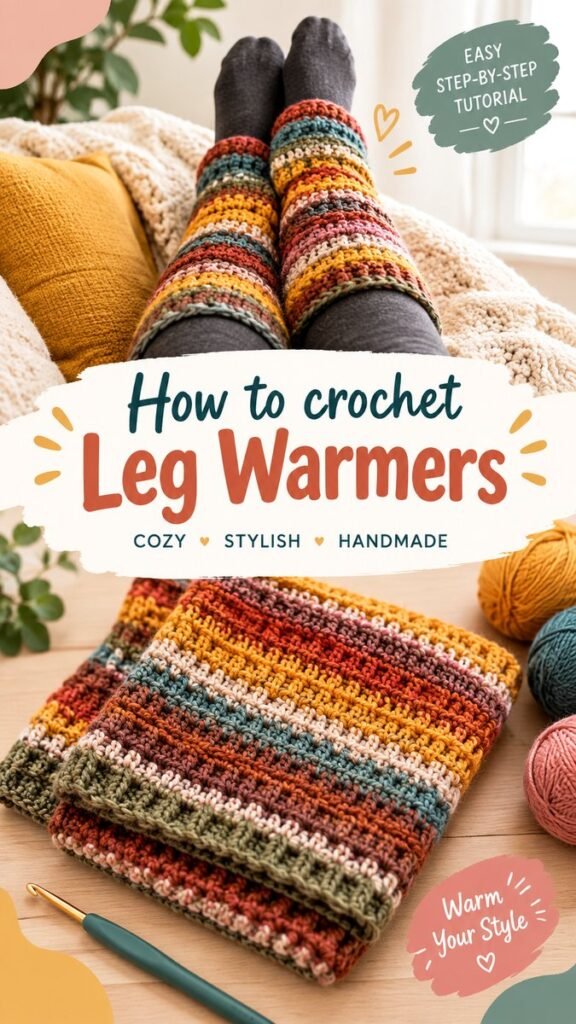
There is something wonderfully satisfying about making a pair of crochet leg warmers from colorful yarn. They are practical, cozy, and full of personality, while also giving you a simple way to turn leftover yarn into a useful handmade accessory. A striped design like this one creates plenty of visual interest without requiring complicated colorwork, making it a fun project for a relaxing crochet session.
Key Takeaways
- Crochet leg warmers are a practical and stylish handmade accessory.
- Striped color combinations can make a simple crochet design look distinctive.
- Soft, comfortable yarn is ideal for a wearable project.
- Measuring your legs before crocheting helps create a better fit.
- The design can be customized with different colors, lengths, and textures.
- A simple construction makes this a rewarding project for many crochet skill levels.
Why Crochet Leg Warmers Are Such a Fun Project
Crochet leg warmers combine comfort with creativity. Unlike a large blanket or detailed garment, they are relatively compact projects that allow you to see your progress quickly. They can be worn around the lower legs with leggings, jeans, skirts, dresses, or cozy indoor outfits.
The colorful striped appearance also makes them particularly appealing for handmade wardrobes. You can use a coordinated palette for a subtle look or combine warm and cool shades for a playful accessory. The reference design uses earthy reds, mustard tones, greens, pinks, creams, and muted blue shades, creating a cozy handmade character.
Important: The best crochet leg warmers are not only attractive. They should also feel comfortable against the skin and have enough stretch to fit securely without feeling restrictive.
Choosing Yarn for Crochet Leg Warmers
Yarn choice has a major influence on the finished accessory. Since leg warmers are worn directly against clothing or skin, softness and flexibility are especially important. A yarn that feels pleasant in your hands while crocheting is often a good starting point, but remember that the finished fabric may behave differently depending on the stitch and tension.
For a colorful striped project, medium-weight yarn can be a practical option because it provides visible stitches without making the fabric excessively bulky. You can also experiment with different yarn weights if you want a lighter decorative warmer or a thicker winter version.
Think About Color Before You Start
Color is one of the easiest ways to make a simple crochet leg warmer pattern feel completely original. The pictured style demonstrates how several shades can work together to create a rich, textured appearance.
- Choose three to five colors for a coordinated palette.
- Use alternating warm and cool shades for stronger contrast.
- Add neutral tones such as cream, brown, gray, or olive to soften bright colors.
- Keep stripe widths varied if you want a more organic handmade appearance.
- Use equal stripe widths for a cleaner, more structured look.
How to Plan Your Crochet Leg Warmers
Before beginning a crochet leg warmers free pattern, take a few moments to think about the finished size and intended fit. A leg warmer can be worn loosely for a relaxed look or closer to the leg for warmth and layering.
Measure around the widest part of the lower leg where you want the warmer to sit. It is also helpful to measure from the point where you want the warmer to begin down to its desired ending point. These two measurements give you a useful starting point for determining the circumference and length.
Remember that crochet fabric can stretch. If the finished piece needs to fit comfortably around the leg, the starting measurement may need to be slightly smaller than the body measurement. A small gauge swatch can help you understand how much your chosen yarn and stitch pattern stretch.
Make a Simple Gauge Swatch
A gauge swatch may seem unnecessary for a small accessory, but it can save time when fit matters. Crochet a small sample using the yarn and hook you plan to use. Measure the width and height of the fabric and gently stretch it to see how it behaves.
If the fabric feels too stiff, a larger hook may create a softer result. If the stitches are too loose or the fabric does not hold its shape, a smaller hook may be more suitable. The goal is a comfortable balance between stretch, warmth, and structure.
A Simple Construction for Beginners
One of the appealing features of crochet leg warmers is their straightforward construction. Instead of shaping an elaborate garment, you can create a tube-like piece that wraps around the lower leg. This makes the project approachable for crocheters who want to practice maintaining even tension and consistent rows.
Depending on the pattern, leg warmers can be worked from the bottom upward, from the top downward, or as a flat rectangle that is joined afterward. A circular construction can reduce the need for sewing, while a flat construction can make stripe placement and stitch counting easier to manage.
Adding a Ribbed Edge
The ribbed sections visible in many crochet leg warmer designs provide both texture and practical structure. Ribbing can help the opening sit comfortably against the leg while adding a finished look to the accessory.
Working through different parts of the stitch can create raised ridges that resemble knitted ribbing. You can place this texture at one or both ends, depending on the style you want.
Expert Insight
For wearable crochet accessories, comfort should guide your stitch and yarn choices. A beautiful stitch pattern is only successful when the finished fabric has enough flexibility to move naturally with the body.
Creating Colorful Stripes
Striping is where this crochet leg warmers project can become especially creative. You do not need complicated colorwork to produce an eye-catching design. Simple horizontal changes between yarn colors can create a lively pattern with very little additional difficulty.
Keep Your Color Changes Neat
When changing colors, finish the final stitch of the previous color according to your chosen technique, then introduce the new shade cleanly. Try to keep yarn tails organized as you work. Leaving them manageable makes finishing much easier later.
If you are creating multiple pairs, write down your stripe sequence. A simple list of colors and row counts can help you reproduce a favorite combination without having to guess how the original stripes were arranged.
Try Different Stripe Widths
There is no need for every stripe to have the same number of rows. Narrow accent stripes can separate larger blocks of color, while wider stripes can become the main visual feature. Alternating these widths can make handmade leg warmers look more dynamic.
For a softer appearance, use colors with similar intensity. For a bold statement accessory, place contrasting shades next to each other. Even small changes in color order can dramatically change the final result.
Ways to Customize Your Crochet Leg Warmers
A free crochet leg warmer pattern is best viewed as a starting point rather than a strict limitation. Once you understand the basic construction, you can adjust the project to suit your wardrobe, yarn collection, or preferred crochet style.
- Change the length: Add or remove rows for shorter or longer warmers.
- Adjust the circumference: Modify the starting chain or stitch count to improve the fit.
- Experiment with texture: Try ribbing, simple raised stitches, or alternating stitch patterns.
- Create a neutral version: Use cream, gray, beige, brown, or black for a minimalist accessory.
- Use bright colors: Combine cheerful shades for a playful statement piece.
- Mix yarn leftovers: Small amounts of coordinating yarn can become attractive stripes.
Pro Tip: If you are using several yarn colors, arrange the balls beside one another before crocheting. This makes it easier to see which shades work together and helps you create a balanced palette before committing to the stripe sequence.
How to Style Handmade Leg Warmers
Crochet leg warmers are surprisingly versatile. Their cozy texture works naturally with casual outfits, but colorful handmade versions can also become a statement accessory. Wear them over leggings with boots for a comfortable cold-weather look, or pair them with a skirt and simple shoes when you want the crochet texture to stand out.
For a relaxed home outfit, layer them over comfortable pants or tights. The handmade texture adds visual warmth even when the rest of the outfit is simple. Because the reference style uses multiple earthy and colorful shades, it can easily become the focal point of an otherwise neutral outfit.
Match the Colors to Your Wardrobe
Before selecting your yarn, look at the clothes you already wear most often. If your wardrobe is mostly neutral, colorful crochet leg warmers can add an easy pop of personality. If you already wear bold colors, consider choosing two or three complementary shades for a more coordinated result.
Handmade accessories are also an opportunity to embrace seasonal color palettes. Rust, mustard, olive, burgundy, cream, and muted teal can create a cozy autumn-inspired combination, while softer pastels can produce a lighter spring look.
Common Crochet Leg Warmer Mistakes to Avoid
Even a simple crochet project can benefit from a little planning. Uneven tension is one of the most common issues. If your tension changes significantly throughout the project, the fabric may become wider or narrower as you progress.
Another common mistake is skipping measurements. A leg warmer that looks perfect on the hook may not fit the intended wearer once completed. Checking circumference and length during the project can help you catch problems early.
- Do not rely only on the stitch count without considering finished measurements.
- Check your tension if the fabric suddenly feels much tighter or looser.
- Secure color-change ends carefully during finishing.
- Make both leg warmers with consistent stripe placement if you want a matching pair.
- Test the stretch before weaving in every end.
Finishing Your Crochet Leg Warmers
Once the desired length is reached, finish the final row neatly and secure the yarn according to your chosen method. Weave the loose ends into the fabric carefully, especially around color changes where several yarn tails may collect.
Before trimming the ends, gently stretch and inspect the finished warmer. Check the seams or joining areas, examine the edges, and make sure the fabric feels comfortable. If you have made two separate pieces, compare them side by side so the proportions and stripe placement look balanced.
Blocking may also help certain crochet fabrics settle into a more even shape. The exact method depends on the yarn fiber, so always consider the care instructions associated with your yarn before applying moisture or heat.
At a Glance
- Choose soft, flexible yarn for comfortable wear.
- Measure before starting to create a better-fitting accessory.
- Use stripes to make simple stitches visually exciting.
- Customize the length, colors, texture, and edging to suit your style.
- Keep your tension consistent for a more polished finished pair.
Conclusion
Crochet leg warmers are a wonderful project when you want something practical, creative, and satisfying to make. The simple shape gives you plenty of room to experiment with colorful stripes, textured stitches, ribbed edges, and different yarn combinations. A thoughtfully chosen palette can turn an everyday accessory into a standout handmade piece.
Whether you are searching for a crochet leg warmers free pattern for your next weekend project or simply looking for a cozy way to use your yarn stash, this style offers plenty of inspiration. Start with comfortable yarn, take accurate measurements, and let your color choices bring the design to life. Most importantly, enjoy the process of creating something that reflects your own handmade style.
Ready for your next cozy crochet project? Gather your favorite yarn colors, choose a comfortable stitch, and create a pair of leg warmers that feels uniquely yours. Save this idea so you can return to it whenever you need a colorful handmade project.