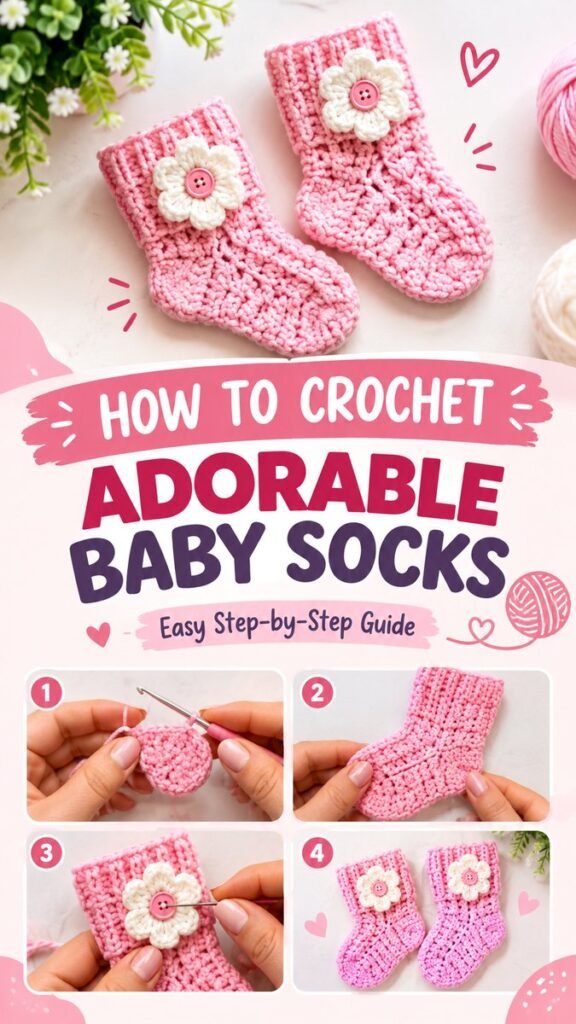
There is something especially charming about handmade baby accessories, and a pair of soft crochet baby socks is a perfect example. These adorable pink booties combine cozy texture with a sweet decorative finish, creating a project that feels both practical and beautifully handmade. A baby socks crochet pattern like this can be a lovely choice for crochet beginners, experienced crafters, or anyone looking for a thoughtful handmade baby gift.
Key Takeaways
- Soft crochet baby socks make a charming handmade accessory.
- A textured stitch pattern can add warmth and visual interest.
- Simple color changes can completely transform the finished look.
- Decorative flowers, buttons, or bows can personalize the design.
- Adjusting the length and width helps create a more comfortable fit.
- This type of project is ideal for handmade gifts and nursery accessories.
Why Crochet Baby Socks Are Such a Lovely Handmade Project
Crochet baby socks are small enough to be approachable, yet they offer plenty of opportunities to practice useful crochet techniques. The pictured style features a soft pink color, a textured stitch surface, a defined cuff, and a decorative flower detail. Together, these elements create a cozy and playful appearance without making the project feel overly complicated.
Small crochet projects are also satisfying because they can be completed much faster than larger blankets, sweaters, or home decor pieces. That makes baby socks a great way to use leftover yarn or experiment with a new stitch pattern before committing to a larger project.
Important: When crocheting anything intended for a baby, comfort should come before decoration. Choose soft yarn, avoid scratchy textures, and make sure decorative elements are securely attached and appropriate for the intended use.
What Makes This Baby Socks Crochet Pattern Stand Out
The appeal of this design comes from its balance of simplicity and detail. The main body has a repeating textured appearance that gives the socks dimension, while the ribbed-looking cuff provides a neat finish around the ankle. The soft pink shade makes the design especially sweet, but the same construction can work beautifully in many other colors.
The decorative flower is another standout feature. A small crochet flower or similar embellishment can turn a basic pair of socks into something that feels custom-made. If you prefer a simpler style, the decoration can be omitted entirely. Alternatively, you can use a contrasting shade to make the detail more noticeable.
The finished shape also demonstrates why crochet socks are such versatile accessories. A taller cuff provides additional coverage, while a shorter version can create a lightweight baby bootie. You can adapt the overall proportions according to the look and fit you want.
A Sweet Color Palette
Pink is an easy choice for a soft and playful baby accessory, but it is far from the only option. Cream, lavender, sage green, pale blue, peach, butter yellow, and warm beige can all create beautiful results. Neutral yarn paired with a colorful flower is another simple way to make the decoration pop.
For a modern handmade look, consider using one main color throughout the sock and reserving a second color for the flower or cuff. Keeping the palette limited helps the stitch texture remain the star of the design.
Materials for a Simple Crochet Baby Sock Project
The exact materials will depend on the pattern and the size you are making, but a project inspired by this style generally requires only a few basic supplies.
- Soft baby-friendly yarn in your chosen color
- A crochet hook suitable for the yarn weight
- Yarn needle for weaving in ends
- Scissors
- Stitch marker, if helpful for keeping track of rounds
- Optional yarn for a contrasting flower or decorative detail
Because baby socks are relatively small, they can be an excellent stash-busting project. A partial skein that is not enough for a large project may still be more than enough for a pair of tiny socks and their decorations.
Choosing the Right Yarn
Yarn selection has a major impact on the finished feel of crochet baby socks. Look for a yarn that feels smooth and comfortable against delicate skin. Soft acrylic, cotton blends, and other yarns specifically suited to baby garments can be useful choices depending on the season and intended purpose.
Avoid choosing yarn based solely on appearance. A beautiful color is not enough if the finished fabric feels stiff, rough, or uncomfortable. For a wearable baby project, softness, washability, and durability are important considerations.
Understanding the Construction of Crochet Baby Socks
Although sock construction can seem intimidating at first, a small crochet baby sock is often much more approachable than a full-sized adult sock. The design shown combines several recognizable sections: the cuff, ankle and leg area, heel transition, foot, and rounded toe.
Thinking about the sock in sections makes the process easier to understand. Rather than seeing it as one complicated shape, you can focus on creating a comfortable tube first and then shaping the lower portion around the heel and foot.
Start With the Cuff
The cuff determines much of the visual character of the sock. A ribbed or textured cuff can create a slightly stretchy opening while giving the top edge a polished appearance. Work carefully here because the opening should be secure enough to stay in place without being unnecessarily tight.
For a decorative baby sock, the cuff can also become a design feature. A contrasting border, a subtle color change, or a small textured section can make the upper edge look more finished.
Build the Ankle and Leg
Once the cuff is established, the main body can be worked using the chosen stitch pattern. The textured appearance seen in the design adds dimension while keeping the socks visually interesting.
Consistent tension is particularly helpful during this stage. If your stitches become significantly tighter or looser from one round to another, the sock may become uneven. Try to maintain a relaxed, repeatable motion as you work.
Shape the Heel and Foot
The heel is where the flat or tubular structure begins to transform into a wearable sock shape. Depending on the construction method, you may work back and forth for part of the heel before returning to rounds or continuing toward the toe.
For beginners, it is useful to mark important sections as you work. A stitch marker can help identify the beginning of a round, while written notes can make it easier to reproduce the second sock consistently.
After the heel, the foot section should gradually create enough length for the intended wearer. The toe can then be shaped with decreases to create the rounded end visible in the finished design.
Expert Insight
The most important part of adapting a baby socks crochet pattern is not simply matching the stitch count. Pay attention to the finished fabric’s stretch, the sock’s proportions, and the intended fit. Small changes in yarn thickness or crochet tension can noticeably change the final size.
- Make a small gauge sample when possible.
- Measure the finished sections rather than relying only on stitch counts.
- Keep the pair consistent by recording your adjustments.
How to Add a Crochet Flower Decoration
The flower detail is one of the easiest ways to personalize this style of baby sock. A simple crochet flower can be made separately and attached after the sock is finished. This approach lets you experiment with different colors and sizes without changing the main construction.
Choose a small amount of contrasting yarn and create a compact flower with several rounded petals. A button or crochet center can provide a focal point, but any embellishment should be securely attached and considered carefully for the age and intended use of the recipient.
For a more understated look, skip the flower and use a contrasting cuff instead. For a playful handmade set, you can create matching flowers on both socks or use a different accent color for each pair.
Beginner Tips for Making Crochet Baby Socks
Small projects are not automatically easy, but baby socks provide an excellent opportunity to build crochet confidence. If this is your first attempt, take your time with the shaping and do not worry about finishing quickly.
- Read the pattern before starting. Familiarize yourself with the construction and any stitch abbreviations.
- Check your tension. Even a small difference in tension can affect the final size.
- Count regularly. Keeping track of stitches can prevent shaping problems later.
- Use stitch markers. They can make rounds and shaping sections much easier to follow.
- Make the second sock carefully. Use the first finished sock as a visual reference so both pieces match.
- Weave in ends neatly. A clean finish makes handmade socks look much more polished.
Pro Tip: If you are adjusting the size, change the pattern gradually instead of making one large alteration. Small changes to the cuff, leg length, foot length, or yarn choice can help you create a better proportion while preserving the overall design.
Making the Pattern Your Own
One of the best things about handmade crochet is the ability to customize nearly every visual detail. The pink socks shown here have a soft, feminine aesthetic, but the underlying concept can be interpreted in countless ways.
Experiment With Color
Try a creamy neutral for the main sock with a dusty rose flower. For a fresh spring-inspired palette, pair pale green with ivory. Soft lavender and white can create a delicate nursery look, while warm beige and caramel can give the project a modern neutral feel.
Change the Decorative Detail
Flowers are only one option. A simple crochet heart, tiny bow, scalloped edge, contrasting stripe, or textured cuff can create an entirely different personality. If you prefer minimalist baby accessories, the textured stitch pattern alone may provide enough visual interest.
Adapt the Length
A taller sock creates more coverage around the lower leg, while a shorter version has the appearance of a traditional baby bootie. Consider the season and the type of outfit the accessory will complement when deciding on the length.
Crochet Baby Socks as Handmade Gifts
Handmade baby accessories can make memorable gifts because they combine usefulness with a personal touch. A pair of crochet baby socks can be included in a baby shower basket, newborn gift set, nursery-themed package, or handmade clothing collection.
For an especially thoughtful presentation, make two or three pairs in coordinated colors. You can use the same baby socks crochet pattern while changing the accent color on each pair. Fold them neatly and pair them with other handmade accessories for a cohesive gift.
These projects are also useful for practicing techniques before moving into larger baby crochet patterns such as cardigans, blankets, hats, or sweaters. Once you become comfortable with shaping and maintaining consistent tension, you can experiment with increasingly detailed designs.
Care and Finishing Considerations
Before considering a handmade baby accessory complete, inspect the entire piece carefully. Check the seams, woven-in yarn ends, decorative elements, and overall shape. The finished sock should feel comfortable and should not have loose strands or rough areas that could cause irritation.
Follow the care instructions appropriate for the yarn you selected. If the socks are intended for frequent use, washable yarn can make them much more practical. Gentle washing and careful drying can help preserve the stitch definition and shape.
Storage is simple too. Keep small crochet socks folded or paired together so they do not get separated. If they are being given as a gift, a small fabric pouch or gift box can keep the pair protected until it is ready to be used.
At a Glance
- Choose soft, comfortable yarn suitable for baby projects.
- Keep your crochet tension consistent for a more predictable fit.
- Use texture, color, and small embellishments to personalize the socks.
- Record any size adjustments so the second sock matches the first.
- Inspect and finish the project carefully before gifting or wearing.
Conclusion
A baby socks crochet pattern is a wonderful small-scale project for creating something practical, cozy, and undeniably cute. The combination of a textured stitch pattern, soft color, shaped foot, and optional floral decoration gives this style plenty of character while leaving room for your own creativity.
Whether you are making your first pair of crochet baby booties or adding another handmade project to your collection, focus on comfortable materials, consistent tension, and careful finishing. Once the basic construction feels familiar, experiment with different colors, cuffs, textures, and decorations to create a version that feels completely your own.
Most importantly, enjoy the process. Small handmade projects have a special way of turning simple yarn into something meaningful. With a little patience and creativity, these charming crochet baby socks can become a treasured handmade gift or a sweet addition to a little one’s wardrobe.