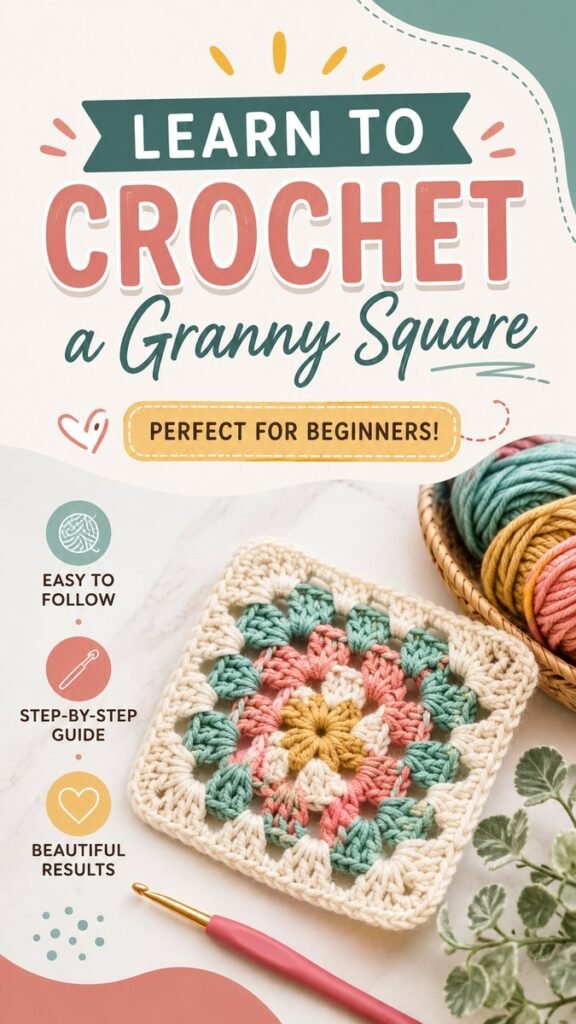
Learning to crochet can feel intimidating at first, but a simple granny square is one of the most inviting projects for beginners. With colorful yarn, a crochet hook, and a few basic techniques, you can create a small piece that looks decorative, useful, and surprisingly impressive. This beginner-friendly approach to easy crochet tutorials focuses on understanding the basic rhythm of crocheting while building a classic granny square that can later become part of blankets, bags, cushions, scarves, and other handmade projects.
The beauty of starting with a granny square is that you do not need to master every crochet technique before making something beautiful. You can begin with a small number of fundamental stitches, learn how they work together, and gradually become more comfortable holding the yarn and hook. Once the basic pattern starts to make sense, repeating the rounds becomes much more natural.
Key Takeaways
- A granny square is an approachable project for learning basic crochet skills.
- Choose a comfortable hook and smooth yarn so your stitches are easier to see.
- Practice consistent tension instead of worrying about making every stitch perfect.
- Work slowly through each round and count your stitches when something looks uneven.
- Experiment with colors to make your finished granny square personal and decorative.
- Once comfortable, combine multiple squares into larger handmade projects.
Why Granny Squares Are Great for Crochet Beginners
Granny squares have remained popular because they combine a simple repeating structure with endless creative possibilities. The basic shape is recognizable, yet changing the yarn colors can completely transform the finished piece. A soft cream border with shades of pink, green, and warm yellow, for example, creates a cheerful handmade look similar to the colorful square featured in this crochet inspiration.
For a beginner, this kind of project offers a useful balance. You get enough repetition to practice your technique, while each completed round gives you a visible sense of progress. Instead of spending hours on a large project before seeing the result, you can watch a small square develop row by row.
Important: The goal of your first granny square is not perfection. Focus on learning how your yarn, hook, tension, and stitches work together. Small inconsistencies are completely normal while you are developing muscle memory.
Start With the Right Materials
You do not need a large collection of crochet supplies to begin. A beginner-friendly granny square can be made with a crochet hook and a few yarn colors. The visual inspiration here uses a combination of soft, cheerful shades, showing how color selection can become part of the creative process.
- Yarn: Choose a smooth yarn with clearly visible fibers. A medium-weight yarn is often easier for beginners to handle than very thin yarn.
- Crochet hook: Select a hook that works comfortably with your chosen yarn. Check the yarn label for a suggested hook size.
- Scissors: Keep a small pair nearby for trimming yarn ends.
- Yarn needle: A blunt-ended needle makes it easier to weave in loose ends when your square is finished.
When learning, avoid yarn that is extremely fuzzy, slippery, or difficult to see. Clear stitch definition makes it much easier to understand where your hook should go.
How to Crochet a Granny Square Step by Step
The exact instructions for granny squares vary from pattern to pattern, but the general idea is simple: you begin in the center and build outward in rounds. Each round adds structure while maintaining the square shape.
1. Make the Starting Loop
Begin by creating a slip knot and placing it onto your crochet hook. The loop should sit comfortably around the hook without being pulled too tightly. Beginners often make the starting loop very tight because they are trying to keep everything controlled, but an overly tight loop can make the next steps frustrating.
Practice adjusting the yarn until the loop moves smoothly along the hook. This small detail can make your first crochet experience much easier.
2. Create the Center
The center of a granny square establishes the foundation for the entire design. Depending on the pattern you follow, this may be formed using a small chain ring or a magic ring. If you are completely new to crochet, a simple chain ring can be easier to understand initially.
Work your first groups of stitches into the center space. Granny square patterns generally use groups of stitches separated by spaces that eventually become the corners of the square.
3. Build the First Round
Once the center is established, work the first round around it. Pay attention to the spaces between stitch groups because these spaces help define the shape. The corners should become clear as you work around the center.
Do not worry if your first round does not immediately look perfectly square. Crochet fabric can shift slightly while you are working. Gently flatten the piece after completing a round to see its overall shape more clearly.
4. Continue Adding Rounds
As you add rounds, the square becomes larger. The repeated structure is where granny squares become especially beginner-friendly. Once you understand how the corners and side sections work, the same basic movement is repeated around the project.
Count your stitch groups as you go. If one side looks noticeably longer than another, stop and check the previous round rather than continuing. Finding an error early is usually much easier than trying to correct several completed rounds.
Expert Insight
Consistent tension is one of the most useful skills you can develop while learning crochet.
- Try to hold the yarn and hook in a relaxed position.
- Avoid pulling every stitch extremely tight.
- Let repetition gradually improve your consistency.
Choosing Colors for a Beautiful Granny Square
One of the most enjoyable parts of crochet is selecting colors. The featured style combines creamy neutral yarn with soft pink, muted green, and a warm golden accent. This type of palette creates a cozy, handmade appearance while keeping the finished square visually interesting.
If you are unsure how to choose colors, start with three or four shades that look good together. You can use one neutral color as a border, one main color for the center, and additional accent shades for the middle rounds.
Try a Simple Color Formula
- Neutral: Cream, ivory, beige, or another soft shade can provide a calm foundation.
- Primary accent: Choose one noticeable color for visual impact.
- Secondary accent: Add a complementary shade for contrast.
- Warm highlight: A golden, peach, coral, or yellow tone can add energy.
You can also make every round the same color if your goal is to practice technique without thinking about color changes. Once you feel confident, introduce additional colors and experiment with different combinations.
Common Crochet Beginner Mistakes to Avoid
Every new crocheter makes mistakes. In fact, correcting small mistakes is part of learning how to read your stitches and understand a pattern. A few common problems are especially worth watching for when making a granny square.
Crocheting Too Tightly
Tight stitches can make it difficult to insert your hook into the correct space. If your hands feel tense or your hook struggles to move through the yarn, relax your grip. Your crochet hook should be doing most of the work rather than your fingers forcing each stitch into place.
Losing Track of the Corners
The corners are essential to maintaining the square shape. If you accidentally work a stitch into the wrong space, your square can begin looking round, uneven, or distorted. Pause regularly and identify the corner spaces before continuing.
Skipping a Stitch Group
Because granny squares use repeating groups, accidentally skipping one section can affect the entire round. If your square suddenly looks uneven, compare each side and look for a missing group or an extra stitch.
Pro Tip: When something looks wrong, do not immediately unravel everything. First lay the square flat and inspect the corners, stitch groups, and spaces. Many beginner problems become much easier to identify once the fabric is relaxed.
How to Make Your Crochet Practice Easier
The best way to improve is to keep your practice simple. Rather than switching between complicated patterns, spend some time repeating the same basic stitches. This allows your hands to learn the movements naturally.
- Choose a comfortable yarn and hook combination.
- Practice making consistent loops and chains.
- Work a small granny square instead of starting with a large project.
- Pause after each round to inspect the shape.
- Count your stitch groups when you are unsure.
- Keep notes about the yarn colors and hook size you use.
It can also help to work in a comfortable environment with good lighting. Clear visibility makes it easier to identify individual stitches, especially when you are learning how to insert your hook into a particular space.
What Can You Make With Granny Squares?
Once you become comfortable making individual squares, you can begin exploring larger crochet projects. The modular nature of granny squares makes them particularly useful because you can create several small pieces and join them together.
- Cozy crochet blankets
- Decorative pillow covers
- Small crochet bags and pouches
- Scarves and wearable accessories
- Colorful home decor
- Patchwork-inspired handmade projects
Joining multiple squares also gives you an opportunity to experiment with color arrangements. You could create a repeating palette, alternate bright and neutral squares, or make every square different for a playful patchwork effect.
Turn Practice Into a Creative Project
Instead of treating every granny square as an isolated exercise, think of each one as part of a larger creative journey. Your first square might be uneven, but your fifth or tenth square can look dramatically more consistent. Saving your early attempts can even give you a satisfying way to see your progress.
Color is another way to keep practice exciting. A familiar stitch pattern can feel completely different when you change the palette. Soft pastels create a delicate look, earthy tones feel natural and cozy, while brighter colors can produce a cheerful statement piece.
A Beginner-Friendly Crochet Routine
If you are learning from scratch, consistency matters more than long practice sessions. Even a short period of focused crochet can help you become more comfortable with the basic movements.
Keep Your First Sessions Simple
Begin by practicing one technique at a time. Spend a little time making chains, then practice the basic stitch used in your chosen granny square pattern. Once your hands feel more familiar with the movements, combine them into a complete round.
When frustration appears, take a break. Crochet is supposed to be an enjoyable creative activity, and stepping away for a few minutes can make it easier to return with fresh attention.
Easy Crochet Tutorials Can Build Real Confidence
A beginner crochet project does more than produce a finished piece. It teaches you how to follow a sequence, recognize stitches, manage tension, correct mistakes, and work patiently with your hands. These skills become increasingly valuable as you move toward more detailed crochet patterns.
The granny square is especially rewarding because progress is easy to see. You start with a small center and gradually build outward until a recognizable square appears. Every round adds another layer of texture and color.
With practice, you may find yourself spending less time thinking about where the hook should go and more time enjoying the rhythm of the stitches. That is the point where crochet begins to feel intuitive rather than complicated.
At a Glance
- Start small with a beginner-friendly granny square.
- Use smooth yarn and a comfortable hook.
- Keep your tension relaxed and consistent.
- Check corners and stitch groups after every round.
- Experiment with color once the basic technique feels comfortable.
Conclusion: Start Your Crochet Journey One Square at a Time
Learning crochet does not have to begin with a complicated pattern or a large project. An easy granny square gives beginners a practical way to learn fundamental techniques while creating something colorful and useful. With a few basic supplies, a little patience, and regular practice, you can gradually become more confident with your hook and yarn.
Focus on the process rather than expecting perfection from the first attempt. Pay attention to your tension, watch the corners, count your stitch groups, and give yourself permission to make mistakes. Each completed round is another opportunity to understand how crochet works.
Most importantly, have fun with the creative side. Try different yarn colors, make several squares, and eventually explore ways to join them into larger handmade projects. The simple granny square can be the starting point for a rewarding crochet hobby filled with texture, color, and personal creativity.