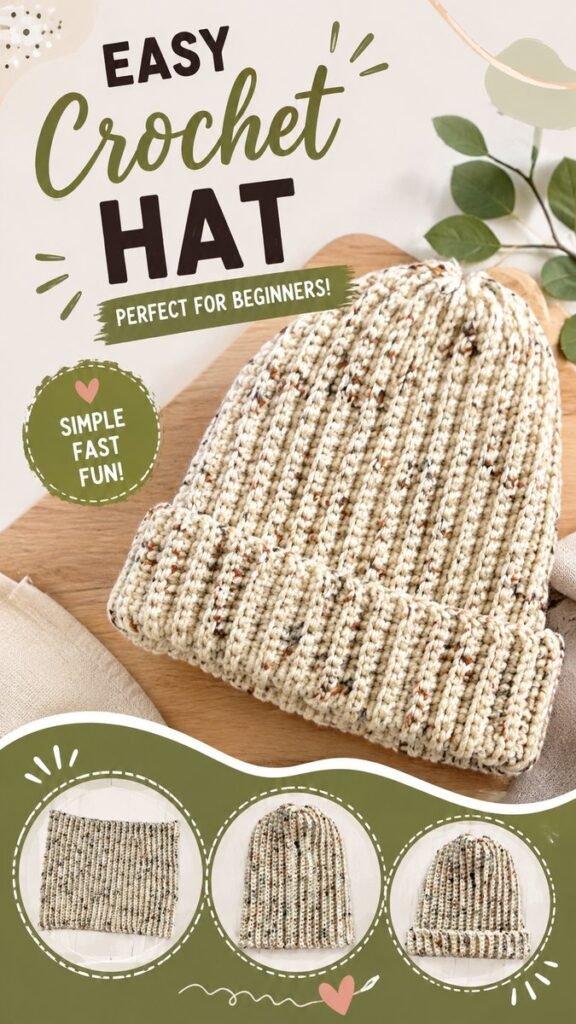
There is something wonderfully satisfying about a crochet project that looks polished without requiring complicated techniques. An easy crochet beanie is a perfect example. The design shown here has a cozy ribbed texture, a simple neutral color palette, and a straightforward shape that makes it especially appealing to beginners. Even better, the construction is based on rows rather than working continuously in rounds, giving new crocheters a comfortable way to practice their stitches while creating something genuinely useful.
If you have been searching for a beginner crochet hat that feels achievable, wearable, and easy to customize, this style is worth adding to your project list. The finished beanie has a softly textured surface with vertical-looking ridges, while the folded brim adds structure and a classic winter-hat finish.
Key Takeaways
- An easy crochet beanie can be made with simple, beginner-friendly stitches.
- Working the hat flat in rows provides a straightforward alternative to crocheting in rounds.
- A ribbed texture gives the finished hat a cozy, handmade appearance.
- Neutral or lightly variegated yarn works beautifully with this simple design.
- The basic construction can be adjusted for different sizes and styles.
Why an Easy Crochet Beanie Is a Great Beginner Project
Starting crochet with a wearable project can be much more motivating than practicing stitches on a small square. A beanie gives you a clear goal, and every row brings you closer to something you can actually use. The design shown here keeps things intentionally uncomplicated, allowing the texture and yarn to do much of the visual work.
One of the most appealing features is the elongated ribbed appearance. Instead of a highly decorative stitch pattern, the fabric relies on repeated simple stitches to create texture. That makes the project approachable while still producing a finished piece that looks thoughtfully designed.
Important: Simple does not mean boring. When the construction is uncomplicated, details such as yarn texture, stitch consistency, brim width, and finishing become the elements that give a handmade beanie its personality.
A Simple Alternative to Crocheting in Rounds
Many crochet hats are constructed from the top down in joined or continuous rounds. That method is useful, but it can feel intimidating when you are still learning how to count stitches or recognize where each round begins and ends.
This beginner-friendly approach offers a different experience. The fabric is created as a rectangular piece and then shaped into a hat. The rows build the ribbed texture, and the finished fabric can be brought together to form the basic beanie shape.
For someone learning crochet, working in rows can make stitch placement easier to see. You can concentrate on maintaining an even tension and repeating the same stitch pattern rather than worrying about increases, decreases, or round joins.
What Makes This Crochet Hat Look So Cozy?
The charm of this beanie comes largely from its texture. The narrow vertical ridges create a soft, tactile surface that resembles knitted ribbing while retaining the handmade character of crochet. The texture also gives a simple silhouette more visual interest.
The yarn shown has a warm cream base with subtle flecks of darker neutral shades. This type of color variation is especially effective for a straightforward crochet pattern because it adds dimension without competing with the stitch design.
Choosing Yarn for a Beginner Crochet Beanie
When selecting yarn for a project like this, think about comfort, stitch definition, warmth, and ease of handling. A smooth yarn makes individual stitches easier to identify, which can be helpful when you are learning.
A lightly textured or flecked yarn can create a beautiful finished result, too. If you choose a yarn with color variation, keep the stitch pattern relatively simple so the texture remains visible.
- Neutral shades: Cream, beige, oatmeal, gray, and soft brown create a timeless look.
- Variegated yarn: Subtle color changes can add interest without requiring a complicated pattern.
- Soft fibers: Choose a yarn that feels comfortable against the forehead and ears.
- Consistent thickness: A relatively even yarn makes it easier to maintain a uniform fabric.
Understanding the Basic Construction
The image provides a useful visual clue about how the project comes together. One view shows a flat rectangular piece covered in repeated vertical ridges. Another shows the same fabric transformed into a recognizable hat shape. The final views demonstrate the difference between the simple hat silhouette and the version with the brim folded upward.
This construction is one of the reasons the pattern is so approachable. Rather than treating the hat as a complicated three-dimensional object from the beginning, you build a manageable piece of crochet fabric first.
- Begin by creating a foundation chain appropriate for the desired height of the hat.
- Work repeated rows of the chosen simple stitch to build the ribbed fabric.
- Continue until the piece is long enough to wrap comfortably around the head.
- Join the edges to create the basic cylindrical hat shape.
- Finish the top by gathering or shaping the upper edge.
- Fold the lower section upward if you want a defined cuff or brim.
The exact number of stitches and rows depends on the yarn, hook, tension, and intended size. For that reason, measuring the fabric as you work is often more useful than relying only on a fixed stitch count.
Crochet Stitches That Keep the Project Beginner-Friendly
The visual design emphasizes a basic single-crochet approach rather than elaborate stitch combinations. That makes the project particularly attractive if you are learning the fundamentals and want to practice consistency.
Single Crochet
Single crochet is one of the foundational stitches in crochet. It creates a relatively dense fabric and is easy to repeat across rows. For a beanie, that density can be useful because it produces a substantial fabric with a cozy appearance.
Depending on where the hook is inserted and how each row is worked, simple stitches can also create pronounced ridges. This is what helps a basic stitch pattern develop the distinctive vertical texture visible in the finished hat.
Maintaining Even Tension
Tension is one of the most important skills to practice when making a crochet hat. If your stitches become tighter or looser from one section to another, the fabric may change width and make it harder to achieve the intended fit.
Try to hold the yarn comfortably rather than gripping it too tightly. Allow the hook to move naturally, and check your work periodically instead of waiting until the entire piece is finished.
Expert Insight
For a wearable crochet project, fit matters more than blindly following a stitch count. Measure the growing fabric and compare it with the intended head size as you work. Yarn choice and personal tension can significantly affect the final dimensions.
How to Get a Better Fit
A crochet beanie should feel comfortable without being excessively tight. The fabric needs enough flexibility to sit securely on the head while still allowing room for natural movement.
Because crochet tension varies from person to person, a finished hat may not measure exactly like another crocheter’s version even when both use the same number of stitches. This is completely normal.
Measure as You Crochet
Rather than waiting until the final row, measure the fabric during construction. If the piece is intended to wrap around the head, compare its length with the desired circumference. Remember that ribbed crochet fabric can stretch, so allow for some flexibility when deciding the final measurement.
Consider the Height of the Hat
The height determines how the beanie sits. A shorter hat creates a closer-fitting style, while additional rows provide more coverage and can allow the top to have a relaxed appearance.
The folded brim shown in the design also changes the overall look. A wider cuff creates a more substantial traditional beanie appearance, while a smaller fold gives a lighter finish.
Easy Ways to Customize Your Crochet Beanie
Once you understand the basic construction, there are many ways to make the project your own without changing its fundamental simplicity.
- Change the yarn color: Try soft neutrals, earthy tones, pastels, or a bold solid shade.
- Experiment with the brim: Make the folded cuff narrow or wide depending on your preferred style.
- Adjust the height: Add or remove rows to create a closer or slouchier silhouette.
- Use contrasting yarn: A different shade for the brim can create a simple color-blocked effect.
- Add a pom-pom: A small handmade or purchased pom-pom can give the finished hat a playful touch.
Pro Tip: If you want the texture to remain the star of the design, keep embellishments minimal. A beautiful yarn and consistent rows can be all you need for a polished handmade beanie.
Common Beginner Crochet Mistakes to Avoid
Even a simple crochet hat can become frustrating if small issues are allowed to build up over several rows. The good news is that most beginner mistakes are easy to prevent with a little attention.
Losing or Adding Stitches
Count your stitches periodically. If the edges begin to slope or the fabric gradually becomes wider or narrower, you may be accidentally skipping a stitch or working an extra stitch at the end of a row.
Skipping Measurements
Do not assume that one fixed stitch count will fit every person. Different yarn weights, hooks, and crochet tension can produce very different dimensions. Measuring as you work gives you much more control over the finished fit.
Pulling the Yarn Too Tightly
Tight tension can make your stitches difficult to work into and may produce a stiff fabric. If your hands feel strained or the hook struggles to move through the stitches, loosen your grip and relax your working yarn.
Why Neutral Crochet Hats Never Go Out of Style
The soft cream and natural tones shown in this project demonstrate why neutral crochet accessories are so versatile. A simple beanie in oatmeal, ivory, beige, taupe, or gray can complement a wide variety of winter outfits without feeling overly trendy.
Neutral yarn also highlights texture. When there are fewer strong color contrasts, the ridges and handmade stitches become more noticeable. This is especially effective for beginner projects where the beauty comes from repetition and craftsmanship rather than complicated colorwork.
A handmade beanie can also make a thoughtful gift because the style is practical and easy to personalize. Choose a recipient’s favorite neutral, match a favorite coat, or select a softly speckled yarn for a rustic handmade effect.
At a Glance
- Project: Easy crochet beanie
- Skill level: Beginner-friendly
- Style: Ribbed, cozy, simple, and versatile
- Construction: Straightforward rows with simple finishing
- Best feature: Attractive texture without a complicated stitch pattern
Final Thoughts on Making an Easy Crochet Beanie
An easy crochet beanie is the kind of project that proves you do not need an advanced pattern to create something beautiful. With simple stitches, thoughtful yarn selection, consistent tension, and a little attention to sizing, you can turn a basic piece of crochet fabric into a warm and stylish accessory.
The ribbed texture gives this design a classic appearance, while the row-based construction makes it approachable for anyone who is still gaining confidence with crochet. It is also an excellent foundation for experimenting with color, fit, brim width, and finishing details.
Whether you are making your first crochet hat, looking for a relaxing weekend craft, or searching for a handmade gift idea, this style is a great place to start. Keep the stitch pattern simple, measure as you go, and let the yarn bring personality to the finished piece.
Most importantly, enjoy the process. Every row is another opportunity to improve your tension, recognize your stitches, and build confidence. Once you finish one easy crochet beanie, you may find yourself ready to make another in a completely different color or style.