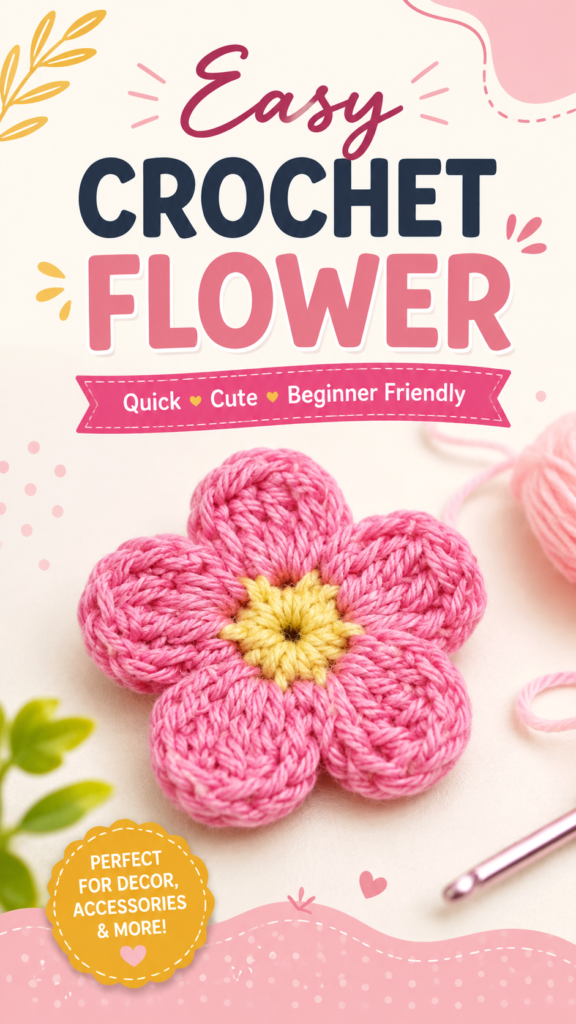
There is something wonderfully satisfying about turning a small amount of yarn into a cheerful crochet flower. With just a few basic stitches and a simple shape, you can create a colorful handmade accent that works for accessories, gifts, clothing, home decor, and countless other craft projects. Easy crochet flowers for beginners are especially appealing because they are small, approachable, and quick enough to make without committing to a large project.
Key Takeaways
- Simple crochet flowers are excellent projects for beginners.
- Basic stitches can create a soft, dimensional five-petal design.
- Bright yarn colors make small flowers stand out beautifully.
- Finished flowers can decorate bags, hats, scarves, blankets, and gifts.
- Small projects are a practical way to practice crochet tension and stitch control.
- Mixing flower colors and sizes can create a coordinated handmade collection.
A handmade crochet flower can be as simple or detailed as you want it to be. The cheerful pink petals and contrasting yellow center shown here demonstrate how effective a limited color palette can be. The flower has a soft, rounded appearance, while the raised stitches give each petal plenty of texture. This makes it a great source of inspiration for anyone searching for an easy crochet flower pattern that looks impressive without requiring complicated construction.
Why Crochet Flowers Are Perfect for Beginners
Small crochet projects offer a comfortable way to learn. Instead of working through dozens of rows, you can focus on a handful of stitches and watch the shape develop quickly. This immediate progress can make learning crochet feel much more rewarding.
Flowers are particularly useful because their structure naturally encourages you to practice working around a center, increasing stitches, creating rounded sections, and maintaining an even rhythm. Once you understand the basic construction, you can begin changing colors, experimenting with yarn weights, and adjusting the size.
Another advantage is that mistakes are less intimidating. If a small flower does not turn out perfectly, you have only invested a short amount of time. You can unravel it, try again, and immediately apply what you learned to the next version.
Important: Small crochet flowers are more than quick decorations. They are useful practice pieces for building confidence with tension, stitch placement, color changes, shaping, and finishing techniques before moving on to larger crochet projects.
The Anatomy of a Simple Crochet Flower
Understanding the basic parts of a crochet flower makes patterns easier to follow. The design pictured here features a central circle surrounded by five rounded petals. The center uses a sunny yellow shade, while the petals are worked in pink for a clear contrast.
The Center
The center acts as the foundation of the flower. It is usually made first and provides the space from which the petals are formed. A contrasting color can make the flower look more defined, especially when the petals are a brighter or deeper shade.
Yellow is a natural choice for a cheerful flower because it creates an instant visual contrast with pink, coral, purple, blue, or green petals. However, there is no need to follow one specific color combination. Cream, white, orange, lavender, or even a multicolor center can completely change the mood.
The Petals
The petals provide most of the visual character. In an easy crochet flower, several groups of stitches are worked around the center to create rounded sections. The number of petals can vary, and changing the stitch count can make them narrower, wider, taller, or flatter.
The flower pictured has five prominent petals, giving it a classic floral silhouette. The thick yarn and dimensional stitching make the petals look soft and slightly puffy, which adds visual interest even though the overall shape remains simple.
Materials for an Easy Crochet Flower
You do not need an extensive craft collection to begin. A simple flower can be made with a small quantity of yarn and a crochet hook appropriate for that yarn. A yarn needle and scissors are also useful for finishing.
- Yarn: Choose a smooth yarn in one or two colors. Cotton or acrylic yarn can both work well for decorative flowers.
- Crochet hook: Select a hook that suits the yarn label recommendations or the desired firmness.
- Scissors: Use sharp scissors for cleanly trimming yarn ends.
- Yarn needle: A blunt yarn needle makes weaving in the loose ends much easier.
- Optional embellishments: Buttons, beads, embroidery, or small decorative centers can personalize finished flowers.
For a first project, smooth yarn is generally easier to work with than highly textured or fuzzy yarn. Clear stitch definition helps you see exactly where the hook needs to go, making it easier to learn consistent tension.
Basic Stitches to Know Before You Start
The exact stitches used depend on the flower pattern, but beginner crochet flowers commonly introduce several fundamental techniques. Learning a few basic stitches first will make the project much more comfortable.
Chain Stitch
The chain stitch is often used to create a starting foundation or small loops within a floral design. Practice keeping each chain approximately the same size. Consistent chains help the finished flower look neat and balanced.
Slip Stitch
Slip stitches are useful for joining rounds and moving the working yarn to another location without adding much height. They can be especially helpful when working around a circular flower center.
Single Crochet
Single crochet creates a compact fabric and is one of the easiest stitches for beginners to practice. It can be used for centers, edges, or decorative details.
Double Crochet
Double crochet adds more height and can help create fuller petals. When several taller stitches are grouped together, they can form the rounded, dimensional effect that gives crochet flowers their soft appearance.
How to Approach a Beginner Crochet Flower
Before starting, choose your colors and make sure your yarn and hook are comfortable to handle. A flower this small does not require a large amount of yarn, so it is also an excellent project for using leftover skeins from previous crafts.
- Begin with the center according to your chosen pattern.
- Work carefully around the center, paying attention to stitch placement.
- Build each petal using the specified stitch sequence.
- Repeat the petal structure evenly around the center.
- Join the final section neatly and secure the yarn.
- Weave in loose ends on the back of the flower.
- Gently shape the petals so the flower sits evenly.
The most important part is not speed. Take your time counting stitches and checking where each new stitch belongs. A few extra seconds spent locating the correct stitch can prevent an entire petal from becoming uneven.
Expert Insight
If your petals look too tight or curled, check your tension before changing the pattern. If they look loose and floppy, try holding the yarn slightly more consistently or using a smaller hook. Small changes can make a surprisingly big difference in the final shape.
Choosing Colors for Crochet Flowers
Color is one of the easiest ways to personalize a simple crochet flower. The example of pink petals with a yellow center creates a playful, spring-inspired look, but you can create completely different effects with the same basic construction.
For a soft and delicate flower, combine pastel shades such as blush pink, cream, pale blue, or lavender. For a bold accessory, try deeper jewel tones. Bright yellow, orange, coral, turquoise, and pink can produce a lively combination that stands out against neutral clothing or bags.
You can also make a collection of flowers in several colors. Instead of making every flower identical, keep the same pattern while changing the palette. This is especially effective when decorating blankets, baskets, scarves, or handmade gift packaging.
Pro Tip: When making crochet flowers for a larger project, choose three to five coordinating shades rather than selecting every color at random. A small, consistent palette helps individual flowers look connected while still allowing plenty of variety.
Creative Ways to Use Crochet Flowers
Once you have made a few flowers, you may be surprised by how many projects they can enhance. Their compact size makes them versatile embellishments for both practical and decorative crafts.
Decorate Hats and Headbands
A crochet flower can become an instant focal point on a plain hat, headband, or hair accessory. Attach one flower for a subtle accent or group several small flowers together for a more playful design.
Add Flowers to Bags
Canvas bags, crochet totes, pouches, and fabric purses can all benefit from handmade floral embellishments. Choose colors that contrast with the bag for a noticeable detail, or use matching shades for a more understated finish.
Personalize Scarves and Blankets
Flowers can be sewn onto finished crochet or fabric pieces to create texture and visual interest. A coordinated collection of flowers can transform a simple scarf or blanket into something much more decorative.
Create Handmade Gifts
Small crochet flowers are also useful for gift presentation. Add one to a wrapped package, handmade card, gift basket, or reusable fabric pouch. The recipient can later reuse the flower as a decoration or accessory.
Make Home Decor
Arrange several crochet flowers into a decorative garland, attach them to baskets, or use them as accents on cushions and textile projects. Because the flowers are lightweight and compact, they can be incorporated into many creative arrangements.
Tips for Getting Neater Crochet Flowers
Even a beginner project benefits from careful finishing. The goal is not perfection, but creating a flower with balanced petals and a clean center.
- Keep your tension consistent: Try not to pull some stitches much tighter than others.
- Count carefully: Consistent stitch counts help keep each petal similar in size.
- Use smooth yarn while learning: It makes individual stitches easier to identify.
- Shape the petals: Gently arrange them after completing the flower.
- Finish securely: Weave yarn tails into the back so the flower remains tidy.
- Practice with inexpensive yarn: Save your favorite yarn for a project once you feel comfortable with the technique.
If one petal looks different from the others, do not assume the entire project is ruined. Small variations can often be corrected by gently reshaping the flower. If the difference comes from a stitch-count mistake, undoing only the affected section may be enough.
Easy Crochet Flower Variations to Try
Once you are comfortable with a basic five-petal flower, experimentation becomes part of the fun. Try changing the number of petals, using different yarn thicknesses, or modifying the center.
A smaller hook and thinner yarn can create delicate flowers for jewelry, hair clips, or tiny embellishments. Thicker yarn can create a larger statement flower that works well on bags, hats, baskets, and winter accessories.
You can also experiment with layered flowers. Make one small flower and place it on top of a slightly larger flower in a contrasting color. Secure the centers together to create additional depth and dimension.
Another easy variation is to use a single color throughout the flower. Monochromatic flowers can look surprisingly elegant, particularly when the yarn has a subtle texture or sheen.
Why Small Crochet Projects Build Confidence
Learning crochet is much easier when you can see progress. A large blanket may require patience for weeks, while a small flower can be completed in a short crafting session. That quick feedback encourages beginners to keep practicing.
Each flower also provides an opportunity to notice improvement. Your first attempt may have uneven tension or petals of slightly different sizes. After making several, your hands begin to understand the rhythm of the stitches naturally.
Important: Do not judge your crochet skills by whether the first flower looks exactly like the inspiration. Consistency comes through repetition. Make several flowers, compare them, and pay attention to how your tension and stitch control improve from one attempt to the next.
A Simple Weekend Crochet Project
Easy crochet flowers are ideal when you want a relaxing project that produces something useful. You can make a few while enjoying a quiet afternoon, then save them for future projects. Keeping a small collection of handmade flowers in different colors can turn them into a convenient craft supply whenever inspiration strikes.
They are also excellent for experimenting with yarn scraps. Instead of allowing leftover yarn to sit unused, turn those small amounts into colorful flowers. Over time, your scrap collection can become a selection of handmade embellishments ready for bags, clothing, gifts, and decor.
At a Glance
- Choose smooth yarn and a comfortable hook.
- Start with a simple circular flower center.
- Build evenly spaced rounded petals.
- Experiment with bright or coordinating colors.
- Use finished flowers for accessories, gifts, and decor.
Conclusion
Easy crochet flowers for beginners are a wonderful introduction to the creative possibilities of crochet. They are small enough to feel approachable, yet versatile enough to become part of much larger projects. A simple combination of colorful yarn, basic stitches, and thoughtful finishing can produce a flower with plenty of texture and personality.
The cheerful pink-and-yellow color combination is a great reminder that simple designs can make a strong visual impression. Once you have mastered the basic flower shape, there is no need to stop there. Try new colors, different yarn weights, layered petals, or collections of flowers in complementary shades.
Whether you are completely new to crochet or simply looking for a quick project between larger makes, crochet flowers are an enjoyable way to practice and create. Make one to learn the basics, make several to use your yarn scraps, and then let your imagination decide where those little handmade blooms belong. 🌸