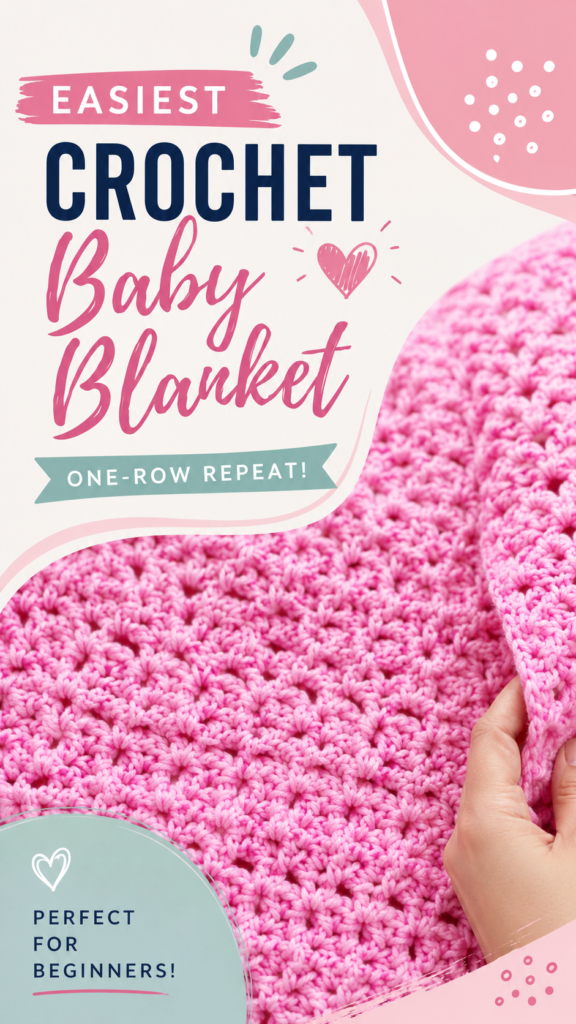
If you have been searching for a baby blanket crochet pattern that feels simple, relaxing, and achievable, this easy textured design is a wonderful place to start. The soft pink blanket shown here has a cozy, handmade look created with repeating crochet stitches, making it especially appealing for beginners who want a beautiful project without a complicated pattern to follow. The one-row repeat keeps the rhythm straightforward, while the textured surface adds plenty of visual interest.
Key Takeaways
- A one-row repeat can make an easy crochet baby blanket especially beginner-friendly.
- Textured stitches create a soft, dimensional look without requiring an elaborate design.
- Pink yarn gives the blanket a warm, cheerful, and gift-ready appearance.
- A simple repeat makes it easier to maintain a steady crochet rhythm.
- The same basic idea can be adapted for different blanket sizes and color combinations.
Why This Easy Crochet Baby Blanket Stands Out
The beauty of an easy crochet baby blanket is that it can combine simplicity with a finished look that feels much more detailed than the work actually is. The blanket featured in this design has a consistent textured pattern across the fabric, creating small raised sections that catch the light and give the surface a cozy, tactile quality.
For a beginner, that kind of texture is especially useful. You do not need a complicated combination of stitches to create a blanket that looks special. A repeating stitch pattern can do much of the visual work for you.
Important: The secret to a polished beginner crochet blanket is not necessarily using difficult stitches. A consistent tension, an easy-to-follow repeat, and careful attention to the edges can make a simple pattern look beautifully finished.
The soft pink color also contributes to the gentle appearance of the project. While pink is a natural choice for a sweet baby-inspired aesthetic, the stitch pattern itself is versatile enough to work beautifully in cream, sage, blue, lavender, beige, gray, or a multicolor palette.
What Makes a One-Row Repeat So Beginner-Friendly?
A one-row repeat is exactly the kind of structure many new crocheters appreciate. Instead of remembering several different rows, you establish the stitch sequence and continue repeating it. Once your hands become familiar with the movement, the project can become almost meditative.
This is particularly helpful when making a larger item such as a baby blanket. Repetition allows you to focus less on constantly checking complicated instructions and more on maintaining an even rhythm.
Simple Repetition Builds Confidence
Beginners often worry that a blanket will be too ambitious. In reality, a straightforward repeating pattern can be an excellent practice project. You get plenty of opportunities to become comfortable holding the hook, controlling the yarn, creating consistent stitches, and recognizing what the fabric should look like as it grows.
Every completed row also provides a visible sense of progress. That can make a long project feel much more manageable.
Texture Adds Interest Without Complexity
The textured appearance of this blanket is one of its most appealing features. Rather than relying on color changes or elaborate motifs, the fabric itself creates the visual effect. This is a useful design approach when you want something attractive but still easy to repeat.
Texture can also make a handmade blanket feel especially cozy. The raised stitches create a surface that looks soft and inviting, which is exactly the feeling many people want from a baby blanket.
Choosing Yarn for an Easy Crochet Baby Blanket
Yarn choice can make a noticeable difference in your experience while crocheting. For a beginner-friendly baby blanket, look for a yarn that is comfortable to hold, easy to see stitch definition in, and suitable for the type of finished fabric you want.
A soft yarn in a smooth or lightly textured construction can make individual stitches easier to recognize. This is helpful when you are learning to identify where your hook needs to go.
- Softness: Choose a pleasant yarn with a comfortable feel for a cozy finished blanket.
- Stitch definition: A yarn that clearly shows the stitches makes learning easier.
- Color: Light and medium shades can make stitch placement easier to see.
- Care: For a frequently used baby blanket, easy-care yarn can be a practical choice.
Pink is particularly effective for the look shown here because it emphasizes the textured stitches and gives the blanket a cheerful, delicate character. However, there is no need to limit yourself to one color. A neutral shade can create a timeless nursery accessory, while a deeper tone can give the same pattern a more modern appearance.
Getting Started With Your Crochet Blanket
Before beginning, gather your yarn, crochet hook, scissors, and a yarn needle for finishing. It is also helpful to have a measuring tape nearby if you want to monitor the blanket’s dimensions as you work.
Because crochet tension varies from person to person, it is worth making a small sample before committing to the full blanket. A test swatch lets you see how your yarn and hook combination behave together.
Start With a Manageable Width
If you are new to crochet, beginning with a smaller blanket can make the experience less overwhelming. A compact baby blanket gives you enough space to practice the repeating stitch while still being much faster to complete than a large throw.
Once you become comfortable with the pattern, you can adjust the starting chain to create a different width, provided the stitch repeat allows for the change. Always check the pattern instructions for the required stitch multiple before changing the size.
Keep Your Edges Consistent
One of the most common challenges for beginners is maintaining straight edges. It is easy to accidentally add or lose a stitch at the beginning or end of a row.
Counting stitches periodically can help prevent this. You can also place a stitch marker at important points if the pattern makes it difficult to see where a row begins or ends.
Pro Tip: Do not rush through the first few rows. Establishing an even rhythm early makes the rest of the blanket much easier. If your stitches begin looking noticeably tighter or looser, pause and relax your grip before continuing.
How to Keep the Crochet Texture Looking Even
When a blanket uses a repeating textured stitch, consistency becomes more important than speed. The pattern looks best when the stitches maintain a similar size throughout the fabric.
Try to avoid pulling the working yarn too tightly. A relaxed hand usually creates stitches that are easier to work into and gives the blanket a softer drape.
It is also helpful to check your work from time to time rather than waiting until the blanket is much larger. If you notice an accidental skipped stitch or extra stitch, correcting it early is usually much easier.
Watch the Fabric, Not Just the Instructions
As you become familiar with crochet, the fabric itself starts to provide useful clues. You can learn to recognize the repeating shapes, textured sections, and row structure. This visual awareness is one of the best skills to develop as a beginner.
Instead of checking every stitch constantly, use the texture as a guide. If one section suddenly looks different from the surrounding rows, stop and investigate before continuing.
Why This Pattern Works Well for Baby Gifts
A handmade baby blanket has a naturally personal quality. Even a simple design can feel meaningful because it represents time, care, and creativity. The soft texture and cheerful pink palette shown here make this style particularly suited to a thoughtful handmade gift.
An easy crochet baby blanket can also be useful for many occasions. It can be made for a baby shower, a new arrival, a nursery refresh, or simply as a handmade present for someone special.
Why This Matters
- A simple pattern is easier to personalize with color and size changes.
- Repeating stitches allow beginners to focus on technique and consistency.
- Texture can give a handmade blanket a distinctive appearance without complicated motifs.
Easy Ways to Personalize Your Blanket
One of the best things about a simple crochet blanket is how easy it is to make it your own. The stitch pattern can remain the same while the overall personality changes dramatically with a new color or finishing detail.
Experiment With Color
Soft pink creates the sweet look shown in the design, but there are countless alternatives. Try creamy white for a classic appearance, dusty rose for a muted palette, sage green for a contemporary nursery, or pale blue for a calm and traditional feel.
You can also introduce two or more colors if you want stronger visual contrast. Simple color changes can transform the appearance of a repeating stitch without making the stitch pattern itself more difficult.
Add a Simple Border
A border can give a blanket a more finished appearance and help define its edges. For a beginner project, a straightforward border is often the easiest choice. You can use a coordinating color for a subtle effect or a contrasting shade to make the edge stand out.
Before adding a border, make sure the blanket edges are reasonably even. A neat foundation makes the finishing process much smoother.
Change the Size
The same concept can often be adapted beyond a small baby blanket. Depending on the stitch repeat and your yarn requirements, you can create a stroller-size blanket, a larger nursery throw, or another cozy project.
Remember that increasing the dimensions also increases the amount of yarn and time required. A small blanket is a great way to learn the stitch before committing to a much larger project.
Common Beginner Mistakes to Avoid
Every crocheter makes mistakes, especially when learning. The goal is not to avoid every mistake but to recognize common problems early.
- Skipping the stitch count: Count your stitches regularly to keep the blanket width consistent.
- Working too tightly: A tense grip can make stitches difficult to insert into and may produce stiff fabric.
- Ignoring the edges: Pay close attention to the first and final stitch of each row.
- Rushing through unfamiliar steps: Slow down until the repeat becomes comfortable.
- Choosing difficult-to-see yarn: Highly fuzzy or extremely dark yarn can make learning harder.
Important: If your first few rows do not look perfect, keep going slowly rather than immediately starting over. Crochet is a hands-on skill, and consistency usually improves naturally as you repeat the same movements.
Making Crochet Time More Enjoyable
A repetitive crochet pattern can be more than a practical project. It can become a relaxing creative routine. Once you know the stitch sequence, the steady repetition can make it easy to settle into the process.
Set up a comfortable workspace with good lighting and keep your yarn positioned so it feeds smoothly. Take regular breaks, especially during longer sessions, and stretch your hands if they become tired.
Another helpful habit is to mark your progress. You might note how many rows you complete during a session or simply enjoy watching the blanket grow. Seeing a small project become a finished handmade piece is one of the most satisfying parts of crochet.
Care and Finishing Tips
Once your blanket is complete, take time to weave in loose ends securely. Neat finishing can make a significant difference in how polished the final project looks.
Always follow the care instructions associated with your chosen yarn. Different fibers can respond differently to washing, drying, heat, and agitation. If the blanket is intended as a baby gift, practical care is an especially useful consideration.
Before gifting, inspect the entire blanket for loose ends or areas that need tidying. A final check is quick and can give you extra confidence in the finished piece.
At a Glance
- Skill level: Beginner-friendly
- Design style: Textured and repetitive
- Best feature: Simple repeating rhythm
- Color inspiration: Soft, cheerful pink
- Project use: Cozy baby blanket or handmade gift
Conclusion: A Simple Crochet Blanket With a Beautiful Finish
This easy crochet baby blanket is a great example of how a straightforward stitch pattern can create something that looks warm, textured, and thoughtfully handmade. The one-row repeat makes the project approachable for beginners, while the consistent texture gives the finished blanket plenty of character.
Whether you are learning crochet for the first time or simply looking for a relaxing project, a repeating baby blanket pattern offers a satisfying balance of simplicity and creativity. Start with a comfortable yarn, practice your stitch rhythm, pay attention to your edges, and let the fabric grow row by row.
The soft pink design is only one possibility. Once you understand the basic structure, you can explore different colors, dimensions, borders, and yarn choices to create a blanket that feels uniquely yours. Most importantly, enjoy the process. A handmade blanket does not need a complicated pattern to become a treasured project.