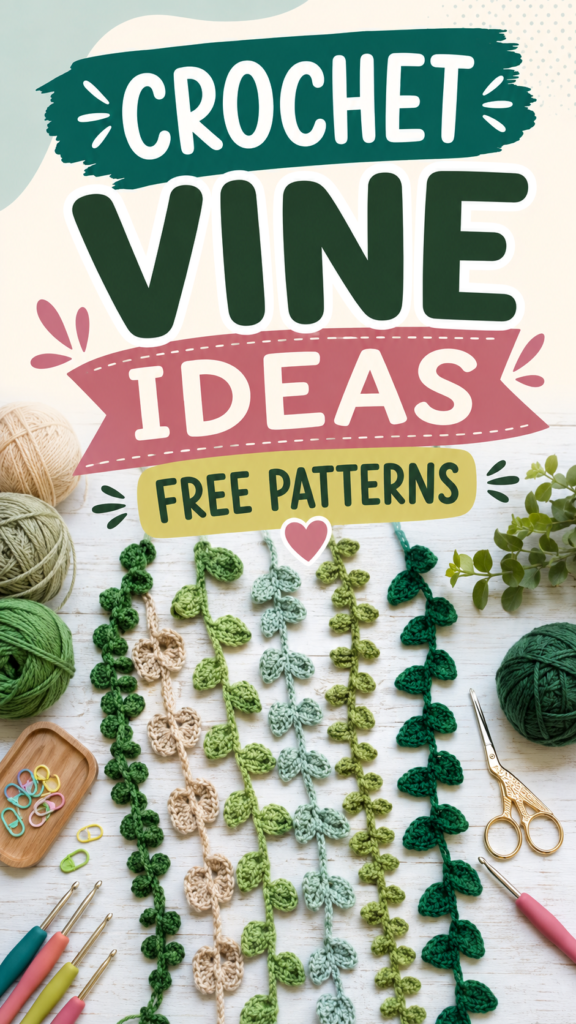
Crochet vines are a beautiful way to bring a touch of handmade greenery into your home, wardrobe, gifts, and creative projects. With soft yarn, simple stitches, and repeating leaf shapes, a single crochet vine can become a delicate garland, a decorative accent, or part of a larger botanical display. The appeal is easy to understand: these projects combine the relaxing rhythm of crochet with the timeless charm of leafy plants, without requiring watering, sunlight, or complicated care.
Whether you are looking for a crochet vines free pattern, searching for beginner-friendly leaf ideas, or simply hoping to add more texture to your yarn projects, leafy crochet designs offer plenty of creative possibilities. Long trailing strands, chunky leaves, tiny heart-shaped motifs, and layered greenery can all be customized with different yarn colors and sizes. The result can feel rustic, modern, whimsical, or naturally elegant depending on how you style it.
Key Takeaways
- Crochet vines are versatile projects that can be used for garlands, decor, gifts, and embellishments.
- Simple stitches and repeating leaf motifs make many vine patterns approachable for beginners.
- Changing yarn weight and hook size can dramatically alter the final look of a crochet vine.
- Mixing several shades of green creates a more natural and dimensional handmade effect.
- Vines can be made short and delicate or long and dramatic to suit your space or project.
Why Crochet Vines Are So Popular
Crochet greenery has become a favorite idea among makers because it offers the beauty of botanical decor with the warmth of a handmade project. A crochet vine can soften shelves, frames, tables, baskets, and craft displays. It can also be wrapped around other handmade items to create a finished look that feels thoughtful and personal.
The visual appeal comes from repetition and texture. Leaves arranged along a flexible crocheted chain naturally create movement, while different stitches give each piece depth. Even a simple vine made with basic stitches can look detailed once the leaves are repeated along its length.
One of the best things about crochet vines is their flexibility. You do not need to follow one exact color palette or make every leaf identical. Small variations can make the finished piece feel more organic and visually interesting.
Choosing the Right Yarn for Crochet Vine Patterns
Yarn selection plays a major role in the final appearance of a crochet vine. The same pattern can look completely different when made with fine cotton, soft acrylic, chunky yarn, or textured fibers. For crisp leaves and defined stitches, smooth yarn is often easier to work with. For a softer, more relaxed look, a slightly fuzzy or textured yarn can add extra character.
Green Shades Create Depth
A single green shade can create a clean, coordinated vine, but combining several tones can make the project feel more dimensional. Deep forest green, soft sage, olive, mint, and muted yellow-green can all work beautifully together. You might choose one shade for the stems and another for the leaves, or alternate colors as you crochet.
Neutral shades can also be surprisingly effective. Cream, beige, dusty blue, or pale gray leaves can create a softer decorative style that works well with modern interiors and handmade displays.
Think About Yarn Weight
Fine yarn is ideal when you want delicate vines that can be draped lightly around a project. Medium-weight yarn creates more visible leaves and works well for everyday home decor. Chunkier yarn produces bold, textured greenery that makes a strong statement.
If you are experimenting with a free crochet vine pattern, make a short test section first. This allows you to see how the yarn, hook, and stitch pattern work together before committing to a longer garland.
Basic Crochet Stitches That Work Well for Leaves and Vines
Many crochet vine projects can be made with familiar beginner stitches. A foundation chain often forms the stem, while combinations of basic stitches create the leaves. The exact shape can vary, but the concept is usually simple: build a leaf, return to the stem, and repeat.
Chain Stitches for Flexible Stems
A chain is a natural starting point for a vine because it creates a long, flexible base. You can make the stem as long as you need, then work leaves directly into selected chain spaces. Some designs also use a second row along the chain to make the stem slightly sturdier.
Slip Stitches for Gentle Transitions
Slip stitches are useful when moving from one section to another without adding extra height. They can help define a leaf shape and keep the vine structure neat between repeated motifs.
Single and Double Crochet for Leaf Shapes
Combining shorter and taller stitches is one of the easiest ways to form leaves. Shorter stitches near the edges and taller stitches toward the center can create a rounded or pointed shape. Once you understand this principle, you can experiment with your own leaf variations.
Creative Ways to Customize a Crochet Vine
The beauty of this type of project is that customization can happen at every stage. You can adjust the vine length, leaf spacing, colors, and texture without changing the overall concept. This makes crochet vines especially useful for makers who enjoy adding their own personality to patterns.
- Change the leaf size. Alternate small and large leaves for a fuller appearance.
- Vary the spacing. Closely spaced leaves create a dense garland, while wider gaps feel more delicate.
- Mix colors. Use two or three shades to create depth and visual movement.
- Add texture. Try puff stitches, bobbles, or other textured details for fuller leaves.
- Create different lengths. A collection of short and long vines can make a display feel more natural.
Expert Insight
For a fuller display, avoid making every vine exactly the same length. Combining several strands with different leaf sizes and shades creates more visual depth and gives your handmade greenery a naturally layered appearance.
How to Use Crochet Vines in Home Decor
Crochet vines can be used in many parts of the home because they are lightweight and easy to position. They can bring softness to a plain surface or add a handmade accent to an existing display. Their flexible shape also makes them easy to arrange around objects rather than simply placing them flat.
Style a Shelf or Craft Corner
Drape a few vines across the edge of a shelf, around a storage basket, or near your favorite handmade projects. Mixing vines with yarn, books, small containers, or natural textures can create a cozy craft-inspired atmosphere.
Create a Handmade Garland
Long crochet vines can become a decorative garland for a wall, window area, doorway, or celebration display. Because the vines are lightweight, they can be arranged in gentle curves and layered with other crochet motifs for a fuller effect.
Add a Botanical Touch to Gifts
A small crochet vine can become a reusable gift decoration. Wrap it around a package, attach it to a handmade bag, or use it as a decorative detail on a basket. This simple addition can make even a small gift feel more special.
Pro Tip: If you plan to use crochet vines as decor, leave a longer tail or add a small loop at one end. This makes it easier to hang, attach, reposition, or connect the vine to other handmade pieces.
Beginner Tips for a Successful Crochet Vine Project
If you are new to crocheting leaves and vines, start with a small section rather than a full-length garland. Practicing a few repeated leaves helps you understand the stitch rhythm and gives you a chance to adjust your tension.
- Use stitch markers to keep track of repeated sections.
- Choose a comfortable hook size that gives your leaves enough structure.
- Do not worry if every leaf looks slightly different.
- Check the length regularly if you are making a vine for a specific space.
- Weave in ends neatly so the finished greenery looks polished from every angle.
Consistency improves naturally as you work. A crochet vine is also a forgiving project because slight differences can add handmade charm. Instead of aiming for perfect repetition, focus on creating a balanced overall piece.
Common Mistakes to Avoid When Crocheting Leaves
Leaf motifs often involve changing stitch heights quickly, so tension can become inconsistent. If your leaves curl too tightly, your stitches may be too tight or the leaf shape may need a little more space. If they feel floppy, consider using a smaller hook or a firmer yarn.
Another common issue is making the vine too heavy for the intended use. A very thick yarn may look beautiful on its own but can be difficult to drape. Think about where the finished piece will be displayed before choosing your materials.
It is also helpful to avoid rushing the finishing stage. Trimming yarn ends too closely or skipping the final weaving can make a project less durable. Taking a few extra minutes to secure the ends can help your crochet vine stay neat through repeated use.
Making a Collection of Different Crochet Vines
Once you have made one style of vine, consider creating a small collection instead of repeating the exact same design. A combination of narrow leaves, rounded leaves, tiny clusters, and larger trailing strands can become a versatile handmade decor set.
You might keep the same color palette across all the pieces so they coordinate while changing the individual shapes. This approach works especially well for home decor because the different designs can be rearranged throughout the year without looking repetitive.
Creating several shorter pieces is also a practical way to use leftover yarn. Small amounts of green, cream, or neutral yarn can become individual leaves and short vines that later combine into a larger display.
Quick Points
- Start simple with a chain stem and basic leaf stitches.
- Use several shades for more depth and a natural appearance.
- Vary vine lengths to create a more interesting display.
- Choose yarn weight based on how delicate or bold you want the greenery to look.
Conclusion: Turn Simple Yarn Into Lasting Greenery
Crochet vines prove that simple stitches can create something wonderfully decorative. With a flexible stem, repeated leaves, and a few thoughtful color choices, you can transform ordinary yarn into a charming piece of handmade greenery. These projects are relaxing to make, easy to personalize, and useful in countless creative ways.
Whether you are exploring a crochet vines free pattern for the first time or building a collection of leafy garlands, the most exciting part is making the design your own. Experiment with colors, adjust the lengths, try new leaf shapes, and arrange the finished vines wherever you want a little extra texture and handmade warmth. A few strands of crocheted greenery can turn a simple space or project into something that feels more personal, creative, and beautifully crafted.