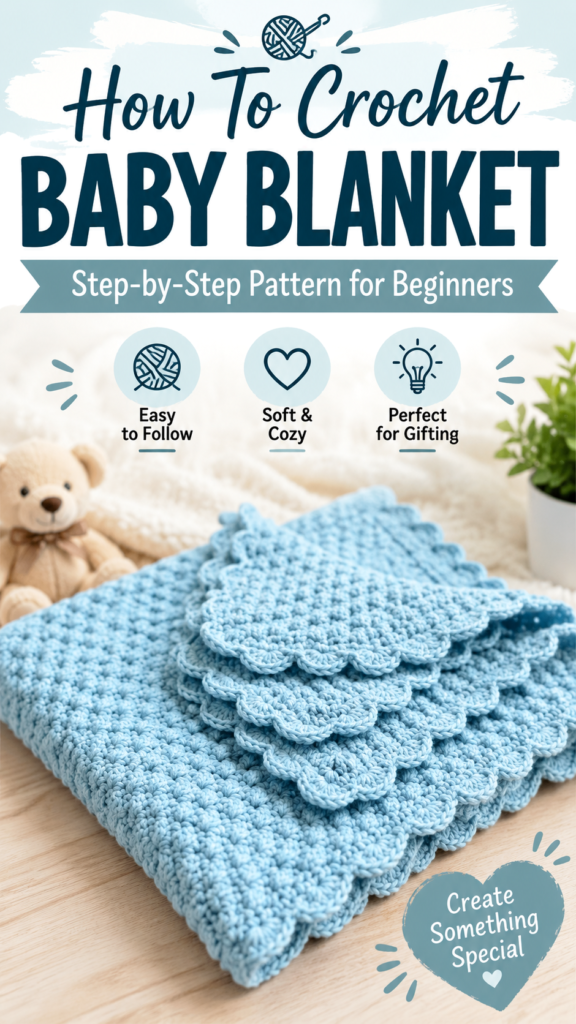
Crocheting a baby blanket is one of the most rewarding projects for both new and experienced makers. A handmade blanket combines comfort, creativity, and practicality in one beautiful piece, making it a favorite choice for nurseries, baby showers, and thoughtful gifts. With soft yarn, simple stitches, and a beginner-friendly pattern, you can create a cozy blanket that feels special from the very first stitch.
The charm of a crochet baby blanket often comes from its texture. A simple rectangular blanket can become visually interesting through raised stitches, layered details, scalloped edges, or repeating patterns. Soft colors and gentle textures create a calm, cozy look that works beautifully in a baby’s room while allowing the handmade craftsmanship to stand out.
Key Takeaways
- Choose soft, comfortable yarn that feels gentle and works well for regular use.
- Begin with simple stitches to make the project easier to follow and finish.
- Texture adds visual interest without requiring complicated color changes.
- A neat border creates a polished finish and helps frame the entire blanket.
- Baby blankets make meaningful handmade gifts for showers, birthdays, and nursery celebrations.
Why Crochet Baby Blankets Are Perfect Handmade Projects
A crochet baby blanket is approachable because it can be as simple or as detailed as you want. You do not need to create complicated shapes, follow difficult garment sizing, or worry about fitting. Most blankets are built by repeating a small number of stitches across rows or rounds until the desired size is reached.
This makes the project especially appealing for beginners. Once you understand the rhythm of the stitch pattern, the blanket becomes a relaxing process of repetition. At the same time, experienced crocheters can use the same basic format as a canvas for experimenting with texture, borders, color combinations, and decorative details.
Important insight: A baby blanket does not need an advanced stitch pattern to look impressive. Consistent tension, soft yarn, an attractive texture, and a clean edge can make even a simple design feel beautifully finished.
Another reason these projects remain popular is their versatility. A handmade baby blanket can be designed for everyday use, quiet stroller moments, nursery decoration, or gift giving. The color palette can be adapted to almost any style, from soft neutrals to cheerful pastels and modern earth tones.
Choosing the Right Yarn for a Soft and Cozy Baby Blanket
Yarn choice has a major effect on how your finished crochet baby blanket looks and feels. Softness is usually the first consideration, but it is also helpful to think about durability, ease of washing, stitch definition, and the overall weight of the finished project.
A smooth, soft yarn can help simple stitches look neat and even. Yarn with clear stitch definition is particularly useful for beginners because it makes it easier to see where the hook should enter. For textured designs, a yarn that is not overly fuzzy can help the pattern remain visible.
What to Look for When Selecting Yarn
- Soft texture: The yarn should feel comfortable against delicate skin.
- Easy care: A practical blanket benefits from yarn that is simple to wash and maintain.
- Comfortable weight: Avoid making the blanket unnecessarily heavy or stiff.
- Good stitch definition: Clear stitches help textured patterns look more polished.
- Color versatility: Choose shades that suit the intended nursery, gift theme, or personal style.
Before beginning, it is also useful to make a small swatch. This gives you a chance to see how the yarn behaves with your chosen hook and stitch pattern. A yarn that feels wonderful in the skein may work differently once it is crocheted into a dense or highly textured fabric.
Easy Crochet Stitches for Beginner Baby Blanket Patterns
The best beginner crochet baby blanket patterns often rely on a few dependable stitches. You can create a beautiful project without memorizing a large number of techniques. The key is choosing a stitch that feels comfortable and repeating it consistently.
Single Crochet
Single crochet creates a firm, compact fabric. It is easy to learn and works well when you want a simple, sturdy blanket with a clean appearance. Because the stitch is relatively dense, it may take more time to complete a large project, but the finished texture can feel substantial and cozy.
Half Double Crochet
Half double crochet is a popular choice for blankets because it works up faster while still creating a soft, comfortable fabric. It offers more height than single crochet and can produce a lovely balance between warmth and flexibility.
Double Crochet
Double crochet is useful when you want a quicker project with a lighter drape. Repeating this stitch in rows creates a classic crochet fabric, while combining it with simple variations can add texture without making the pattern difficult.
Textured Stitch Patterns
Once you feel comfortable with basic stitches, texture can make your crochet baby blanket look more detailed. Raised stitches, clustered stitches, shells, and repeating ridges can create depth and visual interest. The layered appearance of textured crochet is especially appealing because it makes the blanket look cozy even before it is touched.
Expert Insight
When choosing a textured stitch, focus on repetition rather than complexity. A simple motif repeated evenly across a blanket can create a professional, high-impact result while remaining easy to remember as you crochet.
How Texture Creates a More Interesting Crochet Baby Blanket
Texture is one of the easiest ways to make a handmade blanket feel distinctive. Instead of relying only on changing colors, textured stitches use the structure of the yarn itself to create shadows, raised sections, and dimensional details.
A blanket with layered or scalloped-looking sections can feel playful and decorative while still maintaining a calm, soft appearance. Repeating rows of textured motifs can also create a sense of movement across the fabric. This makes the blanket interesting to look at without overwhelming the overall design.
For beginners, it is often best to use one main stitch pattern throughout the body of the blanket. Too many different stitch types can make the project difficult to manage and may result in inconsistent sizing. A focused pattern usually looks more intentional.
A Simple Design Principle
Pair a textured center with a simpler border. The contrast allows the detailed stitches to become the focal point while giving the edges a clean and balanced finish.
Picking Colors for a Modern Baby Blanket
Color plays a big role in the personality of a crochet baby blanket. Soft blues, muted greens, warm creams, gentle pinks, and neutral tones remain popular because they create a soothing visual effect. A single-color blanket can highlight stitch texture particularly well, while a subtle combination of shades can add variety.
When using a detailed stitch pattern, a solid color is often an excellent choice. The eye can focus on the texture instead of competing with frequent color changes. Pale, gentle shades also photograph beautifully, which can be useful for makers who enjoy sharing their finished crochet projects online.
For a more playful design, consider adding color in a controlled way. A contrasting border, alternating stripes, or small accent rows can create visual interest while keeping the project cohesive.
Pro Tip: If you are unsure about color, let texture do the work. A beautifully textured crochet pattern in one soft shade often looks timeless, elegant, and easier to coordinate with different nursery styles.
Step-by-Step Tips for Starting Your First Crochet Baby Blanket
Starting a blanket can feel like a large commitment, but breaking the process into simple steps makes it much more manageable.
- Choose a simple pattern. Select a stitch repeat that you can comfortably practice before committing to the full project.
- Gather enough yarn. Make sure you have sufficient yarn from the start, especially if you want a consistent color throughout.
- Check your tension. Crochet a small sample to see whether your stitches feel too tight or too loose.
- Count regularly. Checking your stitch count prevents the blanket from gradually becoming wider or narrower.
- Take breaks when needed. Comfortable hands and relaxed tension often produce more even work.
- Finish the edges carefully. A neat border can dramatically improve the appearance of the finished blanket.
It can also help to place a stitch marker at important points, especially when working a repeating pattern. This small habit can save time and reduce frustration when returning to the project after a break.
How to Create a Beautiful Border
The border is more than a finishing detail. It frames the entire blanket and can bring together the body of the design. A simple border is often the best choice for a highly textured blanket because it provides visual balance.
You might use a few rounds of basic crochet stitches for a clean edge or select a gently decorative pattern for extra softness. Scalloped and rounded edging can complement blankets that already feature curved or layered textures.
Before beginning the border, inspect the edges of the blanket carefully. Uneven stitch placement can cause rippling or pulling. Working consistently around the perimeter helps the blanket lie flat and gives it a more professional appearance.
Common Crochet Baby Blanket Mistakes and How to Avoid Them
Every crocheter makes mistakes, especially while learning. Fortunately, many common issues are easy to prevent with a few simple habits.
Inconsistent Tension
When stitches change dramatically in size, the blanket may look uneven. Try to hold the yarn comfortably and avoid pulling too tightly. Practice helps, and consistency usually improves naturally over time.
Missing or Adding Stitches
A common beginner problem is accidentally skipping stitches at the edge of a row or adding extra stitches when turning. Count periodically and pay close attention to the first and last stitch of each row.
Choosing a Pattern That Is Too Complicated
A challenging pattern can be exciting, but it may also make the project feel overwhelming. Start with a design that allows you to enjoy the process. You can always add more advanced details to your next blanket.
Making a Crochet Baby Blanket a Meaningful Gift
One of the most appealing things about a handmade baby blanket is the time and care behind it. Unlike a quickly purchased item, crochet allows the maker to choose the yarn, colors, stitch pattern, and finishing details specifically for the recipient.
A blanket can be made to match a nursery color palette, celebrate a new arrival, or simply provide a soft handmade keepsake. Even a simple beginner crochet pattern can become meaningful because the finished piece carries the personality and effort of the person who created it.
Presentation can make the gift feel even more special. Fold the finished blanket neatly, smooth the edges, and make sure any yarn ends are securely woven in. A clean final presentation highlights the craftsmanship and makes the cozy texture immediately inviting.
Building Confidence Through Beginner Crochet Projects
A baby blanket is not only a useful finished item. It is also an excellent way to build crochet confidence. Because the project involves repetition, you have many opportunities to improve your stitch consistency and become more comfortable holding the yarn and hook.
As the blanket grows, you can see your progress in a very visible way. This can be especially motivating for beginners. Each completed row brings the project closer to becoming a finished, functional piece.
There is also plenty of room for creativity. Once you understand the basic structure of a blanket, you can experiment with different borders, textures, colors, and sizes. The skills learned from one simple crochet baby blanket can easily carry over into future projects.
Why This Matters
- Simple projects help beginners build confidence through repetition.
- Texture and neat finishing can elevate an easy pattern.
- A handmade blanket combines practical comfort with lasting sentimental value.
Quick Points for Planning Your Crochet Baby Blanket
- Start with a stitch pattern you can repeat comfortably.
- Choose soft yarn with a texture that suits the design.
- Use color strategically to highlight beautiful crochet stitches.
- Check your stitch count and tension as the blanket grows.
- Finish with a neat border for a polished final result.
Conclusion: Create a Cozy Crochet Baby Blanket You Will Be Proud to Give
A crochet baby blanket is a wonderful project because it brings together creativity, comfort, and practical skill. Whether you choose a simple stitch for your first project or a richly textured pattern for a more decorative result, the process offers plenty of opportunities to make something uniquely beautiful.
Start with soft yarn, choose a pattern that matches your current skill level, and focus on consistency rather than perfection. Small details such as even stitches, thoughtful texture, and a clean border can transform a simple piece of crochet into a blanket that feels truly special.
A handmade baby blanket can become part of everyday routines, nursery memories, and meaningful gift moments. Take your time, enjoy the rhythm of each row, and let the project grow stitch by stitch. The result is more than a cozy blanket. It is a handmade creation filled with care, creativity, and the satisfaction of making something beautiful with your own hands.