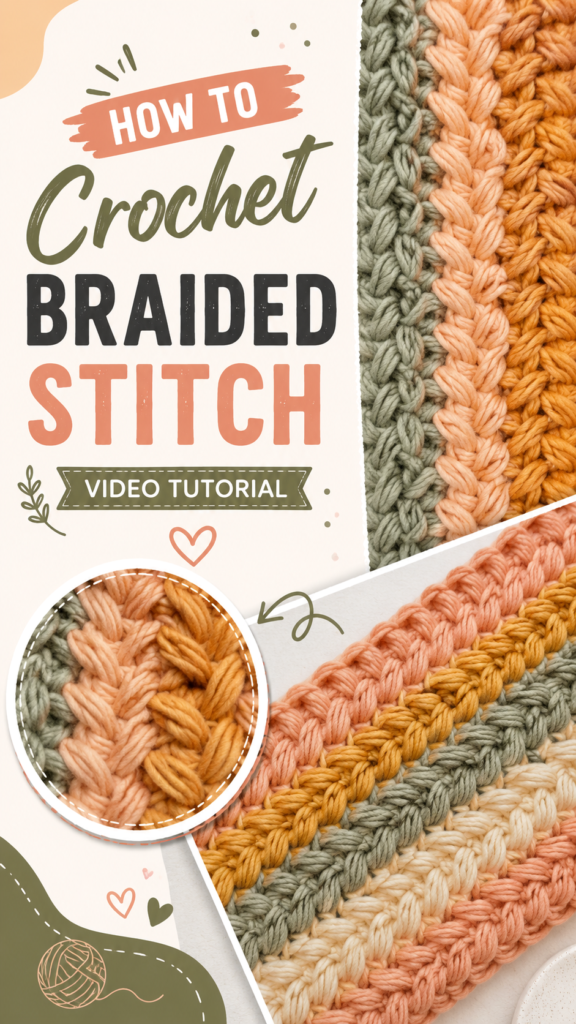
Looking for a crochet stitch that adds bold texture without making your project feel overly complicated? The braided stitch is a beautiful choice for creating cozy, dimensional crochet fabric with a distinctive woven appearance. Its raised, interlocking texture gives ordinary yarn a completely different look, making it especially appealing for blankets, scarves, wraps, bags, and other handmade accessories.
The rich combination of sage green, soft peach, warm mustard, cream, and gray shown in this crochet inspiration highlights just how much personality a braided texture can bring to a project. The stitch looks especially striking when worked in multiple shades, but it can also create an elegant effect in a single color.
Key Takeaways
- The braided stitch creates a thick, dimensional crochet texture.
- Chunky yarn can make the braided effect especially noticeable.
- Neutral and warm pastel shades work beautifully together.
- Color changes can emphasize the woven appearance of the stitch.
- The texture is versatile enough for blankets, accessories, and home projects.
- A video-style tutorial can make the stitch sequence easier to follow.
What Makes the Crochet Braided Stitch So Appealing?
Texture is one of the most enjoyable parts of crochet, and the braided stitch offers plenty of it. Instead of producing a flat surface, the stitch arrangement creates rows that appear to twist, overlap, and form soft braided columns. This gives finished fabric a handcrafted quality that looks detailed even when the overall color palette is simple.
The visual effect is particularly attractive with plush or chunky yarn. Larger strands naturally make each loop easier to see, allowing the braided structure to become the main decorative feature. Even a small swatch can look impressive because the texture does much of the design work.
Important: When working a highly textured crochet stitch, consistent tension is one of the biggest factors in achieving an even and attractive result. Try to keep your loops similar in size throughout each row.
Another reason this stitch stands out is its versatility. You can use it as the main texture across an entire project or combine it with simpler crochet stitches to create contrast. That makes braided crochet patterns useful for both statement pieces and subtle everyday designs.
Exploring Color Combinations for Braided Crochet
The color palette shown in this style of crochet is a great example of how several muted shades can work together without competing for attention. Sage, gray, peach, cream, and mustard create a warm, modern appearance while allowing the raised stitch definition to remain the star.
Soft Neutrals
Cream, beige, taupe, gray, and muted green are excellent choices when you want a calm and sophisticated crochet project. These colors are especially suitable for blankets and home accessories because they can create a cozy appearance without looking too busy.
Warm Accent Colors
Mustard, caramel, peach, terracotta, and soft orange can introduce warmth into a braided crochet design. You do not need many bright colors to create visual interest. One or two accent shades placed between neutral rows can make the braided texture much more noticeable.
A Single-Color Approach
If you prefer a minimalist look, try making the entire project in one shade. A monochromatic braided stitch can look surprisingly luxurious because the texture creates variation even without color changes. Light yarn can highlight the individual loops, while darker shades can produce a deeper, more dramatic effect.
How to Approach a Crochet Braided Stitch Tutorial
A braided crochet stitch can initially look more complicated than a basic stitch because the finished fabric contains several overlapping-looking sections. The easiest way to learn it is to focus on the construction one row at a time rather than trying to understand the entire texture at once.
Start with a small practice swatch. This gives you the opportunity to become familiar with the movement of the yarn and the placement of each stitch before committing to a larger project. A swatch also lets you experiment with hook size and yarn weight.
- Begin with a manageable foundation chain according to your chosen pattern.
- Work the first row carefully, paying attention to stitch placement.
- Follow the pattern instructions for creating the raised or braided sections.
- Pause after each repeat to check that the texture is forming consistently.
- Continue repeating the sequence until the braided pattern becomes familiar.
When following a video crochet tutorial, it can help to pause after individual movements. Watching an entire repeat several times before crocheting can make the stitch sequence easier to understand. Once you recognize the repeating rhythm, the pattern often becomes much more intuitive.
Expert Insight
For textured crochet, do not judge your work only by the first few stitches. Give the pattern several repeats to develop before deciding whether your tension, hook size, or yarn choice is working.
Choosing Yarn for a Chunky Braided Crochet Texture
Yarn choice can dramatically change the appearance of a braided stitch. The inspiration for this style features thick, soft-looking strands that make the individual loops prominent. A yarn with enough body to hold its shape can help the texture remain visible instead of disappearing into the fabric.
Chunkier yarns are useful when your goal is a bold, cozy result. They can also make a relatively simple stitch pattern look substantial. Softer yarns can produce a more relaxed appearance, while firmer yarn may give the braided sections sharper definition.
Before beginning a large project, crochet a small sample using the yarn you plan to use. Look at the swatch from different angles and gently stretch it. This will help you see whether the braided sections remain distinct and whether the fabric has the amount of flexibility you want.
Pay Attention to Yarn Thickness
Using a significantly different yarn weight from the one suggested by a pattern will change both the size and density of the finished fabric. A thicker yarn generally produces larger, more pronounced stitches, while a thinner yarn can create a finer texture with smaller braided details.
Think About Fiber and Texture
Different fibers can respond differently to tension and shaping. Smooth yarns tend to show stitch definition clearly, while fluffy or heavily textured yarns can soften the visual boundaries between stitches. For a first braided stitch project, a yarn with reasonably clear stitch definition can make learning easier.
Pro Tip: If the braided sections look too loose or unclear, make a small swatch before changing the entire project. A modest adjustment to tension or hook size can noticeably improve stitch definition.
Crochet Projects That Suit Braided Stitches
Once you become comfortable with the technique, there are plenty of ways to use braided crochet textures. The stitch has enough visual impact to serve as the central design element, but it can also be incorporated into a larger pattern.
Cozy Crochet Blankets
A braided stitch blanket can have a wonderfully tactile appearance. Alternating colors can create horizontal bands, while repeating the same shade can create a sophisticated textured surface. Soft cream, gray, sage, peach, and mustard are especially appealing for a cozy seasonal palette.
Scarves and Cowls
Scarves are another excellent project for experimenting with textured crochet. A braided pattern can give a simple rectangular scarf plenty of personality without requiring complicated colorwork. Consider keeping the rest of the design minimal so the stitch remains the focal point.
Crochet Bags and Pouches
For bags, braided crochet can add a decorative surface that feels substantial and handmade. A simple shape paired with a textured stitch can be enough to create an eye-catching accessory. Neutral colors can give the project a polished appearance, while brighter combinations can make it playful.
Home Decor
Textured crochet also works beautifully for cushions, baskets, table accessories, and other decorative projects. The raised surface can make handmade pieces feel especially cozy, making braided stitches a natural choice for projects intended to add warmth and texture to a room.
Simple Ways to Improve Your Crochet Tension
Consistent tension matters even more when working with a textured pattern. Uneven loops can cause some braided sections to appear fuller than others, which may make the finished fabric look irregular.
- Hold your yarn comfortably rather than gripping it tightly.
- Try to maintain a similar loop size throughout each repeat.
- Check your work regularly instead of waiting until the end of a row.
- Use a practice swatch to find a comfortable hook and tension combination.
- Let the yarn move naturally through your fingers as you crochet.
Remember that perfect tension does not mean every crocheter will produce exactly the same fabric. Your natural crochet style is part of the handmade character of the project. The goal is simply to create tension that is consistent enough for the stitch pattern to develop evenly.
Making Color Changes Look Intentional
When working multiple colors, plan where you want each shade to appear before starting. The braided texture naturally creates visual lines, so color placement can either emphasize those lines or create a more blended effect.
For a clean striped appearance, use one color for several complete rows before switching. For a softer effect, choose neighboring shades that transition naturally from one to another. The muted palette shown in this style of crochet demonstrates how colors with similar softness can create a cohesive result.
If you want a bolder design, pair a neutral shade with one strong accent. This creates contrast without overwhelming the texture. Another option is to repeat the same three or four colors throughout the project so the finished piece feels coordinated.
Common Challenges When Learning Braided Crochet
Like any textured crochet technique, braided stitches can feel awkward at first. The biggest challenge is usually understanding where the next stitch belongs and recognizing how the repeated sections create the braided appearance.
The Texture Looks Flat
If your finished swatch does not look as raised as expected, check your tension and stitch placement. A yarn that is too soft or fuzzy may also hide the definition. Try a clearer yarn or make another sample with slightly different tension.
The Rows Look Uneven
Uneven row height can happen when your tension changes during more complicated sections. Slow down and compare several repeats. Counting stitches can also help you identify where the difference begins.
The Pattern Feels Confusing
Do not try to memorize every movement immediately. Break the stitch into small steps and repeat them slowly. A visual tutorial can be especially helpful because you can watch how the yarn moves before attempting the same sequence yourself.
How to Make Your Braided Stitch Project Your Own
Once you understand the basic structure, experimentation becomes part of the fun. Try changing the yarn weight, adjusting your color palette, or combining the braided texture with simpler stitches. You can also use the stitch selectively rather than covering an entire project.
For example, a simple crochet blanket could feature a wide braided panel surrounded by a basic border. A scarf could use braided sections separated by rows of a straightforward stitch. A small bag could feature the texture on the front while keeping the back simpler.
The most successful crochet designs often come from small creative decisions. Changing two colors, adding a contrasting border, or adjusting the width of a textured panel can completely transform the final result.
At a Glance
- Use a small swatch before starting a large project.
- Choose yarn with enough stitch definition to show the texture.
- Keep tension consistent for more even braided sections.
- Experiment with muted colors, neutrals, and warm accents.
- Use the texture for blankets, scarves, bags, and home decor.
Why Braided Crochet Stitches Are Worth Trying
A good crochet stitch does more than fill a row. It can influence the entire personality of a handmade project. Braided stitches are appealing because they combine texture, dimension, and visual movement in a way that can make even a simple project feel thoughtfully designed.
The beauty of this style is that you do not need an elaborate color scheme to make it stand out. A single shade can showcase the dimensional texture, while a carefully selected combination of sage, peach, mustard, cream, and gray can create a warm and contemporary effect.
For beginners, a braided stitch may be a rewarding technique to add to a growing collection of crochet skills. For experienced crocheters, it offers another opportunity to experiment with color, texture, yarn weight, and project construction.
Conclusion
Crochet braid styles are a wonderful way to bring extra dimension and personality to handmade projects. The raised, interlocking appearance creates a cozy texture that looks impressive in both simple and colorful designs. Whether you are making a blanket, scarf, bag, or decorative home piece, the braided stitch can become a beautiful focal point.
Start with a small swatch, choose a yarn that shows stitch definition clearly, and take your time learning the repeating sequence. Once the technique feels comfortable, experiment with color combinations and project ideas that reflect your personal style.
The best crochet projects are the ones that make you excited to keep stitching. Save your favorite braided crochet ideas, choose a cozy yarn, and let the texture become the inspiration for your next handmade creation.
Tags
Crochet Braided Stitch Crochet Braid Styles Crochet Stitch Ideas Textured Crochet Crochet Tutorial Crochet Patterns Beginner Crochet Crochet Inspiration