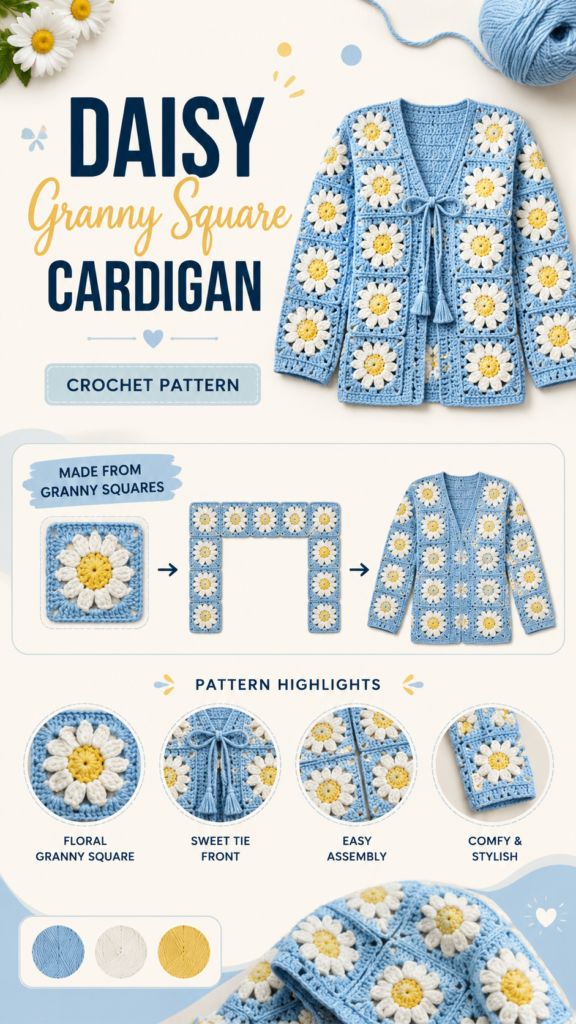
A daisy granny square cardigan is the kind of handmade piece that instantly feels cheerful, nostalgic, and wearable. With soft blue crochet squares, dimensional white daisy petals, sunny yellow centers, and a relaxed tie-front shape, this cardigan blends vintage crochet charm with a fresh cottagecore look. It is playful without feeling childish, detailed without being overly complicated, and practical enough to layer over dresses, tanks, tees, or lightweight spring outfits.
What makes this design especially appealing is its modular construction. Instead of crocheting one large garment from start to finish, the cardigan is built from individual daisy granny squares that are joined together into panels, sleeves, and edging. That makes the project easier to manage, easier to customize, and surprisingly satisfying as each square adds another bloom to the finished piece.
Key Takeaways
- A daisy granny square cardigan is made by crocheting floral squares and assembling them into a wearable garment.
- The blue, white, and yellow color palette gives the cardigan a soft spring and summer aesthetic.
- Modular granny square construction makes sizing, layout, and customization more approachable.
- The tie-front design keeps the cardigan lightweight, casual, and easy to style.
- This project is ideal for crocheters who enjoy statement handmade fashion with vintage influence.
Why the Daisy Granny Square Cardigan Is So Popular
The daisy granny square cardigan has become a favorite among crocheters because it combines several beloved trends in one project: floral motifs, handmade clothing, granny square construction, and soft vintage styling. The daisy motif feels bright and optimistic, while the cardigan silhouette keeps the finished garment easy to wear in everyday life.
Unlike a plain crochet cardigan, the repeated flower squares create immediate visual impact. Each square acts like a small piece of textile art. When joined together, the daisies form a garden-like pattern across the body and sleeves. The result is a cardigan that feels handmade in the best possible way, full of texture, personality, and charm.
The cropped or waist-length shape also makes the design feel current. It pairs beautifully with high-waisted jeans, flowy skirts, linen trousers, and simple dresses. The front tie adds a sweet handmade detail while avoiding the heaviness of buttons or a solid closure.
Important: The beauty of this cardigan comes from balance. The floral squares are bold and decorative, but the soft blue background and simple garment shape keep the overall look wearable, light, and modern.
Understanding the Crochet Daisy Granny Square
At the heart of this cardigan is the daisy granny square. This motif typically begins with a yellow center, followed by white petals, and then a square border worked in the background color. In this design, the background is a gentle sky blue, which makes the white petals stand out clearly and gives the entire cardigan a fresh, airy look.
The square format is essential because it allows multiple flower motifs to be joined cleanly into rectangular garment panels. Granny squares are one of the most flexible building blocks in crochet, and floral granny squares add texture and dimension while still being practical for assembly.
The Color Story: Blue, White, and Yellow
The cardigan’s color palette is a major part of its appeal. The yellow center gives every daisy a warm focal point. The white petals add softness and contrast. The blue border frames each flower and creates a cohesive garment once the squares are joined together.
This combination naturally suggests spring skies, garden blooms, sunshine, and breezy weather. It is also versatile. Blue works well with denim, white, cream, tan, and pastel shades, making the finished cardigan easier to style than a more heavily multicolored crochet piece.
The Texture of the Daisy Motif
Daisy granny squares often have raised petals, giving the motif a dimensional quality. This texture makes the cardigan look rich and handmade even from a distance. The petals may be created with taller stitches, clusters, puff stitches, or petal-like groups depending on the exact pattern method.
Because the flower is built into each square, the motif does not look printed or flat. It becomes part of the fabric itself. That tactile quality is one of the reasons crochet flower cardigans feel so special compared with mass-produced floral clothing.
Cardigan Construction: How the Squares Become a Garment
The cardigan is assembled from multiple daisy granny squares, arranged into the back, front panels, sleeves, and neckline area. A modular layout is helpful because it allows crocheters to visualize the garment before final joining. Instead of guessing how a flat crochet piece will fit, you can lay out the squares and see the cardigan take shape.
The design shown uses a structured layout where the squares are sewn or crocheted together in rows and columns. The finished size is marked as small to medium, with approximate measurements around 17 inches across the upper area, 20 inches across the body, 19 inches in length, and sleeves around 18 inches depending on placement and edging.
These measurements are useful as a guide, but actual size will depend on yarn weight, hook size, stitch tension, blocking, and how the squares are joined.
The Back Panel
The back panel provides the main structure of the cardigan. It is typically made from a rectangular arrangement of granny squares. In this kind of pattern, the back section needs enough width to sit comfortably across the shoulders and enough length to reach the desired cropped or waist-level fit.
A clean back panel also helps stabilize the front panels and sleeves. Because each square has its own structure, the joined panel can be sturdy while still feeling flexible and breathable.
The Front Panels
The front panels frame the body and create the open cardigan shape. In this design, the front does not rely on buttons. Instead, it uses a tie closure at the center, which gives the cardigan a relaxed handmade finish.
The front panels are usually narrower than the back panel and may be arranged to create a V-neck or open-front effect. The placement of the daisy squares is important here because the flowers become highly visible when the cardigan is worn.
The Sleeves
The sleeves are also built from granny squares, which gives them the same floral continuity as the body. The layout usually forms long rectangular strips that are folded and joined into sleeve tubes before being attached to the armholes.
One of the advantages of granny square sleeves is that length can be adjusted easily. Add more squares for longer sleeves, use fewer squares for a three-quarter sleeve, or adjust the border rows to fine-tune the final fit.
Pro Tip: Before joining the sleeves permanently, pin or clip the pieces together and try the cardigan on carefully. This helps confirm sleeve length, shoulder comfort, and front panel placement before the final seams are secured.
Materials That Work Best for This Crochet Cardigan
Choosing the right yarn makes a big difference in how the finished daisy cardigan looks and feels. Since the design includes many joined squares, the yarn should provide stitch definition, comfortable drape, and enough durability for wearable use.
Yarn Fiber Choices
Cotton and cotton-blend yarns are popular for granny square cardigans because they show stitch texture clearly and feel breathable in warm weather. Acrylic yarn is another accessible option, especially for beginners, because it is affordable, widely available, and easy to care for. A lightweight wool blend can work well if you want a warmer cardigan for cooler seasons.
The best choice depends on when and how you plan to wear the cardigan. For a spring or summer layering piece, cotton or bamboo blends can feel cool and soft. For a cozy transitional cardigan, acrylic or wool blends may provide more warmth.
Hook Size and Gauge
Gauge matters because this cardigan is based on square dimensions. If your granny squares come out too large, the cardigan may become oversized. If they are too small, the finished garment may feel tight or cropped in unexpected ways.
Always make a sample square before committing to the full set. Measure the square after finishing and, if possible, after blocking. Adjust hook size if needed. A slightly larger hook can create a softer drape, while a smaller hook can create a denser, more structured fabric.
Recommended Yarn Qualities
- Good stitch definition: Helps the daisy petals and square borders stand out.
- Comfortable against the skin: Important for a cardigan worn over light tops.
- Moderate drape: Keeps the garment from feeling too stiff or too floppy.
- Consistent thickness: Makes joining squares neater and more predictable.
- Easy care: Useful for a wearable handmade piece.
Expert Insight
For a granny square cardigan, consistency is more important than speed. Even small changes in tension can affect how the squares line up, especially around the shoulders and sleeves. Stack your finished squares as you go and compare their size before assembly.
Step-by-Step Project Flow
A daisy granny square cardigan may look complex at first, but the workflow is straightforward when broken into stages. The key is to complete each phase carefully before moving on to the next.
1. Make a Test Daisy Square
Start with one complete daisy granny square using your chosen yarn and hook. This test square helps you understand the stitch sequence, color changes, petal shaping, and final size.
Measure the square after finishing. If it matches the intended size for your cardigan layout, continue with the full set. If not, adjust your hook size or tension before making dozens of squares.
2. Crochet All Required Squares
The design indicates a total of 42 granny squares, which is a manageable but meaningful project quantity. Making the squares in batches can help maintain momentum. For example, complete all yellow centers first, then all white petals, then all blue borders. This assembly-line method can create more consistent results and reduce repeated color switching.
Some crocheters prefer finishing each square completely before starting the next because it feels more rewarding. Either method works as long as your tension stays consistent.
3. Block the Squares
Blocking is strongly recommended for a granny square garment. It helps the squares become the same size, opens the stitches, sharpens the corners, and makes joining much neater.
You can lightly steam block acrylic yarn with caution, wet block cotton, or follow the care recommendations for your chosen fiber. The goal is not to stretch the squares dramatically, but to even them out and help them hold a tidy shape.
Important: Blocking is not just a finishing detail for this project. Because the cardigan depends on many squares fitting together, blocking can make the difference between a polished handmade garment and one that feels uneven at the seams.
4. Lay Out the Panels
Before joining, lay all squares flat in the planned cardigan arrangement. Check that the daisies face the same direction and that the color placement feels balanced. This is also the best time to decide which squares should appear on the front, sleeves, shoulders, and back.
If some squares look slightly different, place the most even and attractive ones in the most visible areas, such as the front panels and upper sleeves.
5. Join the Squares
There are several ways to join granny squares. A whip stitch creates a simple sewn seam. A slip stitch join creates a visible crochet ridge. A single crochet join adds texture and stability. An invisible join keeps the focus on the daisy pattern.
For this cardigan, a neat join in the same blue yarn can blend with the square borders and create a cohesive look. The right joining method depends on whether you prefer a flat seam or a slightly raised decorative seam.
6. Add Borders and Edging
Once the panels and sleeves are assembled, border rows help finish the cardigan. Edging may be added around the front opening, neckline, hem, cuffs, and sleeve openings. The border gives the cardigan structure and makes the edges look intentional.
A ribbed or simple stitched edge around the neckline can also improve fit. The visible cardigan sample has a neat blue edge that frames the front opening and supports the tie closure.
7. Create the Front Ties
The tie-front detail adds softness and functionality. Ties can be made with crochet chains, braided yarn, i-cord, or a narrow crocheted cord. Tassels or small decorative ends can be added for extra charm.
Attach the ties securely at the front edges, usually around the bust or upper waist area. The ties should be long enough to form a bow comfortably without pulling the cardigan out of shape.
How to Customize the Daisy Cardigan
One of the biggest advantages of a granny square cardigan pattern is customization. Since the garment is built from repeatable motifs, you can adapt the size, color, sleeve length, and finishing details more easily than with many fitted crochet garments.
Adjusting the Size
To make the cardigan larger, you can use larger squares, add extra squares to the body width, lengthen the panels, or increase border rows. To make it smaller, use a finer yarn, smaller hook, fewer border rows, or reduce the number of squares where the layout allows.
Be mindful that changing the square count can affect proportions, especially around armholes and shoulders. It is often easiest to adjust size by changing square dimensions slightly rather than completely redesigning the layout.
Changing the Color Palette
While blue, white, and yellow are classic for a daisy cardigan, the design can take on a completely different personality with new colors. Try cream backgrounds for a vintage look, sage green for a garden-inspired cardigan, lavender for a soft pastel feel, or black for a bold retro statement.
You can also change the flower colors. Pink petals create a cheerful floral cardigan, while warm orange centers and cream petals feel autumnal. The daisy motif is simple enough to adapt without losing its charm.
Modifying Sleeve Length
Sleeve length is one of the easiest changes. For warmer weather, make shorter sleeves or three-quarter sleeves. For a cozy look, extend the sleeves and add cuffs. You can also create a bell-sleeve effect by adding extra border rounds at the wrist or using wider joining arrangements.
Customization Ideas
- Add scalloped edging for a more romantic finish.
- Use wooden buttons instead of ties for a structured closure.
- Make a longer version by adding another row of squares to the body.
- Create matching accessories, such as a daisy granny square bag or headband.
- Use tonal blues for the background squares to create subtle variation.
Styling a Crochet Daisy Granny Square Cardigan
This cardigan is a statement piece, but it is surprisingly easy to style. The key is to let the floral crochet texture shine while pairing it with simple wardrobe basics.
Casual Everyday Outfit
Wear the cardigan over a white tank top with high-waisted jeans and sandals for an effortless everyday outfit. The blue squares pair naturally with denim, while the daisies add a bright handmade touch.
Cottagecore and Vintage Styling
For a softer cottagecore look, layer the cardigan over a cream dress or a flowy skirt. Add simple jewelry, woven accessories, or canvas shoes. The daisy motif works beautifully with romantic, nature-inspired styling.
Festival and Vacation Looks
A lightweight crochet cardigan is also perfect for music festivals, beach trips, and vacation outfits. It adds coverage without feeling heavy and brings a handmade, artistic element to simple summer clothing.
Style Note: Because the cardigan already has strong texture and pattern, pair it with solid-colored clothing when you want the crochet work to be the focal point.
Common Mistakes to Avoid
Even though a granny square cardigan is beginner-friendly in concept, a wearable project requires care. Paying attention to the details will make the finished cardigan more comfortable, durable, and polished.
Skipping Gauge Checks
It is tempting to start making squares right away, but skipping gauge can lead to sizing problems. Since every square contributes to the final measurements, even a small difference can become significant across the full cardigan.
Joining Without a Layout Plan
Always lay out the squares before joining. This helps prevent misplaced motifs, uneven rows, and awkward panel shaping. Taking a photo of the layout can also help you remember the arrangement as you sew or crochet the pieces together.
Ignoring Yarn Ends
A floral granny square has multiple color changes, which means many yarn ends. Weave them in securely as you go or before assembly. Loose ends can become frustrating once the cardigan is joined, and they may work their way out with wear.
Care Tips for a Handmade Crochet Cardigan
A handmade crochet cardigan deserves gentle care. Proper washing and storage will help preserve the daisy texture, square shape, and overall fit.
- Wash gently: Hand washing is often safest, especially for cotton or delicate blends.
- Use cool water: Hot water can affect fiber texture and cause unwanted changes in shape.
- Lay flat to dry: Hanging a wet crochet cardigan can stretch the fabric.
- Store folded: Folding prevents shoulder stretching and keeps the garment in better shape.
- Refresh with light blocking: If the cardigan loses shape, gently reshape it while damp.
At a Glance
- Best feature: dimensional daisy granny squares.
- Ideal style: spring, summer, cottagecore, vintage-inspired fashion.
- Main technique: crochet motifs joined into cardigan panels.
- Helpful finishing step: blocking each square before assembly.
- Customization options: size, sleeve length, edging, and color palette.
Conclusion: A Cheerful Handmade Cardigan Worth Making
The crochet daisy granny square cardigan is more than a pretty handmade garment. It is a joyful project that combines creativity, texture, color, and practical construction. Each daisy square adds a little burst of sunshine, and as the motifs come together, they form a cardigan that feels personal, wearable, and full of character.
Whether you love vintage crochet, cottagecore fashion, floral patterns, or modular garment making, this design offers a rewarding balance of beauty and structure. With careful gauge, neat joining, thoughtful blocking, and a color palette you love, a daisy granny square cardigan can become one of the most treasured pieces in your handmade wardrobe.
It is the kind of crochet project that turns simple stitches into something memorable: a soft blue field of daisies you can actually wear.
Tags
Crochet Cardigan
Daisy Granny Square
Granny Square Pattern
Crochet Fashion
Handmade Wardrobe
Cottagecore Crochet
Spring Crochet Project