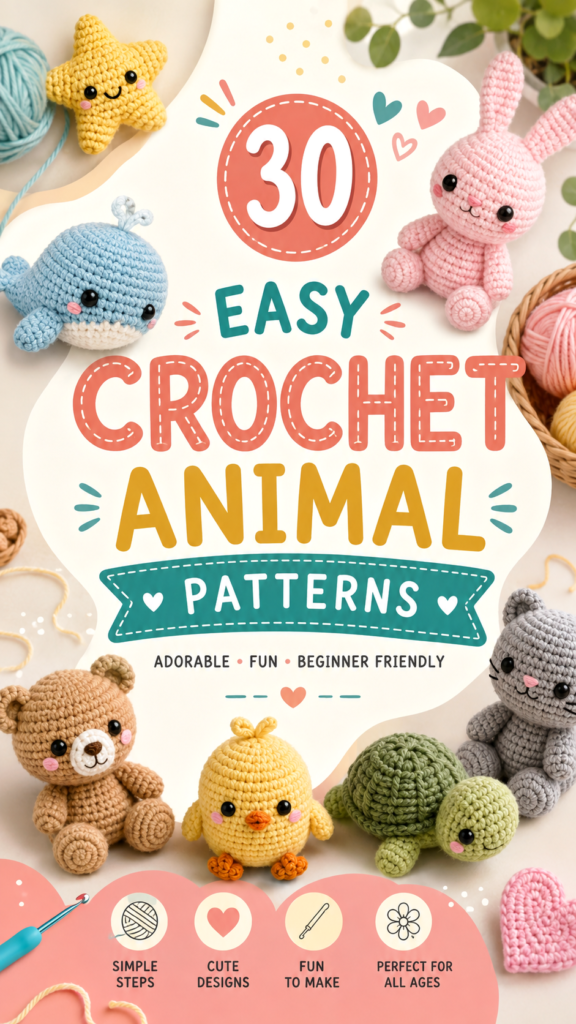
Learning how to crochet animals for beginners can be one of the most rewarding ways to start making amigurumi. With a little yarn, a crochet hook, stuffing, and a few basic stitches, you can create charming handmade animals that are small, practical, and full of personality. From cuddly bears and long-eared bunnies to whales, chicks, cats, and turtles, simple animal shapes offer plenty of opportunities to practice crochet while making something you will actually want to keep.
Key Takeaways
- Start with simple animal shapes and basic crochet stitches.
- Choose smooth, easy-to-handle yarn while learning.
- Practice consistent tension for neat amigurumi.
- Use small details such as ears, tails, wings, and noses to add personality.
- Work slowly and check your stitches regularly as you build each animal.
- Save beginner-friendly designs so you always have your next project ready.
The appeal of beginner crochet animals is their simplicity. You do not need to begin with a complicated character or an advanced pattern. Many cute amigurumi designs are built from familiar forms such as spheres, ovals, tubes, and small rounded pieces. Once you understand how those shapes work, you can combine them into countless animals and gradually develop the skills needed for more detailed crochet projects.
Why Crochet Animals Are Great for Beginners
Animal amigurumi projects are an excellent introduction to crochet because they allow you to repeat the same techniques several times. Repetition helps your hands become comfortable with the movement of the hook and yarn, while small finished projects provide a satisfying sense of progress.
A beginner can start with a simple rounded body and then add a few recognizable features. A pair of ears can turn a basic shape into a bunny or bear. A tail can transform another shape into a cat or turtle. Wings, fins, feet, and a small beak can create an entirely different character.
One of the biggest advantages of beginner amigurumi is that you can focus on learning instead of perfection. Small imperfections are often part of the charm of handmade crochet. As your tension becomes more consistent and your stitch counting improves, your animals will naturally become more polished.
Start With Familiar Crochet Stitches
You do not need a huge collection of techniques to begin. Simple crochet animals often rely on foundational stitches and construction methods. Depending on the pattern, you may encounter single crochet, increases, decreases, slip stitches, chains, and working in continuous rounds.
Working in rounds is particularly useful for amigurumi because it creates compact, three-dimensional shapes. A series of increases can widen the piece, while decreases gradually narrow it again. This simple concept can be used to create heads, bodies, snouts, feet, and many other parts.
Essential Supplies for Crochet Animal Projects
One of the best things about beginner crochet animals is that you can keep your supplies fairly simple. You do not need an enormous craft collection to make your first project.
- Yarn: Choose a smooth yarn that allows you to see your stitches clearly.
- Crochet hook: Use a hook that works comfortably with your chosen yarn and pattern.
- Stuffing: Soft fiber filling gives finished animals their rounded shape.
- Yarn needle: A blunt needle helps with sewing pieces together and weaving in ends.
- Stitch marker: This is especially helpful when crocheting in continuous rounds.
- Safety or embroidered features: Eyes, noses, and other facial details can be added according to the project and intended use.
For your first few projects, consider choosing yarn in a light or medium shade. Very dark yarn can make individual stitches harder to see, which may make counting more difficult while you are learning.
Choosing Yarn That Is Easy to Work With
Yarn choice can make a noticeable difference when you are learning. A smooth yarn with clear stitch definition makes it easier to identify where your hook should go. Very fluffy or textured yarn can be beautiful, but it may hide individual stitches and make troubleshooting more challenging.
Soft pastel colors, neutral shades, and cheerful tones also work beautifully for animal amigurumi. The image-inspired collection of crochet animals demonstrates how different colors can give similar rounded shapes completely different personalities. A soft blue can suggest a whale, while warm brown creates a teddy bear appearance and yellow immediately gives a chick a cheerful look.
30 Easy Crochet Animal Ideas to Try
When looking for crochet animal ideas for beginners, it helps to think in terms of shapes rather than complicated characters. The animals below are excellent sources of inspiration because many can be simplified into basic components.
- Teddy Bear: A rounded head, small ears, simple arms, and feet create a classic beginner project.
- Bunny: Add long ears to a rounded body for an instantly recognizable design.
- Whale: A rounded body with fins and a tail creates a playful ocean-inspired project.
- Chick: A small yellow body paired with tiny wings and an orange beak makes a cheerful design.
- Cat: Triangular or rounded ears, a tail, and simple facial details are enough to suggest a kitten.
- Turtle: Combine a rounded shell with a smaller head and short legs.
- Mouse: Small round ears and a thin tail can transform a simple body into a mouse.
- Penguin: Use contrasting yarn colors for the body and belly.
- Duck: A rounded body, wings, and a flat beak make a recognizable duck.
- Elephant: A simple trunk and large ears can define the entire character.
- Fox: Try warm colors and a pointed face for a woodland-inspired animal.
- Dog: Floppy or upright ears and a small tail can create many variations.
- Frog: Rounded eyes and simple limbs give a frog plenty of personality.
- Bee: Alternate yarn colors to create easy stripes.
- Ladybug: A small rounded body makes a compact beginner project.
- Sheep: Use soft-looking yarn or simple rounded pieces for a fluffy effect.
- Pig: A small snout and rounded ears can define the design.
- Koala: Large round ears are an easy feature to add to a simple body.
- Panda: Contrasting black and white sections create a recognizable appearance.
- Giraffe: A simple body with a longer neck introduces a slightly different shape.
- Lion: A mane made from yarn details can make a basic body stand out.
- Monkey: Rounded ears and a long tail provide recognizable features.
- Owl: Large eyes and small wings work well with simple crochet forms.
- Penguin Chick: Keep the shape compact and focus on contrasting colors.
- Seal: A smooth oval body with small flippers is a beginner-friendly concept.
- Otter: A rounded body and small paws can create a cute woodland or aquatic theme.
- Deer: Small ears and simple antler details can personalize the design.
- Hippo: A large rounded body and small ears keep construction straightforward.
- Snail: A spiral-inspired shell offers an opportunity to experiment with texture.
- Alpaca: A simple body combined with a longer neck and small ears creates a charming finish.
Why This Matters
Beginner crochet animals are not only cute finished projects. They are also useful practice pieces.
- Repeating rounds helps improve stitch counting.
- Small parts teach you how to shape and assemble crochet pieces.
- Different animals encourage you to experiment with color, proportions, and details.
How to Crochet Animals for Beginners Step by Step
If you are completely new to amigurumi, resist the temptation to rush through the pattern. Treat each project as a small learning exercise. The process becomes much easier when you divide it into manageable stages.
1. Read the Pattern Before Starting
Look over the entire pattern before picking up your hook. Identify which pieces need to be made, how many rounds are involved, and whether the project requires increases or decreases. This gives you a clear picture of the construction before you begin.
2. Make the Main Body
Most simple stuffed animals begin with a rounded central piece. Pay close attention to stitch counts at the end of each round. A missing or extra stitch can gradually change the shape, so counting regularly is much easier than trying to correct a large mistake later.
3. Add the Smaller Pieces
Once the body is complete, work on the ears, arms, legs, fins, wings, tails, or other distinctive features. Keeping these pieces separate makes it easier to customize the final animal.
4. Stuff Gradually
When a piece requires stuffing, add small amounts as you crochet rather than waiting until the very end. This helps you distribute the filling more evenly and gives you better control over the shape.
Pro Tip: Do not pack stuffing too aggressively. A gently filled piece usually gives you more control over the final shape and helps maintain the soft, rounded appearance that makes amigurumi so appealing.
5. Assemble and Add Personality
Assembly is where the animal really starts to come together. Position the ears, limbs, tail, and other pieces before permanently sewing them into place. Try different placements and angles until the proportions look right.
Facial details can make a surprisingly large difference. Simple eyes, a tiny nose, embroidered features, or small color changes can transform the same basic body into an entirely different character.
Tips for Neater Beginner Amigurumi
Consistent tension is one of the most useful skills you can develop while learning crochet animals. If your stitches are very loose, stuffing may become visible through the fabric. If your tension is extremely tight, the project may become difficult to crochet and uncomfortable for your hands.
- Count every round, especially when increases and decreases are involved.
- Use a stitch marker to identify the beginning of continuous rounds.
- Keep your yarn tension comfortable rather than forcing each stitch tightly.
- Check the shape as you work instead of waiting until the end.
- Keep small pieces together so they do not get misplaced.
- Take breaks during longer sessions to keep your hands relaxed.
Another helpful habit is to compare your work with the pattern after each major stage. If the head is supposed to be rounded but yours is becoming unusually flat or elongated, pause and check the stitch count before continuing.
Choosing Beginner-Friendly Animal Patterns
Not every crochet animal pattern is equally suitable for someone who is just starting. Look for designs described as easy, simple, beginner-friendly, or basic amigurumi. Patterns with fewer separate pieces can also be less overwhelming during your first projects.
Rounded animals are often a good place to begin because their shapes are forgiving and can be constructed with repetitive rounds. Once you feel comfortable with those designs, move toward animals with more complex proportions, textured details, or multiple color changes.
It can also help to choose an animal that genuinely interests you. If you love bunnies, make a bunny. If ocean creatures appeal to you, try a whale. Enjoyment makes repetition feel less like practice and more like a creative activity.
Fun Ways to Personalize Crochet Animals
Once you understand the basic construction, there are many ways to make a design feel unique. Change the yarn color, adjust the size, experiment with facial expressions, or create a small collection using the same basic pattern.
For example, one simple bear design could become a collection of bears in different colors. A bunny could have short or long ears. A whale could be made in several shades of blue, gray, or other colors. A turtle could have a contrasting shell and body.
You can also experiment with accessories. Tiny scarves, bows, flowers, hats, or other simple crochet additions can give each animal a distinct personality. These small changes are especially useful if you want to make handmade gifts or decorate a craft space.
Common Beginner Mistakes to Avoid
Everyone makes mistakes while learning, and crochet is no exception. The goal is not to avoid every error but to recognize common problems early.
Losing Track of Stitches
Forgetting to count can cause the shape to change unexpectedly. Use a stitch marker and count at the end of each round. This simple habit can save considerable time.
Changing Tension Frequently
Very loose and very tight sections can make the finished animal look uneven. Try to maintain a relaxed, consistent grip on the yarn and hook.
Sewing Pieces on Too Quickly
Before sewing parts permanently, position them temporarily and look at the animal from several angles. A tiny adjustment can make the finished design look much more balanced.
Choosing a Difficult Pattern First
Ambitious projects can be exciting, but an overly complicated first pattern may become frustrating. Build confidence with small, simple animals before taking on highly detailed designs.
From First Stitches to a Collection of Amigurumi
One of the most enjoyable parts of learning how to crochet animals is seeing your skills develop from project to project. Your first animal may take patience, but the second often feels more familiar. After several projects, you may find yourself recognizing shapes and understanding how small changes affect the finished piece.
Creating a collection can also help you discover your preferred crochet style. You might enjoy tiny animals, colorful characters, realistic proportions, or very simple minimalist designs. There is no single right way to make amigurumi. The best projects are the ones that keep you interested in picking up your hook again.
Whether you want a handmade gift, a cute desk companion, a nursery decoration, or simply a relaxing weekend craft, crochet animals offer an approachable way to explore your creativity.
At a Glance
- Choose a simple animal with basic rounded shapes.
- Use smooth yarn and a comfortable hook.
- Count stitches carefully and mark your rounds.
- Stuff gradually for better shape control.
- Personalize finished animals with colors and small details.
Conclusion: Start With One Cute Crochet Animal
Learning how to crochet animals for beginners does not require advanced skills or an elaborate collection of supplies. Start small, choose a friendly pattern, and focus on becoming comfortable with the basic stitches and shapes. A simple bear, bunny, whale, chick, cat, or turtle can give you valuable practice while producing an adorable handmade result.
The most important part is to enjoy the process. Count your stitches, work at a comfortable pace, learn from mistakes, and experiment with color and details as your confidence grows. Before long, one beginner crochet animal can become the first piece in a whole collection of handmade amigurumi.
The best beginner project is the one that makes you want to keep crocheting. Pick an animal you love, gather your yarn and hook, and let each small stitch build your skills one round at a time.
Tags
Crochet Animals Crochet for Beginners Amigurumi Easy Crochet Patterns Beginner Amigurumi Crochet Ideas Handmade Crochet Cute Crochet Projects