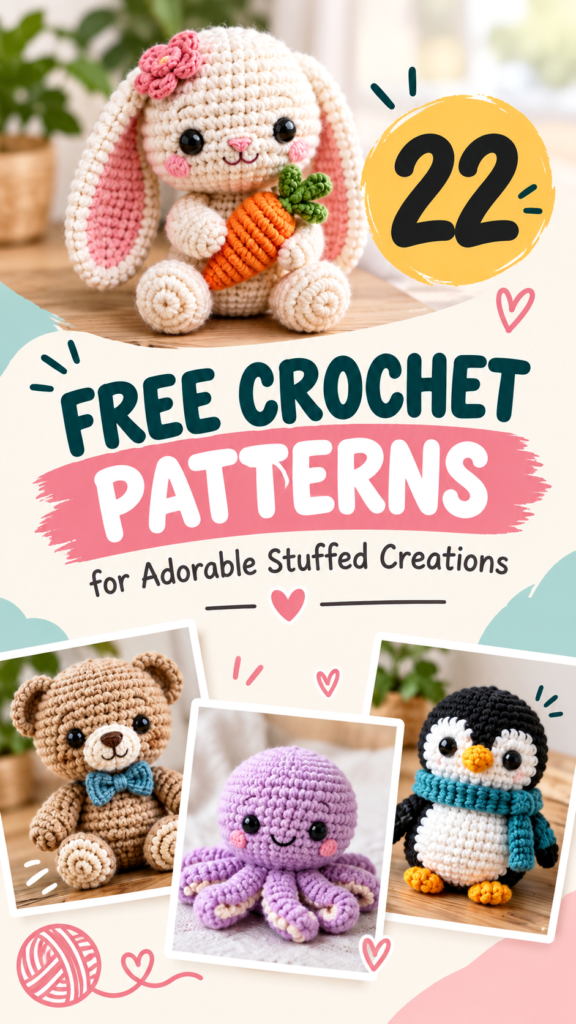
There is something especially charming about a handmade stuffed animal. A few simple crochet stitches can become a cheerful octopus, a friendly dinosaur, a playful penguin, or a tiny yellow chick with its own personality. If you have been searching for how to crochet stuffed animals, these adorable amigurumi-inspired creations are a wonderful source of inspiration for your next project.
Crochet stuffed animals are popular because they combine creativity, practical skills, and plenty of room for personalization. You can experiment with colors, textures, facial details, accessories, and different animal shapes to create something that feels completely your own. Whether you are a beginner learning the basics or an experienced crocheter looking for a fun weekend project, stuffed animals offer endless possibilities.
Key Takeaways
- Choose simple, rounded animal shapes when learning amigurumi.
- Soft yarn and a coordinated color palette can make handmade toys look polished.
- Small details such as eyes, noses, wings, spikes, and cheeks create personality.
- Practice consistent tension to achieve a neat, stuffed appearance.
- Save your favorite crochet stuffed animal ideas for future projects.
Why Crochet Stuffed Animals Are So Fun to Make
Crochet stuffed animals are more than simple decorative projects. They are small creative canvases where basic stitches can turn into recognizable characters. The examples shown feature rounded bodies, expressive faces, short limbs, and playful color combinations. These characteristics make amigurumi particularly appealing because the finished result can look cute even when the construction is relatively simple.
Another advantage is the flexibility of the craft. A basic animal design can be adapted into many variations. Change the yarn color and you can create a completely different character. Add ears, fins, horns, wings, tails, or accessories and the same basic construction can become a new creature.
Important: When learning how to crochet stuffed animals, focus first on clean shapes and consistent stitches rather than complicated details. A simple, well-finished animal often looks more polished than an ambitious design with uneven tension.
Choosing Your First Crochet Stuffed Animal
If you are new to amigurumi, start with an animal that uses simple geometric shapes. Round bodies and heads are especially useful because they teach several fundamental techniques without requiring a complicated construction.
A small octopus is a great example of a beginner-friendly concept. Its body can be based around a rounded shape, while the tentacles add a fun opportunity to practice repeated forms. The pastel octopus in the design demonstrates how soft colors can make a simple silhouette look playful and inviting.
A chick can also be a satisfying project. Its rounded body, small wings, orange beak, and feet create a recognizable character using only a handful of visual elements. Once you understand how the body is formed, you can experiment with different shades of yellow or add small decorative details.
Start With Simple Shapes
Before attempting an intricate stuffed animal, look for patterns built from circles, ovals, tubes, and simple repeated sections. These shapes are easier to understand and make it easier to identify where you need to increase or decrease stitches.
Simple designs also give you more freedom to concentrate on technique. You can learn how to maintain even tension, close openings neatly, attach pieces securely, and position facial features without feeling overwhelmed by a complicated pattern.
Essential Supplies for Crochet Amigurumi
You do not need a huge collection of supplies to begin making crochet stuffed animals. A small selection of useful materials is usually enough for a basic project.
- Crochet hook: Choose a hook appropriate for your yarn and the type of fabric you want to create.
- Yarn: Smooth yarn makes individual stitches easier to see while you learn.
- Stuffing: Use a soft fiber filling to give the animal its rounded shape.
- Yarn needle: This is useful for sewing pieces together and weaving in ends.
- Stitch marker: A marker can help you keep track of rounds when working in a continuous spiral.
- Safety or embroidered features: Eyes, noses, and other facial details can be added according to your project and intended use.
Color selection is another important part of the creative process. The pictured animals use gentle pastels alongside classic black, white, yellow, green, pink, and purple. You can follow a similar approach or create a completely different palette.
How to Crochet Stuffed Animals Step by Step
Although every pattern has its own instructions, many crochet stuffed animals follow a similar overall workflow. Understanding the process can make unfamiliar patterns feel much easier to approach.
- Choose your design. Pick an animal with a shape and skill level that match your experience.
- Gather your materials. Prepare your yarn, hook, stuffing, needle, stitch marker, and other required supplies.
- Build the main body. Many amigurumi projects begin with a small starting loop and grow through rounds of stitches.
- Shape the piece. Increases can make a form wider, while decreases help narrow or close it.
- Add stuffing gradually. Fill the body as you work rather than waiting until the very end when the opening may be difficult to reach.
- Complete the closure. Finish the final rounds carefully and secure the yarn neatly.
- Make the smaller pieces. Depending on the animal, these may include arms, legs, ears, wings, fins, tails, beaks, or spikes.
- Assemble and personalize. Attach the pieces and add the facial details that give your animal its character.
Why This Matters
The personality of an amigurumi often comes from surprisingly small details. Slight changes to eye placement, the curve of a smile, or the size of a nose can make the same basic shape feel completely different.
- Place facial features carefully before permanently attaching them.
- Keep both sides of the animal visually balanced.
- Use contrasting colors when you want small details to stand out.
Cute Crochet Animal Ideas to Try
The variety of animals shown provides a useful starting point for building a crochet project collection. Each creature has a distinct silhouette, yet the same general principles can be used to create all of them.
Crochet Octopus
A crochet octopus is a fun choice for practicing repeated elements. The rounded head creates a soft focal point, while the tentacles add movement and texture. Try using two or three coordinating colors to make the tentacles more visually interesting.
Crochet Dinosaur
A dinosaur offers more opportunities for personalization. A rounded body can be combined with a tail, short arms, legs, and a row of decorative spikes. Mint, sage, turquoise, and other soft greens can create a friendly look, while brighter colors can make the character feel more playful.
Crochet Penguin
The classic black-and-white penguin is another appealing design because the color blocking naturally creates a recognizable face and body. Orange feet and a small beak provide a cheerful contrast. Adding a scarf or another tiny accessory can give the finished character a distinctive personality.
Crochet Chick
A yellow chick is ideal when you want a bright and cheerful project. A round body, tiny wings, an orange beak, and little feet are enough to create an expressive character. This type of design also works well with different shades of yellow and gold.
Tips for Neater Crochet Stuffed Animals
Getting a polished result is mostly about consistency. Even a simple pattern can look professional when the stitches are evenly tensioned and the individual pieces are attached carefully.
- Keep your tension consistent. Loose stitches can create unwanted gaps, especially when stuffing is added.
- Count your stitches. Small counting mistakes can gradually change the shape of an amigurumi.
- Stuff evenly. Add small amounts at a time and distribute the filling around the entire shape.
- Check placement before sewing. Position ears, limbs, wings, and facial features first so you can adjust them.
- Finish your ends securely. Neat finishing helps the project maintain its shape and appearance.
Pro Tip: Take a quick photo of your unfinished animal before attaching the final details. Seeing the shape on a screen can make it easier to spot uneven features or an attachment point that needs adjusting.
How to Personalize Your Crochet Creations
One of the best reasons to learn how to crochet stuffed animals is the freedom to make every project different. A pattern gives you a foundation, but your yarn choices and finishing touches can turn it into a unique handmade creation.
Start with color. A dinosaur does not have to be green, and an octopus does not have to be purple. Try muted neutrals for a minimalist look, bright colors for a playful character, or coordinated pastel shades for a soft nursery-inspired aesthetic.
You can also change proportions. A slightly larger head can create a more cartoon-like appearance, while longer ears or a larger tail can emphasize the identity of the animal. Small embroidered cheeks, eyelashes, smiles, or tiny accessories can add even more personality.
If you are making several animals, consider creating a theme. A collection of woodland creatures, ocean animals, farm characters, or colorful fantasy creatures can make individual projects feel like part of a larger handmade world.
Making Crochet Projects More Enjoyable
Successful crochet is not only about finishing quickly. Part of the appeal is enjoying the process. Choose a project that feels manageable, gather your favorite yarn, and give yourself permission to experiment.
Keeping a small project basket can also make crafting easier. Store your current yarn, hook, stitch markers, needle, stuffing, and pattern together so you can pick up the project whenever you have a little free time.
Most importantly, do not worry if your first stuffed animal is not perfect. Handmade pieces have character because they are made by hand. Every project gives you an opportunity to improve your stitch control, shaping, assembly, and finishing techniques.
At a Glance
- Start with rounded, uncomplicated animal designs.
- Use smooth yarn and consistent tension for cleaner stitches.
- Stuff gradually to create an even, soft shape.
- Personalize your animals with colors, expressions, and accessories.
- Save inspiring crochet stuffed animal ideas so you always have your next project ready.
Conclusion
Learning how to crochet stuffed animals is a rewarding way to turn simple stitches into charming handmade characters. From a cheerful chick and classic penguin to a playful octopus or friendly dinosaur, there is plenty of room to explore different shapes, colors, and personalities.
The key is to begin with a design that matches your current skill level, pay attention to stitch consistency, and enjoy experimenting with the details that make each creation unique. As your confidence grows, you can move from simple rounded animals to more detailed characters with accessories, textured features, and creative color combinations.
Keep these ideas nearby when choosing your next project, and let your yarn stash become the starting point for something fun. A small crochet animal can be a satisfying handmade project, a thoughtful gift, or simply a cheerful addition to your collection. 🧶