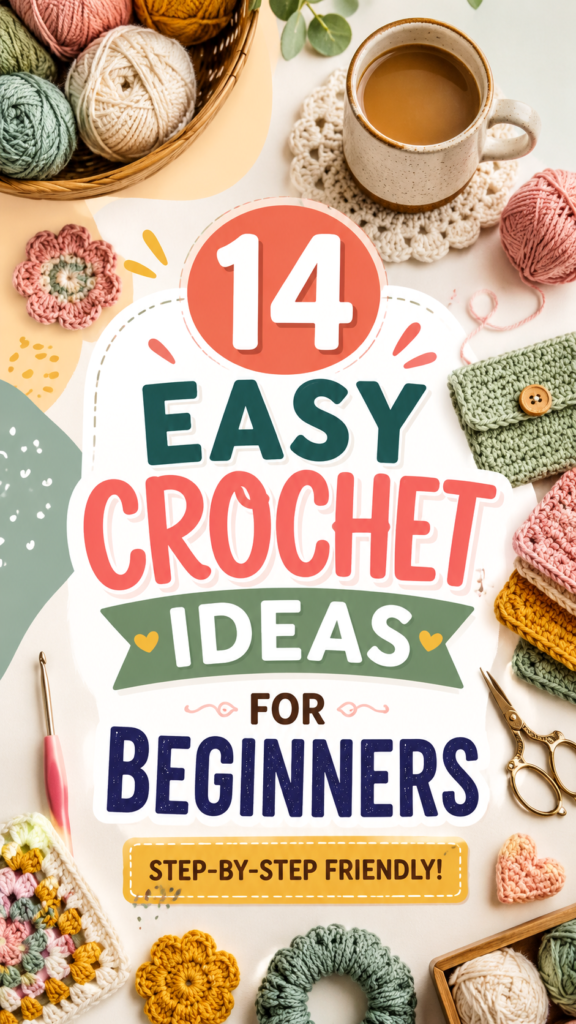
Starting crochet can feel both exciting and a little overwhelming. With so many stitches, hooks, yarn types, and project ideas to choose from, beginners often wonder where to begin. The good news is that learning crochet does not require complicated patterns right away. Simple, step-by-step projects can help you build confidence while creating something useful, colorful, and satisfying.
Easy crochet ideas for beginners are all about practicing the basics in a relaxed way. Small projects give you the chance to improve your tension, understand stitch placement, and become comfortable holding your hook and yarn. As your skills grow, those basic stitches can turn into beautiful accessories, home decorations, flowers, pouches, granny squares, and many other handmade creations.
This guide explores beginner-friendly crochet ideas that are simple to approach and easy to adapt. Whether you are picking up a crochet hook for the first time or returning after a long break, these projects can help you enjoy the learning process one stitch at a time.
Key Takeaways
- Start with small projects that use basic crochet stitches.
- Choose smooth, easy-to-see yarn when learning new techniques.
- Practice consistent tension instead of trying to crochet quickly.
- Use simple rectangular, circular, or granny square shapes to build confidence.
- Repeat beginner projects to improve your stitch consistency.
- Focus on enjoying the process while gradually adding new skills.
Why Easy Crochet Projects Are Perfect for Beginners
One of the best ways to learn crochet is by making something simple. Beginner crochet projects provide immediate practice without requiring you to understand advanced shaping, complicated stitch combinations, or long written patterns.
Simple projects also make mistakes easier to spot. If a row becomes uneven or your stitch count changes unexpectedly, you can quickly unravel a few stitches and try again. This is much less intimidating than discovering a mistake after working on a large project for several days.
Important tip: Your first projects do not need to look perfect. The goal is to understand how stitches work together. Every slightly uneven edge or loose stitch is part of the learning process.
The Basic Supplies You Need to Start Crocheting
You do not need a large collection of supplies to begin. A few carefully chosen materials are enough for most easy crochet ideas.
A Comfortable Crochet Hook
Choose a hook size that works well with your yarn. Many beginners find a medium-sized hook easier to control than a very small hook. A comfortable handle can also make longer practice sessions more enjoyable.
Beginner-Friendly Yarn
Smooth yarn in a light or medium color is usually easier to work with when learning. Dark, fuzzy, or highly textured yarn can make it difficult to see individual stitches. Medium-weight yarn is a practical choice for many beginner crochet patterns.
Simple Finishing Tools
A pair of scissors and a yarn needle will help you finish projects and weave in loose ends. Stitch markers can also be useful when you start working in rounds or following repeating patterns.
14 Easy Crochet Ideas for Beginners Step by Step
The best beginner crochet projects combine repetition with a simple goal. Here are easy ideas that can help you practice while creating something you can actually use, display, or give as a handmade gift.
1. A Simple Crochet Swatch
A swatch may seem basic, but it is one of the most useful ways to begin. Create a small rectangle using the same stitch repeatedly. Practice making a starting chain, turning your work, and keeping your rows reasonably even.
This project teaches you the rhythm of crochet without the pressure of following a complex design.
2. Easy Crochet Coasters
Coasters are small, practical, and perfect for practicing straight edges. You can make square, rectangular, or circular versions depending on the stitches you want to learn.
Make several in different colors to practice consistency. A matching set is also a lovely handmade gift idea.
3. A Beginner Crochet Mug Rug
A mug rug is slightly larger than a coaster and gives you more room to practice. Work back and forth in rows until you reach the desired size, then add a simple border if you want to try a new technique.
4. A Small Crochet Pouch
Small pouches are beginner-friendly because they can be made from simple shapes. Crochet one or two rectangles, join the sides, and add a button or simple closure.
This is a useful project for learning basic construction while making something practical for small accessories.
5. A Classic Granny Square
Granny squares are popular for a reason. They allow beginners to practice working in groups of stitches and creating an open, decorative pattern. Once you understand one basic square, you can make more in different colors and join them into larger projects later.
Pro Tip: Keep your first granny square nearby as you make additional ones. Comparing them later is a fun way to see how much your stitch tension and confidence have improved.
6. A Crochet Flower
Small crochet flowers are a cheerful way to explore working in the round. They can be attached to bags, used as decorative accents, or combined into larger handmade projects.
Start with a simple flower pattern that uses a center and a few repeating petals. The repetition makes it easier to remember the steps.
7. A Simple Headband
A crochet headband is often made as a straightforward strip that is joined at the ends. It is an excellent project for practicing rows and measuring your work.
You can keep the design minimal or add a twisted front, bow, or textured stitch once you feel more comfortable.
8. A Beginner Scrunchie
Scrunchies are small projects that can be worked around an elastic band. They are colorful, quick to make, and a great way to practice repeating stitches around a circular base.
9. A Basic Crochet Bookmark
Bookmarks are ideal for beginners who want a quick project. A narrow rectangle can be transformed with a simple tassel, decorative edge, or contrasting color.
Because the project is small, it offers a satisfying finish without requiring much yarn.
10. A Chunky Crochet Basket
Once you are comfortable with the basics, a small basket can introduce you to working with sturdier stitches and shaping. A simple basket may start with a flat base before the sides are built upward.
Use it for yarn, craft supplies, or small household items.
11. A Cozy Crochet Washcloth
A washcloth is another practical beginner project. Work in a simple square or rectangle using an absorbent yarn and a stitch pattern you enjoy practicing.
This project is especially helpful for learning how different yarn textures and stitches affect the final fabric.
12. A Simple Crochet Heart
Small hearts can be made as flat motifs or tiny decorative pieces. They are wonderful for practicing increases, decreases, and simple shaping once you are ready to move beyond straight lines.
13. A Beginner Crochet Scarf
A scarf is a classic crochet project because the basic construction is easy to understand. Choose one stitch and repeat it until you reach the length you like.
A longer project also gives you plenty of practice, helping your hands become more comfortable with the motion of crocheting.
14. A Small Crochet Wall Decoration
Simple crochet motifs, squares, flowers, or textured pieces can be arranged into a decorative handmade accent. This is a creative way to experiment with colors and shapes without following a strict pattern.
Why This Matters
Small crochet projects build important skills that transfer to larger patterns.
- They help you recognize stitches more easily.
- They improve hand control and yarn tension.
- They make learning new techniques feel less intimidating.
How to Follow Crochet Projects Step by Step
When you are new to crochet, written instructions can look confusing at first. The easiest approach is to slow down and complete one instruction at a time.
- Read the full project first. Get a general idea of the shape and steps before starting.
- Gather your supplies. Make sure your hook, yarn, scissors, and finishing tools are ready.
- Practice the stitch separately. If the project uses an unfamiliar stitch, try it on a small swatch first.
- Count your stitches. This helps prevent accidental increases or missing stitches.
- Pause at the end of each row or round. Check your work before moving forward.
- Do not be afraid to unravel. Reworking a section is a normal part of crochet.
Expert-style insight: Beginners often improve faster by repeating the same basic project than by constantly switching to new patterns. Repetition helps your hands learn the movement naturally and makes stitch recognition much easier.
Common Beginner Crochet Mistakes and How to Avoid Them
Making the Tension Too Tight
Tight stitches can make it difficult to insert your hook. Try relaxing your grip and allowing the yarn to move smoothly through your fingers.
Accidentally Losing Stitches
Beginners sometimes miss the first or last stitch of a row. Counting regularly and using stitch markers when needed can help keep your edges even.
Choosing a Difficult First Project
It can be tempting to start with an elaborate design, but complicated projects may create unnecessary frustration. Begin with something small and repeatable, then gradually challenge yourself.
Expecting Perfect Results Immediately
Crochet is a skill that improves with practice. Your first piece may have uneven edges, inconsistent stitches, or small mistakes. That does not mean you are doing badly. It means you are learning.
How to Make Your Beginner Crochet Practice More Enjoyable
Create a comfortable space where your yarn and tools are easy to reach. Good lighting can make it easier to see your stitches, while a cozy drink or relaxing background atmosphere can make your crochet time feel like a welcome creative break.
Keep a small collection of yarn colors that inspire you. Soft neutrals can create a calm, classic look, while brighter shades are perfect for playful motifs and colorful practice projects.
You can also save easy crochet ideas and organize them by skill level. Keep one list for projects you can make now and another for designs you want to try later. This gives you a clear path forward without feeling overwhelmed by too many choices.
When Should You Move Beyond Beginner Crochet Projects?
There is no fixed moment when you stop being a beginner. You are ready to try something new when the basic techniques start to feel more comfortable and you can complete simple projects with less effort.
Consider exploring new stitches, color changes, shaping, textured designs, and larger projects gradually. You do not need to master every beginner technique before trying something more challenging.
Build Skills One Layer at a Time
A good progression might look like this:
- Learn the basic chain and simple stitches.
- Practice rows with small rectangular projects.
- Try working in rounds.
- Make simple motifs such as flowers, hearts, or squares.
- Learn basic joining and finishing techniques.
- Move on to larger accessories and home projects.
Quick Points
- Start small and focus on mastering basic stitches.
- Choose yarn that makes your stitches easy to see.
- Repeat simple projects to improve confidence and tension.
- Use step-by-step patterns instead of rushing ahead.
- Celebrate progress, not perfection.
Conclusion: Start Your Crochet Journey One Easy Project at a Time
Learning crochet does not have to begin with a difficult pattern or a large project. The simplest ideas are often the most valuable because they teach the skills you will use again and again. A coaster can teach stitch consistency. A pouch can introduce construction. A granny square can help you understand working in groups and rounds. Each finished piece becomes another step forward.
The most important thing is to choose a project that feels approachable and enjoyable. Pick up your hook, select a yarn color you love, and give yourself permission to learn at your own pace. With simple step-by-step crochet ideas, even a complete beginner can start creating handmade pieces that feel personal, useful, and rewarding.
Begin with one small project today. Practice the basics, enjoy the texture of the yarn, and keep going one stitch at a time. Before long, the techniques that once felt unfamiliar can become part of your creative routine.