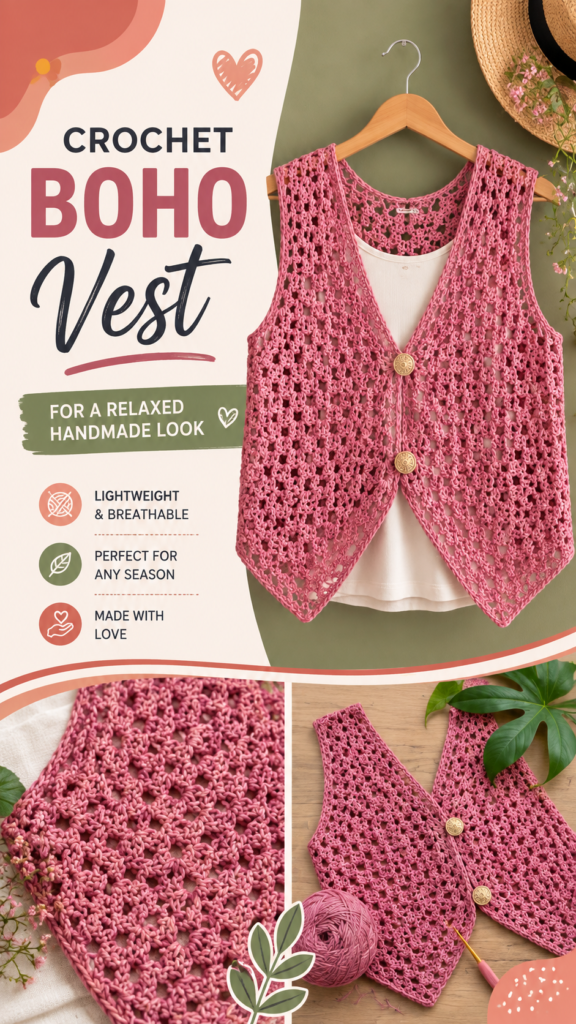
A crochet vest is one of those handmade pieces that instantly adds texture, personality, and a relaxed boho feel to an outfit. With its open stitchwork, lightweight structure, and eye-catching handmade look, a crochet vest can work as a stylish layer for warm days, transitional weather, or creative everyday outfits. Whether you love vintage-inspired fashion, modern bohemian style, or simply enjoy wearing your crochet projects, this versatile garment offers plenty of room for creativity.
The beauty of a handmade crochet vest is that it can be customized almost endlessly. You can experiment with yarn color, stitch patterns, shaping, buttons, length, and texture to create a piece that feels completely your own. From airy openwork designs to more structured textured patterns, crochet vests can be adapted for different seasons and skill levels.
Key Takeaways
- Crochet vests are versatile layering pieces that can suit casual, boho, vintage, and handmade wardrobes.
- Openwork stitches create a breathable fabric that is ideal for lightweight layering.
- Textured stitch patterns add visual interest and make a simple vest look more detailed.
- Buttons and closures can become decorative focal points as well as practical features.
- Yarn choice affects the final look, including drape, comfort, texture, and seasonality.
- Simple construction methods can make crochet vests approachable for beginners.
Why Crochet Vests Are a Timeless Handmade Wardrobe Piece
Crochet fashion has a special ability to feel both nostalgic and current. A vest is a particularly useful format because it does not require the full construction of a sweater, yet it still makes a strong visual statement. The sleeveless shape allows the stitch pattern to take center stage, while the open front and layered styling make the garment easy to wear.
A crochet vest can be paired with a simple tank top, fitted shirt, flowy dress, or lightweight blouse. This makes it an easy handmade addition to a wardrobe because it can transform basic clothing into something more personal. A neutral outfit can feel warmer and more creative with the addition of a textured crochet layer, while a colorful vest can become the main focal point of the entire look.
Important insight: The most successful crochet vests often balance visual texture with comfortable drape. A beautiful stitch pattern matters, but the yarn and fit determine whether the finished piece feels enjoyable to wear.
The Appeal of Openwork Crochet Stitch Patterns
One of the most striking features of many crochet vest designs is openwork. This style uses intentional spaces between stitches to create a lacy, breathable fabric. The result can range from delicate and elegant to bold and geometric depending on the stitch combination.
Openwork is especially effective for a handmade vest because it creates texture without making the garment feel overly heavy. The small openings allow the layer underneath to show through, which adds depth to the outfit and makes the crochet pattern easier to see.
Popular Openwork Styles for Crochet Vests
There are many stitch patterns that can create a similar airy effect. Some use chain spaces and simple clusters, while others rely on shells, fans, mesh patterns, or repeated textured motifs. The best choice depends on the style you want to achieve.
- Mesh stitch: Great for lightweight, breathable layering.
- Shell stitch: Creates a soft, decorative, flowing texture.
- Cluster stitch: Adds more dimension while still allowing small openings.
- Granny-style motifs: Ideal for colorful, retro-inspired crochet fashion.
- Repeating geometric patterns: Give the vest a modern and structured appearance.
When choosing a stitch pattern, it is useful to think about how it will look across a larger garment. A stitch that appears attractive in a small swatch may behave differently when repeated across the front and back panels. Testing the pattern before beginning the full vest can help you understand its drape, width, and overall visual impact.
Choosing the Right Yarn for a Crochet Vest
Yarn selection plays a major role in the finished appearance of a crochet vest. The same pattern can look completely different when made with soft cotton, lightweight acrylic, bamboo blends, wool blends, or textured yarn.
For a breathable vest with visible stitch definition, smooth yarn is often a helpful choice. It allows textured stitches and openwork spaces to stand out clearly. Cotton and cotton blends can create a fresh, structured feel, while softer fibers may create more drape and movement.
Consider the Weight and Drape
A heavier yarn may create a warm and cozy vest, but it can also make the fabric feel thicker. A lighter yarn may produce a more delicate result, especially when combined with an open stitch pattern. Neither option is automatically better. The important question is how you want the finished garment to function.
For relaxed layering, a medium or lighter yarn often provides enough structure without making the vest feel bulky. If you prefer a statement piece with strong texture, a thicker yarn and larger stitch pattern can create a more dramatic handmade look.
Color Can Completely Change the Mood
Soft pinks, dusty rose shades, warm neutrals, earthy greens, and cream tones can give a crochet vest a romantic or bohemian feel. Brighter colors can create a playful statement, while natural shades often emphasize the texture of the stitches. If you are making your first wearable crochet project, choosing a solid color can also make it easier to see your stitches and identify mistakes.
Crochet Vest Construction: Simpler Than It Looks
A detailed crochet garment can appear complicated, but many vests use surprisingly straightforward construction. Some are made from two rectangular or shaped panels that are joined at the shoulders and sides. Others begin with a back panel and are worked outward. Certain designs use motifs that are joined together to create the garment shape.
This makes crochet vests an excellent project for crafters who want to move beyond scarves, blankets, and accessories without immediately taking on the complexity of a fitted sweater.
Why This Matters
A crochet vest does not need complicated shaping to look polished. Choosing an attractive stitch pattern, checking your measurements, and creating clean edges can have a greater impact than adding unnecessary construction steps.
A Simple Approach to Planning the Project
- Choose the style: Decide whether you want a cropped, waist-length, long, fitted, or oversized vest.
- Pick the yarn: Consider comfort, weight, drape, and stitch definition.
- Make a gauge swatch: This helps prevent sizing surprises.
- Measure carefully: Focus on bust width, body length, and arm opening placement.
- Complete the panels: Keep stitch counts consistent and check the shape regularly.
- Join and finish: Seam the garment neatly, weave in ends, and add optional closures.
How Decorative Buttons Elevate a Handmade Vest
Buttons are a small detail with a surprisingly large visual impact. On a crochet vest, they can create a focal point near the center front and add contrast against the yarn. Round decorative buttons, wooden buttons, vintage-inspired buttons, or simple covered buttons can all change the final personality of the garment.
If you prefer the vest to stay open, buttons can even be used mainly as decorative elements. If you want a functional closure, be sure to consider the size of the buttonhole and how much tension the closure will experience during wear.
Pro Tip: Choose your buttons before finishing the front edge. This makes it easier to plan buttonholes and spacing while keeping the overall design balanced.
How to Style a Crochet Vest for Different Seasons
The versatility of a crochet vest is one of its strongest advantages. Depending on the yarn and stitch pattern, the same general garment concept can be styled throughout much of the year.
Warm Weather Styling
In spring and summer, a lightweight crochet vest can be worn over a simple tank top, sleeveless dress, or fitted tee. Openwork patterns are particularly useful because they provide texture without adding too much warmth. Pair the vest with relaxed denim, linen clothing, or a flowing skirt for an easy handmade look.
Transitional Weather
When the weather becomes cooler, a crochet vest can work as a middle layer. Wear it over a long-sleeved shirt or lightweight sweater to add texture while keeping the outfit comfortable. Earthy colors and deeper yarn shades can give the piece a cozy seasonal appearance.
Creative Everyday Outfits
Because crochet has such a visible handmade character, even a simple vest can become the standout element of an otherwise minimal outfit. Try combining a textured vest with neutral basics, straight-leg jeans, or a plain dress. Let the crochet details provide the visual interest rather than competing with too many patterns.
Tips for Getting a Better Fit
Fit is one of the biggest differences between a crochet vest that looks good in progress and one that becomes a favorite wearable piece. Since crochet fabric can stretch depending on the yarn and stitch pattern, measurements should be checked throughout the project.
Start With Ease
Think about whether you want the vest to fit close to the body or have extra room for layering. A relaxed vest usually benefits from positive ease, while a more tailored design may need more precise measurements.
Check the Arm Openings
Arm openings should be comfortable without exposing too much of the sides of the body. If you are making separate front and back panels, test the fit before permanently joining the side seams. A small adjustment at this stage can improve the comfort of the finished vest significantly.
Do Not Skip the Gauge Swatch
It may not be the most exciting part of a project, but a gauge swatch can save time and yarn. Crochet tension varies from person to person, and even a small difference can affect the final width and length of a garment.
Making the Most of Texture and Stitch Detail
Texture is what gives a crochet vest its handmade personality. Repeated stitch motifs create rhythm across the fabric, while open spaces can make the design feel lighter and more dimensional. A textured vest does not need excessive decoration because the stitches themselves already provide visual interest.
When working with a detailed pattern, try to keep the edges neat. Clean borders around the neckline, front opening, and lower hem can make the entire project look more polished. A simple edging can also help stabilize openwork stitches and prevent the garment from losing its shape.
Blocking is another useful finishing step. Gentle wet or steam blocking, when appropriate for the yarn, can help open lace-like stitches, even out the fabric, and improve the final drape. Always follow care guidance suitable for your chosen fiber.
Crochet Vest Ideas for Beginners and Experienced Makers
Beginners can start with a simple vest made from basic rectangles and a repeating stitch pattern. A design with minimal shaping allows you to focus on maintaining even tension and learning how garment pieces fit together.
More experienced crocheters can experiment with custom shaping, intricate lace motifs, mixed stitch patterns, color changes, or unusual construction methods. A vest can also be an excellent canvas for combining different crochet techniques without committing to a large, full-sleeve garment.
- Beginner idea: A simple two-panel vest with basic stitches.
- Intermediate idea: An openwork vest with decorative edging and buttons.
- Advanced idea: A fitted vest using multiple stitch patterns and custom shaping.
- Creative idea: A motif-based vest with mixed colors and textured joins.
At a Glance
- Open stitches create breathable, lightweight layering.
- Textured patterns give a crochet vest strong visual appeal.
- Simple construction can make garment crochet more approachable.
- Buttons, edging, and color choices personalize the final design.
- Good measurements and gauge checks improve fit and comfort.
Caring for Your Handmade Crochet Vest
Proper care helps preserve the shape and texture of a handmade garment. Always consider the fiber content of the yarn before washing. Some fibers can be machine washed, while others benefit from gentle hand washing.
When possible, lay the vest flat to dry rather than hanging it while wet. This can help prevent stretching, especially with openwork or heavier yarn. Store the garment folded in a clean, dry place and avoid hanging it for long periods if the fabric tends to stretch under its own weight.
If the vest includes decorative buttons or delicate stitchwork, handle it gently during washing and storage. With the right care, a handmade crochet garment can remain a beautiful part of your wardrobe for years.
Conclusion: Create a Crochet Vest That Feels Truly Your Own
A crochet vest is more than a simple layering piece. It is an opportunity to turn yarn and stitches into wearable texture, color, and personality. The combination of openwork details, handcrafted texture, decorative buttons, and relaxed shaping creates a garment that can feel both timeless and fresh.
Whether you choose a beginner-friendly pattern or create a custom design, focus on the elements that make the vest comfortable and enjoyable to wear. Choose yarn that suits your lifestyle, select a stitch pattern you genuinely love, and take time to check the fit as you work. Small details such as neat edging and thoughtful button placement can elevate the finished project.
Most importantly, enjoy the creative freedom that crochet fashion offers. A handmade vest does not need to look identical to anyone else’s. Change the color, adjust the length, explore new textures, or make the fit more relaxed. That freedom to personalize every detail is what makes a crochet vest such a rewarding project.
With a little planning and plenty of creative inspiration, you can make a crochet vest that becomes a favorite handmade layer, a conversation-starting statement piece, and a beautiful reflection of your personal style.