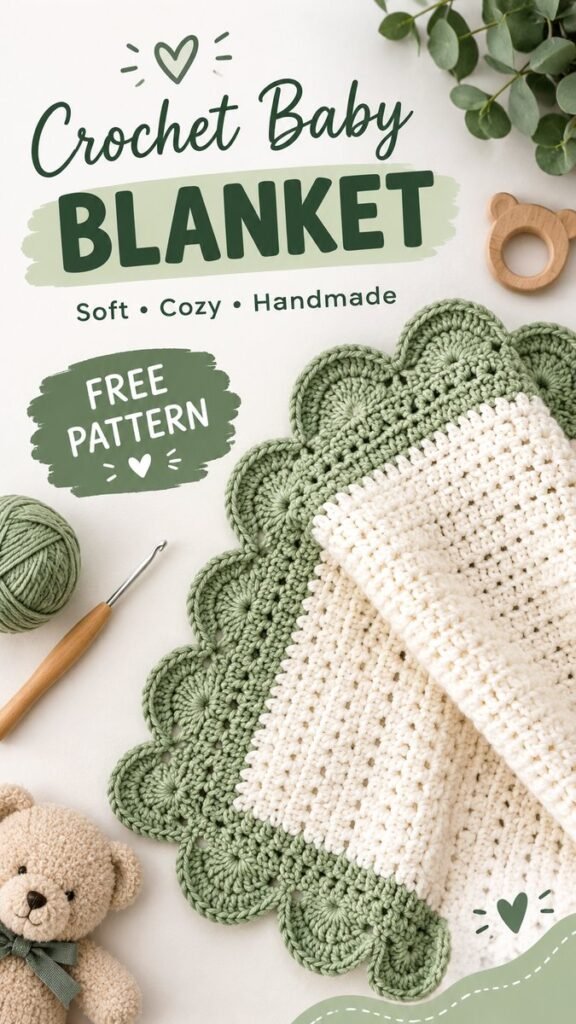
A soft handmade blanket can make a baby nursery feel instantly warmer, and an easy gender neutral crochet baby blanket is one of those projects that combines comfort, simplicity, and timeless style. The design shown here pairs a creamy textured blanket with a muted sage green scalloped border, creating a gentle color combination that works beautifully for any baby. Whether you are preparing for a baby shower, making a thoughtful handmade gift, or adding something cozy to a nursery, this style is a wonderful project to keep in your crochet collection.
Key Takeaways
- A neutral ivory and sage palette creates a soft, timeless baby blanket.
- A simple textured stitch pattern can make an easy project look beautifully detailed.
- A decorative scalloped border adds a charming finished edge without overwhelming the design.
- Gender neutral colors make the blanket suitable for many nursery styles and gifting occasions.
- Choosing comfortable, washable yarn makes a handmade baby blanket practical as well as pretty.
Why Choose an Easy Gender Neutral Crochet Baby Blanket?
One of the best things about a gender neutral crochet baby blanket is its versatility. Instead of relying on traditional pink or blue shades, you can create a calming piece with colors such as ivory, cream, beige, sage, oatmeal, soft gray, or muted green. These shades work naturally with modern nursery decor and can remain useful as a child grows.
The pictured style uses a warm creamy center with a sage green border. The contrast is gentle rather than dramatic, allowing the texture of the crochet stitches to become part of the decoration. It has a handmade character while still looking clean and contemporary.
An easy crochet baby blanket is also a satisfying project for beginners. A repetitive stitch pattern gives you the opportunity to practice consistent tension without constantly changing complicated techniques. Once the main body is established, the border can become the decorative finishing touch.
Important: For a baby blanket, comfort and practicality matter just as much as appearance. Choose a yarn that feels soft, is appropriate for baby projects, and can be cared for easily. A beautiful blanket is even more useful when it can handle regular washing and everyday use.
The Beauty of a Soft Neutral Color Palette
Color is one of the easiest ways to give a crochet blanket a particular mood. The combination of ivory and sage green shown here creates a peaceful, natural feeling. Ivory keeps the blanket light and classic, while sage introduces just enough color to define the border and highlight the shape.
If you want to create a similar look, consider building your palette around two shades instead of using many colors. A main neutral shade can form most of the blanket, while a muted accent color can be reserved for the border. This keeps the finished piece cohesive and makes the scalloped edging stand out.
Color Ideas for a Gender Neutral Baby Blanket
- Ivory with sage green for a soft botanical-inspired look
- Cream with warm beige for a classic neutral design
- Oatmeal with soft gray for a modern nursery palette
- White with muted olive for a natural handmade feel
- Light taupe with dusty green for subtle contrast
The key is to choose colors that feel gentle together. Very bright shades can certainly work, but muted tones are particularly effective when the goal is a calm, timeless baby blanket.
Understanding the Blanket’s Textured Look
The center of this blanket has a dense, cozy texture that gives the fabric visual interest without requiring a complicated color design. Repeated crochet stitches create subtle rows across the surface, giving the blanket a tactile appearance that looks especially inviting when folded or draped.
Texture is particularly helpful when working with a single main color. Instead of depending on stripes or elaborate motifs, the stitch structure itself becomes the focal point. This approach can make a beginner-friendly crochet baby blanket look much more sophisticated than the simplicity of the construction might suggest.
Keep the Main Pattern Simple
For an easy project, choose a stitch pattern that can be repeated across rows. Simple stitches are often ideal because they allow you to develop an even rhythm while crocheting. Consistent tension will help the finished blanket maintain a neat shape and uniform texture.
If you are new to crochet, resist the temptation to make every row different. A straightforward repeat can be relaxing, easier to count, and much simpler to troubleshoot if you lose your place.
Expert Insight
A simple center and decorative border are a powerful combination. Keeping the main fabric understated gives the edging room to become the visual feature, while the repeated texture prevents the blanket from looking plain.
How the Scalloped Border Changes the Design
The sage green scalloped border is what gives this blanket its distinctive character. Instead of ending with a straight edge, the rounded sections create a soft decorative outline around the fabric. The repeated curves add movement while maintaining the gentle look expected from baby accessories.
A decorative border is also a useful way to introduce a second color without making the entire blanket multicolored. If you prefer minimal designs, this is an excellent approach. The majority of the blanket remains neutral, while the contrasting border provides definition.
Planning a Scalloped Edge
When adding a scalloped border, pay attention to the spacing around the blanket. The number of stitches in the edging needs to work with the dimensions of the main fabric so the border can sit smoothly around corners and along the sides.
If the edge begins to ripple excessively, the border may be adding too much fabric. If it pulls inward, there may not be enough room for the decorative pattern. Checking the edge as you work makes it much easier to correct tension or stitch placement before completing the entire border.
Choosing Yarn for a Crochet Baby Blanket
Yarn choice has a major impact on how a baby blanket feels and performs. Look for a soft yarn with a pleasant texture that is comfortable against delicate skin. Many crocheters also prefer yarn that is easy to wash because baby blankets naturally need frequent cleaning.
For this style, a smooth yarn helps the stitch texture remain visible and allows the scalloped edging to look defined. Very fuzzy yarn can hide stitch details, while extremely textured yarn can make counting more difficult for beginners.
What to Consider Before Buying Yarn
- Softness: Choose a yarn with a comfortable feel.
- Care: Consider washable fibers for practical everyday use.
- Weight: Select a yarn weight that produces a comfortable fabric rather than something excessively heavy.
- Color: Look for gentle neutral shades that coordinate naturally.
- Consistency: Buy enough yarn from the same color batch when possible.
A small sample swatch can also help you see how your chosen yarn behaves before committing to the full blanket. It gives you a chance to evaluate the texture, drape, stitch definition, and overall feel.
Tips for Making an Easy Crochet Baby Blanket
The most enjoyable blanket projects usually come from taking your time with the basics. You do not need an elaborate pattern to create something memorable. Focus on consistent stitches, clean edges, and a color combination that you genuinely enjoy.
- Start with a small swatch. Test your yarn and hook combination before beginning the blanket.
- Count regularly. Checking your stitch count every few rows can prevent the blanket from gradually becoming wider or narrower.
- Keep your tension steady. Relax your hands and avoid pulling each stitch too tightly.
- Mark important sections. Stitch markers can help you identify corners, row beginnings, or repeating sections.
- Check the edges. Straight sides make the final decorative border much easier to work.
- Finish your ends carefully. Secure loose yarn tails neatly so the finished blanket has a polished appearance.
Pro Tip: If your blanket is intended as a gift, make a small color sample before purchasing all your yarn. Sage, cream, beige, and gray can look very different depending on lighting, so seeing the shades together first can help you create a more balanced palette.
Making the Blanket Your Own
One of the pleasures of crochet is being able to personalize a basic idea. You can keep the same general concept while changing the colors, border, size, or texture to suit your project.
Try Different Border Colors
A sage border gives this particular style a soft natural appearance, but the same concept can work with dusty blue, warm tan, soft gray, muted mustard, or another understated shade. For a very minimalist blanket, use a border that is only slightly darker than the center.
Experiment With Blanket Size
The dimensions can be adapted depending on how the blanket will be used. A smaller piece can be convenient for a stroller or supervised cuddling, while a larger blanket can work as a nursery throw. Before adjusting the size, consider how the stitch repeat and border pattern will fit around the final dimensions.
Add a Personal Handmade Touch
For a special gift, you can coordinate the blanket with other handmade nursery accessories. A matching crochet toy, small cushion, or simple storage basket can create a cohesive handmade theme without requiring the blanket itself to become overly complicated.
Why Handmade Baby Blankets Make Thoughtful Gifts
A crochet baby blanket carries a sense of time and care that makes it especially meaningful as a gift. The neutral design shown here can suit many different tastes, making it a practical option when you do not know the nursery color scheme or want something that feels timeless.
The handmade quality is part of the charm. A simple stitch pattern can still create something personal because every row represents time spent making something specifically for a little one. The soft neutral palette also allows the blanket to remain useful beyond a particular nursery theme.
Care and Finishing Tips
Before gifting or using a crochet baby blanket, check the yarn manufacturer’s care instructions and follow them carefully. Proper care helps preserve the softness, shape, and appearance of the finished fabric.
After completing the blanket, inspect the edges and weave in loose ends securely. A gentle final blocking, when appropriate for the yarn, can help straighten the edges and give the blanket a more polished shape.
Keep the finished blanket clean and store it in a dry, suitable place when it is not being used. For baby items, practical care is just as important as the decorative details.
Quick Points
- Use a soft neutral main color for timeless appeal.
- Add one muted accent shade for a simple decorative border.
- Choose an easy repeating texture for a relaxing crochet experience.
- Keep the edges neat for a smooth scalloped finish.
- Prioritize softness, washability, and comfortable construction.
Conclusion
An easy gender neutral crochet baby blanket can be simple without ever feeling ordinary. The combination of a soft ivory center, gentle sage border, cozy texture, and rounded scalloped edging creates a timeless handmade look that feels perfectly suited to a modern nursery. It is the kind of crochet project that allows the yarn, stitches, and thoughtful details to speak for themselves.
Whether you are learning crochet, preparing a handmade baby shower gift, or simply looking for a calming project to enjoy, this style offers plenty of room for creativity. Keep the colors neutral, experiment with texture, and let the border provide the finishing character. Most importantly, choose materials and construction details that make the finished blanket comfortable and practical.
With a simple design and a little patience, you can create a beautiful crochet baby blanket that feels personal, cozy, and ready to become part of everyday memories. Save this idea for your next crochet project and use the basic concept as inspiration for your own color combinations and finishing touches.
Tags
Gender Neutral Crochet Crochet Baby Blanket Easy Crochet Beginner Crochet Baby Blanket Pattern Neutral Baby Blanket Crochet Baby Gift Scalloped Crochet Border