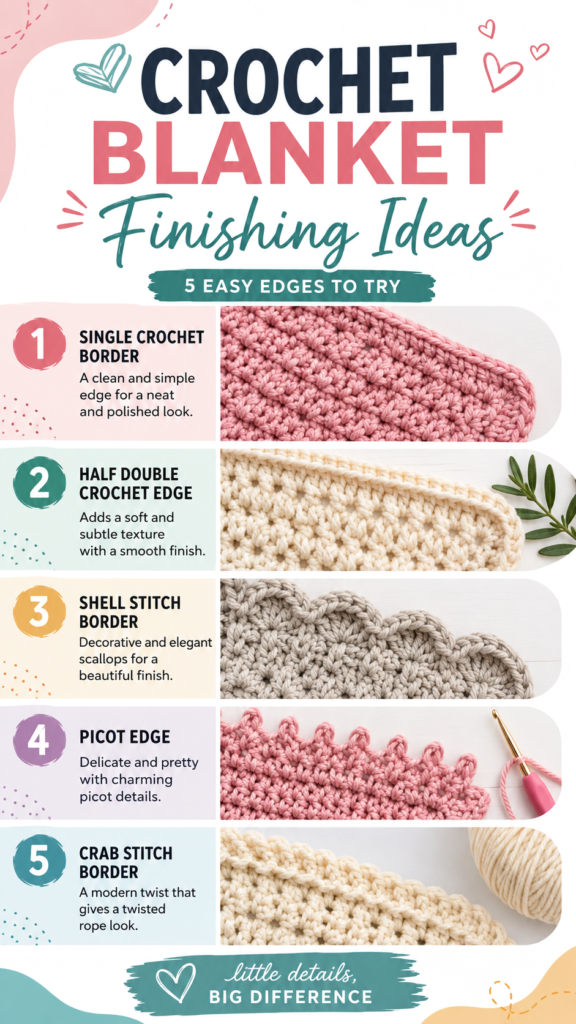
Finishing a crochet blanket is about more than simply weaving in the last ends. The border can completely change the final look, turning a basic handmade project into something polished, textured, delicate, modern, or beautifully decorative. Whether you are making a cozy throw, a baby blanket, or a special handmade gift, the right crochet blanket edging can provide that satisfying final touch.
There are many ways to finish a crochet blanket, but some edging techniques are especially versatile and beginner-friendly. A simple single crochet border creates a neat frame, while half double crochet adds softness and texture. Decorative shell stitches, delicate picot edges, and the twisted look of crab stitch can each give the same blanket a completely different personality.
Key Takeaways
- Single crochet creates a clean and simple blanket border.
- Half double crochet adds a soft, slightly raised texture.
- Shell stitch is ideal for a decorative and elegant finish.
- Picot edging adds small, delicate points for extra charm.
- Crab stitch creates a distinctive twisted rope-like edge.
Why Crochet Blanket Edges Make Such a Difference
A crochet blanket border serves both a practical and decorative purpose. Visually, it creates a frame around the project and helps the entire design feel intentional. Even a very simple blanket made with repetitive stitches can look more refined once it has a carefully chosen edge.
From a practical perspective, an edging can also help straighten uneven sides, soften the transition between rows, and give the blanket a more consistent shape. This is especially useful when the main body of the project has naturally irregular edges or when different stitch patterns have created subtle changes in tension.
Important tip: The best crochet blanket border is not always the most complicated one. A simple edge that matches the weight, texture, and style of the blanket often creates the most professional-looking result.
Before choosing an edging, take a moment to look at the overall project. Is the blanket heavily textured? Is the yarn thick and cozy? Is the design intended for a baby, a modern home, or a more decorative setting? The answers can help guide your choice.
1. Single Crochet Border for a Clean, Classic Finish
A single crochet border is one of the easiest and most useful ways to finish a blanket. It creates a compact, tidy edge that works with almost any crochet pattern. For beginners, this is often the perfect place to start because the stitch is familiar, easy to control, and simple to repeat around all four sides.
The beauty of a single crochet border is its versatility. You can add just one round for a subtle finish or work several rounds to create a thicker frame. Using the same yarn color keeps the look cohesive, while a contrasting color can make the border stand out.
When to Choose a Single Crochet Edge
- When the blanket already has plenty of texture.
- When you want a simple and modern finish.
- When you are new to crochet borders.
- When the project needs a quick but polished final detail.
- When you want to build a foundation for a more decorative edging.
One helpful technique is to work a careful first round around the entire blanket before adding additional decorative stitches. This creates a more even base and can make the rest of the edging easier to manage.
2. Half Double Crochet Edge for Soft Texture
If a single crochet border feels too narrow but you do not want an overly elaborate finish, half double crochet can be an excellent choice. This stitch has more height and softness, giving the edge a fuller appearance without overwhelming the blanket.
A half double crochet border works particularly well with cozy throws, chunky yarn projects, and blankets that benefit from a gently textured frame. The stitches create a visible rhythm along the edge, adding interest while still keeping the design clean.
A Simple Way to Add More Dimension
Try working one or two rounds of single crochet first, then add a round of half double crochet. This combination creates a smooth transition between the blanket body and the wider outer edge.
You can also experiment with yarn color. A neutral blanket paired with a soft contrast can make the edging visible without making it feel too bold. For a more subtle result, choose a shade from the same color family as the main project.
3. Shell Stitch Border for Decorative Elegance
A shell stitch border instantly adds a more decorative look. The repeating clusters create soft curves or scallops that feel elegant and handmade. This type of edging is a wonderful option when the blanket itself is fairly simple and you want the border to become a feature.
Shell stitch borders can be adapted in many ways. The shells can be small and subtle or larger and more dramatic depending on the number of stitches used and the spacing between them. This flexibility makes shell stitch suitable for everything from baby blankets to decorative throws.
Matching the Shell Size to Your Blanket
A delicate blanket made with lightweight yarn may look best with smaller shells. A thicker or larger blanket can support more substantial scallops. The goal is to keep the scale balanced so that the edging complements the main design rather than competing with it.
Pay special attention to the corners. Decorative stitch patterns can bunch or pull if the spacing is too tight. A little planning before beginning the final round can help the shells sit naturally around the entire blanket.
Expert Insight
The most successful decorative borders usually echo something already present in the blanket. You might repeat a color, match the softness of the yarn, or choose a stitch shape that complements the texture of the main pattern.
4. Picot Edge for a Delicate Crochet Finish
A picot edge is a charming option when you want to add small decorative points along the border. The repeating details create a light, playful finish that can look especially lovely on baby blankets, lightweight throws, and more delicate crochet projects.
Picots are small, but they can make a big visual difference. They break up a plain edge and introduce texture without adding much width. This makes them useful when you want something more interesting than a simple border but do not want large scallops or heavy stitch clusters.
Keep the Spacing Consistent
The key to a neat picot border is consistent spacing. Place each decorative point at regular intervals and try to maintain an even stitch count around the blanket. If the points are too close together, the edge may become crowded. If they are too far apart, the decorative effect may disappear.
A picot edge can also be combined with a plain base. Working a simple round first gives the decorative points a stable foundation and helps the entire border look more organized.
5. Crab Stitch Border for a Modern Twisted Look
Crab stitch is one of the most distinctive crochet blanket edging ideas because it creates a twisted, rope-like texture. Although the finished edge looks detailed, the technique is based on working in the opposite direction from the usual crochet movement.
This creates a firm, textured line that can look especially striking on modern crochet projects. Crab stitch works beautifully as a final round after a simpler border and can add definition to blankets made with smooth or softly textured stitches.
Because the stitch is worked in reverse, it may feel unusual at first. Take your time and focus on keeping the tension relaxed. Once the movement becomes familiar, the repeating twist creates a beautiful finishing detail.
Pro Tip: If your crochet blanket border begins to ripple or curl, check your stitch count and tension before continuing. An even number of stitches and relaxed corners often make a bigger difference than changing the entire edging pattern.
How to Choose the Right Crochet Blanket Border
With so many crochet edging ideas available, choosing one can feel surprisingly difficult. A good starting point is to consider the texture and purpose of the blanket.
For Simple and Textured Blankets
If the blanket already includes cables, bobbles, raised stitches, or other detailed textures, a simple single crochet or half double crochet edge may be the best choice. A complicated border can make an already busy design feel crowded.
For Plain or Minimal Blankets
A simple blanket can become much more interesting with a decorative edge. Shell stitch, picot details, or a textured crab stitch finish can introduce personality without requiring you to redesign the entire project.
For Baby Blankets and Gifts
Soft, gentle borders are often a lovely match for baby blankets and handmade gifts. Small shells, delicate picots, or smooth textured edging can create a charming finish while keeping the overall design comfortable and practical.
Tips for Neat and Even Crochet Edges
Even the best border pattern can look uneven if the foundation is not prepared carefully. Before starting your chosen edging, examine the sides and corners of the blanket.
- Count your stitches where possible. This helps prevent accidental increases or decreases.
- Watch the corners. Corners usually need extra stitches or chains so the border can turn smoothly.
- Keep your tension consistent. Tight stitches can cause curling, while loose stitches may create waves.
- Use a suitable hook size. The hook should work comfortably with both the yarn and the desired fabric density.
- Lay the blanket flat occasionally. This makes it easier to notice ripples, pulling, or uneven sections early.
Do not be afraid to undo a small section if the border is not sitting correctly. Fixing a tension or spacing issue early is usually much easier than trying to adjust it after several rounds have been completed.
Using Color to Make Your Crochet Edging Stand Out
Stitch choice is only part of the design. Color can also transform a crochet blanket border. Using the same color as the blanket creates a subtle and seamless finish. A contrasting shade can frame the project and highlight the edge.
Soft tonal combinations work well when you want a calm, coordinated appearance. For example, a light neutral blanket can be finished with a slightly darker or warmer neutral. If you prefer a more playful look, a brighter accent color can draw attention to shell shapes, picot points, or textured crab stitch.
Another option is to use color only on the final round. This creates a small but noticeable outline and can be especially effective when the rest of the border is simple.
Crochet Blanket Edging Ideas at a Glance
Quick Points
- Single crochet: clean, simple, and beginner-friendly.
- Half double crochet: soft, fuller, and gently textured.
- Shell stitch: decorative with elegant scalloped shapes.
- Picot edge: delicate and playful with small pointed details.
- Crab stitch: modern, firm, and beautifully rope-like.
Conclusion: The Perfect Edge Is the Final Detail That Brings It All Together
A crochet blanket does not need a complicated border to look beautifully finished. Sometimes a clean single crochet edge is exactly what the project needs. Other times, a textured half double crochet border, elegant shell stitch, delicate picot points, or a distinctive crab stitch can give the blanket its final personality.
The most important step is choosing an edging that feels balanced with the rest of the project. Consider the yarn, texture, size, color, and overall style of the blanket before deciding. A border should enhance the handmade work you have already completed and create a finish that feels intentional from every angle.
Try experimenting with different crochet blanket edges on small swatches before committing to one. This gives you a chance to compare texture, width, and appearance without having to undo a full round later. With a little practice, these five easy edging ideas can become reliable finishing techniques for blankets, throws, baby projects, and many other crochet creations.
Tags
Crochet Blanket Crochet Edging Crochet Borders Crochet Stitches Blanket Finishing Shell Stitch Picot Edge Crochet Ideas