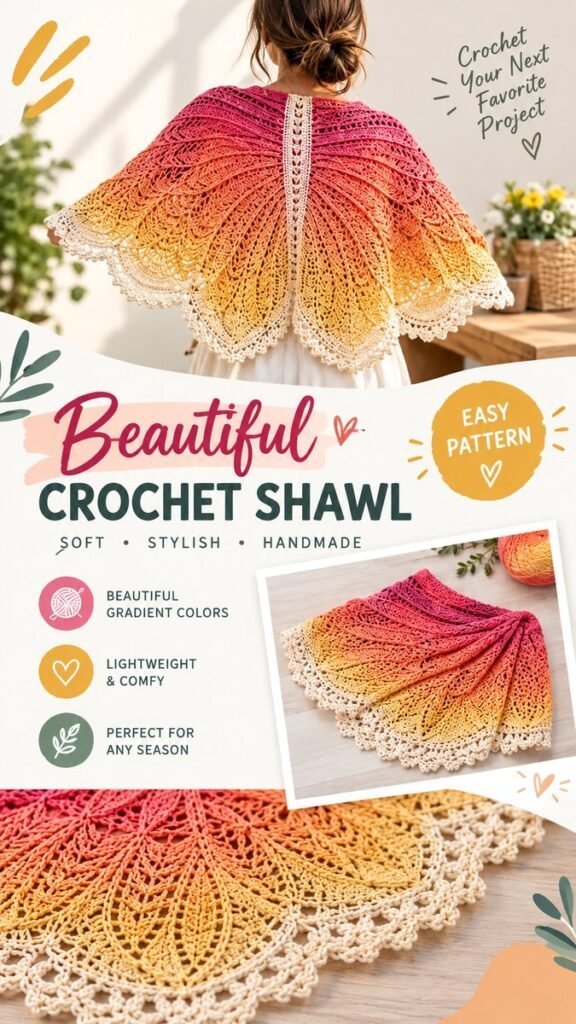
A beautifully designed crochet shawl can turn a simple handmade project into a statement piece, especially when delicate lacework meets a soft gradient of warm colors. This style of crochet shawl combines coral, pink, golden yellow, and creamy ivory tones with flowing openwork motifs and a decorative scalloped border. The result is light, elegant, and full of handcrafted character. Whether you are looking for crochet shawl patterns for a relaxing weekend project, a handmade gift, or a versatile accessory, this design offers plenty of inspiration.
Key Takeaways
- A gradient crochet shawl creates beautiful color movement without requiring complicated color changes.
- Lace-inspired crochet stitches give a shawl an airy, lightweight appearance.
- A decorative scalloped border adds a polished finish to the outer edge.
- Warm pink, coral, gold, and ivory tones create a soft seasonal palette.
- The generous shape makes a handmade shawl practical for layering over everyday outfits.
- Careful blocking can help open the lacework and define the overall shape.
Why Crochet Shawl Patterns Are So Inspiring
Crochet shawls are popular because they sit at the intersection of creativity, practicality, and personal style. A shawl can be decorative enough to feel special while remaining useful as a lightweight layer. Unlike a small accessory, it also provides plenty of space for experimenting with stitch patterns, color changes, borders, and texture.
The design shown here has an especially eye-catching structure. The center opening creates a strong vertical line, while the repeated flowing motifs spread outward toward the lower edges. This arrangement gives the finished piece a graceful, wing-like appearance without relying on excessive embellishment.
For crocheters, that combination of visual impact and repeating construction can make a shawl particularly rewarding. Repeated sections are often easier to follow once the stitch rhythm becomes familiar, while changes in color and border details keep the project interesting.
Important: When choosing a crochet shawl pattern, look beyond the finished photograph. Consider the shape, stitch density, yarn weight, color sequence, border construction, and finished dimensions so the project matches your skill level and intended use.
A Closer Look at the Color Palette
Color is one of the strongest features of this crochet shawl style. The upper section uses rich pink and coral shades before gradually moving into golden yellow and finally a creamy neutral at the border. This progression creates a gentle visual flow and gives the lace motifs extra definition.
Gradient yarn is particularly useful for achieving a similar effect. Instead of stopping to join multiple colors, a long color-changing yarn can transition gradually across the project. The finished fabric can then display several shades while maintaining a cohesive appearance.
Choosing Colors for Your Own Shawl
You do not have to copy the warm palette exactly. The same crochet shawl design can look completely different when worked in other color families. Soft blues and cream can create a calm coastal feeling, while greens and neutrals can produce a more earthy appearance. Lavender, blush, and ivory can create a delicate spring-inspired combination.
- Warm palette: coral, peach, mustard, and cream.
- Cool palette: dusty blue, sage, lavender, and ivory.
- Neutral palette: beige, taupe, cream, and soft brown.
- Bright palette: pink, orange, yellow, and a light neutral.
The key is to choose shades that transition comfortably from one another. A gradual shift generally creates a softer result, while stronger contrasts make each section more noticeable.
Understanding the Lacework and Texture
The openwork construction is another defining feature of this crochet shawl. Rather than creating a dense fabric, the stitch arrangement leaves spaces between groups of stitches. These openings reduce visual weight and allow the finished piece to drape more naturally.
The repeated motifs resemble curved leaves or feathers, giving the shawl an organic appearance. Their direction also contributes to the overall shape, with each section flowing outward from the center. This type of visual structure is ideal for crocheters who enjoy patterns that look intricate without needing dozens of unrelated decorative elements.
Why Openwork Works So Well for Shawls
Lace stitches are especially suitable for shawls because they can create an elegant fabric without making the finished accessory overly bulky. The spaces between stitches also allow the colors beneath each section to remain visible, which enhances the effect of a gradient yarn.
Openwork does require attention to stitch placement. A small mistake can become more noticeable as the repeated pattern grows, so it is useful to pause regularly and check the previous rows before continuing.
Expert Insight
The beauty of lace crochet often appears most clearly after the fabric has been gently shaped. Blocking can open the spaces between stitches, straighten the border, and help repeating motifs become easier to see.
The Importance of the Scalloped Border
A decorative border can completely change the appearance of a crochet shawl. In this design, the outer edge uses a delicate cream-colored finish that contrasts with the warmer colors above it. The small scallops create a soft, decorative outline and help frame the entire piece.
Using a neutral border is a practical design choice because it separates the edge from the gradient without competing with the central motifs. It also provides a visual connection between the different shades in the main body.
When planning your own crochet shawl, think about the border as part of the overall composition rather than an afterthought. A simple edging can keep a complex body pattern balanced, while a more elaborate border can become a focal point in its own right.
Yarn and Hook Considerations
The ideal yarn depends on how you want the finished shawl to feel and drape. A lightweight yarn can emphasize the airy quality of lace stitches, while a slightly heavier yarn can create more warmth and definition.
For a design with openwork motifs, it is helpful to choose yarn that allows individual stitches to remain visible. Very fuzzy fibers can soften the details, while smooth yarns tend to make lace patterns easier to see.
Before You Begin
- Check the recommended yarn weight and hook size for your chosen pattern.
- Make a small swatch to see how the stitches look with your yarn.
- Measure the swatch if the finished size is important to you.
- Confirm that your color-changing yarn has enough yardage for the intended dimensions.
- Keep your tension consistent throughout the project.
Swatching is particularly useful when working with lace. A tighter tension can make the fabric look denser, while a looser tension can open the stitch pattern significantly. The right balance depends on the yarn, hook, pattern, and desired drape.
How to Make a Crochet Shawl Look Polished
A finished crochet shawl can look dramatically different before and after careful finishing. Neat stitch tension is important, but shaping and edge finishing also have a major effect on presentation.
Keep Your Tension Consistent
Try to maintain a comfortable, even rhythm as you crochet. Uneven tension can cause some motifs to appear tighter than others and may affect the symmetry of the shawl. If your hands become tired, taking a short break can help you return with more consistent tension.
Pay Attention to Symmetry
Many decorative shawls depend on a balanced center and mirrored sections. Count stitches when the pattern requires it, especially around increases and motif transitions. Catching an error early is much easier than discovering it several rows later.
Finish With Care
Weave in loose ends securely and treat the completed fabric according to the yarn manufacturer’s care recommendations. If the yarn is suitable for blocking, gently shaping the shawl can help reveal the lacework and create a cleaner silhouette.
Pro Tip: Do not rush the finishing stage. A few extra minutes spent evening out the edge, securing ends, and shaping the lace can make a handmade crochet shawl look considerably more refined.
Styling a Handmade Crochet Shawl
A crochet shawl is versatile enough to work with casual and more polished outfits. The generous triangular or wrap-style shape can be draped over the shoulders, worn loosely around the upper body, or folded into a narrower layer when additional warmth is needed.
A colorful gradient shawl can also become the main accent of a simple outfit. Pairing a vibrant handmade accessory with neutral clothing allows the crochet texture and color changes to stand out without creating a busy overall appearance.
For everyday wear, consider styling the shawl with denim, simple tops, dresses, or lightweight sweaters. For special occasions, lace crochet can complement a simple dress while adding handmade texture and color.
Crochet Shawl Projects for Different Skill Levels
Not every shawl pattern needs to be extremely complicated. Beginners can start with repeating stitches, simple increases, and an uncomplicated edging. Once those techniques become comfortable, more decorative lace motifs can be introduced.
For Beginners
Look for patterns with clearly repeated rows and straightforward shaping. A simple triangle shawl can be an excellent introduction because the construction is easy to recognize as it grows.
For Intermediate Crocheters
Intermediate makers can explore lace motifs, gradient yarn, decorative borders, and more detailed stitch combinations. A design with repeated leaf-like sections can provide a satisfying challenge while still offering a recognizable visual rhythm.
For Experienced Crocheters
More experienced crocheters may enjoy adapting a shawl pattern by changing the border, experimenting with color placement, adjusting the finished dimensions, or combining several lace motifs into a personalized design.
Ideas for Personalizing Your Crochet Shawl
One of the best things about crochet is the ability to make a familiar pattern feel completely personal. Small changes can create a very different result without redesigning the entire project.
- Change the yarn colors to match a favorite wardrobe palette.
- Use a contrasting neutral for the border.
- Make the shawl wider or narrower according to your preferred fit.
- Experiment with a slightly different edging.
- Choose a smooth yarn to emphasize lace details.
- Try a subtle tonal gradient for a more understated finish.
These simple adjustments make crochet shawl patterns useful sources of inspiration rather than rigid instructions. Once you understand the basic construction, you can begin making choices based on your own style and the way you want the finished piece to function.
At a Glance
- Style: airy lace crochet shawl
- Color inspiration: pink, coral, golden yellow, and ivory
- Key feature: flowing openwork motifs
- Finishing detail: delicate scalloped edging
- Best for: layering, handmade gifts, and creative crochet projects
Conclusion
Crochet shawl patterns offer an inviting way to combine color, texture, and handmade craftsmanship in one beautiful project. A design featuring flowing lace motifs, a warm gradient palette, and a delicate scalloped border can create an accessory that feels both practical and artistic.
The most appealing part of this style is its flexibility. You can keep the soft coral, pink, gold, and ivory palette, or create an entirely different mood with your favorite colors. You can focus on the lace texture, simplify the border, or experiment with different yarn weights and dimensions.
Whether you are searching for your next crochet project or simply collecting ideas for future handmade creations, a beautiful shawl can provide plenty of inspiration. Choose a yarn you love, work at a comfortable pace, pay attention to stitch consistency, and give the finished lacework the care it deserves. The result can be a distinctive handmade piece that is enjoyable to make and easy to wear.