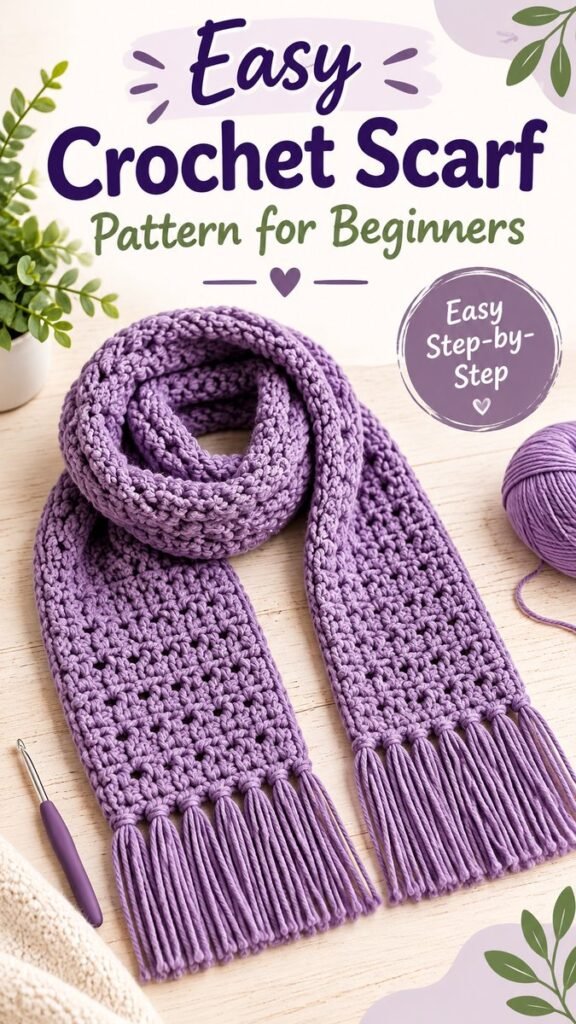
If you are looking for a cozy handmade project that is simple enough for a first attempt, an easy crochet scarf for beginners is a wonderful place to start. A soft, textured scarf can be made with basic crochet techniques while still looking polished, stylish, and completely handmade. The design shown here features a beautiful lavender tone, a comfortable rectangular shape, subtle texture, and long fringe at both ends, creating a classic accessory with a modern handmade feel.
Key Takeaways
- A simple crochet scarf is an approachable project for beginners.
- Basic stitches and consistent tension can create a beautiful textured fabric.
- Medium-weight or soft yarn makes the project comfortable to handle.
- A rectangular scarf design is easy to customize for different sizes.
- Fringe adds a decorative finish without requiring complicated techniques.
- A soft lavender palette gives the finished scarf a cozy, contemporary look.
Why an Easy Crochet Scarf Is Perfect for Beginners
Starting crochet can feel overwhelming when a pattern contains many stitch changes, complicated shaping, or unfamiliar abbreviations. A scarf removes much of that pressure. Because the main body can remain a simple rectangle, you can concentrate on learning the rhythm of your stitches and developing even tension.
An easy crochet scarf for beginners is also useful because progress is easy to see. Each completed row adds visible length, making the project satisfying even when you only have a short amount of time available. You can work on it while relaxing at home, during a quiet afternoon, or whenever you want a creative project that does not require a large collection of supplies.
Important: Your first scarf does not need to have perfectly uniform stitches. Consistency naturally improves with practice. Focus on maintaining a comfortable grip, keeping your tension relaxed, and enjoying the process rather than trying to make every stitch identical.
What Makes This Beginner Crochet Scarf Appealing?
The visual design combines several elements that make a handmade scarf especially attractive. The long rectangular shape is practical and versatile, while the textured crochet fabric gives the piece plenty of visual interest. Instead of relying on complicated color changes, the single-color approach allows the stitch texture to become the main feature.
The lavender yarn shown in the design creates a soft, calming appearance. However, the same concept works beautifully in many other colors. Cream, dusty rose, sage green, soft blue, warm beige, charcoal, or classic white can completely change the personality of the finished accessory.
Another noticeable detail is the fringe. Long yarn fringe adds movement to the ends and gives a simple scarf a finished, decorative appearance. It is also beginner-friendly because it can be attached after the main crochet work is complete.
A Simple Shape With Plenty of Style
One of the biggest advantages of a rectangular scarf is its flexibility. You do not need complicated increases or decreases to create the basic form. Once you establish the starting chain, you can continue working rows until the scarf reaches your preferred length.
This makes the project easy to personalize. A shorter scarf can be comfortable for casual styling, while a longer version can be wrapped around the neck several times. You can also adjust the width by changing the number of stitches in your starting chain.
Choosing Yarn for an Easy Crochet Scarf
Yarn choice has a major effect on how enjoyable your beginner crochet project will be. For a first scarf, choose a yarn that allows you to see your stitches clearly. Extremely fuzzy or slippery yarn can make it harder to identify individual stitches, especially while you are still learning.
A soft medium-weight yarn is a practical starting point. It is substantial enough to help the stitches become visible while remaining comfortable to crochet. Depending on the finished look you want, you can also experiment with thicker yarn for a chunkier scarf or lighter yarn for a more delicate accessory.
Color Ideas for Your Crochet Scarf
Color is one of the easiest ways to make a simple crochet pattern feel personal. The lavender shade in this design creates a soft and feminine look, but you can choose a color that matches your wardrobe or home style.
- Lavender: Soft, cozy, and gentle with a modern feel.
- Sage green: Natural and understated.
- Cream: Classic and easy to coordinate.
- Dusty pink: Warm and playful.
- Deep plum: Rich and dramatic while staying elegant.
- Neutral beige: Versatile for everyday outfits.
For a first project, a solid color can be particularly helpful because you can concentrate on stitch formation rather than managing multiple strands. Once you are comfortable with the basic technique, striped or multicolored scarves can be a fun next step.
Basic Supplies You Will Need
A beginner scarf does not require an extensive craft collection. Keeping your materials simple can make the project feel much more approachable. The exact yarn quantity and hook size will depend on your chosen yarn and the final dimensions you want.
- Soft yarn in your preferred color
- A crochet hook appropriate for the yarn weight
- Scissors for trimming yarn
- A yarn needle for weaving in loose ends
- A measuring tape for checking scarf dimensions
- Optional: a stitch marker if you find it helpful for keeping track of rows
Pro Tip: Before beginning the full scarf, crochet a small sample. This lets you check your tension, see how the yarn behaves, and decide whether the fabric feels soft and flexible enough for a scarf.
How to Approach the Pattern as a Beginner
The most beginner-friendly way to approach this type of scarf is to divide the project into a few simple stages. First, create your foundation chain. Next, establish your main stitch pattern and repeat it across each row. Continue until the scarf reaches your desired length. Finally, finish the edges, weave in loose ends, and add fringe if desired.
1. Start With a Foundation Chain
The foundation chain determines the width of the scarf. Take your time with this first step because overly tight chains can make the first row difficult to crochet into. Keep your hands relaxed and aim for loops that are consistent rather than extremely tight.
2. Work the Main Rows
Once the foundation is ready, begin working the chosen basic stitch across the row. Depending on the pattern, this might involve single crochet, half double crochet, double crochet, or another beginner-friendly stitch combination.
The important part is repetition. When you reach the end of a row, turn your work and repeat the established pattern. If the scarf begins to widen or narrow unexpectedly, check whether you are accidentally skipping a stitch or adding an extra stitch at the edge.
3. Keep Checking the Shape
Every few rows, lay the scarf flat and look at the edges. They should remain reasonably straight. Small differences are completely normal, especially for a first project, but checking regularly can help you catch mistakes before they become difficult to correct.
4. Finish and Weave in the Ends
When the scarf reaches your preferred length, finish the final stitch and leave enough yarn to secure the end. Use a yarn needle to weave the loose tail into the fabric. Repeat the process for any remaining loose ends.
Adding Fringe for a Finished Look
The long fringe shown on the scarf adds a beautiful finishing detail. Fringe is also a simple way to make a basic rectangle feel more decorative without changing the crochet pattern itself.
To create fringe, cut several pieces of yarn to a consistent length. Fold each piece in half and attach the folded loop to the edge of the scarf. Pull the loose ends through the loop and gently tighten. Continue along the edge, spacing the fringe as evenly as possible.
You can make the fringe short and subtle or longer and more dramatic. For a balanced appearance, measure the first few pieces carefully and use them as a guide for the rest.
Why This Matters
The finishing details can make a simple beginner project look much more intentional. Consistent edges, neatly woven yarn ends, and evenly spaced fringe can transform basic crochet work into a polished handmade accessory.
Beginner Crochet Mistakes to Watch For
Learning crochet is largely about practice, so mistakes are part of the process. A few common issues are easy to recognize once you know what to look for.
- Changing stitch counts: Count your stitches occasionally to make sure the scarf remains the intended width.
- Very tight tension: If your hook struggles to enter stitches, try relaxing your grip.
- Loose edge stitches: Pay attention to the first and last stitch of every row.
- Skipping stitches: Work carefully near the edges where stitch placement can be harder to see.
- Uneven fringe: Use a measured yarn strand as a template for consistent lengths.
Remember that handmade projects do not need to look factory-perfect. Slight variations can be part of their charm. The goal of a beginner crochet scarf is not only to create an accessory but also to build confidence with the craft.
Ways to Customize Your Scarf
Once you understand the basic structure, there are many easy ways to make the design your own. Changing the yarn color is the simplest option, but you can also experiment with width, length, texture, and finishing details.
Change the Size
For a narrow scarf, use fewer stitches in the foundation chain. For a wider wrap-style scarf, increase the starting chain. The length can be adjusted simply by continuing or stopping the rows at the point that feels right for your needs.
Experiment With Texture
Simple stitch changes can create completely different surfaces. A basic stitch produces a clean appearance, while combinations of beginner-friendly stitches can add ridges, small openings, or raised texture.
Try Different Finishes
If long fringe is not your style, you can leave the ends plain, add a shorter fringe, or crochet a simple border around the scarf. Even a subtle finishing row can give the project a more defined appearance.
How to Make Your Crochet Practice More Enjoyable
Choose a comfortable place to work and keep your yarn positioned so it feeds smoothly. Good lighting can make individual stitches much easier to see. It can also help to pause every so often and gently relax your hands and shoulders.
If you make a mistake, avoid immediately unraveling a large section. Look closely at the row first and determine where the problem began. Often, only a few stitches need to be corrected.
It is also helpful to save small yarn samples from your projects. Over time, these swatches become useful references for comparing textures, colors, and tension. They can inspire future crochet scarves, blankets, cowls, hats, and other handmade accessories.
Easy Crochet Scarf Styling Ideas
A handmade scarf can be surprisingly versatile. Wear it loosely around the neck for a relaxed everyday look, wrap it once for a simple silhouette, or fold it before draping it around your shoulders. The soft texture and fringe can add interest even when paired with simple clothing.
Lavender and other soft shades work especially well with neutral colors such as cream, gray, beige, white, and denim. If you choose a bold yarn color, keeping the rest of the outfit simple can allow the handmade accessory to become the focal point.
At a Glance
- Begin with a simple rectangular design.
- Choose soft yarn that makes stitches easy to see.
- Keep tension relaxed and consistent.
- Customize the length, width, color, and fringe.
- Finish carefully for a polished handmade result.
Conclusion
An easy crochet scarf for beginners is a practical project that combines simple construction with plenty of room for creativity. The textured lavender design shown here demonstrates how beautiful a straightforward scarf can become when you choose an appealing yarn, maintain consistent stitches, and add thoughtful finishing details such as fringe.
Whether you are picking up a crochet hook for the first time or looking for a relaxing weekend project, a simple scarf gives you an opportunity to practice fundamental skills while creating something you can actually wear and enjoy. Start with an approachable pattern, work at your own pace, and do not worry about small imperfections.
With every row, you will become more familiar with your hook, yarn, tension, and stitch placement. Before long, that first easy crochet scarf can become the starting point for many more creative crochet projects.