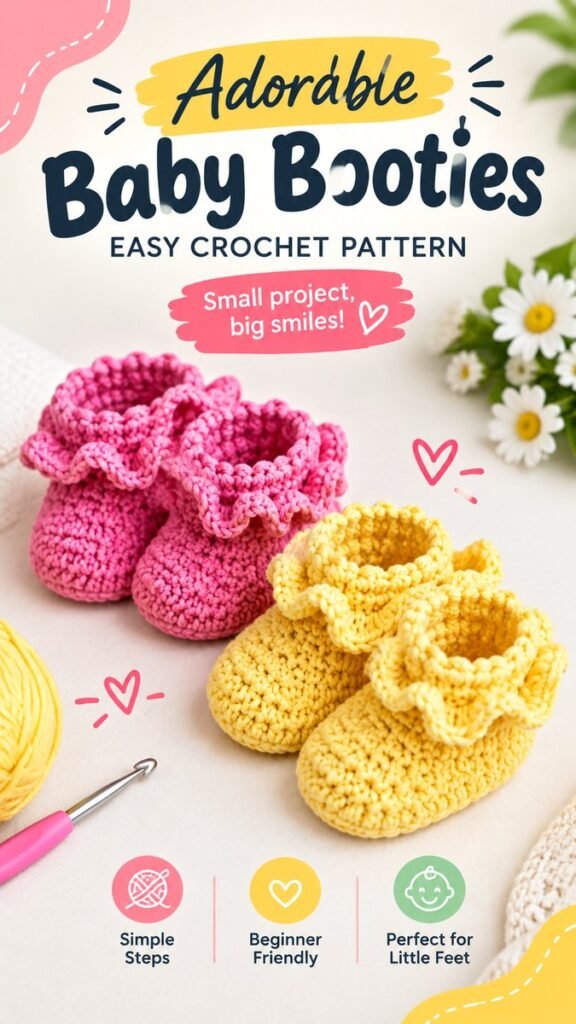
There is something irresistibly sweet about tiny handmade footwear, especially when it comes to crochet baby socks for little feet. Soft yarn, cozy stitches, playful colors, and delicate details can turn a simple crochet project into something that feels truly special. The cheerful pink and yellow crochet footwear shown here captures that handmade charm beautifully, making it a lovely source of inspiration for anyone creating socks or booties for babies from 0 to 3 months.
Crocheting baby socks can also be a satisfying project for beginners. The small size means you can work through a pair without committing to a large project, while the simple shapes allow plenty of room to experiment with colors, edging, texture, and decorative touches.
Key Takeaways
- Crochet baby socks are a small, approachable project for handmade baby wardrobes.
- Soft yarn and comfortable construction are especially important for newborn-sized footwear.
- Pink, yellow, pastel, and neutral shades can create an adorable finished look.
- Simple stitches can produce a cozy texture without making the project overly complicated.
- A ruffled or gently shaped cuff adds personality while helping the socks look polished.
Why Crochet Baby Socks Are Such a Lovely Project
Baby socks are naturally small, which makes them appealing to crocheters who want a quick and rewarding handmade project. Instead of spending days working on a blanket or larger garment, you can focus on a compact design with plenty of opportunities for detail.
The image inspiration features a soft, cheerful color combination with pink and yellow crochet pieces. That palette immediately gives the project a playful nursery feel. You could recreate the same mood with pastel yarns, or choose cream, sage, lavender, peach, beige, or another soft shade for a more neutral style.
Another advantage of crochet baby socks is versatility. A pair can become part of a newborn gift set, a baby shower present, a photography prop, or simply a handmade addition to a little one’s wardrobe.
Important: When making crochet footwear for very young babies, comfort should come before decoration. Keep the finished fabric soft and flexible, avoid scratchy materials, and make sure decorative elements are securely attached and cannot become loose.
Choosing Yarn for Crochet Baby Socks 0-3 Months
Yarn choice can make a noticeable difference in how comfortable a pair of baby socks feels. Since newborn feet are delicate, a soft yarn with a pleasant texture is a practical starting point.
Look for yarn that feels smooth against the skin rather than rough or overly fuzzy. Lightweight yarn can help create a flexible pair that is not unnecessarily bulky. A yarn with some durability is also useful because baby items often need frequent washing.
Color is where you can have fun. The cheerful pink and yellow combination shown in the design is especially suitable for bright, playful baby accessories. If you prefer a calmer look, try a single pastel shade or combine a neutral base with a small contrasting detail.
- Soft pink and blush for a sweet classic look.
- Sunny yellow for a cheerful handmade feel.
- Cream and beige for a timeless neutral palette.
- Lavender or mint for a gentle pastel finish.
- Two coordinating colors for stripes, cuffs, or small accents.
Understanding the 0-3 Month Size
When crocheting baby socks 0-3 months, remember that newborn sizing is not simply a smaller version of an adult sock. Tiny feet need a different proportion, with enough room for natural movement without creating an oversized shape.
Before starting a project, check the sizing information supplied with your chosen crochet pattern. Different yarn weights, hooks, stitch tensions, and construction methods can produce noticeably different finished dimensions.
Gauge is especially useful when you want your finished socks to match a particular pattern size. Even a small difference in stitch tension can become more noticeable when working with a compact item.
A Comfortable Fit Matters
The finished sock should feel flexible rather than stiff. A cuff should not be unnecessarily tight, and the toe area should provide comfortable room. Since babies grow quickly, handmade footwear can also have a short useful window, so sizing carefully helps make the project more practical.
Simple Crochet Details That Make Baby Socks Special
You do not need complicated techniques to create an eye-catching pair. The reference style shows how texture, color, and a decorative cuff can make a simple handmade design feel much more distinctive.
A textured stitch pattern can give the body of the sock visual interest while keeping the overall construction straightforward. A contrasting cuff can create a clear color break, while a softly ruffled edge can add a playful finishing touch.
For an understated design, keep the body one color and add a contrasting border. For something more colorful, alternate two shades in the cuff or use small color changes throughout the sock.
Expert Insight
Small crochet projects benefit from simple visual planning. Choose one main color, one optional accent color, and one recognizable detail such as a textured stitch or decorative cuff. This keeps the finished baby socks cohesive without making them look overly busy.
A Beginner-Friendly Approach to Crochet Baby Socks
If you are new to crochet, baby socks can look more complicated than they really are. The key is to break the construction into manageable sections rather than thinking about the entire sock at once.
- Start with the cuff or opening. Follow the pattern instructions carefully and establish the correct size before continuing.
- Build the main foot section. Work evenly and keep your stitch tension consistent.
- Shape the toe. Follow the decreases or shaping instructions provided by your chosen pattern.
- Finish the edges. Check the cuff and other openings for loose or uneven stitches.
- Make the matching second sock. Count your stitches and rows carefully so the pair remains consistent.
Working slowly is often more helpful than trying to finish quickly. Because baby socks are small, mistakes can sometimes be difficult to spot until several rounds have been completed. Checking your stitch count regularly can save time later.
Color Ideas Inspired by the Pink and Yellow Style
The bright handmade look in the image works particularly well because the colors feel cheerful without overwhelming the delicate scale of baby footwear. Pink and yellow make a lively combination, but there are many ways to develop the same idea.
- Pink and cream: Soft, warm, and easy to coordinate with other baby clothing.
- Yellow and white: Bright and sunny with a clean handmade appearance.
- Peach and beige: A subtle alternative for a neutral nursery palette.
- Mint and cream: Fresh, gentle, and modern.
- Lavender and pale yellow: A playful combination with plenty of personality.
For a polished pair, choose colors that have enough contrast to make the details visible. If the yarn colors are too similar, textured stitches and decorative cuffs may become less noticeable.
How to Add a Pretty Ruffled Cuff
A ruffled edge is one of the easiest ways to give crochet baby socks a decorative finish. The softly curled look shown in the inspiration can make an otherwise basic pair feel more playful and handmade.
Depending on the pattern, a ruffle can be created by working additional stitches around an edge. The extra fabric naturally gathers and creates a wavy effect. The exact technique varies by pattern, so follow the stitch instructions rather than adding increases randomly.
If you prefer a cleaner appearance, a simple ribbed or scalloped edge can provide a similar finishing detail without as much volume.
Making Crochet Baby Socks More Practical
Pretty details are fun, but baby accessories also need to be practical. Think about how the socks will be worn, washed, stored, and handled.
Keep the construction comfortable and avoid adding small decorative pieces that could detach. Loose yarn ends should be securely woven in. The finished item should also be checked carefully for anything that could become a hazard during normal use.
Wash and care instructions should match the yarn manufacturer’s recommendations. Gentle handling can help handmade crochet pieces maintain their shape and texture for longer.
Keep the Design Comfortable
For newborn-sized footwear, simplicity is often a strength. A soft stitch pattern, comfortable opening, and neatly finished seams can be more valuable than elaborate embellishment.
Crochet Baby Socks as Handmade Gifts
A pair of crochet baby socks makes a charming addition to a handmade baby gift. Because they use relatively little yarn, they can also be coordinated with other small projects such as a baby hat, bib, mittens, or blanket.
For a gift set, consider choosing a consistent color palette. Pink and yellow can create a bright, playful theme, while neutral shades can work for a minimalist presentation. Matching the socks with another handmade item can make the entire collection feel intentional.
Packaging can be simple too. Fold the finished socks neatly and place them alongside the other handmade pieces. A small handwritten note can add a personal touch without taking attention away from the crochet work itself.
Common Mistakes to Avoid
Even simple crochet baby socks can present a few challenges. Fortunately, most are easy to prevent with a little planning.
- Ignoring gauge: A different stitch tension can change the finished size significantly.
- Using uncomfortable yarn: A beautiful color is not enough if the fiber feels rough.
- Skipping stitch counts: Uneven increases or decreases can make the two socks look different.
- Making the cuff too tight: The opening should be comfortable and flexible.
- Leaving loose ends: Secure and weave in yarn tails neatly before considering the project finished.
Pro Tip: Make one sock first and use it as your reference for the second. Compare the length, width, cuff, and overall shape before completing the pair. This simple check can prevent small differences from becoming obvious.
Ideas for Personalizing Your Crochet Baby Socks
Once you are comfortable with the basic construction, there are many ways to personalize the design. Try changing the cuff color, adding subtle stripes, experimenting with stitch textures, or creating a simple contrasting border.
You can also create seasonal versions. Soft pastel colors work beautifully for spring, sunny yellow can bring a cheerful summer feeling, warm neutral tones suit autumn, and creamy shades can create a cozy winter-inspired pair.
The most appealing handmade projects often have one or two memorable details rather than dozens of decorations. Let the yarn texture and shape do most of the work, then add a small finishing feature that reflects your style.
At a Glance
- Choose soft, baby-friendly yarn.
- Check the pattern’s 0-3 month sizing carefully.
- Keep the cuff flexible and comfortable.
- Use color and texture for personality.
- Secure all finishing ends and decorative details.
Conclusion: Create a Tiny Pair With Plenty of Charm
Crochet baby socks 0-3 months are a wonderful way to turn a small amount of yarn into something practical, personal, and adorable. The pink and yellow inspiration shows how simple crochet construction can become visually appealing through cheerful colors, textured stitches, and decorative cuffs.
Whether you are making your first pair or adding another handmade project to your collection, focus on softness, comfortable sizing, neat finishing, and a design you genuinely enjoy. A simple color palette can be just as charming as an elaborate pattern, especially when the details are carefully finished.
Most importantly, enjoy the process. Small crochet projects leave plenty of room for creativity, and a tiny pair of handmade socks can become a memorable gift or a sweet addition to a baby’s wardrobe. Choose your favorite soft yarn, pick a comfortable pattern, and start creating a pair that feels uniquely yours.
Tags
Crochet Baby Socks 0-3 Months Crochet Baby Crochet Crochet Baby Booties Newborn Crochet Easy Crochet Pattern Handmade Baby Gifts Beginner Crochet