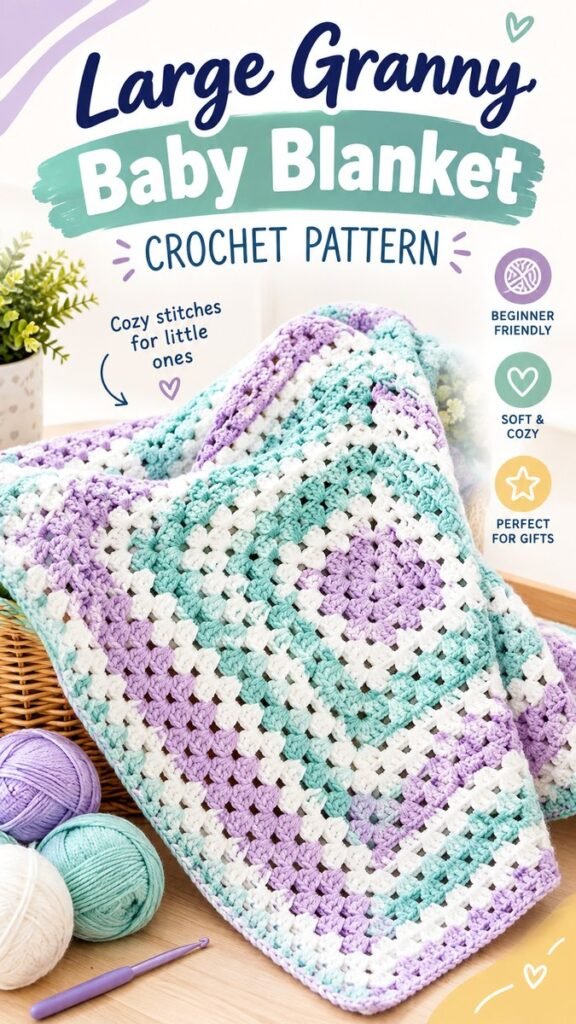
Choosing the right crochet baby blanket size can make a handmade project more useful, comfortable, and enjoyable to create. A beautiful granny-style blanket in soft lavender, mint, and white is not only charming for a nursery, but can also become a practical layer for cuddling, stroller rides, tummy time, or gifting. Whether you are a beginner planning your first baby blanket or an experienced crocheter looking for a simple sizing guide, understanding how blanket dimensions affect the finished project is an important place to start.
Baby blankets come in many shapes and sizes, and there is no single measurement that works for every purpose. The best crochet baby blanket size depends on how the blanket will be used, the baby’s age, the yarn and stitch pattern, and whether you want a compact receiving blanket or a larger piece that can grow with the child.
Key Takeaways
- Choose blanket dimensions based on how the finished piece will be used.
- A smaller blanket is convenient for wrapping, holding, and travel.
- A larger baby blanket can work well for cribs, play areas, and longer use.
- Granny-style crochet patterns are easy to customize by adding or removing rounds.
- Always make a gauge swatch if you want predictable finished dimensions.
Understanding Crochet Baby Blanket Sizes
When searching for the ideal crochet baby blanket size, it helps to think in terms of purpose rather than one fixed measurement. A blanket intended for a newborn gift does not necessarily need to be the same size as one designed for a crib or play mat.
Common baby blanket dimensions often fall somewhere around the small receiving-blanket range through larger crib-style blankets. Smaller designs can be especially practical for carrying and cuddling, while larger designs provide more coverage and room to use the blanket as the baby grows.
The beauty of crochet is that you can adjust the dimensions as you work. This is particularly convenient with granny squares and repeating stitch patterns because additional rounds can increase the width and length without changing the overall character of the design.
Important: There is no universal perfect baby blanket measurement. Think about the intended use first, then select dimensions that make sense for the project, yarn, stitch pattern, and recipient.
Popular Crochet Baby Blanket Size Options
Different blanket sizes serve different purposes. Before beginning a project, consider whether you want something compact and portable, generously sized for everyday use, or large enough to become a long-lasting nursery blanket.
Small Receiving Blanket
A smaller receiving-style blanket is a practical choice when portability matters. It can be folded easily into a diaper bag and works well as a light layer for cuddling or supervised use.
This size is also appealing when you want to finish a crochet project relatively quickly. Fewer stitches and fewer rounds mean less yarn and less overall crocheting while still producing a meaningful handmade gift.
Standard Baby Blanket
A medium-sized baby blanket is one of the most versatile choices. It provides enough surface area for cozying up while remaining manageable to fold, wash, store, and transport.
This is a particularly useful size for colorful granny-style designs because the pattern has enough room to show off repeating color changes without becoming unnecessarily large.
Larger Baby or Crib Blanket
A larger crochet baby blanket offers more coverage and can be useful as a nursery accessory or supervised play blanket. It also gives the crocheter more room to showcase a decorative center, multiple color bands, or a substantial border.
The pastel blanket inspiration shown here works especially well with a larger format because the repeating lavender, mint, and white sections create a soft visual rhythm across the surface. The larger the blanket becomes, the more noticeable those color transitions can be.
How to Choose the Right Baby Blanket Size
The intended use should be your first consideration. Ask yourself where the blanket will spend most of its time and how much coverage you actually want.
- For gifting: Choose a versatile size that is easy for the family to fold, store, and use.
- For portability: Consider a smaller blanket that fits conveniently into a stroller or diaper bag.
- For nursery use: A larger rectangular or square design can provide more visual impact.
- For longer use: Consider making the blanket larger so it remains useful beyond the earliest months.
- For a quick project: A smaller design can be a satisfying choice when you have limited time.
Shape matters too. Square blankets are wonderfully flexible and easy to customize, while rectangular blankets can provide more directional coverage. Granny-square construction can also make it easier to create a specific finished dimension by joining individual motifs.
Why Granny-Style Crochet Works So Well for Baby Blankets
Granny-style crochet is popular for baby blankets because it combines a recognizable handmade texture with endless opportunities for color customization. A simple repeating stitch structure can create a blanket that looks detailed without requiring an overly complicated construction.
The design shown in the inspiration features rows of soft pastel colors with white accents. Lavender and mint create a gentle contrast, while the white sections help separate the color bands and emphasize the pattern.
Another advantage is flexibility. You can repeat a color sequence consistently, alternate two shades, create a rainbow-inspired palette, or use leftover yarn for a more playful appearance.
Customize the Dimensions as You Crochet
One of the simplest ways to adjust a granny-style blanket is to continue working additional rounds until the project reaches the desired dimensions. If the blanket is becoming too large, you can stop earlier and add a border for a finished edge.
For a rectangular blanket, you can also modify the starting foundation and repeat the pattern across the desired width. Always check the pattern instructions first because different stitch constructions require different adjustment methods.
Expert Insight
If the pattern is built around repeating granny-style rounds, sizing is often easier than it first appears. Work evenly, measure the blanket as you go, and stop when the dimensions match your intended use rather than relying only on the number of rounds.
Yarn Choice and Its Effect on Blanket Size
Yarn selection can noticeably affect the finished dimensions of a crochet baby blanket. Different yarn weights, fibers, and hook sizes can produce different stitch sizes even when you follow the same basic pattern.
A soft yarn is naturally appealing for baby projects, but softness is only one consideration. Think about stitch definition, durability, care requirements, and how the fabric feels when worked into the chosen pattern.
Pastel shades like mint, lavender, and white create a gentle look, but the same blanket design can take on a completely different personality with warmer neutrals, earthy shades, or brighter colors.
Why Gauge Matters
Gauge refers to the number of stitches and rows produced within a specific measurement. Even when two crocheters use the same yarn and hook size, their individual tension can produce different results.
If precise sizing matters, make a small gauge swatch before starting the full blanket. This allows you to see whether your stitches are tighter or looser than the pattern designer’s sample.
Pro Tip: Measure your work periodically instead of waiting until the final round. Small differences are much easier to manage early than after dozens of rounds have been completed.
Planning a Large Crochet Baby Blanket
A larger baby blanket requires more planning because the amount of yarn, time, and finished weight increases as the dimensions grow. Before beginning, estimate how much yarn the project may require based on the pattern or a comparable sample.
Color planning is equally important. A repeating palette can keep a large blanket visually balanced. The lavender, mint, and white combination shown in this style creates clear stripes and blocks while maintaining a soft overall appearance.
If you are working with several colors, decide how often each shade will appear. You can use one main color, one secondary color, and a neutral accent, or distribute several colors more evenly throughout the design.
Creating a Balanced Border
A border can visually complete a baby blanket and help define its outer edge. It can be simple or decorative depending on the main stitch pattern.
For a colorful granny-style blanket, a clean border in one of the existing colors can create a cohesive finish. White can emphasize the pastel palette, while lavender or mint can provide a stronger frame.
Keep the border proportional to the blanket. A very small blanket may look best with a modest edge, while a larger design can support several rounds of edging.
Crochet Baby Blanket Size Tips for Beginners
If this is your first baby blanket, avoid making the project more complicated than necessary. A simple repeating stitch and a manageable size can help you build confidence while learning to maintain consistent tension.
- Measure your first few rows to check the starting width.
- Count stitches when learning a new pattern.
- Keep your tension as consistent as possible.
- Use stitch markers when they make pattern repeats easier to track.
- Lay the blanket flat occasionally to check its shape.
- Plan the border before reaching the final round.
It is perfectly fine if your finished blanket does not match a reference dimension exactly. Handmade crochet naturally contains small variations, and the most important goal is creating a fabric that has the size, drape, and feel you want.
Making a Crochet Baby Blanket as a Gift
A handmade baby blanket can be a thoughtful gift for a baby shower, new arrival, birthday, or nursery celebration. When choosing the size, consider what the recipient is likely to find most practical.
A medium or generously sized blanket can be versatile, while a smaller blanket may be easier for parents to carry. If you know the nursery colors, matching the palette can make the finished project feel even more personal.
The pastel combination featured in this crochet style is particularly adaptable. Soft lavender and mint pair naturally with white and can suit many gentle nursery themes without relying on a highly specific decorating style.
Carefully Measure Before You Finish
Before weaving in the final ends, lay the blanket flat and measure its width and length. Check that the shape is even and that the edges are behaving as expected.
If the blanket is slightly smaller than planned, additional crochet rounds or a wider border may provide the extra coverage you need. If it has already reached the desired size, a simple finishing edge can complete the project without adding unnecessary bulk.
For washable baby blankets, follow the yarn manufacturer’s care instructions. Gentle washing and appropriate drying methods can help maintain the texture and appearance of the finished crochet fabric.
At a Glance
- Small blankets: convenient and portable.
- Medium blankets: versatile for everyday baby use.
- Large blankets: generous coverage and nursery appeal.
- Granny patterns: easy to customize with additional rounds.
- Gauge and yarn choice: important for predictable dimensions.
Final Thoughts on Crochet Baby Blanket Size
Finding the right crochet baby blanket size is ultimately about matching the dimensions to the way you want the blanket to be used. A compact design can be perfect for portability, while a larger blanket can provide generous coverage and create a beautiful statement piece for a nursery.
The soft granny-style design shown here demonstrates how effective simple crochet construction can be when paired with a thoughtful pastel color palette. Lavender, mint, and white create a cozy handmade look, while repeating rows give the blanket plenty of texture and visual interest.
Whether you are making a first crochet baby blanket or adding another handmade project to your collection, take time to plan the dimensions, choose a comfortable yarn, check your gauge, and measure as you work. With a flexible pattern, you can easily create a blanket that feels personal, practical, and beautifully finished.
Remember: The best crochet baby blanket size is the one that suits the intended purpose, feels comfortable to use, and gives you a finished piece you are excited to share or keep.