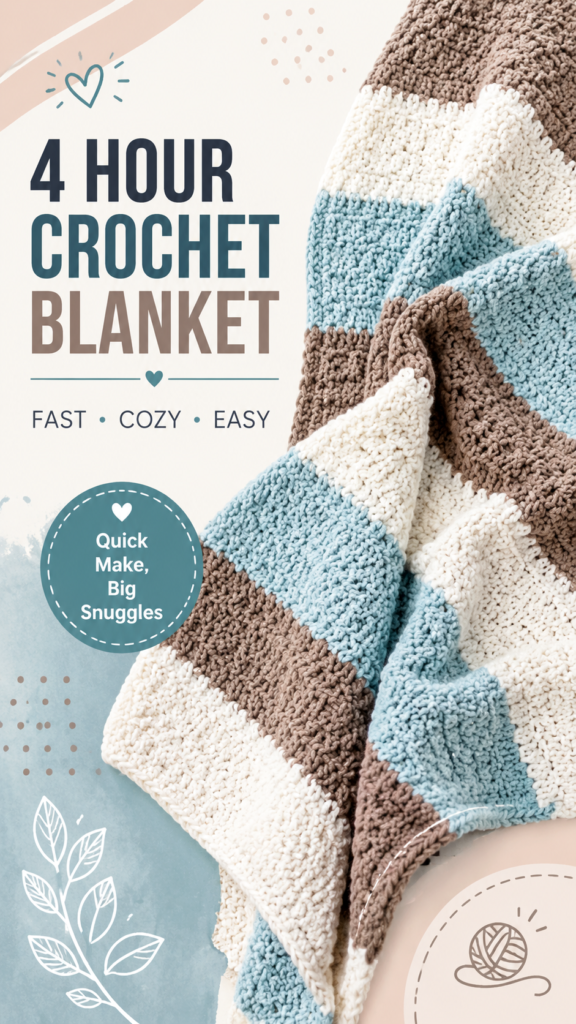
There is something wonderfully satisfying about a crochet blanket that looks beautifully textured, cozy, and substantial without requiring an overly complicated design. A striped crochet blanket like this brings together soft-looking stitches, calming colors, and a simple repeat that makes the finished piece feel both handmade and modern. It is the kind of project that can work beautifully as a baby blanket, nursery accent, lap blanket, or thoughtful handmade gift.
If you are searching for baby blanket crochet inspiration, this style is especially appealing because the design focuses on texture and color rather than complicated shaping. The alternating cream, soft blue, and warm taupe tones create a gentle palette, while the chunky stitch texture gives the blanket a plush, inviting appearance.
Key Takeaways
- A simple striped layout can create a polished crochet blanket without complicated colorwork.
- Soft cream, blue, and taupe make a versatile palette for nurseries and cozy spaces.
- Chunky-looking texture adds warmth and visual interest to a straightforward design.
- Adjust the blanket size easily by changing the starting chain and number of rows.
- Choose comfortable yarn and a suitable hook size based on the intended use.
Why a Simple Striped Crochet Blanket Works So Well
The beauty of a striped crochet blanket is its balance. The stitch pattern can remain consistent while the colors create the visual rhythm. This makes the project approachable for crocheters who want something relaxing to work on while still achieving a finished blanket that looks thoughtfully designed.
The blanket shown here uses broad horizontal sections of color. Cream provides a soft neutral foundation, while pale blue introduces a cool accent and taupe adds warmth. Together, these colors create a soothing combination that feels appropriate for a nursery but is not limited to baby decor.
For a crochet baby blanket, this type of palette is particularly easy to coordinate with other pieces in a room. The colors are gentle enough to complement natural wood, white furniture, neutral bedding, and soft textiles without overwhelming the space.
Important: The simplest blanket designs often have the greatest versatility. A repeating stitch paired with carefully chosen stripes can create a handmade piece that feels polished without making the crocheter manage complicated motifs or frequent shaping.
Choosing Colors for a Baby Blanket Crochet Project
Color is one of the easiest ways to personalize a crochet blanket. You do not need an elaborate color scheme to make the finished piece memorable. Two or three coordinated shades can be enough to create a distinctive look.
The example uses a combination of warm neutral and cool pastel tones. Cream keeps the design light and airy, blue adds softness, and taupe provides contrast. This combination can be recreated in many yarn brands using similar shades, or adapted to suit your own preferences.
Try a Three-Color Palette
- Light neutral: Use cream, ivory, or soft white as the main foundation.
- Pastel accent: Add powder blue, dusty pink, sage, or another gentle shade.
- Warm contrast: Taupe, beige, oatmeal, or light brown can anchor the palette.
Another advantage of a striped design is that you can change the order and width of the stripes to create an entirely different appearance. Wider bands feel bold and graphic, while narrower stripes create a more playful rhythm.
Selecting Yarn for a Cozy Crochet Blanket
Yarn choice has a major effect on the finished blanket. The image emphasizes a thick, soft-looking texture, so a yarn with enough body to showcase the stitches will help create a similar visual effect. For a baby blanket, comfort should be one of the first considerations.
Look for yarn that feels pleasant against the skin and is practical for the intended use. Baby blankets are likely to encounter spills, frequent handling, and regular washing, so easy-care yarn can be a practical choice.
What to Consider Before Buying Yarn
- Check the recommended hook size on the yarn label.
- Consider how soft the finished fabric feels before committing to a large quantity.
- Choose shades that coordinate well under natural and indoor lighting.
- Check the care instructions if the blanket will be used frequently.
- Buy enough yarn from the same dye lot when possible for consistent color.
For a quick crochet blanket, thicker yarn can help the project grow more quickly because each stitch covers more area. However, the exact amount of time required will vary according to blanket size, stitch pattern, yarn thickness, crochet speed, and experience.
Creating the Textured Look
One of the most noticeable features of the blanket is its rich, raised texture. Instead of relying on elaborate visual motifs, the design allows the stitch texture to become part of the decoration. This is an excellent approach when you want a blanket that feels substantial while keeping the overall pattern visually simple.
Texture also changes how the colors appear. A smooth fabric can make stripes look very crisp, while a textured fabric creates subtle shadows between stitches. This gives each color section more depth and makes the blanket look especially cozy.
Expert Insight
If texture is the star of your blanket, keep the color changes relatively simple. A restrained palette lets the stitches remain visible instead of competing with an overly busy color arrangement.
How to Plan Your Crochet Blanket Size
A major benefit of a basic striped blanket is that the dimensions can be customized. You can make a compact piece for a newborn, a larger blanket for a toddler, or a generous throw for a bed or sofa using the same general concept.
Before starting, decide how the blanket will be used. A small baby blanket needs less yarn and can be completed more quickly, while a larger throw requires more time but can become a substantial home accent.
Think About Width and Length
The starting chain generally determines the width of a blanket, while the number of rows determines the length. Always make a small test swatch when you need a particular finished size. Crochet tension can vary considerably from one person to another.
If the fabric feels too stiff, you may want to adjust the hook size or reconsider the yarn. If it feels too loose, a smaller hook may create a denser fabric. The goal is a comfortable fabric that drapes naturally rather than feeling rigid.
Simple Stripe Ideas for Beginners
You do not need a complicated stripe sequence to make your blanket distinctive. Start with a repeating order and change it only if you want a more organic appearance.
- Alternate two colors in equal-width sections.
- Use three colors and repeat the same sequence.
- Create wider neutral bands between smaller accent stripes.
- Repeat your favorite color more often to make it the dominant shade.
- Use uneven stripe widths for a relaxed, modern look.
For a baby blanket, repeating stripes can also make the project easier to plan. You can decide the number of rows for each color before beginning, then follow your sequence throughout the blanket.
Tips for Making a Crochet Baby Blanket
A handmade baby blanket is both a creative project and a practical item, so thoughtful planning can make the process much more enjoyable. Keep the construction simple, especially if you want the project to remain relaxing rather than becoming a complicated undertaking.
1. Make a Gauge Swatch
A small swatch gives you an opportunity to see how the yarn and hook work together. It also helps you estimate how many stitches you need for your preferred width. This is particularly useful when adapting a blanket design to a specific size.
2. Keep Your Edges Consistent
Even edges make a handmade blanket look more polished. Count stitches regularly, especially during the first few rows. If your stitch count changes unintentionally, the blanket may gradually become wider or narrower.
3. Secure Color Changes Carefully
When switching from cream to blue or taupe, keep your yarn changes neat and consistent. Weaving in the ends as you work can prevent a large finishing task from building up at the end.
4. Consider the Finished Fabric
A beautiful yarn color is only part of the equation. Pay attention to the way the completed stitches feel and drape. For a blanket intended for a baby, a comfortable fabric is more important than simply achieving a particular appearance.
Pro Tip: If you are unsure about a color combination, crochet a few stripes in miniature before committing to the full blanket. Seeing the colors together in actual stitches is much more useful than comparing yarn balls individually.
Making the Project Faster and More Enjoyable
The appeal of a quick crochet blanket is not only speed. A straightforward repeat lets you settle into a comfortable rhythm. Once you understand the stitch pattern, you can focus on maintaining even tension and enjoying the changing colors.
Organize your yarn before starting so your color changes are easy to manage. Keep your hook, scissors, stitch marker, measuring tape, and yarn within reach. If you are working on a large blanket, a project bag can help keep everything together between sessions.
It can also help to divide the blanket into small milestones. Instead of thinking about the entire project at once, aim to finish one color section or a set number of rows during each crochet session. This makes a larger project feel much more manageable.
Ways to Personalize Your Blanket
A striped crochet blanket gives you plenty of opportunities to add a personal touch without changing the basic construction. Color is the easiest place to start, but small finishing details can also make the blanket feel unique.
- Choose colors that match a nursery or child’s room.
- Add a simple contrasting border around the finished blanket.
- Use a repeating color sequence that has personal meaning.
- Adjust the stripe widths to create your preferred visual balance.
- Make a coordinating smaller piece such as a cushion cover or stroller blanket.
For a handmade gift, a customized color palette can make a simple crochet pattern feel much more personal. Neutral combinations are easy to style, while brighter colors can create a cheerful accent.
Care and Finishing Considerations
Once the final row is complete, take time to finish the blanket carefully. Weave in loose ends securely and inspect the edges for missed stitches or uneven sections. A simple border can also provide a finished appearance if the main design has uncomplicated edges.
Always follow the care instructions for the yarn you selected. Washing and drying requirements can vary, and following the label recommendations helps protect the texture and shape of the finished blanket.
If the blanket is intended for a baby, keep the design practical and avoid unnecessary loose decorations. The goal is a comfortable, easy-to-care-for textile that can be enjoyed regularly.
At a Glance
- Style: Soft, modern striped crochet blanket
- Palette: Cream, pastel blue, and warm taupe
- Focus: Texture, simple repeats, and cozy appeal
- Best for: Baby blankets, nursery accents, gifts, and home throws
- Customization: Easily adapt colors, stripe widths, and overall size
Conclusion
A simple striped crochet blanket can be the perfect combination of relaxing craftsmanship and beautiful everyday design. The soft cream, blue, and taupe palette creates a calm appearance, while the textured stitches give the finished blanket plenty of personality.
Whether you are planning a baby blanket crochet project, looking for an easy handmade gift, or simply want a cozy throw for your home, this style offers plenty of room for creativity. Start with a comfortable yarn, choose a small group of coordinated colors, establish a repeat you enjoy, and let the texture do the rest.
The best part is that you can make the idea completely your own. Change the palette, experiment with stripe widths, adjust the dimensions, or add a simple border. With a straightforward construction and a timeless color-blocked appearance, a textured crochet blanket is a project worth saving for your next cozy crafting session. 🧶